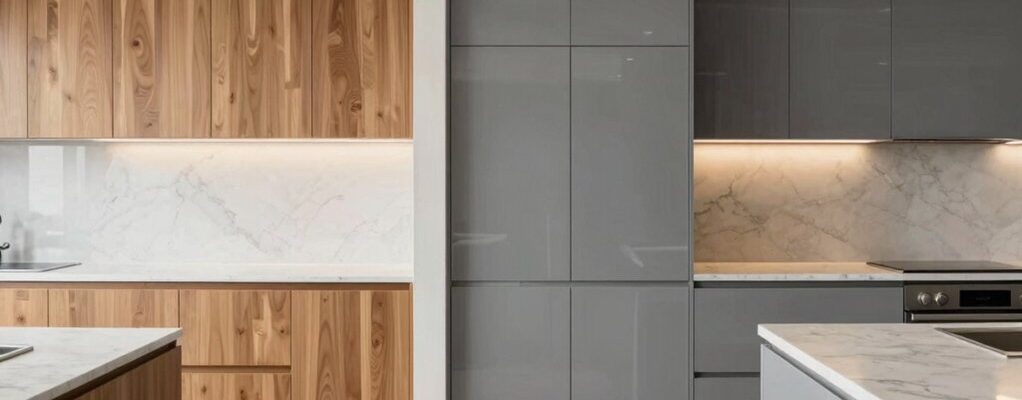
You’ll notice that Shaker kitchens read timelessly, while handleless designs push a crisp, modern edge; each choice reshapes how your space speaks to buyers and budget. As costs, durability, and resale come into play, you’ll want a clear sense of what each style promises long-term. Let’s weigh the trade-offs, from build quality to daily practicality, and see which path aligns with your goals—before you commit.
Longevity of Shaker Vs Handleless Aesthetics
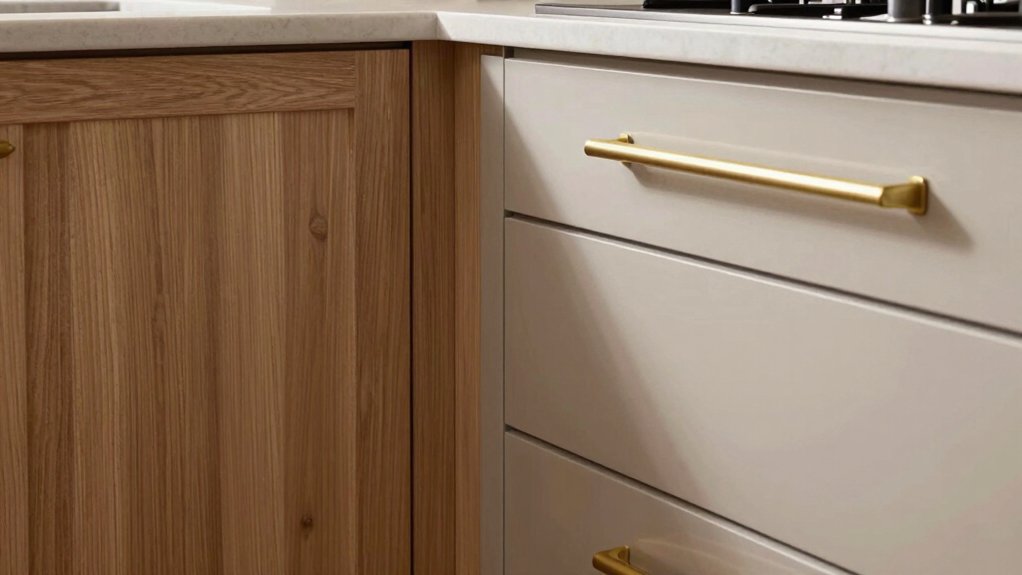
Shaker and handleless kitchens each project a different sense of endurance, and their longevity isn’t just about materials but about the vibe they sustain over time. You gauge durability by how well a look holds as trends shift, not by a single season’s hype.
Shaker aesthetics endure through tactile warmth and timeless lines that age gracefully, inviting quiet, practical updates rather than overt redesigns.
Handleless styles endure via sleek continuity, thriving on minimalist discipline and a clean, high-contrast evolution that feels current longer.
Your choice will hinge on hardware styles and color options you can live with for years, because these details anchor perception more than structural heft.
In practice, longevity means perceived relevance, not just scratch resistance or finish durability. Stay intentional about subtle, adaptable updates.
Material and Build Quality Across Styles
Material solidity varies by style, so you’ll notice Shaker cabinets feel denser and more traditional. Handleless fronts, on the other hand, read cleaner and lighter.
Build quality shifts with joinery, hardware, and seam precision, influencing perceived durability in daily use.
Finishes also differ in resilience, with coat integrity and wear patterns shaping long-term performance across both looks.
Material Solidity Across Styles
Across styles, material solidity hinges on core construction and how well components resist wear over time; this means not just the veneer or finish, but the joinery, hardware, and core boards that underlie the look. You’ll notice that material consistency matters: when panels, cores, and edges align in density and finish, you avoid visible seams, sag, or delamination as trends shift.
In shaker and handleless lines, solidity isn’t about flashy coatings but stable assemblies that maintain grip and texture through use. Seek uniform core materials and matched hardware tolerances to preserve style uniformity as cabinets age.
The most durable outcomes fuse precise joinery with balanced, repeatable finishes, delivering predictable performance across fronts, doors, and interiors without sacrificing design intent.
Build Quality Variations
When evaluating build quality across styles, you’ll notice variations in core construction, hardware durability, and panel integrity that directly affect longevity and feel.
Shaker assemblies often emphasize solid frames and traditional joinery, yielding tactile heft but sometimes heavier weight.
Handleless designs lean on precision milling and concealed fittings, delivering a sleeker silhouette with modern rigidity; any flex or misalignment becomes more noticeable.
Materials range from solid wood composites to high-density laminates, influencing stiffness, noise, and resistance to environmental impact.
Customization options let you tailor hinge quality and drawer slides, shaping long‑term performance.
Consider environmental impact alongside price and feel, as sustainable cores and finishes can sway value.
In short, build quality hinges on engineering detail, not appearance alone.
Durability of Finishes Across Styles
Durability of finishes across styles hinges on how each design’s core materials and joinery respond to wear, moisture, and daily use. You’ll evaluate whether Shaker constructions rely on solid wood, medium-density fiberboard, or plywood, and how their edge detailing holds up under frequent handling.
In contrast, handleless systems depend on substrate rigidity and seamless laminates or acrylics that resist scuffs but may show edge wear or fingerprinted surfaces. Look at cabinet hardware integration, hinge quality, and drawer slides, since these details influence longevity as much as topcoats.
Consider color options and finish layering—matte, satin, or gloss—because some options resist moisture better than others. Your verdict should weigh maintenance needs, durability under family use, and how each choice preserves resale value.
Maintenance, Durability, and Practicality in Daily Use
Maintenance, durability, and everyday practicality hinge on how you use and care for them, and the differences between shaker and handleless kitchens become clear once you test them against real life.
In daily use, handleless designs minimize snag points and push-forwards accessibility, yet demand precise cabinet alignment and consistent cleaning to avoid visible gaps. Shaker fronts forgive irregularities but invite frequent wipe-downs to preserve subtle textures.
You’ll notice appliance integration feels more seamless with handleless layouts, especially around built-in ovens and integrated fridges, while lighting options—under-cabinet strips and toe-kick LEDs—shape spill patterns and task readiness.
Durability hinges on hinges, runners, and gasket integrity; contemporary materials help, yet you’ll benefit from proactive maintenance schedules to sustain pristine aesthetics and reliable performance.
Budget Breakdown: Installation, Materials, and Labor
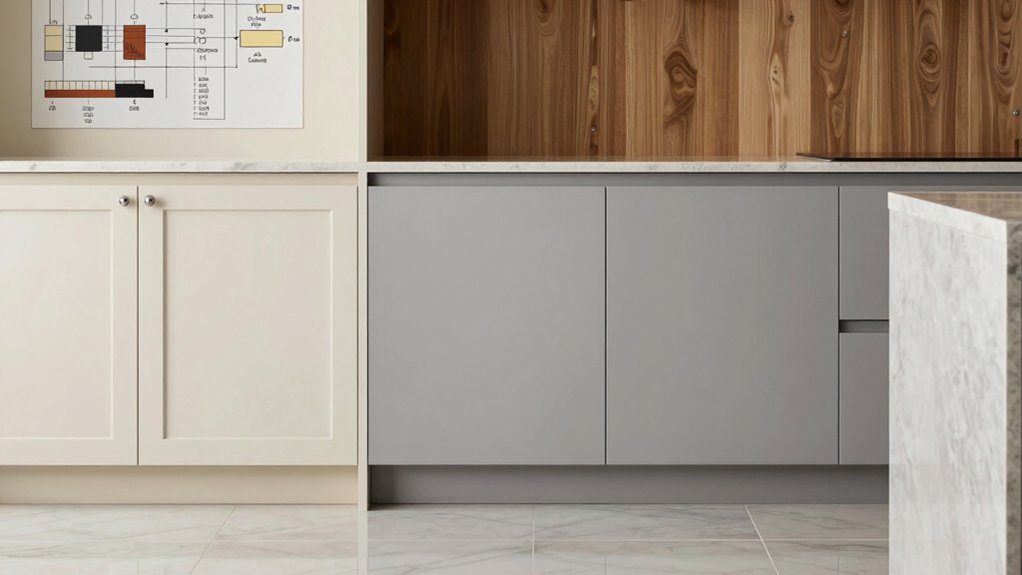
A clear budget breakdown starts with upfront costs: installation, materials, and labor each carry distinct price tiers, so you can map total investment against your design goals.
You weigh installation feasibility, timelines, and disruption, then calibrate material quality to your kitchen layout. The balance between minimalist metal trims and warm wood fronts shapes both vibe and price, so you compare solid wood, plywood core, or veneer options against durability needs.
Labor, often overlooked, sets the pace and final finish, from cabinet mounting to seam alignment and hardware fit.
Storage solutions influence space efficiency and costs—custom pullouts can spike prices, while modular organizers keep them manageable.
In this calculus, optimize for long-term function, not just first impressions.
Impact on Resale Value and Buyer Perception
When buyers compare kitchens, the impact of Shaker versus handleless styles often hinges on perceived longevity and ease of use; your choice signals future-proofing as well as daily practicality.
In resale terms, Shaker cabinets convey timeless reliability, while handleless fronts suggest modern efficiency and streamlined spaces.
The market appeal shifts with buyer preferences: traditionalists may favor warmth and tried-and-true finishes, whereas trend followers lean into minimalism and material coherence.
Consider how cabinet hardware, door profiles, and drawer performance influence perceived value, not just aesthetics.
Your decision should balance enduring appeal with current demand, since resale value benefits when the design feels cohesive with established architectural styles.
You’ll maximize equity by aligning your kitchen’s vibe with anticipated buyer expectations.
Real-World Renovation Insights and Recommendations
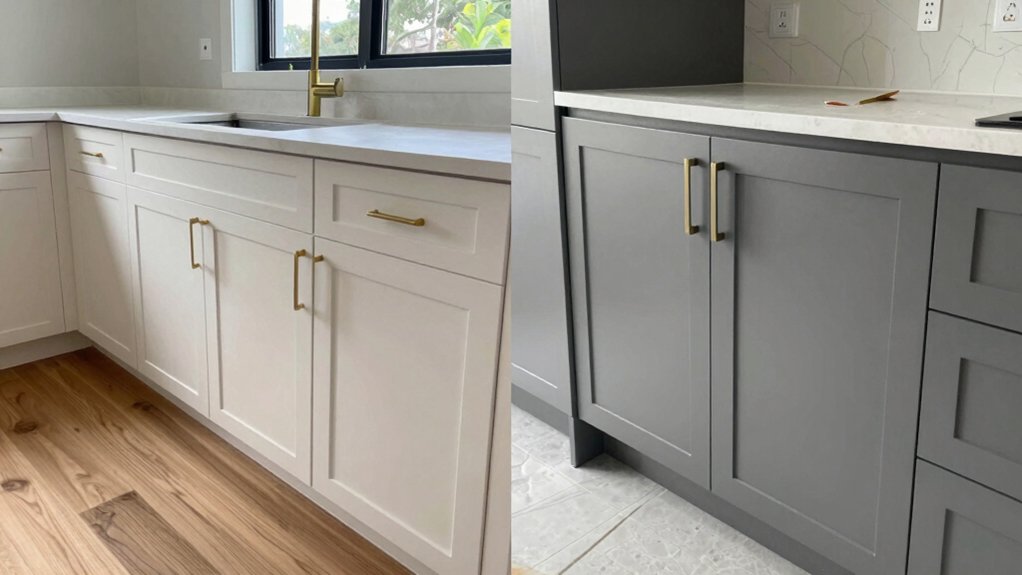
You’ll see real-world renovation insights shaping what works best in practice, not just theory. Compare practical kitchen realities—costs, timelines, and trade-offs—across shaker and handleless layouts to spot which setup scales with your space and budget.
We’ll map clear recommendations for remodels, translating trends into actionable choices you can implement with confidence.
Real-World Renovation Insights
Real-world renovation insights reveal how practical choices—like cabinet fronts, hardware, and layout—play out when you’re mid-project. You’ll notice that shift-ready decisions—without overhauling structure—save time and budget, yet shape long-term perception.
When you weigh shaker versus handleless, you’re testing tactile and visual impact in real rooms, not models. Focus on friction points: door swing, toe-kick height, and sightlines between prep zones. Practical success hinges on cohesive cabinet fronts with your chosen hardware, ensuring comfort and reliability during daily use.
You’ll benefit from selecting thoughtful details early—like custom hardware that anchors style across cabinets, and kitchen accessories that streamline workflows without clutter. Real-world results favor restraint, accurate measurements, and iterative checks, steering you toward a finish that remains compelling as trends evolve.
Practical Kitchen Comparisons
In real-world renovations, practical kitchen comparisons hinge on how options like shaker and handleless fronts perform under everyday use. You’ll assess feel, durability, and maintenance through daily routines, not marketing hype.
Shaker fronts reward tactile engagement and timeless textures, while handleless designs emphasize streamlined sightlines and modern efficiency. You’ll notice cabinet alignment, drawer smoothness, and edge wear matter most when you cook, clean, and entertain.
Pay attention to how each style integrates appliances, as gaps and reveal consistency influence usability and resale perception. Color customization sharpens the decision: consistent hues across cabinetry, countertops, and backsplashes reduce visual noise or create bold focal points.
In practice, align your choice with your workflow, cleanliness expectations, and long-term vision for the space.
Recommendations for Remodels
To remodel effectively, start with a clear criteria map that aligns your workflow, maintenance tolerance, and long-term goals with cabinet style and hardware choices.
In practice, translate that map into concrete decisions about decor style and color options, then test each choice against daily tasks and resale expectations.
For Shaker styles, prefer simple, durable finishes and matte or satin sheens that hide fingerprints; for handleless, lean into high-contrast accents and seamless surfaces to maximize perceived space.
Set a budget cap for entry, midrange, and premium components, and stage a phased plan to avoid scope creep.
Prioritize cabinet gravitas over trends, channeling a cohesive palette across cabinetry and appliances.
Finally, review installation timelines, warranty coverage, and maintenance routines to protect your investment long after the remodel closes.