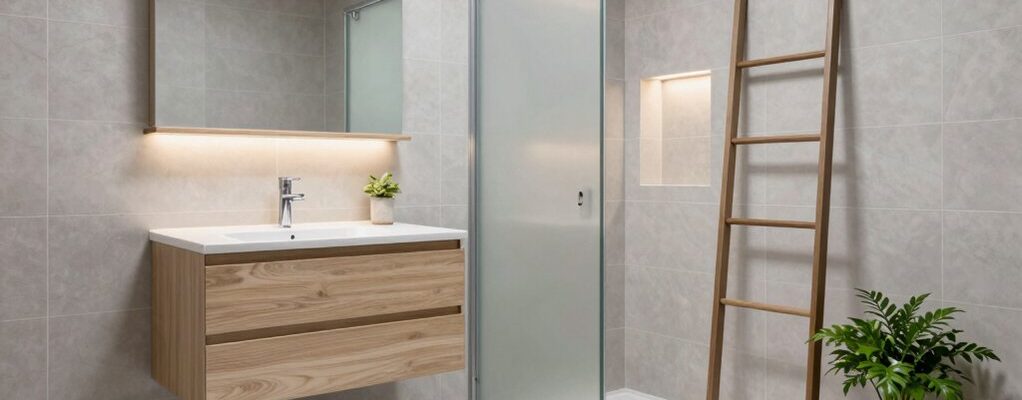
Start with clarity, efficiency, restraint: you’ll plan around wall-mounted fixtures, compact vanities, and hidden storage so every inch serves a purpose. You’ll choose light colors, precise lighting, and large-format tiles to visually expand the space. You’ll balance form and function with frameless glass and sliding doors, then layer textures to keep the bath calm. There’s more to fine-tuning the layout, and the next step reveals how to make it feel bigger without sacrificing storage or ease.
Maximizing Small Bathroom Layout With Space-Saving Fixtures

Maximizing a small bathroom layout hinges on intelligent fixture choices that reclaim floor space and streamline movement. You select compact, wall-hung options that pull the eye upward and leave knee room for ease of use.
Start with vanity choices that minimize footprint without sacrificing storage; consider recessed shelves or a shallow cabinet to keep surfaces clear. A wall-mounted sink paired with a slim vanity creates open, uninterrupted flow around the toilet and shower.
Mirror placement matters: hang a tall, frameless mirror above the sink to visually extend the room and reflect light from a discreet fixture. Prioritize clean lines, tactile finishes, and easy-clean surfaces.
Move deliberately, measure each clearance, and maintain consistent gaps to preserve functional rhythm.
Color, Light, and Surfaces to Brighten a Compact Bath
Color, light, and surfaces in a compact bath should amplify space without repetition. You choose color psychology to bias perception toward airiness: cool neutrals, pale blues, soft greens. Keep contrast deliberate, not dramatic; subtle shifts widen the feel without crowding it.
Light surfaces reflect more, so favor matte or satin textures on walls and cabinetry to reduce glare, while a single glossy tile trim adds focal clarity. Introduce tactile precision with materials that feel intentional under your fingertips—stone, porcelain, or solid-surface counters.
Plan lighting in layers: ambient, task, and accent, prioritizing even diffusion to avoid harsh corners. Surface textures matter: varied but coordinated to avoid busyness.
Aim for a cohesive, breathable palette that enhances perception of space and invites calm use.
Clever Storage Solutions That Keep Busy Bathrooms Organized
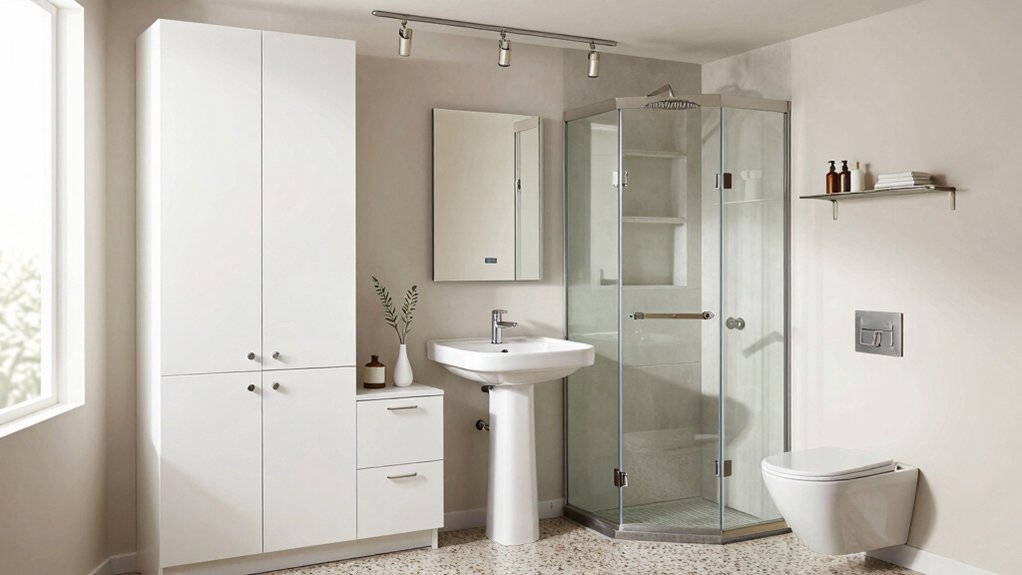
Clever storage in a busy bathroom starts with deliberate planes and reachable pockets: install shallow wall shelves and medicine cabinets that tuck items behind a slim profile, so every inch serves a purpose without crowding. You’ll keep daily routines uncluttered by notebooking a predictable rhythm: items grouped by use, not size.
Favor vanity organization strategies that place essentials at eye level, reducing rummaging and misplacement. Choose shelving alternatives that float near the sink or behind the door to free floor space while maintaining tactile access—drawer liners, labeled bins, and pull-out trays keep surfaces clean.
Use modular units for scalable storage as needs shift. The result is a calmer space with faster grips, fewer spills, and a deliberate sense of order you can rely on daily.
Smart Door and Wall-Mounted Design Tricks for Tiny Spaces
Small spaces demand doors and walls that work as hard as the person using them. You optimize entry with folding glass doors that vanish when open, letting light flow while preserving floor area. Slide them smoothly; tactile grooves confirm alignment, and the frame’s slim profile reduces visual bulk.
Wall-mounted design keeps counters clean and feet unblocked, enhancing maneuverability in tight loops. Choose a wall-mounted toilet to reclaim floor space and simplify cleaning; suspend lines emphasize openness without compromising function.
Install hinges and tracks with precision to minimize snagging and noise, then pair soft-close mechanisms for calm, deliberate use. Use vertical channels for storage above doors and toilets to maintain legibility of the room’s planes.
The result feels expansive, uncluttered, and deliberately lived-in.
Budget-Friendly Upgrades That Deliver Big Visual Impact
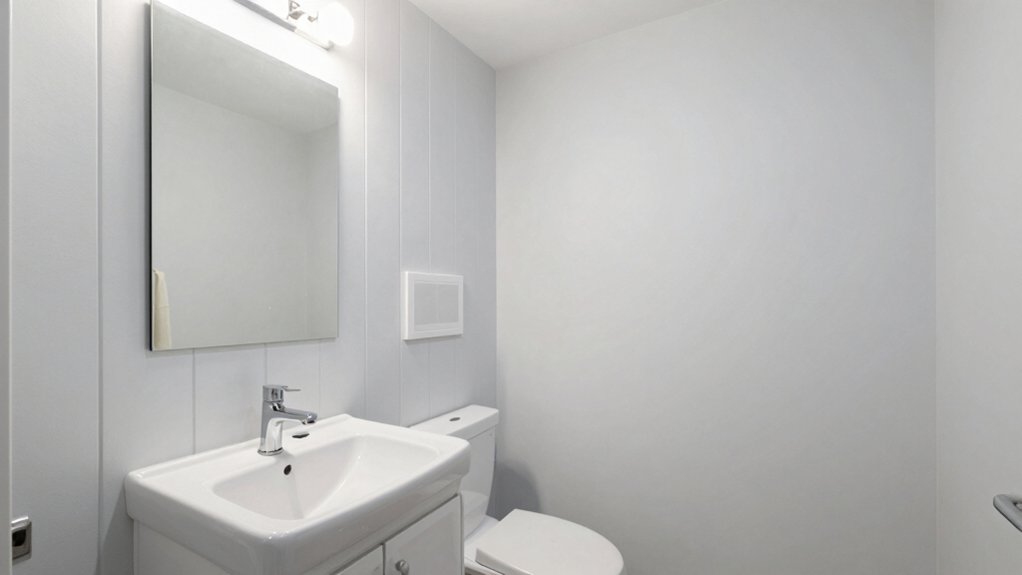
Hidden gains come from simple, targeted upgrades that read as design intent rather than overhaul. You transform a small bath with deliberate choices that maximize perception of space and light.
Start with eco-friendly materials for fixtures, shelving, and tiles—durable, low-maintenance, and kinder to the planet. Choose a slim, wall-mounted vanity to free floor space while preserving usable depth. Add vintage accents through a retro faucet or a framed mirror, delivering texture without bulk.
Recessed niches keep products within reach without crowding. Opt for a restrained color palette and large-format tiles to minimize grout lines, enhancing flow. Install a clear shower door or a frameless enclosure to visually expand the room.
Finally, use directional lighting and dimmers to sculpt space and mood.