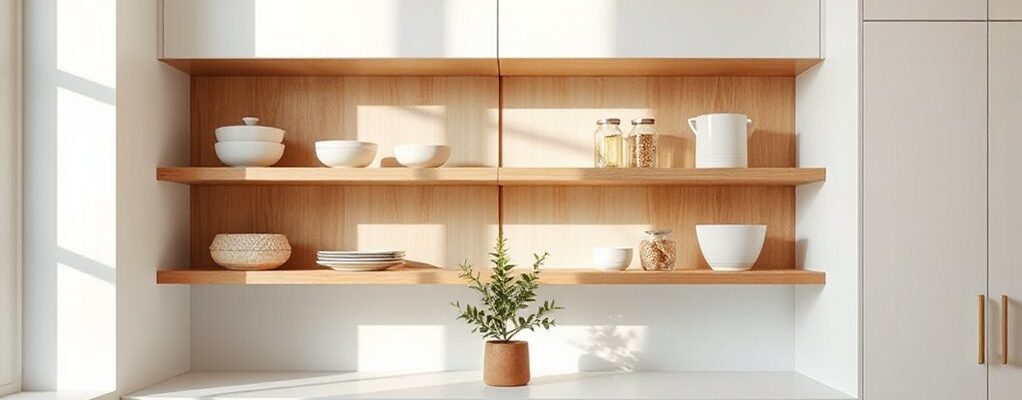
Open shelving in a kitchen can feel intentional and calm when you define a simple scope, set a core look, and group items by purpose. You’ll keep daily essentials within reach, reserve space for seasonal updates, and choose one or two statement pieces to anchor the shelves. A cohesive color palette and deliberate spacing prevent clutter, so you’ll notice the difference as you balance accessibility with a clean, uncluttered aesthetic—and you’ll see what comes next.
Define Your Kitchen Open-Shelf Scope
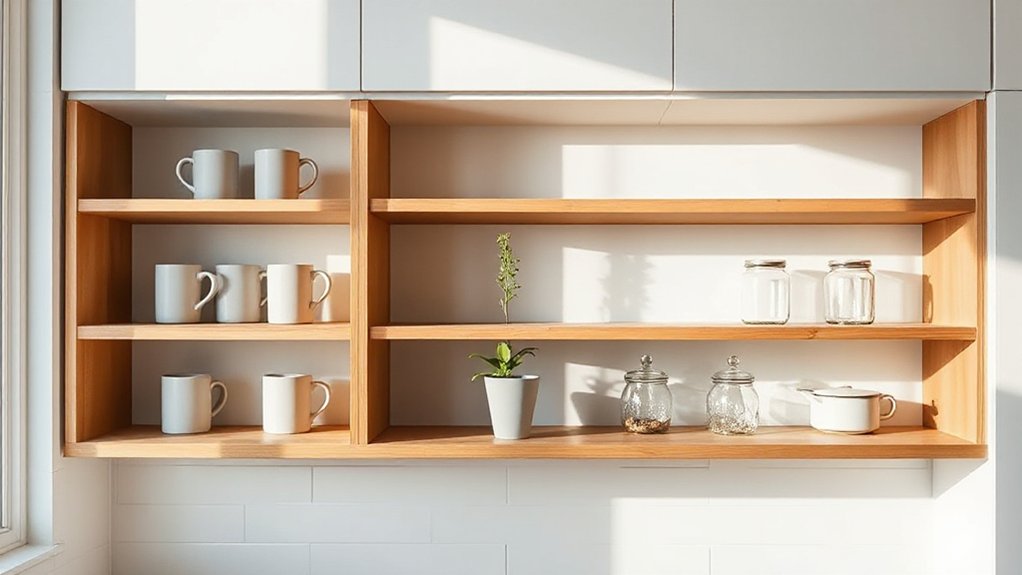
Defining your kitchen open-shelf scope starts with asking what you actually want to store where. You map items by function, not by fashion, letting purpose guide placement. Start with daily-use objects: mugs, bowls, and a few staple ingredients. Consider exposure and accessibility—keep the items you reach most within arm’s reach. Now, decide on display priorities: what earns visibility, what stays tucked behind doors, and what becomes a subtle accent. When you think about Kitchen lighting, plan accents that illuminate without glare, highlighting your best pieces. For Shelf materials, choose finishes that resist heat and moisture, and pair with your overall kitchen tone. Finally, reserve space for future growth, so your shelves stay calm as your needs shift.
Set Up Your Core Open-Shelf Look
Start with a clean core: choose a focal grouping—daily mugs and bowls, or a few staple ingredients—and arrange them in a simple, cohesive line. Set the tone with a restrained display that feels intentional, not cluttered. Keep the core items accessible and visible, so your daily routines stay quick and smooth. Introduce decorative accessories sparingly; pick one or two pieces that repeat across the shelf to create rhythm without noise. Align heights and shapes to build a quiet, corporate silhouette that reads as curated rather than random. Practice color coordination by sticking to a limited palette—neutrals with a single accent hue—to unify the look. Regularly reassess; swap elements for function or season, maintaining the core’s clean, ordered backbone.
Group Like a Pro and Declutter Open Shelves
Grouping like items simplifies access and reduces visual noise, so cluster related pieces—mugs with mugs, spices with spices, bowls with bowls—into cohesive mini-sets that you can grab in a single motion.
- Create zones: group staples together, then decorative accessories as a separate, tidy block.
- Limit spices and small jars to one shelf for quick, visual scanning.
- Rotate Seasonal themes seasonally to keep the shelf feeling fresh.
- Keep a small, reusable tray to consolidate loose pieces and reduce clutter.
This approach keeps your open shelves calm and practical, letting you see function at a glance. It also supports a curated look with Decorative accessories applied sparingly, so the display remains intentional rather than busy.
Find and Style Cohesive Pieces for Open Shelves
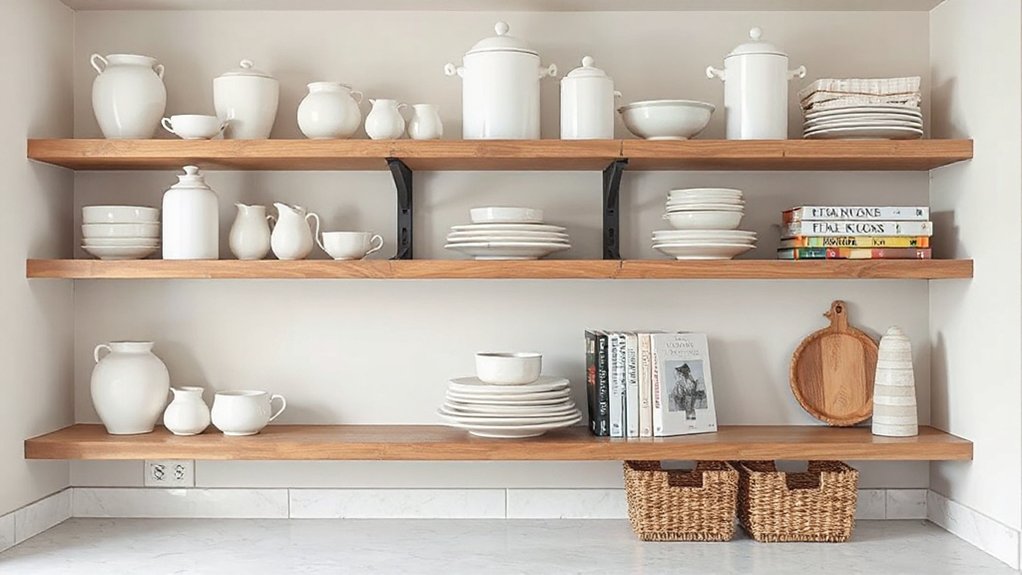
To create cohesive open shelves, start by selecting pieces that share a unifying thread—material, color, shape, or era—and then style them in simple, intentional clusters. You’ll create visual rhythm by repeating key elements rather than scattering options. Choose a core color palette and stick to it across decorative accents like bowls, vases, and mugs, ensuring Color coordination is evident at a glance. Limit contrasts to one or two tones to maintain calm, organized lines. Favor timeless shapes—low-profile mugs, flat plates, and compact bowls—that stack neatly and feel deliberate. Group items in fours or triples, keeping one negative space between clusters to preserve air. Finish with a single, understated decorative accent to anchor the arrangement.
Tackle Shelf Clutter: Quick Fixes for Open Shelves
If clutter has crept onto your open shelves, tackle it with quick, deliberate fixes that restore calm in minutes. You’ll regain visual order by filtering items, grouping them, and keeping essentials in reach. Use simple rules to maintain balance: rotate displays, limit colors, and hide rarely used pieces behind decorative accents that still feel intentional. Seasonal updates keep shelves fresh without chaos, so swap objects seasonally and store surplus elsewhere. Focus on function first, then style.
- Group similarly shaped items and containers for a clean rhythm.
- Swap out clutter for a single decorative accent that anchors the shelf.
- Rotate seasonal updates to prevent stale displays.
- Reserve a small, dedicated zone for everyday essentials.
Frequently Asked Questions
How Often Should I Rotate Items on Open Shelves?
Rotate items every few months to keep decor fresh. You’ll maintain order and balance while avoiding clutter. Prioritize function, then style, ensuring Decor arrangement stays intentional. Regular Shelf maintenance helps reveal hidden pieces and preserve overall polish.
Can Plants Thrive on Kitchen Open Shelves?
Yes, plants can thrive on kitchen open shelves if you place them wisely. Focus on bright, indirect light and steady airflow. Practice plant placement with seasonality, and schedule regular Shelf maintenance to prevent moisture buildup and dust.
What Lighting Works Best for Open Shelving?
Task lighting works best for open shelving, you want focused brightness without glare. Use adjustable fixtures, under-shelf rail lights, or small pendants. Prioritize shelf organization, so lighting highlights curated items and reduces shadows across the display.
How to Prevent Dust on Open Shelves?
Dust prevention starts with regular wiping, sealing gaps, and using lids or jars; shelf organization keeps items grouped, labeled, and reachable, reducing clutter and dust-drag. You maintain cleanliness, you simplify access, you preserve shine and order.
Are Open Shelves Suitable for High-Traffic Kitchens?
Yes, open shelves are suitable for high-traffic kitchens if you choose sturdy shelf materials and keep a disciplined decorating style. You’ll prioritize clean lines, minimize clutter, and maintain function while updating your decorating style with practical shelf materials.
Conclusion
You trade chaos for calm, and clutter for clarity. Juxtapose daily essentials with seasonal accents, so routine items feel intentional, not busy. Keep mugs and bowls in orderly clusters, like a quiet chorus, while a single statement piece punctuates the shelf’s rhythm. The result isn’t emptiness—it’s focus. Function leads form, color stays cohesive, and every space breathes. In this restraint, your open shelves finally look polished, purposeful, and effortlessly serene.