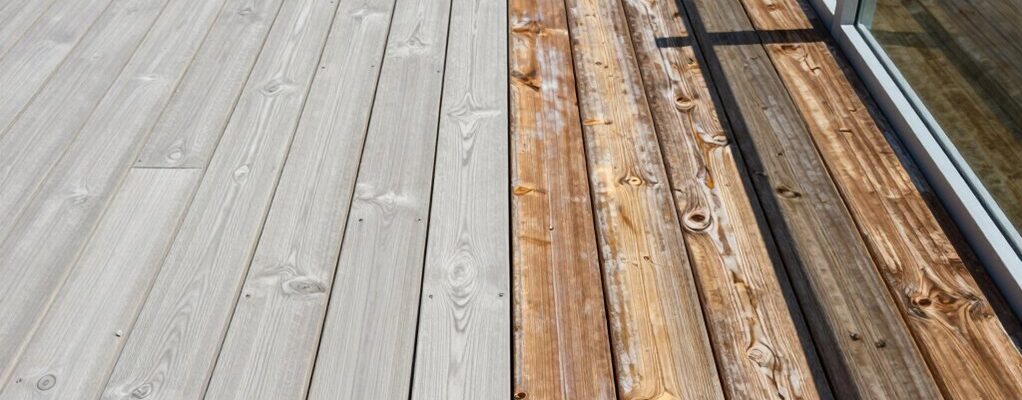
You weigh composite decking against pressure-treated wood by examining lifespan, upfront and long-term costs, and maintenance needs. You’ll find composites resist rot and moisture better, but cost more initially, while PT wood is cheaper upfront yet may require ongoing preservative treatments and repairs. The trade-off hinges on climate, usage, and long-term value. Your decision hinges on whether you prioritize maintenance simplicity or lower immediate expense, with implications that extend beyond installation.
Lifespan Comparison: Composite Decking vs. Pressure-Treated Wood
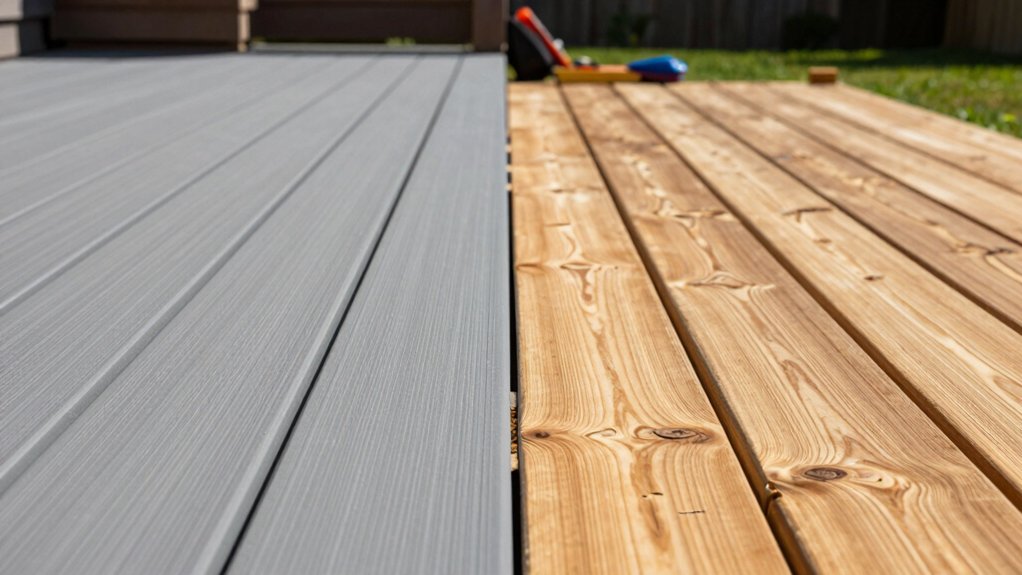
Composite decking typically lasts longer than pressure-treated wood under similar conditions, but the exact lifespan depends on exposure, maintenance, and product quality. You’ll compare service life by environmental stressors, such as UV, moisture, and temperature swings, against material composition.
Pressure-treated lumber generally resists decay for a period aligned with natural wood aging, yet pests and moisture ingress can shorten that window without proper sealing. Composite decking relies on resin binders and UV stabilizers; formulation and cap stock influence fade resistance, scratching, and surface wear.
In real-world use, deck boards may retain appearance and structural integrity longer with routine cleaning, preventive sealing (where applicable), and timely repairs. Anticipate differential performance across climates; performance gaps narrow when you align material choice with maintenance discipline and exposure control.
Initial Costs: Upfront Investment for Each Material
Upfront costs set the stage for the total cost of ownership, so understanding how initial investments differ between composite decking and pressure-treated wood is essential. You evaluate material costs per square foot, installation labor, and required substructure components.
Composite decking typically carries higher per‑foot material prices than pressure‑treated boards, driven by engineered polymers and stabilizers. PT wood, while cheaper per board, may incur additional costs for preservatives, fasteners, and protective treatments over time.
Substructure needs, such as joists and fasteners, influence both options but vary with species, grades, and spans. For a like‑for‑like installation, you’ll often see higher upfront materials cost for composite, offset by potential savings from reduced maintenance and longer service intervals.
Budget around 5–15% higher initial expense for composite installations, contingent on project specifics.
Long-Term Maintenance: Cleaning, Sealing, and Repairs
Long-term maintenance for decking hinges on how cleaning, sealing, and repairs preserve surface integrity and structural safety. You’ll monitor cleanliness to prevent staining, decay indicators, and slip hazards, identifying contamination, mold, or varnish degradation early.
For composite decking, follow manufacturer guidelines on non-abrasive cleaners and gentle brushing to avoid micro-scratches that undermine color and coating warranties. For pressure-treated wood, use detergents designed for wood and ensure thorough rinsing to prevent chemical residue that can hinder sealant adhesion.
Sealing timelines depend on material and climate; recoat when the surface loses water beading or shows moisture uptake.
Implement timely repairs, replacing warped boards, securing loose fasteners, and addressing gap expansion to maintain load paths and prevent structural failure. Regular maintenance minimizes lifecycle costs and conserves performance.
Resistance to Moisture and Rot: How Each Material Performs
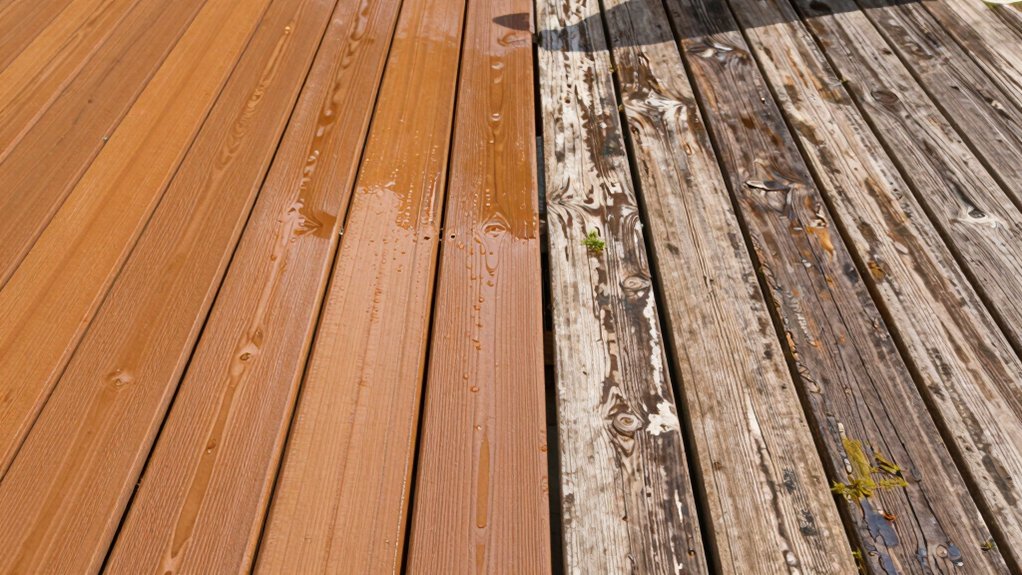
Moisture resistance varies by material, with composites typically offering lower water absorption than untreated wood and showing reduced swelling in typical climates.
Rot prevention differs as composites resist fungal decay better due to inorganic binders, while pressure-treated wood relies on preservative chemistry to impede decay agents.
Expect distinct material expansion behavior: composites exhibit controlled, dimensional stability, whereas wood expands and contracts with moisture fluctuations, affecting joints and fasteners.
Moisture Resistance Variations
Water exposure drives how decking materials resist moisture and rot. You’ll compare how composites and pressure-treated wood respond to humidity, direct splash, and immersion.
In composites, moisture resistance hinges on resin chemistry, filler size, and cap stock; low permeability reduces water uptake but microcracking from temperature shifts can create paths for moisture.
You’ll note wood’s behavior depends on preservative penetration, cell durability, and seasoning; untreated zones absorb water faster, while treated profiles slow absorption yet remain susceptible to repeated wetting and drying cycles.
Expect dimensional stability to influence joint performance and fastener life, with composites typically maintaining shape better but risking surface checking under sustained exposure.
Pressure-treated wood may show greater swelling and shrinkage variability, heightening maintenance diligence for sealing and drainage.
Rot Prevention Differences
Rot prevention hinges on how each material handles water exposure over time. For composite decking, moisture intrusion is limited by polymer-resin encapsulation and closed-cell cores, reducing absorption and slowing fungal growth. Sealed fasteners and limited capillary absorption further mitigate moisture pathways, yet bricking edges and degraded filler can still harbor micro-organisms if joints aren’t maintained.
Pressure-treated wood relies on preservative penetration and barrier coatings to resist decay, but porosity permits moisture uptake, promoting wood-decay fungi under repeated wetting cycles. Drying potential and dimensional stability influence rot risk: composites resist swelling-driven cracks that invite decay, while treated wood benefits from periodic drying but remains susceptible if treatments drift or are breached.
Material Expansion Behavior
Both materials respond differently to moisture-driven expansion and dimensional changes. You’ll observe that composite decking typically exhibits minimal swelling under humidity but can still expand across its grain when exposed to high moisture cycles; manufacturer tolerances often accommodate this with built-in gaps.
Pressure-treated wood, by contrast, swells more noticeably as pores absorb water, broadening boards and potentially altering gaps at fasteners. Temperature fluctuations compound these effects, yet treated wood’s expansion is less predictable due to variable moisture content and preservative interactions with wood fibers.
Across both options, you should consider core differences: dimensional stability, shrinkage during drying, and potential for fastener loosening. Proper detailing, drainage, and installation clearances limit restraint-induced stress, preserving deck flatness and long-term performance.
Insect and Pest Resilience: Termites, Decay, and Treatments
You’ll compare termite resistance options and decay prevention methods to determine which system minimizes pest damage over time.
We’ll assess how composite decking and pressure-treated wood deter termites, along with preventive treatments and maintenance practices.
This discussion sets up a technical comparison of effectiveness, durability, and cost implications for ongoing resilience.
Termite Resistance Options
Termite resistance options hinge on material choice and protection strategy; selecting treated or naturally resistant materials can markedly reduce infestation risk. You evaluate two pathways: intrinsic resistance in species like certain naturally durable woods, and engineered protections such as preservative treatments and barrier technologies.
Treated lumber uses chemical formulations that deter feeding and disrupt termite colonies, while dense, uniform decking reduces easy access points. For composites, you leverage embedded inhibitors or surface coatings designed to resist infestation, though performance varies by formulation.
Installation details matter: proper flashing, ventilation, and gap avoidance minimize moisture niches that attract termites. Maintenance plans should align with manufacturer guidelines, ensuring timely reapplication or renewal of protective layers.
Understanding local termite species and building codes informs selection and long-term cost implications.
Decay Prevention Methods
Decay prevention methods focus on interrupting moisture-driven decay cycles and limiting pest access to structural substrates. You implement moisture control and proper drainage to reduce wood-penetrating decay fungi.
Use breathable, slope-draining profiles, flashing, and weep holes to prevent water accumulation near fasteners and joints. Select substrate that resists insect galleries and treat vulnerable areas with approved antisapstain or preservative barriers before installation.
In demand-driven layouts, you maintain continuous barrier continuity across joists, beams, and ledger connections to minimize substrate exposure. You verify that termite shields and physical barriers are compatible with deck materials and regional pest pressures.
Regular inspections target moisture hotspots, fastener corrosion, and evidence of gallery activity, enabling timely retreatment or replacement prior to structural compromise.
Climate and Sun Exposure Effects on Durability
Sun and climate exert a direct influence on the durability of both composite decking and pressure-treated wood by accelerating or mitigating weathering processes. You assess sun exposure as a primary driver of surface aging, color fading, and photodegradation, with ultraviolet light breaking down resins in composites and degrading surface finishes on wood.
Temperature fluctuations amplify expansion and contraction cycles, stressing joints, fasteners, and protective coatings. Humidity and moisture cycles promote swelling in wood and, where applicable, moisture ingress in composites, impacting dimensional stability.
You evaluate climate-related damage risk by considering rain intensity, wind-driven debris, and salt exposure in coastal regions, which can erode finishes and promote corrosion. Overall, durability projections hinge on material resilience to UV, thermal stress, and moisture variability across the service area.
Installation Considerations and Labor Costs
Installation considerations and labor costs must align with the chosen decking system’s mechanics, fastener compatibility, and substrate preparation requirements. You’ll assess substrate flatness, joist spacing, and moisture conditions to prevent misalignment and costly callbacks.
For composites, plan for hidden-fastener installations that minimize surface blemishes, while pressure-treated options may require face-fastening for long-term stability. Expect additional labor if anti-slip or thermal expansion features demand precise gap management.
Fastening hardware compatibility matters: stainless steel or corrosion-resistant coatings reduce long-term maintenance and warranty disputes. Decking installation times hinge on board length, cutting accuracy, and dust-control needs.
Substructure rot risk, ventilation needs, and drainage must be factored into labor estimates to avoid premature warranty claims. Budget allowances should include material waste, tools, and potential site alterations to meet code and manufacturer requirements.
Valor and Resale Impact: How Material Choice Affects Property Value
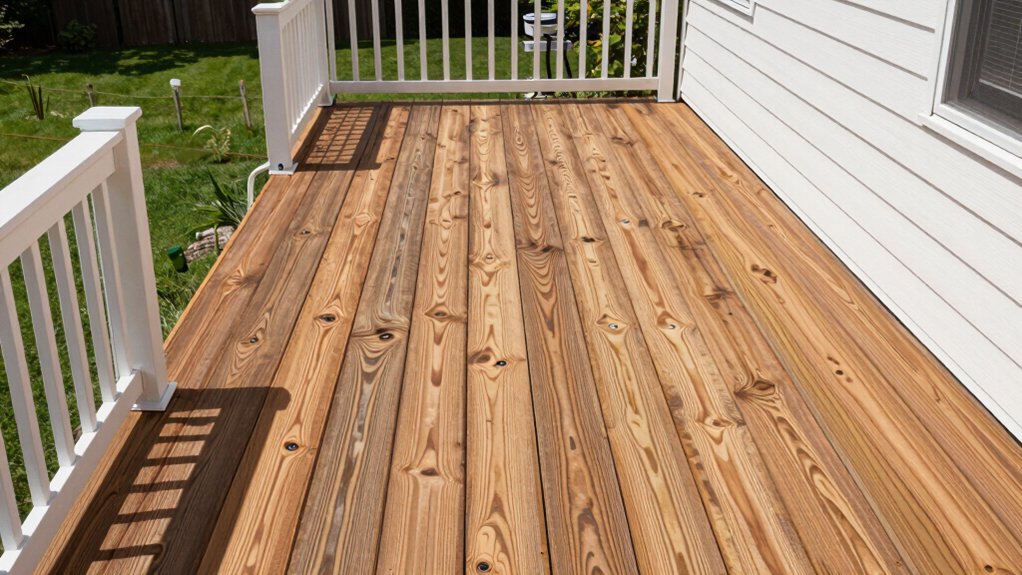
Choosing the right decking material directly influences resale value by signaling long-term performance and maintenance costs to buyers. Material choice carries perceived risk and durability implications that buyers weigh alongside aesthetics.
Composite decking typically conveys reduced maintenance needs, consistent appearance, and longer lifespan under varying climates, which can elevate perceived value. Pressure-treated wood may signal lower upfront costs but higher future maintenance and shorter longevity, potentially dampening offers or prompting price negotiations.
Market signals vary by region and buyer type; however, durability, warranty coverage, and compatibility with current exterior systems influence appraisal trajectories. When evaluating value impact, quantify expected maintenance intervals, repaint or seal frequencies, and replacement likelihood.
Transparent disclosure of material expectations helps buyers form objective comparisons and supports more confident bids.
Practical Costing Scenarios: When to Choose Composite or PT Wood
When evaluating cost, you should compare the total lifecycle expenses of composite versus pressure-treated (PT) wood, not just the upfront price. In practical scenarios, factor in installation, maintenance cycles, coating requirements, and repair frequency.
Composite decking typically has higher initial material costs but lower ongoing upkeep, with fewer staining or sealing events and longer repaint-free intervals.
PT wood usually costs less upfront, yet requires periodic staining, sealing, or re-boarding after nails and fasteners loosen, which accelerates maintenance labor.
Consider lifespan projections: composites often resist rot and fading, reducing replacement risk, while PT wood may be more vulnerable to moisture damage in wet climates.
Choose composite for long-term use in high-traffic or resale-focused projects; select PT wood for short-term budgets or simple, easily replaced layouts.