
If you want to move faster and get stronger offers, staging often wins over selling empty. You’ll help buyers feel space, flow, and lifestyle, not just square footage. Yet empty rooms can highlight structure and scale when priced right. The choice hinges on market, price, and target buyer. There’s more to weigh—costs, time, and what your property signals—so you’ll want a clear plan before you commit to one path. Consider what matters most for your situation.
The Cost Breakdown: Staging vs. Empty
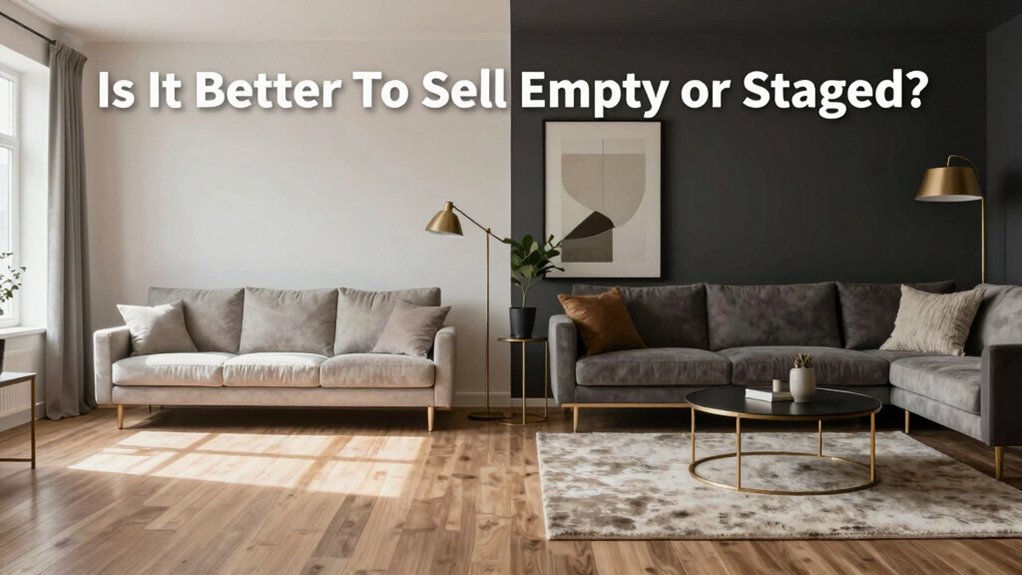
When you’re weighing the cost breakdown of staging versus going empty, the numbers tell the story quickly. Staging costs blend furniture rental with strategic decor investment, translating into faster offers and higher closing prices. You’ll pay upfront for furniture, accessories, and artwork, but you gain leverage in marketing and buyer confidence.
Empty rooms save you immediate furniture outlays yet risk longer days on market and price reductions to compensate for perceived emptiness. Consider your target price band: luxury tiers often justify higher staging budgets, while entry-level homes benefit from minimal, selective investments.
The key is measuring impact: incremental sale price versus total outlay. If your goal is speed and certainty, investing in well-chosen pieces tends to outperform a bare presentation. Efficient, targeted investments outperform broad, indecisive emptiness.
How Staging Impacts Perceived Space and Flow
Staging shapes how buyers read your home’s footprint, making rooms feel larger and more navigable at a glance. You’ll guide attention with clear sightlines, deliberate focal points, and logical flows from room to room.
The result is a smoother perceived space and an intuitive path through your listing.
Perceived Space Enhancement
Staging instantly makes spaces feel larger and more navigable, guiding buyers’ eyes toward flow and function. You’ll notice a visual illusion of openness when furniture is scaled to room size, creating breathing room where there was crowding.
Each piece acts as a reference point, shaping spatial perception so pathways read as natural and intuitive. Strategic lighting, mirrors, and cohesive color schemes amplify ceilings, corners, and alcoves, further elongating walls without adding square footage.
By highlighting focal points and minimizing visual clutter, staging reduces cognitive load, helping buyers imagine daily life in the space. This isn’t about decoration; it’s about optimizing perception to sell faster and for more.
Your goal is a clean, confident presentation that communicates value through perceived space enhancement.
Flow and Navigation Cues
Even with a clean layout, staging guides buyers through the space by creating intuitive paths and clear focal points. Flow and navigation cues matter because they shape how a room feels in seconds. You’ll direct attention with sightlines, furniture placement, and purposeful vignettes that guide movement from one area to the next.
When traffic feels natural, buyers imagine living there, not just viewing features. Visual storytelling shows how spaces connect, reinforcing use cases and balance. Subtle contrasts, like a rug or lighting, cue where to pause, peek, and proceed.
Emotional appeal arises from cohesive scenes that feel welcoming and effortless, reducing hesitation. In practice, staging should streamline routes, heighten perceived space, and keep the buyer focused on the story you’re telling.
Time and Budget Considerations for Each Approach
When deciding between selling empty or staged, time and budget are the practical levers you should tighten first. You’ll move faster by defining a tight scope: what you’ll stage, what you can leave empty, and the minimum viable upgrades to boost perceived value.
Budget-wise, set a hard cap and prioritize high-ROI touches like lighting, fresh paint, and clean staging furniture. Staging adds cost but often cuts time on market, while empty rooms can reduce expenses and marketing complexity.
Plan timelines around photos, virtual tours, and listing updates to maintain momentum. For promotion, lean on virtual tours and social media to maximize exposure without pushing beyond your window.
Align expectations with a data-backed plan to stay competitive and cash-positive.
Real-World Impact on Sale Price and Time on Market
Moving from the time-and-budget lens, you’ll see real-world effects on the sale price and days on market that buyers notice immediately. In practice, staging tends to lift perceived value, while empty rooms can undersell, even when price is competitive.
Pricing strategies matter most where buyers form quick judgments about space, flow, and potential. You’ll notice higher list-to-sale ratios and shorter days on market when staging aligns with buyer expectations and market norms.
Conversely, a well-executed pricing strategy paired with strong marketing tactics can compensate for minimal staging, but often at a premium in slower markets. The impact is measurable: modest gains in price, faster offers, and fewer price reductions, signaling strong demand.
Your best path combines thoughtful pricing with targeted marketing to maximize appeal.
When to Choose Staging Over Empty, and Vice Versa
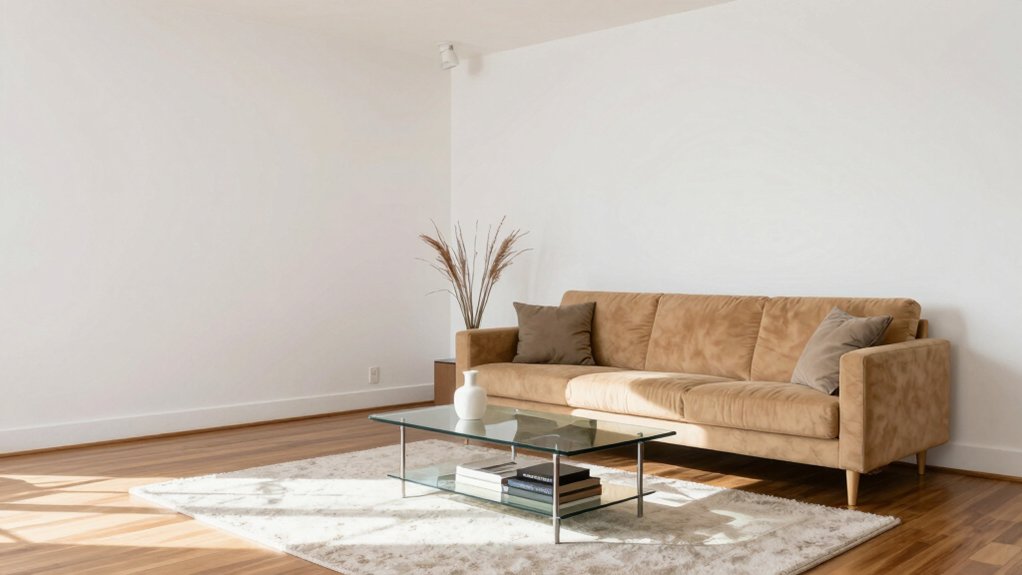
Staging can attract more buyers and often boost perceived value, but empty spaces can highlight price, layout, and potential.
If your listing has standout features or a strong price point, empty may win.
If the goal is emotional engagement and quicker offers, staging helps.
Consider the market, target buyers, and what drives faster, higher-quality offers to decide which path to take.
Benefits of Staging
Staging makes a home feel instantly livable and shows its full potential, so buyers picture themselves there rather than just imagining it. You benefit from faster offers and higher perceived value when rooms read as intentional, not empty.
A staged space highlights flow and usable areas, guiding buyers to see each room’s purpose without effort. Focused furniture arrangement creates clear sightlines, emphasizing clickable updates and generous scale. Thoughtful color schemes set mood, reduce buyer uncertainty, and help photos pop online.
By presenting a turnkey lifestyle, staging minimizes objections about decor or wear, accelerating decision-making. You gain control over the narrative, framing features like natural light, views, and storage as assets.
In markets with competition, staging often outsizes empty rooms, delivering stronger perceived value and a quicker close.
When Empty Wins
Sometimes empty spaces win when flow, scale, and light are the assets you want buyers to feel instantly, especially in homes with strong architectural lines or unique features that don’t need furniture to tell the story. In these cases, you showcase space, materials, and natural ambiance, letting buyers imagine their own lives.
Vacant properties often move faster when architectural cues shine and rooms read clearly on a quick tour. Yet beware of staging myths—that empty means cold or uninviting. Strategic, minimal touches can emphasize flow without clutter, provided lighting is bright and purposeful.
When you choose empty, you save time and cost; when you choose staging, you release emotional connection. Decide based on market cues, pricing strategy, and audience expectations.
Quick-Win Tips to Boost Appeal in Any Scenario
Even when you’re short on time or budget, you can boost appeal quickly with a few proven moves: declutter, straighten key spaces, and highlight the traits buyers care about most.
In any scenario, focus on what sells: light, flow, and purposeful accents. Use artificial decor sparingly to create focal points without overwhelming rooms, and keep textures cohesive to avoid visual clutter.
Target major sightlines first—entry, living, and kitchen—since these drive first impressions and perceived value. Consider virtual staging to test ideas fast, swapping finishes or furniture to align with buyer personas without large commitments.
Prioritize clean lines, balanced scale, and inviting atmospherics that feel usable. Quick wins tighten gaps between listing photos and reality, accelerating buyer momentum and minimizing negotiation friction.
Case Studies: Empty Listings vs. Staged Listings
Case studies show how empty listings compare to staged ones in real-world buyer behavior and time-to-sale. You’ll see staged homes attract faster offers, higher prices, and stronger emotional appeal, especially when luxury upgrades are visible but tasteful.
In contrast, empty listings often struggle to convey scale, flow, and lifestyle, leaving buyers unsure about space usability. The data highlights that staging helps buyers envision daily living, reducing hesitation and perceived risk.
When you prioritize strategic upgrades—think accent lighting, quality fixtures, and cohesive décor—you create a polished, aspirational narrative that translates into quicker decision-making.
Ultimately, consider the market, price band, and target buyer; staged listings consistently outperform empty ones on speed-to-sale and final value.