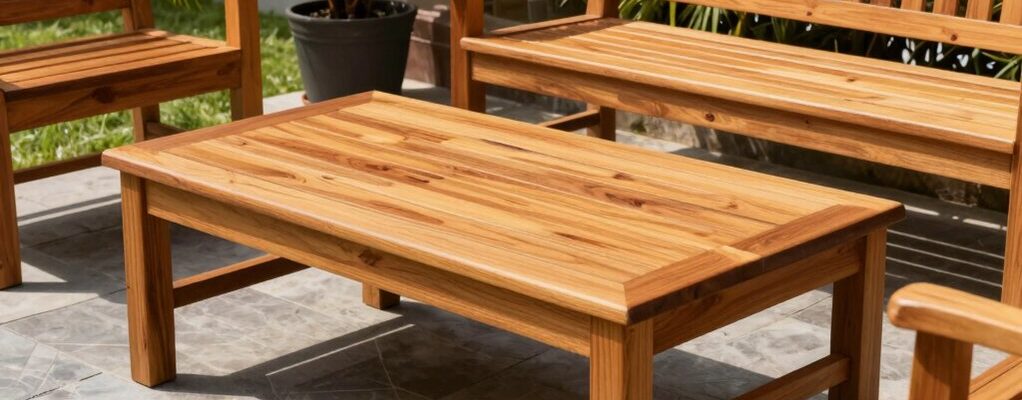
For outdoor teak, pick a finish that matches your climate and maintenance willingness. If you want deep, natural grain with easy reapplication, choose a penetrating oil or modern teak finish that dries clear and enhances color without sealing pores shut. For wetter or sunny spots, use a UV-blocking, water-repellent sealant and recoat every 1–3 years. Prep well, apply thin, even coats with the grain, and recheck annually to keep it protected—more tips follow.
Understanding Teak Wood and Finishes
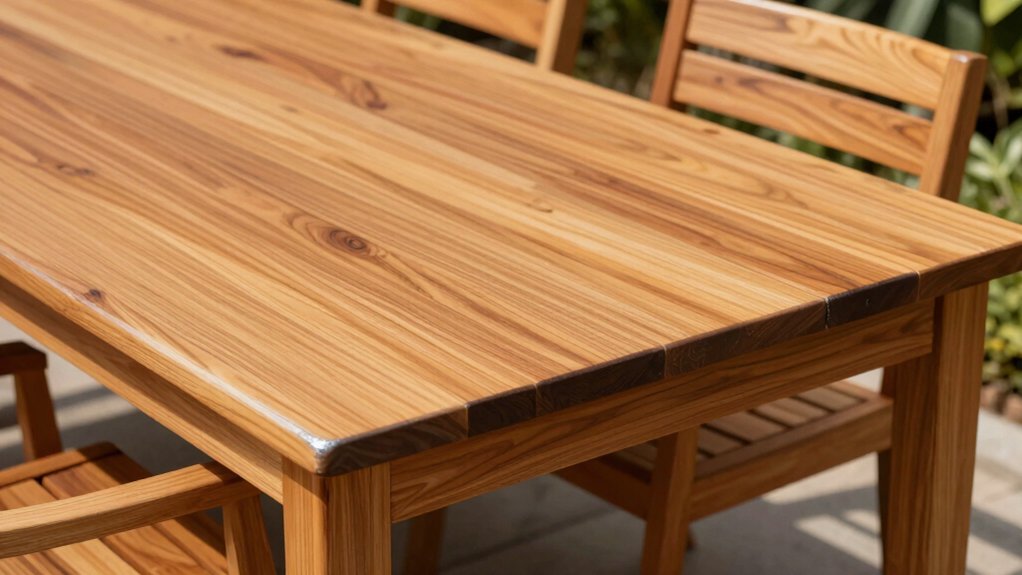
Teak is prized for its natural oils and tight grain, which give it exceptional durability outdoors. You’ll examine teak wood by its surface clues and structural traits, then map how finishes interact with these features.
Teak grain patterns run in straight, wavy, or interlocked arrangements, influencing staining results and wear patterns. Natural oil content matters because it affects moisture transfer, resin behavior, and bonding of coatings. You’ll find oils persist even after cleaning, contributing to stain resistance and a reduced need for frequent maintenance.
Decide on a finish approach by considering porosity, density, and exposure level, then align with your desired look and protection. Document outcomes with standardized notes: grain direction, color shift, film integrity, and reapplication intervals.
Penetrating Oils: Breathable Protection for Teak
Penetrating oils offer breathable protection for teak by soaking into the surface to shield from moisture without forming a thick film. You apply thin coats with a clean rag, letting each layer infiltrate before adding more. These oils enhance natural grain and highlight color, delivering color enhancement without masking wood texture.
Choose a product labeled for exterior teak and follow exact curing times to prevent tackiness. Wipe away excess promptly to avoid blotching. Oil-treated surfaces age gracefully, requiring periodic reapplication as sheen fades and pores reopen.
Avoid over-application, which can create uneven patina or sticky residues. Odor considerations matter in enclosed areas; ensure good ventilation during application and curing. Store cans tightly closed, away from heat, and label batches for maintenance scheduling.
Water-Repellent Sealants for Outdoor Durability
Water-repellent sealants form a protective, breathable surface on outdoor teak without sealing the pores shut. You apply uniformly to clean, dry surfaces, working with the grain to avoid lap marks.
Choose products labeled marine grade sealants for durability against moisture, UV exposure, and temperature swings. These coatings penetrate slightly, forming a barrier that resists water infiltration while preserving natural grain visibility.
Recoat intervals typically range from one to three years, depending on climate and wear. Before reapplication, lightly sand or wipe the surface to remove film buildup and guarantee adhesion.
Eco friendly coatings minimize VOCs and environmental impact without sacrificing performance.
Store unopened containers upright, away from heat, and follow manufacturer instructions for curing times and maintenance.
Classic Teak Oil vs. Modern Alternatives
You’ll compare Classic Teak Oil’s easy reapplication and natural look with modern alternatives that offer faster drying times and built-in UV protection. Consider the pros of each: traditional oil’s deep penetration and maintenance mindset, against modern options’ durability, weather resistance, and schedule-friendly upkeep.
We’ll cover application considerations like surface prep, coats, and how each choice affects color, sheen, and long-term protection.
Classic Teak Oil Pros
Classic teak oil remains a straightforward option for safeguarding outdoor teak furniture, delivering a warm amber finish that enhances grain while offering practical protection against moisture. You’ll appreciate its simplicity: easy application, quick wipe-in, and a single-coat appearance that deepens with light use.
The durability is solid for standard exposure, creating a satin sheen that resists simple wear without needing complex maintenance routines. With repeated applications, you build a protective layer that helps slow weathering and minimizes drying splits.
Teak oil durability depends on proper surface prep and timing between coats, so you control buildup and color balance. Eco-friendly teak formulas focus on natural oils rather than heavy synthetics, supporting routine upkeep without harsh residues.
Modern Alternatives Pros
Modern alternatives offer several practical benefits that address gaps you may notice with classic teak oil. You’ll discover quicker maintenance cycles and longer intervals between reapplication, reducing downtime and effort. Many modern products form more uniform film thicknesses, promoting smoother, consistent color across panels and joints.
Eco friendly options emphasize low volatile organic compounds, recyclable packaging, and safer application environments, which matters for family spaces and outdoor setups. These finishes often deliver stronger UV resistance, helping prevent graying and color fading on sun-exposed surfaces.
You’ll also find a range of aesthetic variations, from warm amber hints to natural silvery tones, enabling you to match or refresh patio palettes. Choose with compatibility in mind, verifying surface prep, recoat windows, and expected service life for lasting results.
Application Considerations
When choosing between classic teak oil and modern alternatives, start with surface preparation and recoat schedules. You’ll assess how often you’ll reapply, how long finishes last, and how maintenance intervals affect outdoor use.
Classic teak oil gives a traditional look but may require more frequent upkeep, especially in sun and rain exposure. Modern sealers offer longer intervals and UV protection, yet some may subtly alter the warm, natural patina you expect.
Consider surface adhesion, squeaks, and runoff on horizontal surfaces to prevent missed spots. Plan for decorative accents and furniture styling: choose a finish that complements carved details and insets.
Test compatibility with cushions and hardware, then document care steps for future owners. Balance appearance, durability, and ease of maintenance to optimize long-term performance.
UV Blocking Finishes: Guarding Against Sun Damage
UV-blocking finishes protect outdoor teak by forming a durable shield that minimizes UV-induced fading, cracking, and warping. You’ll want a product with proven UV inhibitors and a consistent film-forming resin. Apply evenly per manufacturer instructions, avoiding gaps that expose grain.
Expect gradual color change as the finish ages, but choose options labeled for exterior timber and UV protection. For best finish durability, recoat on schedule: typically every 1–3 years, depending on sun exposure and cleaning frequency.
Between applications, clean lightly with a soft brush to remove grime that could abrade the film. Select a finish that balances clarity with protection; matte to satin sheens often reduce glare while preserving natural teak tones.
Track performance and maintain a routine to preserve color and integrity.
Prep Steps for a Long-Lasting Finish
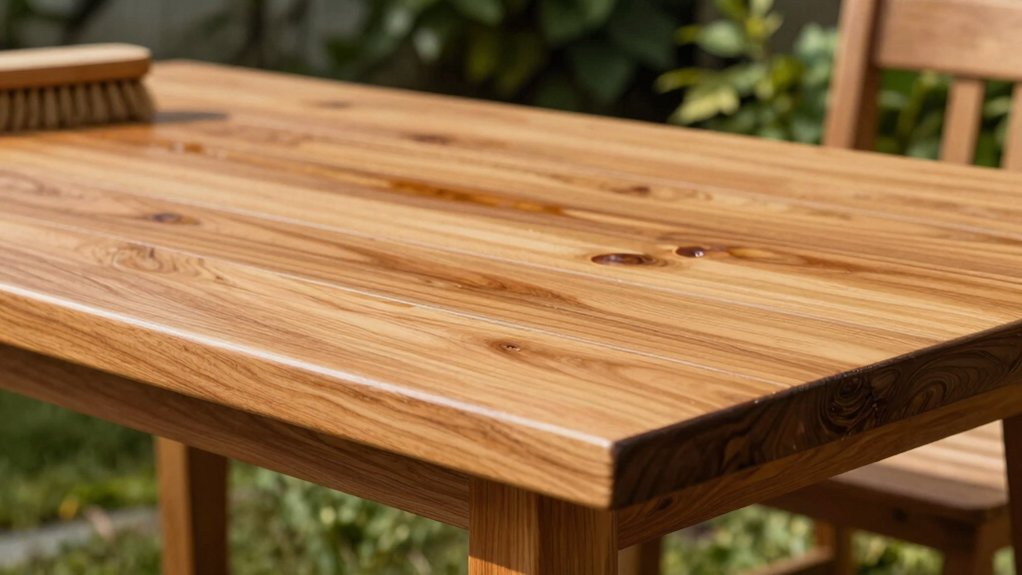
Before you apply any finish, start with a clean slate: remove existing coatings, dirt, and any loose fibers, then make certain the surface is dry and free of contaminants.
You’ll prep teak by inspecting for cracks or splits and sanding with 120–180 grit, progressing to a smooth, uniform texture. Wipe with a damp cloth to remove dust, then let it dry completely.
Consider a light acetone wipe for residue on older aging teak, but avoid oversaturation. Control moisture by performing prep in a shaded, dry day; avoid humidity spikes.
After sanding, apply a conditioner if your finish requires it, and record the conditions for teak wood aging.
When not in use, store furniture at indoors or shaded outdoor furniture storage to minimize weather exposure.
Application Techniques for Even Coverage
To achieve even coverage, start by maintaining a consistent application pace and method across all surfaces. You’ll prep small test spots to verify color consistency before full-coverage work.
Use smooth, steady strokes and keep a light touch, avoiding drips. Work in uniform, overlapping passes, maintaining the same orientation on each surface to prevent streaks.
Choose application tools that suit the finish, such as a natural-bristle brush for teak’s grain or a high-density foam roller for flat areas. Keep a damp edge to prevent lap marks, and back-brush lightly to blend.
Monitor color matching as you go, adjusting pressure as needed. Wipe away excess quickly where pooling could occur.
Clean tools promptly to preserve performance between coats and ensure precise, professional results.
Maintenance and Reapplication Schedules
Regular maintenance keeps outdoor teak furniture looking and performing its best, and setting a sensible reapplication schedule helps you avoid costly fixes later. You should establish a simple routine that fits your use and climate, then document it for consistency.
Cleaning routines should occur monthly during heavy use and quarterly in milder seasons, using a soft brush, mild soap, and plenty of water—never harsh cleaners or power washes that can raise the grain. After cleaning, dry thoroughly before applying any finish.
Assess surfaces for grain raising, wear, and color change during seasonal inspections, noting areas needing attention. Refinish intervals depend on exposure, but plan for a refresh every 1–2 years indoors or under sun, and more often outdoors with moisture.
Keep records and adjust schedules as needed.
Choosing the Right Finish for Climate and Use
Choosing the right finish for climate and use starts with understanding how your space impacts the wood. You assess exposure: sun, rain, humidity, and seasonal temperatures, then pick a finish that tolerates those conditions without cracking or fading.
For hot, sunny patios, prefer UV-resistant finishes that slow teak’s graying while preserving color. If you have frequent rain, choose a water-shedding film with flexible adhesion to prevent peeling.
In high-traffic areas, select a durable, maintenance-friendly option that resists wear and fingerprints.
Plan for maintenance intervals: clean surfaces with Teak cleaning before refinishing, and avoid buildup that prevents bonding. When you recoat, apply a thin, even layer and wipe excess.
For upkeep, routine Furniture polishing keeps surfaces smooth and ready for next season.