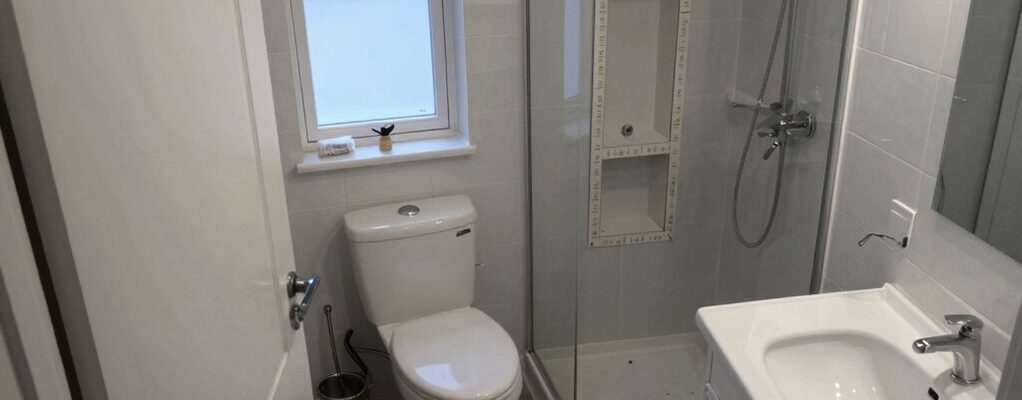
Common door swings, vanity depth, and tight clearances keep you from moving smoothly and invite costly reworks later. Watch for doors that intrude on sinks, storage, or paths, and choose dual-swing or sliding options in tight spaces. Size vanities to leave room for kneeling and plumbing, and guarantee at least 30 inches of traffic space and 21 inches in front of fixtures. Plan plumbing footprints now and future-proof for changes; there’s more to optimize if you keep exploring.
Common Door Swing Pitfalls That Block Access
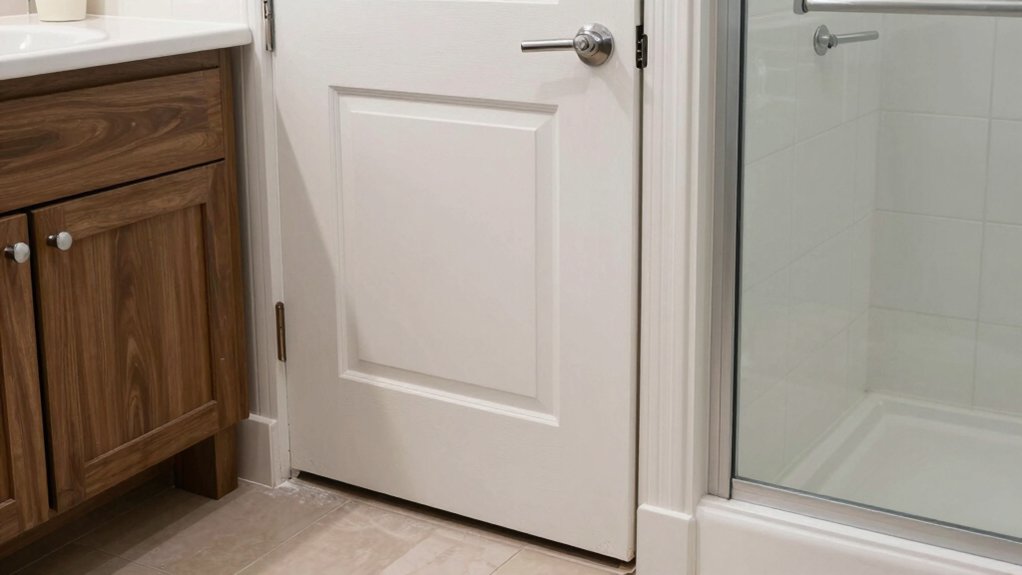
Door swing issues are more than a nuisance—they block access and make everyday tasks harder. You’ll notice doors that swing into tight spaces, collide with fixtures, or deny clear paths to the toilet, shower, or cabinet.
Measure clearance before you pick a hinge style, swing direction, or door width, and account for handles, towel bars, and light switches. Consider pocket or barn doors in tight rooms, or single-action doors that don’t intrude when open.
Check the door’s arc against nearby obstacles: vanity corners, toe-kicks, and appliance doors. Test a mock swing with your body length and typical load, like towels or baskets.
Prioritize uninterrupted corridors, easy access, and smooth operation to prevent future layout fixes. Optimize placement now to avoid costly renovations later.
Vanity Sizing Traps That Create Crowding
Vanity sizing traps sneak in when cabinet depth, width, or placement seems reasonable on paper but clashes in practice. You’re measuring for a vanity that claims ample storage, yet shallow depth or oversized drawers crowd the sink area and door swing.
Check toe-kick height and leg clearance; otherwise you’ll back into plumbing fixtures or struggle to reach essentials. Account for countertop overhang and hardware profiles; protrusions reduce usable space without obvious gain.
Beware mismatched scales between wall-mounted sconces, mirrors, and the vanity; mismatches invite clutter and cramped tasks. When you layout outlets, lighting, and backsplash, ensure they don’t force awkward knee space or drawer obstruction.
Validate clear paths by simulating daily routines—shaving, brushing teeth, and towel retrieval. If you detect crowding, swap to a compact depth, relocate drawers, or reconfigure the door swing before finishing.
Small changes here save costly redesign later.
Inadequate Clearance: Why Spacing Matters
Clearances aren’t optional details; they’re the backbone of a functional bathroom. When you plan around doors, you guarantee doors don’t collide with fixtures, towels, or your legs.
Leave at least a 30-inch path through the doorway for comfortable entry and exit, and keep at least 21 inches of clear space in front of sinks and toilets to avoid crowding.
If you install a shower or tub, provide a minimum 30-by-36-inch standing area so you can move without twisting.
Consider elbow room for drawers and mirrors—avoid placing storage that narrows walkways.
Remember, tight gaps become tripping hazards and daily friction. Measure twice, visualize movement, and adjust until paths feel effortless.
Poor spacing compounds maintenance, accessibility, and cleaning effort later.
Plumbing Footprint Mistakes That Tie Your Hands
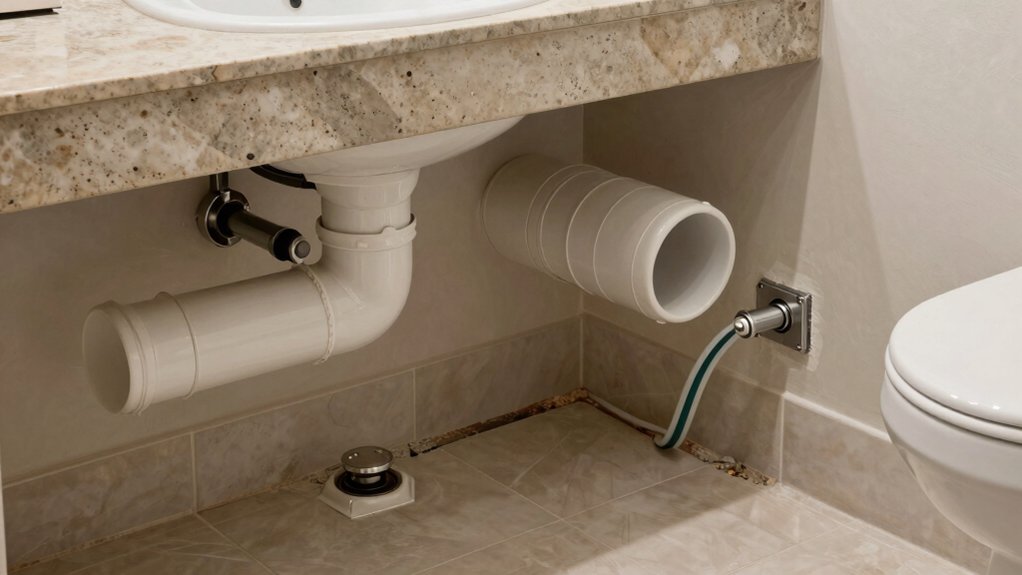
Plumbing footprint mistakes can quietly sabotage your layout once you start gutting or building. You’ll learn to map every pipe and box before pulling a wall. Forget guessing where studs end; plan around existing rough-ins and future fixtures, not your vanity’s look.
Measure clearance behind cabinets, doors, and drawers, and check for venting constraints that could trigger reworks. If you move a sink, ensure the water supply lines and waste stack don’t collide with electrical or structural elements.
Don’t rely on flexible hoses as a crutch; fixed, properly routed lines reduce leak risk and maintenance. Document elevations, slopes, and access panels so repairs stay convenient.
Finally, coordinate with plumbing, framing, and finished-floor plans to avoid costly, late-stage shifts. Plan deliberately, install thoughtfully, live easier.
Drying Space Dilemmas and Ventilation Gaps
You’ll see how drying space and ventilation gaps affect daily use, from towel clutter to mildew risk.
We’ll map how Drying Space Dilemmas, Ventilation Gap Risks, and Layout Liquid Harvests intersect with flow, moisture control, and clean-up routines.
Let’s discuss practical fixes you can implement now to keep damp areas under control and air moving efficiently.
Drying Space Dilemmas
Drying space is often the bottleneck in a compact bathroom, and without a thoughtful layout, damp towels, racks, and brushes end up competing for room. You’ll benefit from a dedicated, shared zone that minimizes collapse of air and drying time.
Prioritize vertical storage: wall-mounted racks, hooks, and a slim towel bar keep towels off the floor and reduce clutter.
Use a folding or pull-out clothes bar for occasional use, so you don’t waste space daily.
Opt for a breathable laundry basket placed near the washer, not beside the shower, to avoid moisture transfer.
Keep a compact, water-resistant hamper in a corner behind a door.
Install a small, draft-free ventless desiccant chamber only if needed, but ensure it won’t introduce clutter.
Regularly re-evaluate towel rotation and rack loads.
Ventilation Gap Risks
Even with smart drying zones, ventilation gaps can undermine drying efficiency and dampness control. You’ll trap humidity when gaps exist around doors, vents, or panels, letting moist air stagnate instead of escaping. Misplaced returns or undersized exhausts reduce circulation, so mold spores thrive in corners you don’t visually inspect.
Guarantee continuous paths for air: align vent grills with pathways, seal perimeters, and avoid blocking fans with towels or cabinetry. Use short, directed blows rather than long, diffuse ones; this concentrates air where dryness matters most.
Regularly test with a simple humidity reading after showers, then adjust fan run times accordingly. Don’t neglect cross-ventilation; two opposite openings dramatically improve air exchange.
Finally, document repair dates for any seal or duct work to prevent creeping gaps.
Layout Liquid Harvests
Layout Liquid Harvests: drying space dilemmas arise when the layout creates bottlenecks or dead zones where moisture lingers; gaps around doors, vents, and panels let damp air pool instead of escaping. You’ll miss quick drying if towels, rugs, and towels rack block air paths or sit on the wrong side of a door swing.
Prioritize clear circulation space, opening geometry, and direct line of sight to exhausts. Place drying spots away from corners that trap humidity, and align towel rails with airflow rather than behind obstacles. Seal gaps around fixtures to prevent re-circulation of damp air.
Test with a simple air-flow check: feel for moving air at each drying point, adjust placements, and re-seat vents until air moves freely. Optimize spacing, minimize obstructions, reduce drying times, lower mold risk.
Lighting Layouts That Don’t Support Actual Use
Poor lighting in key tasks can make bathroom use harder than it needs to be, so start by mapping where you actually stand and work. You’ll often rely on overhead and task lights, but mismatches create shadows and glare that hinder shaving, applying makeup, or brushing teeth.
Knock out the layout by measuring wall-to-sill angles, mirror position, and cabinet clearance, then verify light levels at eye height and task zones.
Use a layered approach: ambient, task, and accent lights with dimmable controls. Place task lights on the mirror to reduce shadows, and aim ambient sources away from reflective surfaces to avoid hotspots.
Choose bulbs with consistent color temperature and CRI, and test at different times of day. Document swaps, so future updates stay efficient and purposeful.
Storage Placement That Forces Reconfigurations
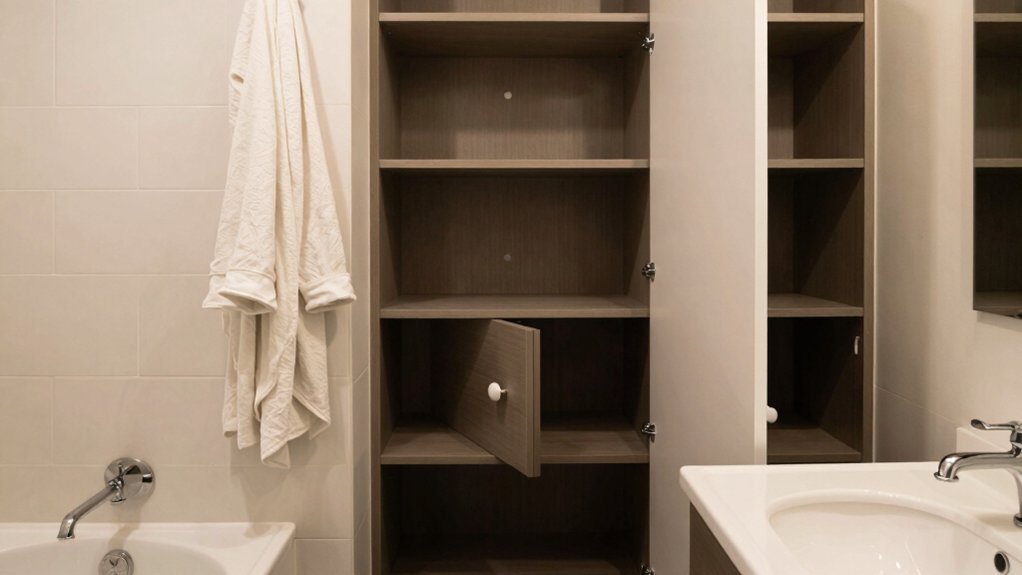
Storage placement should support flow, not trap you in rearrangements later. You’ll want storage where it’s truly used, not where it sits idle. Place main cabinets near daily routines: toothbrushes by the sink, towels within reach of the shower, meds away from moisture, and liners where you prep.
Avoid deep drawers that bury essentials; shallow pull-outs improve visibility and access. Think vertical too: wall shelves or tall cabinets reduce floor clutter and widen traffic paths. Leave clear zones for hampers, cleaning supplies, and a small agitator-free zone for daily tasks.
Measure door swings and appliance footprints so openings don’t collide with storage. Label zones and keep rarely used items in back or on higher racks to minimize reconfigurations later. Simple, intentional placement saves future changes.
Shower/T Tub Layouts That Kill Flow
If your shower and tub aren’t aligned, you’ll waste steps every time you move between them.
Misaligned fixtures and awkward door swings create traffic jams and awkward openings that slow you down.
Let’s pinpoint simple fixes for smoother flow, like aligning entry paths and choosing door swings that avoid cross-traffic.
Poor Shower-Tub Alignment
When the shower and tub aren’t aligned for flow, everyday moves become awkward and inefficient. You notice wasted steps: reaching around corners, misjudging where to stand, and needing extra scoots to rinse or dry.
Start with clear sightlines: position the faucet and drain so you don’t have to twist mid-routine. Keep the showerhead within easy reach from the tub lip, and avoid placing the tub’s edge directly in the line of your typical path.
Consider a straight, uninterrupted progression between spaces, even if you use a bench or seat. Ensure doors or curtains don’t trap you in edges or glares of splash.
Plan around a natural arc that minimizes detours, and document measurements before install to prevent rework. Precision saves time and space.
Door Swing Conflicts
Door swing conflicts disrupt flow the moment you approach the shower and tub. When a door swings into the wrong space, you’ll bump elbows, loosen towels, and stumble into a cramped path.
Plan clearance to avoid snagging doors on hips, shower bars, or grab handles. Measure the required swing arc you’ll actually use, not just door width, and compare it to the available corridor and vanity clearance.
Consider dual-swing or sliding options to keep traffic moving, especially in tight bathrooms. Prioritize doors that open away from the main aisle and never toward the shower stall or tub edge.
Install a stop or soft-close hinge to prevent abrupt hits. Test layouts with furniture tallies, then adjust door placement before drywall.
Fixture Heights That Strain the Back and Knees
Too-high or too-low fixture heights strain your back and knees, making daily routines uncomfortable or painful. When you plan a bath or shower, measure reach from seated and standing positions, not just a basin standard. Place the sink, mirror, and toilet at ergonomic heights so you don’t hunch or twist.
Consider a vanity that lets you kneel comfortably for maintenance, avoiding awkward bending. For showers, install grab bars at hip-to-chest height and place the control within easy reach, not behind curtains. Bathtubs should have a rim reachable from a seated position, with a non-slip surface.
If you reconfigure, aim for 16 to 20 inches for most sinks, 17 to 19 inches for toilets, and shower controls that align with your elbow when standing. Fine-tune with test runs before finalizing.
Future-Proofing: Flexible Plans for Changes
Start with a flexible layout that adapts to evolving needs: plan in phases, choose adjustable fixtures, and leave room for future tech or accessibility upgrades. You’ll design a bathroom that grows with you, not against you.
Begin with a modular core: a simple sink, a shower, and a toilet placed for universal access. Add temporary walls or modular components to reconfigure without a full remodel.
Select adjustable-height vanities and grab bars that install laterally, not just vertically. Think plumbing and electrical corners: run extra capacity for future fixtures, motion lighting, and smart controls.
Document measurements, fixture clearances, and wall stud positions to speed future swaps. Build with durable, repairable materials and easy access panels.
Revisit plans after major life changes, and update wiring, plumbing, and drainage accordingly.
Conclusion
You’ll thank yourself later when you skip the cosmetic sprint and choreograph real space. If you ignore door swings, you’ll fight every morning like a superhero against gravity. If vanity sizes crowd the room, you’ll spend more time squeezing than shaving. Forgetting clearance turns daily routines into obstacle courses, and faulty footprints—plumbing, venting, storage—lock you into reworks you could’ve avoided. Plan flexible, future-proof layouts now, and save yourself endless headaches, backaches, and budget-busting courage-killers later.