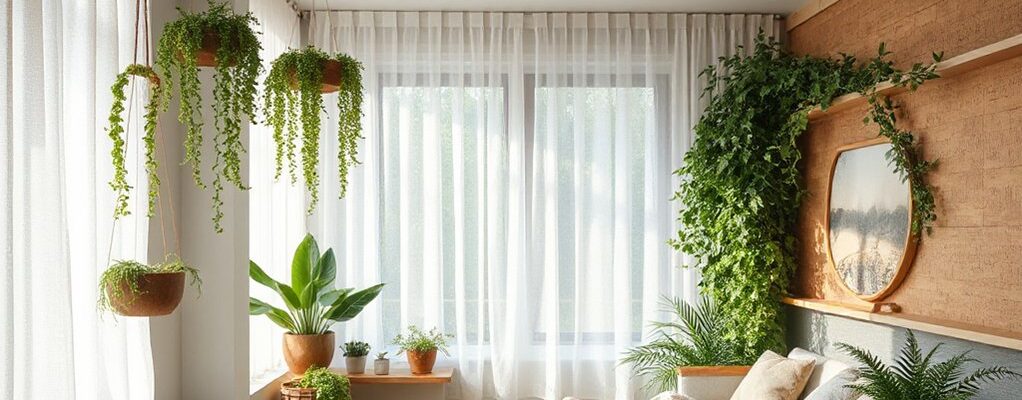
You may not realize you can turn a single wall into a living texture with a green wall or vertical garden. Picture mossy greens, glossy leaves, and the soft hum of nature right at eye level, inviting touch and calm. You’ll feel the room breathe as daylight dances across wood and stone surfaces, while a gentle fountain adds a tactile rhythm. There’s more to explore—how to balance maintenance, budget, and beauty to make this feel effortless.
What Biophilic Design Is and Why It Matters
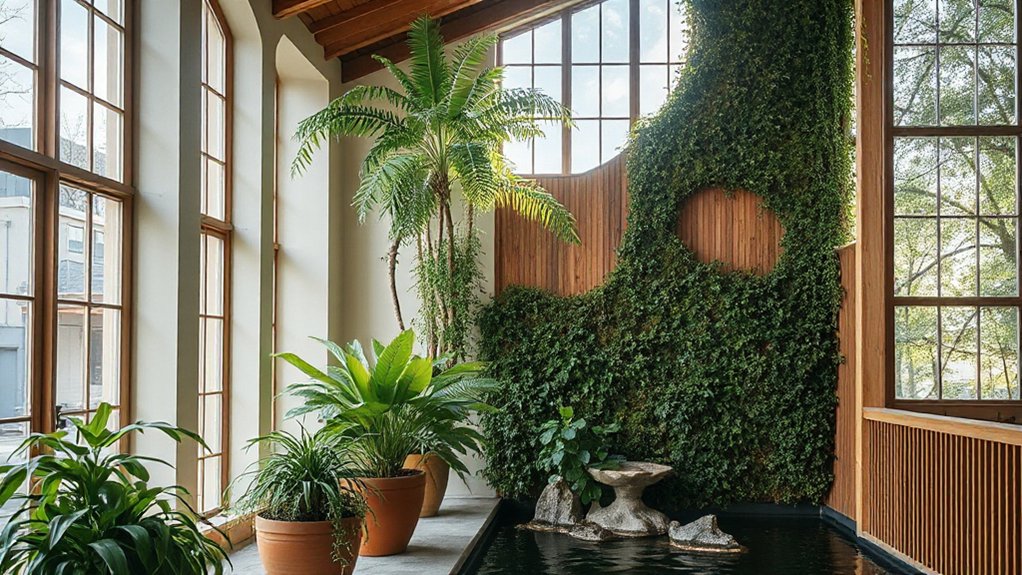
Biophilic design is the practice of bringing nature into built spaces to connect people with the natural world. You feel it as soon as you enter: a breath of calm, a glow from filtered light, a texture of wood and stone under your fingertips. You’re drawn to patterns of leaves and the hush of soft sounds that mimic a forest floor. The core idea is simple and powerful: spaces that nurture well-being through direct, tangible links to nature. You’ll notice improved mood, focus, and resilience, especially during long workdays or gray weather. Indoor air feels cleaner, and natural lighting wraps around you, reducing glare and fatigue. When design respects living systems, you thrive.
Biophilic Wall Installations: Green Walls and Vertical Gardens
Green walls and vertical gardens bring living texture to interiors, turning blank façades into lush, tactile surfaces you can touch and feel. You’ll notice the immediate depth as leaves shift with your movement, inviting curiosity and calmer attention. Installations create microclimates: pockets of humidity, subtle shade, and a sense of enclosure that softens echoes. Choose modular panels, irrigation lines, and high-contrast greens to maximize visual impact. When you design for Indoor air quality, you help plants scrub air while reducing dust and VOCs, boosting comfort without glare. Pair with natural lighting techniques to balance sun exposure and filtration, ensuring foliage thrives without overheating drafts. Maintain with simple checks: irrigation, prune, and rotate species for resilient, vibrant walls that breathe life into any room.
Maximize Daylight: Layout, Windows, and Natural Light Strategies
When you shape a room for daylight, you invite sunlight to dance across surfaces and lift every detail with a warm, tangible glow. You’ll feel the space brighten as window placement guides the beam’s rhythm, creating inviting pockets and soft shadows that change with the day. Think in layers: sheer curtains that diffuse glare, strategic glazing for glare control, and skylights that pull the sky down to touch the floor. Align furniture to chase light without crowding views, and use reflective surfaces to bounce warmth without overpowering color. Embrace daylight strategies that reduce artificial cues, helping you sense the outdoors indoors. The result is a verdant clarity, a room that breathes with sunlight yet remains calm, connected, and utterly usable.
Choose Natural Materials for Warm, Biophilic Textures
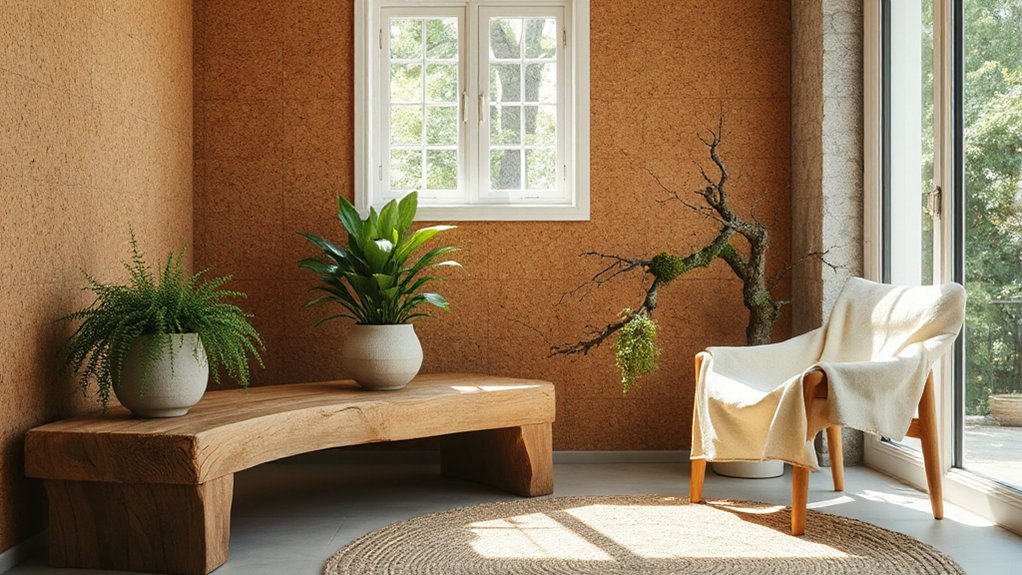
You feel the room soften as you reach for a natural material palette, inviting textures that echo the outdoors. Choose woods, stone, and plant-based fibers that balance warmth with light, and consider how each surface invites touch and thought. With sustainable options in mind, you’ll weave verdant, tactile cues—natural materials, warm textures, and responsible choices—into a cohesive, calming space.
Natural Material Palette
Choosing natural materials instantly warms a space with texture and life; their earthy tones and tactile surfaces invite touch and linger in memory. You weave a palette that feels grown, not manufactured—wood, stone, clay, linen, jute—each piece telling a quiet story of the land it came from. You pair maple with walnut, limestone with terracotta, and you let grain, grainy surfaces, and soft fibers play against smooth finishes. This palette supports Indoor air quality by favoring low-emission finishes and breathable fabrics, while natural lighting techniques reveal the material’s true depth, casting evolving shadows that animate daily rituals. Your scheme rewards slow, deliberate placement: a live-edge table, a stone hearth, woven shades that glow at dusk. The result is verdant calm you can practically touch.
Warm Texture Choices
Texture that feels warm under your fingertips comes from natural materials with soft edges and embracing warmth. You’ll sense the glow in woodgrain, cork, and woven fibers, each inviting touch and a slow, calm breath. Choose textures that pause light and hold it gently, not glare. Textured fabrics bring depth without heaviness, revealing grain, mossy greens, and cloud-soft surfaces to the eye and palm. Cozy textiles layer without shouting, wrapping your space in quiet temperature that feels alive. Think burlap’s rustic edge, cotton’s breathable warmth, and linen’s sun-warmed haze. Pair with tactile stones and warm ceramics for contrast that reads concrete-counter calm. The result is inviting, verdant, and intimate: a room that breathes natural warmth.
Sustainable Resource Options
Natural materials offer a steady, earthy warmth that complements the textures you’ve imagined. You’ll feel the grain, the weight, the subtle scent of timber and stone as you move through space, choosing surfaces that breathe with you. Eco friendly flooring delivers quiet, durable steps, while cork and bamboo cushion joints with flexible, resilient textures. Reclaimed wood adds character, patina, and a story you can touch. For walls and accents, lime plaster, clay, and low-VOC finishes keep the air invigorated and visually lush. Sustainable options extend to energy: Renewable energy sources power lighting and climate control with minimal footprint. The result is a verdant, tactile rhapsody—cozy, breathable, and endlessly inviting.
Water Features and Sensory Details on Any Budget
Ever notice how a gentle fountain can turn a room into a living landscape? You’ll feel the hush of水 and the cool mist kiss your skin as you place water features within reach of sight and touch. Aquatic plants sway, textures shift, and sounds layer softly, creating a verdant, inviting mood. You don’t need a big budget to reap the calm; choose scale, not grandeur, and let natural materials lead.
- Create a tabletop water sculpture with a single, quiet pump and a shallow tray.
- Layer a small wall-mounted fountain with pebbles and driftwood for tactile variation.
- Add a low, planted container of aquatic plants to reflect light and invite close inspection.
Embrace Organic Shapes and Plant-Inspired Motifs
You feel the room breathe with organic curves and leaf-inspired lines that guide your eyes and hands. Let your spaces flow like petals and vines, inviting touch and exploration of texture, form, and motion. Start with patterns that echo nature’s growth, then weave plant motifs into furniture, textiles, and surfaces for a cohesive, verdant vibe.
Organic Form Patterns
Organic Form Patterns: Embrace curves, asymmetry, and plant-inspired motifs to weave motion and softness into spaces. You feel the space breathe as organic contours flow, guiding sight and touch with gentle, tactile rhythm. In this approach, you connect daily routines to nature’s cadence, aligning interiors with Biophilic design principles and boosting Indoor air quality through thoughtful ventilation cues and natural materials. The result is a sense of calm that anchors activities while inviting curiosity.
- Favor rounded edges, irregular silhouettes, and leaf-like silhouettes to create visual softness.
- Use sculptural blocks, curved furnishings, and flowing partitions that echo vines and streams.
- Choose textures that invite touch—rattan, linen, clay—paired with plants at varying heights.
Plant-Inspired Motifs
Plant-Inspired Motifs: Let curves and leafforms guide your space, weaving motion and breath into every detail. You shape rooms with sinuous lines that mimic stems, petals, and tendrils, inviting your eyes to travel and your hands to sense texture. Think curved archways, rounded corners, and organic silhouettes carved into furniture edges. Textile patterns bloom as botanical patterns across upholstery, while wall graphics ripple like a breeze through canopies. Materials feel tactile—bark-like roughness, smooth lacquer, woven fibers that catch light. Colors deepen into emeralds and terracotta hues, echoing soil and foliage. In an urban jungle, these motifs blur indoors with outdoor rhythm, transforming corners into microhabitats. Your space breathes, fashioning a continual, livable garden.
Budget, Maintenance, and Starter Ideas for Biophilic Design
Budget, maintenance, and starter ideas for biophilic design start with simple, tactile choices you can test today. You’ll feel textures, see color, and sense calm as you move through space designed for life. Think enduring, cost effective solutions that don’t demand a forest’s budget, and prioritize easy maintenance tips that stay fresh with minimal effort.
- Swap synthetic decor for natural textures—jute rugs, cork boards, and linen cushions—to create tactile richness without high upkeep.
- Layer real greenery using low-maintenance plants (snake plants, pothos, philodendron) in lightweight containers for instant verdant impact.
- Schedule simple care routines: wipe leaves weekly, water on a fixed day, and group plants to simplify humidity and light management.
These steps keep your environment lush, affordable, and manageable.
Frequently Asked Questions
How Can Biophilic Design Boost Occupant Well-Being in Offices?
Biophilic design boosts occupant well-being by surrounding you with natural lighting and tactile, verdant textures; you feel calmer, energized, and focused as ergonomic furniture supports posture, while plant life and daylight shape a healthier, more productive workday.
What Are the Best Low-Maintenance Plants for Interiors?
You’ll want indoor succulents and low light foliage, the best low-maintenance picks for interiors. Visual, tactile greens invite touch, with leathery textures and compact shapes; you’ll enjoy verdant, resilient growth that thrives in shelves, desks, and shaded corners.
Can Biophilic Elements Improve Acoustics Without Clutter?
In a real office, you feel quiet after adding an Acoustic plant wall, offering natural sound absorption without clutter. You experience verdant textures, tactile leaves, and Natural sound absorption, transforming spaces into calm, visual, and breathable environments.
How to Balance Biophilic Design With Small Budgets?
Yes, you can balance biophilic design on a budget. You’ll embrace budget friendly greenery, affordable natural materials, and versatile textures; you’ll mix DIY planters with wood accents, lush fabrics, and mossy greens to create a tactile, verdant vibe.
Are There Safety Concerns With Indoor Water Features?
Yes—water safety and electrical hazards loom like thunder. You should secure cords, use GFCI outlets, keep basins screened, and place features away from outlets. Ventilate, clean regularly, and monitor leaks to protect your verdant, tactile oasis.
Conclusion
Imagine stepping into a space that breathes with you—lush greens, sunlit corners, and textures you can almost feel under your fingertips. Biophilic design isn’t decoration; it’s a living backdrop that soothes, inspires, and energizes. Picture a small office where a vertical garden cools the air and a rattan chair invites lingering, or a living room with a quartz surface that catches afternoon light like a lake. Case study: a wellness clinic cut patient stress by 20% after introducing green walls and natural materials. You can, too.