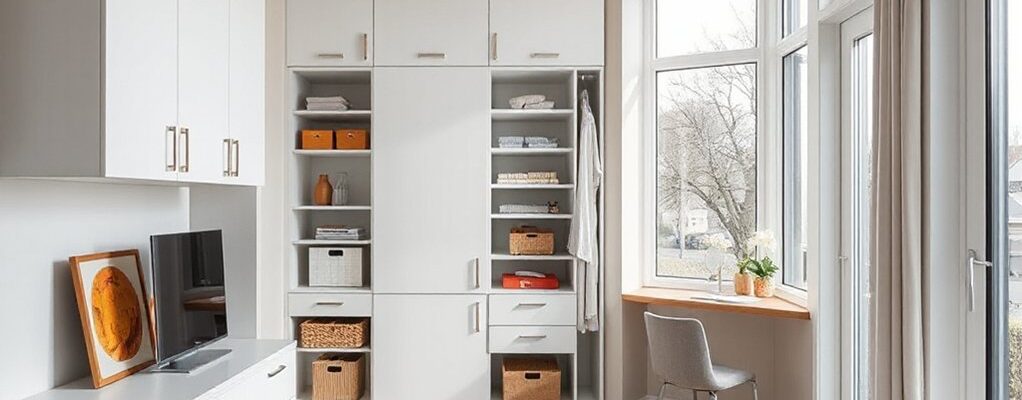
You may not realize how much you can reclaim by building inward: niches, recessed cabinets, and wall-mounted units keep floors open while doubling storage. In compact new builds, every inch counts, so you’ll want a plan that blends vertical space with multi-functional pieces—think hidden compartments in ottomans or fold-away desks that don’t scream “temporary.” There’s more to it than shelves; the right layout and materials make it durable, adaptable, and quietly efficient, inviting you to explore the options that follow.
Why Compact New-Builds Demand Clever Storage
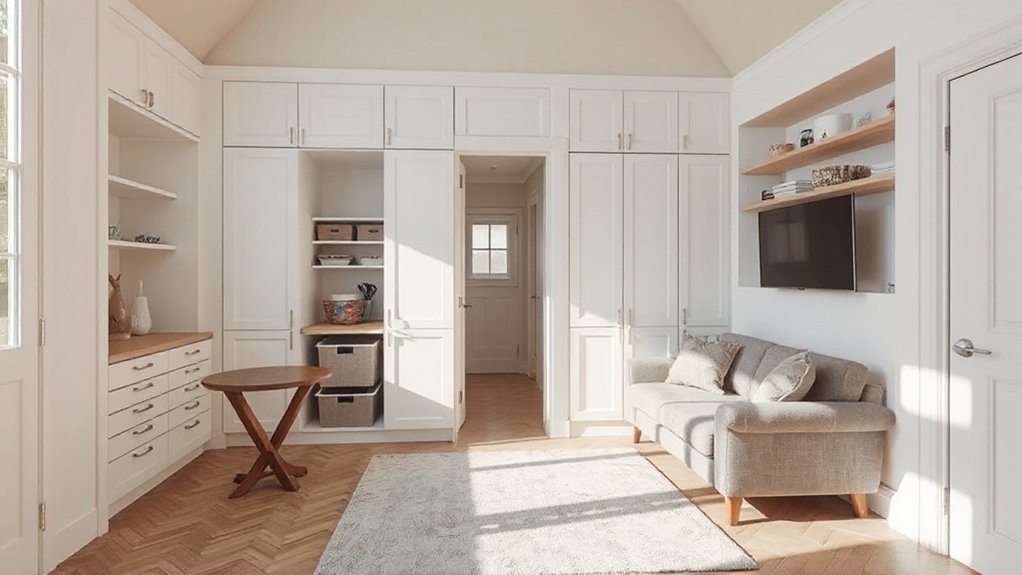
Compact new-builds demand clever storage because every square foot counts from day one. You design with purpose, prioritizing accessible space over decorative clutter.
In modern homes, walls shorten, ceilings rise to reveal headroom, yet corners shrink under furniture footprints. Outdoor storage becomes essential for seasonal gear, bikes, and tools that don’t deserve prime indoor real estate, so you plan weatherproof options that stay tidy year-round.
Inside, Smart shelving lets you customize heights, tethered units, and adjustable dividers, maximizing every inch without sacrificing flow. You maintain clear sightlines by grouping essentials, labeling bins, and using uniform hardware.
Built-Ins for Small Footprints: Niches, Pull-Outs, and Recessed Cabinets
Niches with purpose save space and add function you can feel daily.
Think pull-out pantry solutions that glide smoothly and keep bulk items within easy reach.
Recessed cabinets vanish into walls while still delivering organized storage and cleaner lines.
Niches With Purpose
If you’re optimizing a small space, built-in niches, pull-out shelves, and recessed cabinets can dramatically increase storage without stealing floor area.
Choose niches that align with daily tasks—a slim bathroom niche for toiletries, a coffee-bar niche near the counter, and a compact book nook in the living zone.
Use pull-outs inside deeper cabinets for lids, spices, or tools, so you never waste drawer space.
Recessed cabinets should tuck into walls rather than protrude, preserving open sightlines while adding capacity.
Match hardware to your color schemes for a cohesive look, and incorporate decorative accents like subtle lighting or framed panels to avoid visual clutter.
Plan dimensions around door swings and appliance clearances to maintain flow and usability.
Pull-Out Pantry Innovations
Pull-out pantry innovations maximize storage without crowding the kitchen floor by integrating slim, labeled pull-outs into existing cabinetry. You’ll appreciate how these concealed units slip into narrow gaps, revealing organized tiers for canned goods, spices, and snacks.
Choose smart shelving that adjusts height with simple pinches or detents, so you tailor each shelf to your items. Modular units let you customize widths and depths, aligning with your cabinet soffits and toe kicks for a seamless look.
Install timers or moisture barriers for produce zones, and label fronts for quick grabs. For cleaning, pick smooth-glide slides and durable interiors that resist staining.
Pair pull-outs with a shallow secondary cube for utensils, and you’ll gain accessible storage without sacrificing floor space.
Multi-Functional Furniture That Saves Space in Real Homes
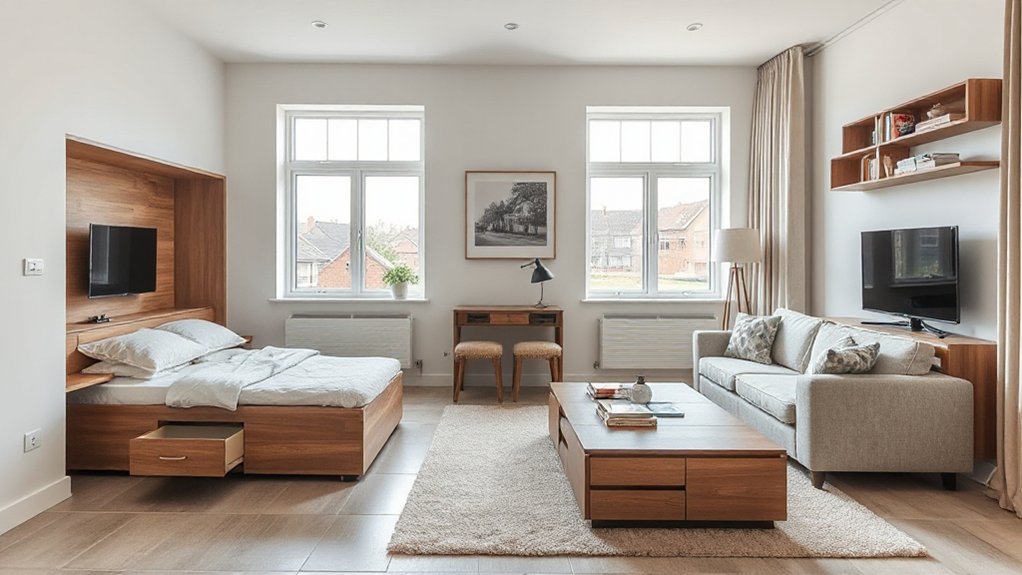
Multi-functional furniture is essential in real homes where space is at a premium. You’ll find pieces that transform daily use into storage, like ottomans with hidden bins or coffee tables that lift to reveal work surfaces and shelves.
Choose seating with built‑in drawers or charge stations, so you merge comfort with organization. Bed frames that tuck extra linens, slim desks that fold flat, and wall‑mounted consoles that convert to dining surfaces help you reduce clutter without sacrificing function.
Prioritize sturdy hardware, smooth lifts, and integrated divisions so items stay accessible yet out of sight. Look for smart storage features, such as modular units you can reconfigure over time, delivering innovative solutions as your space evolves.
Hidden and Vertical Storage Solutions for Tight Walls
Wall space often holds the most potential in tight rooms, and vertical storage makes it practical without widening your footprint. You can exploit wall depth with clever hidden compartments integrated into cabinetry or under stairs, keeping clutter out of sight while preserving surface area.
Use vertical shelving to reach ceiling lines, installing adjustable brackets that accommodate changing storage needs. Consider recessed niches in hallways for slim bins, or slim-profile cabinets that tuck beside doors.
For linen or cleaning supplies, opt for tall, narrow closets with bi-fold doors to maximize reach without swinging clearance. In kitchens, mount spice racks and pan storage on wall rails, freeing counter space.
Seal edges and use built-in liners to prevent dust; label bins for quick retrieval. Hidden compartments and vertical shelving deliver organization without bulk.
Room-by-Room Planning: Maximizing Every Corner
Start by mapping each room’s corners and listing every surface that can hold storage without crowding traffic flow. Prioritize corner-centric planning, use under-utilized wall space with slim shelves and hooks, and choose multi-purpose furniture that tucks away gear while keeping essentials in reach.
Keep the approach practical: assign a dedicated spot for each category, and adjust as you test how daily routines actually fit into the space.
Corner-Centric Storage Planning
Looking at every room with a corner-first mindset helps you reveal hidden storage quickly. You map each nook, alcove, and junction where walls meet to place modular solutions that maximize height and depth. Prioritize vertical racks, corner wardrobes, and pull-out shelves that use dead space without encroaching on movement.
Select units with adjustable shelves and airtight lids to keep clutter contained. For kitchens, install corner pullouts and magnetic spice organizers that stay accessible yet out of the way.
In bathrooms, opt for corner towers and tumbler holders that capitalize on slim footprints. Commit to storage aesthetics by choosing cohesive finishes, while material durability guides you toward solid wood or coated MDF.
Implement precise dimensions, secure anchoring, and routine checks to maintain longevity.
Under-Utilized Wall Space
Maximize every inch of wall real estate by targeting under-utilized zones you pass by daily. In compact homes, you can reclaim vertical space with simple, sturdy decisions. Start with near-eye‑level corridors and entryways: install wall mounted racks for shoes, keys, and slim daily essentials to avoid countertop clutter.
In kitchens, place narrow shelves above work zones to store spices, oils, or gadgets you reach regularly, freeing counter space for prep.
Bathrooms benefit from recessed niches and towel bars that double as hang points. Hallways and laundry nooks deserve slim cabinets or hooks that keep seasonal items organized without crowding rooms.
Ceiling hooks help with light, seldom-used items like seasonal décor, freeing floor and cabinet space for daily needs.
Multi-Purpose Furniture Tactics
With multi-purpose furniture, you can transform tight spaces into flexible work zones by selecting pieces that serve at least two functions. In small homes, prioritize modular design that adapts to shifting needs, like a coffee table that lifts into a desk or a storage ottoman that doubles as seating.
Choose lightweight units you can rearrange without tools, so you can reconfigure rooms for work, play, or guests. Consider wall-mounted options that fold away, freeing floor space while preserving surface areas.
Look for built-in shelves with hidden compartments to reduce clutter, and choose textiles and finishes that unify varied pieces. Flexible furniture thrives on consistency: coordinate color, material, and scale to maintain flow while maximizing corner nooks and underused alcoves.
Budget-Friendly Storage Picks That Fit Tight Timelines
When you’re tight on time and budget, start with simple, multifunctional pieces that pack storage without clutter. Opt for modular shelving that adapts as needs change, and choose ottomans with hidden compartments to conceal odds and ends. Look for wall-mounted options that free floor space, like narrow pegboards and floating cubbies, which keep essentials within reach without crowding rooms.
Prioritize ready-made units assembled in minutes, not days, to meet tight timelines. Favor durable finishes that resist wear, reducing future replacements. Consider budget-friendly materials that don’t sacrifice function, such as laminated composites or powder-coated metal, which pair well with small spaces.
Plan around budget constraints by sizing pieces to avoid overordering, and group storage by zone for faster setup. Innovative materials help maximize capacity without expanding footprints.
Quick-Install Tips for Move-In-Ready Storage
If you want move-in readiness, start with a few turnkey pieces you can deploy today and expand later as needed. Focus on modular units that fit tight footprints and leave walls clear for future upgrades.
Start with wall-mounted shelves and shallow cabinets to maximize floor space, then add stackable bins for clothing and pantry items.
Choose durable finishes and predrilled mounting patterns to simplify installation. Prioritize Eco friendly materials where possible, such as recycled wood composites and low-VOC finishes, to keep indoor air quality high.
For tech-minded homes, plan smart home integration by wiring for wireless door sensors, under-cabinet lighting, and a hub-friendly charging station.
Keep measurements handy and label boxes for fast, stress-free organization.
A Practical Framework to Choose, Install, and Maintain Storage
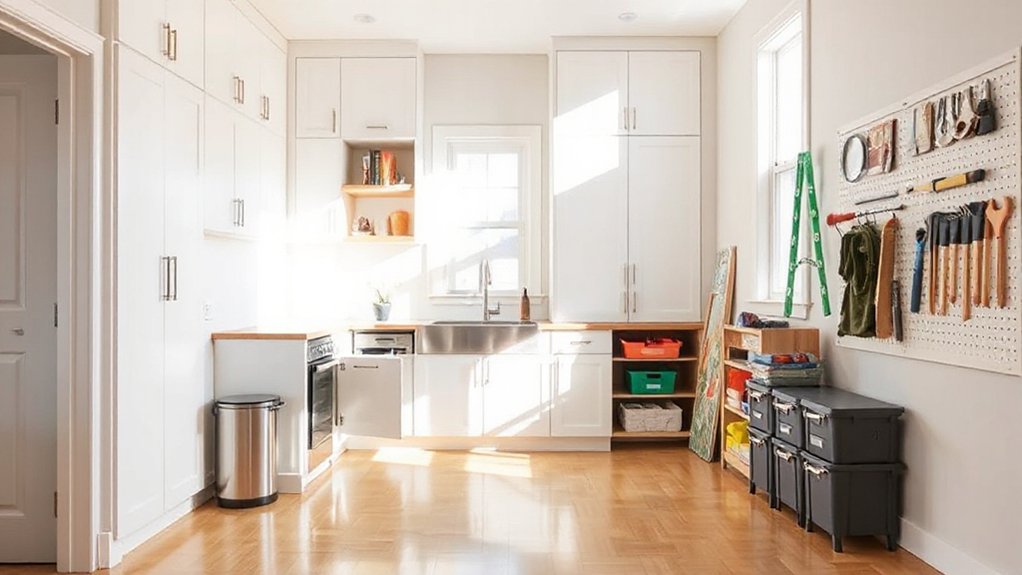
To choose, install, and maintain storage effectively, start by defining your goals: what items you must store, the available space, and how often you’ll access each category.
Then map zones: entry, kitchen, living, and bedrooms, prioritizing high-use areas for quick access.
Choose modular, adjustable components to adapt over time, avoiding fixed solutions that’ll become obsolete.
Use environmentally friendly materials and water-based finishes to minimize toxins and durability to reduce replacements.
Plan wiring and lighting around storage—smart lighting that activates on motion or task needs reduces clutter and power draw.
Install labeled, uniform hardware for consistency and faster reconfiguration.
Regular maintenance should include quarterly decluttering, inspection of joints, and resealing where needed.
Guarantee transferability by documenting dimensions, weight limits, and care instructions for future occupants.
Smart lighting enhances usability; eco friendly materials support longevity.
Frequently Asked Questions
What Is the Average Cost per Square Foot for Smart Storage?
The average cost per square foot for smart storage varies, but you’ll typically spend about $5 to $15, depending on features. You’ll maximize space optimization with innovative furniture, integrating modular systems and hidden compartments efficiently.
How Long Does It Take to Install Built-Ins in Compact Homes?
How long does it take? Usually 2–5 days for built-ins in compact homes, depending on scope. You’ll plan, install custom shelving, and adjust for innovative design; you’ll note accuracy, measure twice, and finish with clean, solid results.
Which Materials Are Best for Durable, Space-Saving Cabinets?
You should choose durable, space-saving cabinets using innovative materials like high-strength plywood, melamine-faced boards, and metal alloys, paired with space-efficient designs such as stack-height drawers and modular fittings for adaptable storage.
How Can Moisture Affect Hidden Storage in Small Houses?
Water condenses inside, so moisture affects hidden storage by promoting hidden mold and weakening materials. You’ll want to seal, ventilate, and dehumidify; moisture condensation triggers mold growth, so inspect joints regularly and keep vulnerable spaces dry, dry, dry.
Are There Zoning or Code Limits on Custom Storage Sizes?
Yes, zoning restrictions and storage regulations may limit custom storage sizes in your area; check local codes, obtain permits where required, and design within setbacks, fire-rated assemblies, and egress rules to stay compliant and safe.
Conclusion
You’ve got the blueprint to maximize every inch, so implement built-ins, hidden compartments, and vertical organizers now. Use modular pieces that adapt as needs shift, label everything, and keep a simple system for future upgrades. Think niches, pull-outs, and wall-mounted units to preserve floor space without sacrificing function. The twist: a clutter-free home feels larger than it is. Like a well-packed suitcase, your space should surprise you—organized, flexible, and ready for whatever comes next.