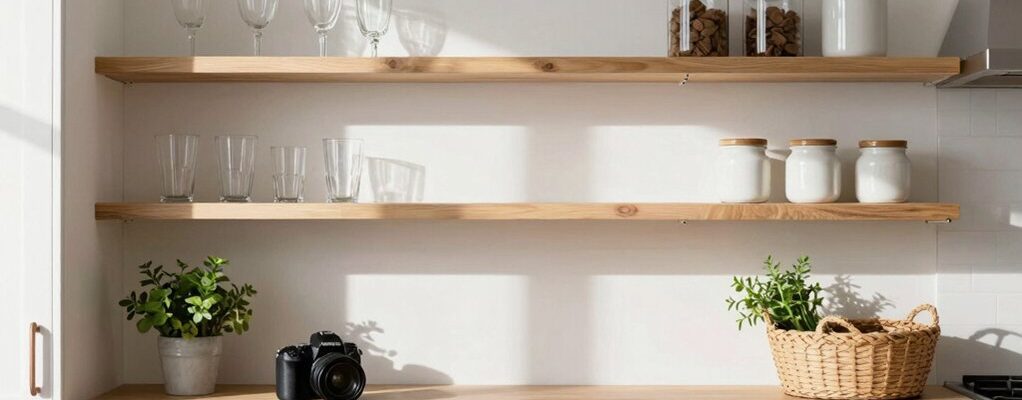
Open shelving in kitchens can feel stylish and practical, giving you instant access and a lighter, more breathable look. But it’s not all glow—dust, fingerprints, and constant tidying can wear on you, and clutter can hurt resale if you overdo it. Balance open displays with closed storage to keep versatility and appeal. If you curate with intention—color, texture, and seasonal swaps—you’ll gain character without sacrificing value. Curious what setup works best? You’ll find more insights ahead.
Pros of Open Kitchen Shelving
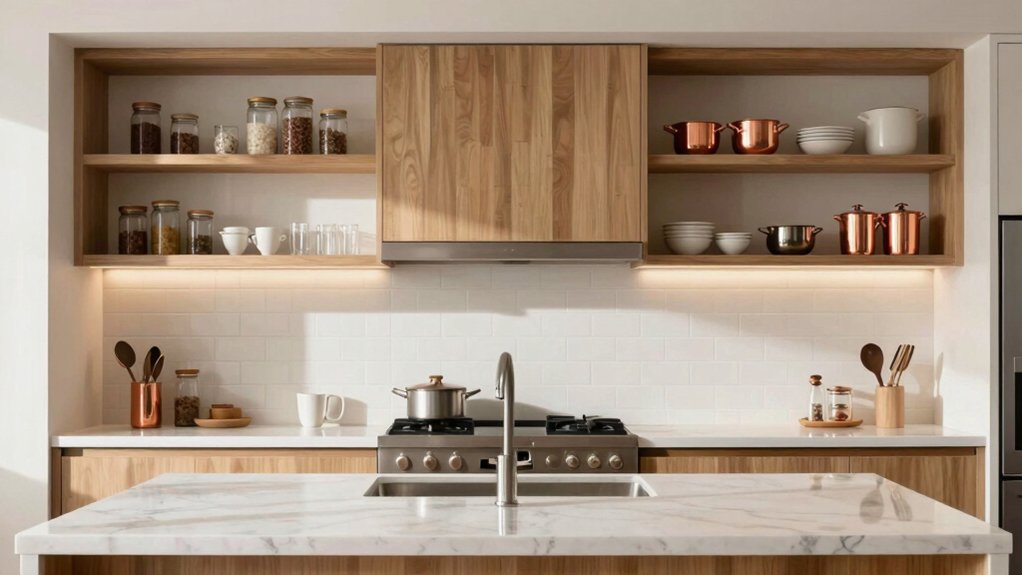
Open shelving in kitchens is a practical trend that makes everyday cooking feel more efficient, and its benefits are hard to ignore. You gain instant visual access to essentials, cutting down rummaging time during busy routines. Dishes, glassware, and frequently used tools become mementos of your routine, encouraging organization and care.
You’ll likely save money on cabinetry, embracing a simpler installation that suits mid-century or industrial vibes you already crave. Yet you stay alert to weight limits and real-world durability, choosing sturdy rails and sturdy shelves rather than chasing style over function.
Accessibility can speed up prep and cooking, but you’ll trade some cabinet secrecy for display risk. Overall, the pros push you toward a practical, characterful kitchen that reflects your daily tempo.
Aesthetic and Space-Enhancing Benefits
Aesthetic and space-enhancing benefits of open shelving come into sharper focus when you consider how it visualizes your kitchen’s daily rhythm. You see how items live beyond cabinets, creating a narrative of use: bowls, glassware, mugs, and perhaps a single plant. The result is a lighter, more breathable room, with sightlines that feel intentional rather than sealed off.
When curated with restraint, shelves mirror a studio-like efficiency—color accents, varied heights, and textures that echo your taste. Yet the trend isn’t neutral; it nudges you toward deliberate displays, not clutter. The space reads larger, but only if you resist the impulse to fill every inch.
The payoff: a kitchen that feels current, personal, and visually cohesive without redrawing the room’s proportions.
Practical Drawbacks: Dust, Maintenance, and Organization
Dust tends to settle on every shelf, and open storage invites it to linger rather than hide. You’ll notice dust tracks on mugs, pans, and spice jars, a constant reminder that maintenance isn’t optional. Wiping, rearranging, and dusting become part of weekly routine, not a novelty.
The open look can feel glamorous until you realize every spill, fingerprint, or crumb is visible from across the room, demanding attention you didn’t forecast. Organization becomes a moving target: items shift, mismatched lids multiply, and labeling resilience matters.
You may chase uniformity, only to discover a growing catalog of “what goes with what.” Practicality clashes with aesthetics when you value cleanliness as a baseline, not a choice, and find yourself policing every shelf edge for balance and ease.
Accessibility and Display Opportunities
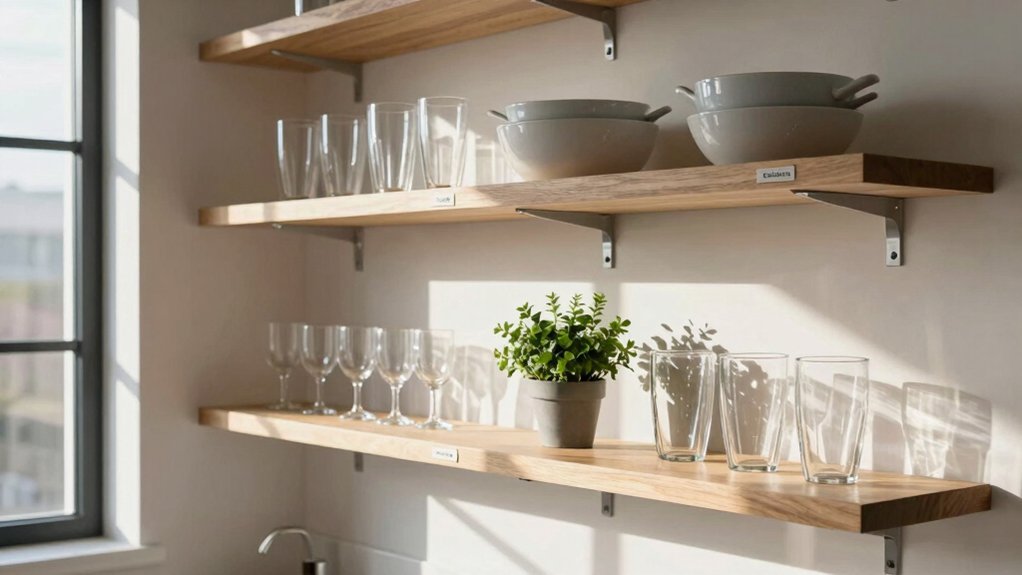
Accessible design and deliberate display can turn open shelving from a liability into a feature. You’ll notice accessibility cues shaping how you reach for items, the rhythm of shelf height, and what stays within easy reach.
When you curate, you balance function with aesthetics, avoiding overstuffed rows and dusty gaps that scream maintenance. You’ll favor items that pull double duty—clear canisters, labeled jars, and frequently used cookware at midlevel—so you move with intention rather than improvisation.
Display opportunities invite storytelling: a weekly rotation, a color or material family, or a seasonal accent that stays fresh. Yet you’ll stay skeptical of trend drift, resisting clutter that erodes usability.
The most successful setups blend practicality with personality, proving accessibility can amplify appeal without sacrificing order.
Material, Mounting, and Weight Considerations
You’ll weigh material options like steel, wood, and glass against moisture, heat, and style cues, because each choice shifts how your shelves perform and read.
Weight and mounting requirements aren’t afterthoughts—they determine what anchors you actually can use and how confidently you’ll lean into the trend.
Stay curious about practical limits and aesthetics, and question whether your setup matches real-world use as much as the look.
Material Options
When choosing material for open shelving in kitchens, you’ll weigh durability, weight, and how each option ages under heat and humidity. Wood feels warm, but varies by species and finish; softwoods dent more easily, while hardwoods resist scratches yet show rings and grain that read as design.
Laminate presents a sleek, budget-friendly lie—it chips and swells with heat; edges reveal cheaper cores.
Metal shelves promise longevity, though weight and rust resistance matter; powder coats fade near ovens unless properly protected.
Solid-surface options read clean and modern, yet can scorch or stain if not sealed.
Plywood offers strength with lighter loading, but veneered faces may delaminate.
Stone headlines durability, yet requires precise mounting.
Your pick should blend aesthetics with reliable, long-term function.
Weight and Mounting
Because weight and mounting plane are the real test of open shelving, you’ll weigh material density, mounting methods, and load capacity as a single, practical equation. Heavier boards demand stronger supports, but denser woods can carry more with slimmer profiles. Consider steel brackets or cleat systems for uniform load distribution, not just looks.
Wall structure matters: plaster, tile, or paneled backing alters fastener choice and backing strength. Don’t ignore edge treatment; unfinished edges can shed particles and loosen over time.
Mounting height affects accessibility and risk; too high invites strain, too low crowds traffic. Aesthetics tempt minimal hardware, yet underestimating weight shifts can warp shelves.
Finally, plan for dynamic loads: spice jars, cookbooks, and occasional dishes. Balance form, function, and future resale impact.
Impact on Home Resale Value and Market Perceptions
Open shelving in kitchens can raise your home’s perceived value by signaling modernity and practicality, but it also invites judgment about cleanliness, organization, and style consistency.
From a resale standpoint, buyers may equate exposed storage with reduced privacy and higher maintenance, which can dampen offers or trigger negotiations.
You’ll likely encounter mixed perceptions: some see it as aspirational, a glimpse of curated living; others worry about mismatches with cabinetry, clutter, or dated dishware.
Marketability hinges on context—location, home age, and buyer expectations.
If you embrace it, you should plan for orderly displays, durable materials, and cohesive color schemes to project intentionality.
Inconsistent execution risks the opposite effect, signaling upkeep concerns rather than design confidence, potentially narrowing the buyer pool and affecting perceived value.
Styling Tips for Longevity and Adaptability
Even as open shelving signals modernity, you’ll want to design for longevity and adaptability by selecting durable materials, modular configurations, and finishes that age gracefully, so your display remains cohesive as trends shift.
Begin with a restrained core: choose neutral tones, simple hardware, and consistent shelf depths to reduce visual clutter. Mix textures rather than colors to preserve flexibility, using stone, wood, and metal in complementary grades.
Prioritize modular storage—adjustable brackets, removable panels, and stackable units—to reconfigure without a full redo.
Display only curated groups: three to five items per shelf reads calmer and lasts longer in style.
Invest in quality lighting and a sealant that protects against humidity.
Finally, document a rotation plan to refresh deliberately, not constantly.
When to Choose Closed Cabinets Instead
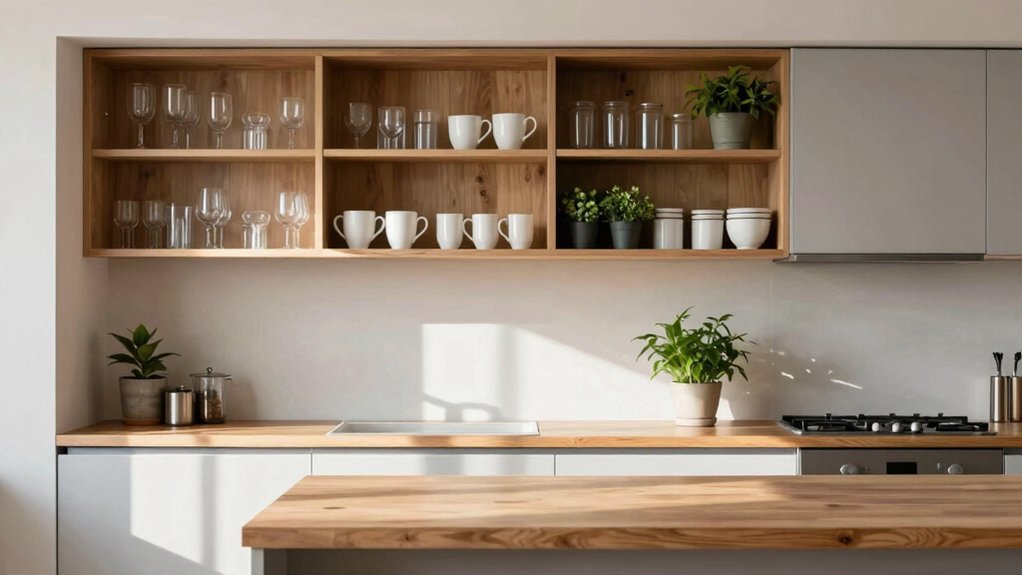
Closed cabinets shine when you need clean lines and practical concealment, especially in kitchens that double as workspaces or display zones. There are moments when open shelving feels loud or chaotic, and you crave a calmer backdrop for appliances, mugs, or collections.
Choose closed storage where daily clutter would otherwise undermine style: busy households, small footprints, or high-traffic lanes where edges get worn. They also win on resale, offering universal appeal and timeless dimension that doesn’t fight personality.
If you value cohesion over display, or you rely on uniform color blocks, closed cabinetry makes sense. Yet don’t overdo it: too much stock-flat closure can dull character and require frequent reorganization to stay fresh.
Balance between concealment and occasional reveal sustains a versatile, lasting kitchen.
Conclusion
You’ll weigh the charm against the chaos, noticing how open shelving can feel instantaneous and airy yet invites dust, fingerprints, and perpetual organizing quests. You’re not just choosing a look—you’re courting maintenance. If your lifestyle pivots with constant hosting or artful display, it’s a smart, trend-aware gamble; otherwise, it might turn into a resale liability you someday dread. Be honest about storage needs, then decide: bold mood booster or fragile fixture? It’s a decision that looms like a supernova.