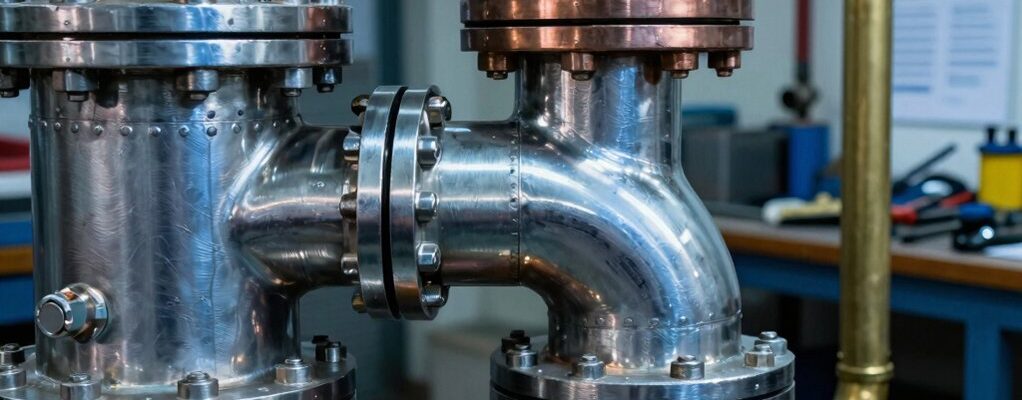
You may not realize how much clearance and access a boiler box needs for safe maintenance. Start with a clear on-site map of pipes, vents, and supports, then plan liftable panels and service doors that stay secure yet easy to open. You’ll want heat-rated materials, precise gaps for ventilation, and durable seals so moisture doesn’t creep in. Keep pathways unobstructed and label everything clearly to avoid surprises when you need access.
Assessing the Boiler and Pipe Arrangement
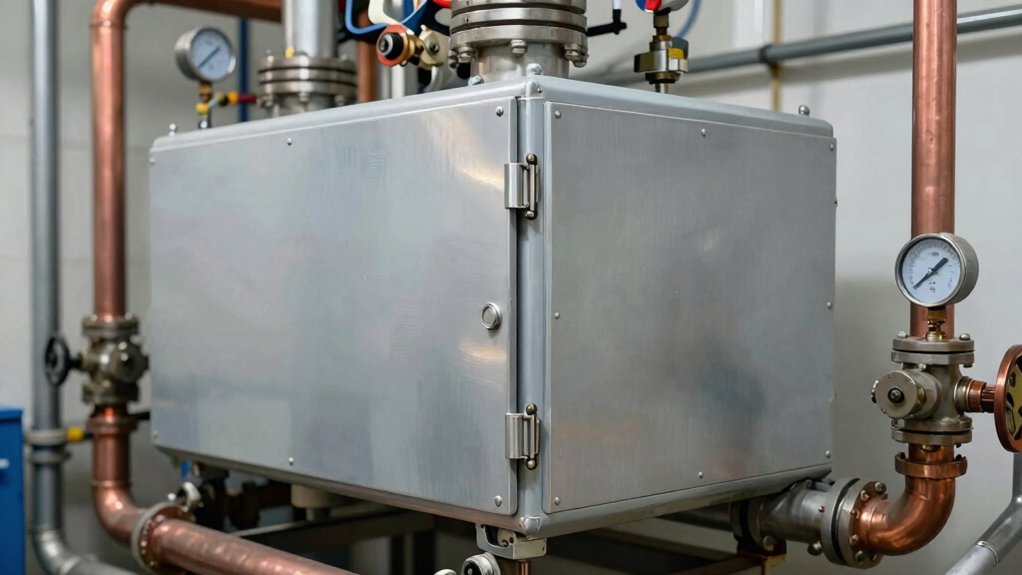
Evaluating the boiler and pipe arrangement starts with a clear, on-site survey. You’ll identify pipe routes, access points, and potential clearance gaps that affect boxing. Check the boiler’s venting, combustion air, and service panels to confirm safe, unobstructed access.
Map nearby utilities, electrical feeds, and sprinkler or gas lines to prevent clashes during boxing. Assess pipe sizes, insulation, and any leaks or corrosion that could complicate enclosure. Prioritize heat sources, clearances, and ventilation to avoid overheating or condensate issues.
Note signage, isolation valves, and service tags, so maintenance remains straightforward after installation. Document measurements with sketches or photos, and verify manufacturer guidelines for service accessibility.
Conclude with a concise plan emphasizing safety, risk mitigation, and compliant workmanship.
Material Options for Boxing
When selecting boxing materials, prioritize fire resistance, durability, and ease of access for maintenance. You’ll want boards, sheets, or panels that tolerate heat and moisture without warping, such as treated plywood, cementitious boards, or metal-faced panels with non-combustible cores.
Choose screw-fastened systems over nails for reliable access during inspections. Apply a durable, flame-retardant finish or paint to reduce surface heat transfer and simplify cleaning.
Use noncombustible cable trays, conduit covers, and width-graded gaps to accommodate expansion and contractors’ tools. Guarantee joints are sealed with high-temperature sealant and reinforced with corner beads to prevent debris ingress.
For ventilation, install perforated panels or louvered sections, maintaining a continuous fire barrier. Prioritize compatibility with existing fixtures and accessibility for routine servicing.
Planning the Layout and Accessibility
Map out the boxing plan to balance safety, service access, and workflow. Start by mapping the boiler and pipes, noting critical clearances and emergency access routes.
Prioritize liftable sections, service panels, and future maintenance points, marking them on a simple layout. Choose box heights that keep valves, gauges, and controls reachable without bending or kneeling excessively.
Allow for ventilation gaps to prevent heat buildup and moisture stagnation. Plan door and panel openings to swing away from hot surfaces and potential pinch points, and provide unobstructed pathways for tools and waste removal.
Use modular panels that can be removed for servicing without dismantling surrounding structures. Consolidate electrical, gas, and water lines in separate, labeled zones.
Confirm the plan meets local codes and manufacturer guidance.
Safe Installation Practices
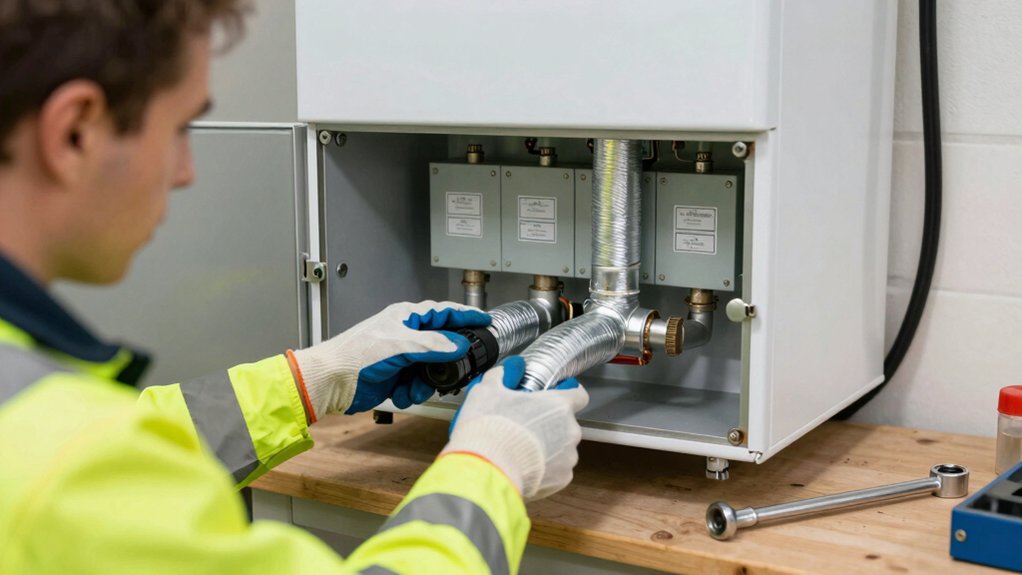
Safe installation practices start with a clear, action-oriented plan and strict adherence to codes. You inspect existing clearances, ventilation, and access routes, then map cable routes, support points, and service panels.
You verify boiler and pipe sizes, alignment, and insulation requirements before any box‑in work begins. You use qualified tools, correct fasteners, and appropriate sealants to prevent leaks and drafts.
You isolate the system, depressurize safely, and install temporary supports to avoid shifts during boxing. You maintain continuous grounding and bonding, protect against moisture, and label all components for future service.
You keep fire barriers intact and ensure that combustion air is unobstructed. You test fittings, inspect joints, and document compliance for maintenance crews and inspections.
Finishing Touches and Aesthetic Considerations
You’ve finished boxing in the boiler and pipework, so now you focus on finishing touches and appearance without compromising safety or access.
Start with clean lines: trim any protruding edges, align panels flush, and ensure screws are recessed to prevent snagging.
Choose coatings that resist heat, moisture, and corrosion; apply evenly and allow full cure before testing.
Use neutral colors to reflect light and keep the area visually calm, aiding quick inspections.
Label service panels clearly and keep access paths unobstructed.
Seal joints with flexible sealant suitable for heat zones, preventing dust ingress while preserving ventilation clearance.
Avoid overfitting decorative trim near vents, gauges, or valves.
Periodically check for paint peeling, rust spots, or loose fasteners, and address promptly to maintain both safety and aesthetics.
Maintenance and Service Access
Maintenance and service access should be planned so you can reach key components quickly without disturbing surrounding finishes. You’ll design access panels and doors to stay clear of heat sources, valves, and electrical junctions. Mark clear routes, minimum headroom, and unobstructed hands-on space for installation, inspection, and routine maintenance.
Use swing doors on hinges that won’t bind when gloves are on, and label all service points with simple, durable tags. Align suspended boxing to maintain ventilation paths and avoid condensate traps. Provide dedicated lighting and safe stepping surfaces to reduce slip hazards.
Keep tools portable and organized, reducing time spent searching. Confirm fire stops, sealing, and combustion-air continuity after any service. Document access changes for future crews.
Common Mistakes to Avoid
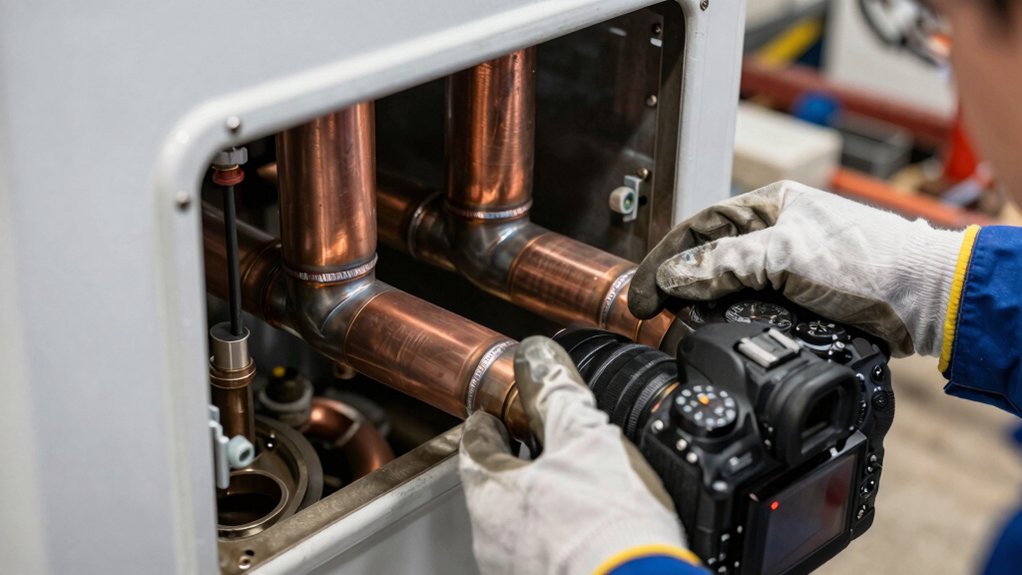
Common mistakes to avoid often stem from rushing or skipping small details, which can jeopardize safety and efficiency. You’ll save time later by planning every step, double-checking measurements, and labeling each section before you start boxing in.
Don’t overlook clearance for access doors, ventilation, and service panels. Avoid over-tightening fasteners, which can crush insulation or create leaks; use a steady, moderate torque instead.
Don’t ignore manufacturer guidelines or building codes—confirm material specs, sealants, and fire-stopping requirements. Keep utility shutoffs clearly marked and documented.
Rework is more costly than careful work the first time, so verify alignment, joints, and clearances with a tape measure and level. Finally, document deviations from the plan, so future maintenance remains straightforward and safe.
Conclusion
boxing in a boiler and pipework. Think through the layout first, leaving liftable panels for access, sealed joints, and proper ventilation so heat doesn’t build up. Use fire-resistant materials, secure fasteners, and moisture-resistant coatings for longevity. Keep pathways clear and labels legible for quick safety checks. A telling stat: poorly boxed systems can add up to 15% more maintenance time due to restricted access. Prioritize safety, accessibility, and neat finishes for reliable, low-risk operation.