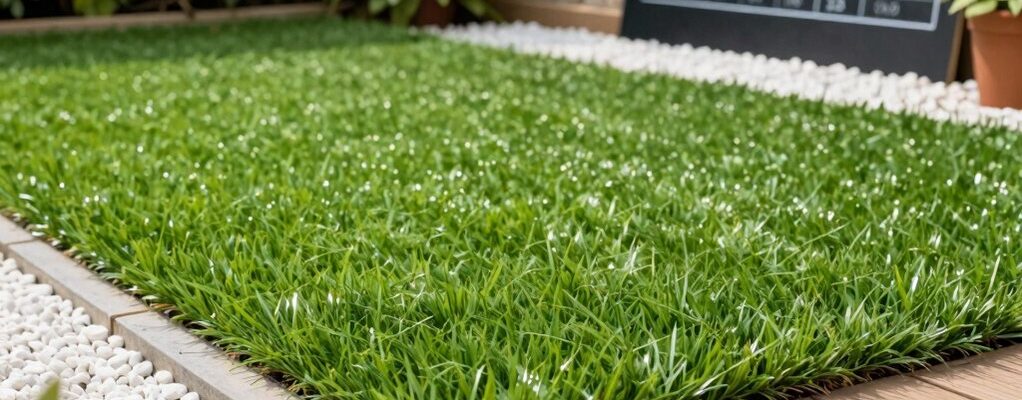
Artificial grass in UK homes offers a predictable, low-maintenance outdoor option, with upfront costs typically £30–£60 per m² plus site prep. You’ll weigh drainage, heat retention, and installation methods against year-round greenery and no mowing. Durability depends on traffic and quality, yet hidden fees or underlays can shift budgets. Ready to assess your space, conditions, and long-term savings to decide if the middle ground between natural turf and synthetic is right for you?
Understanding Artificial Grass: What It Is and How It Works
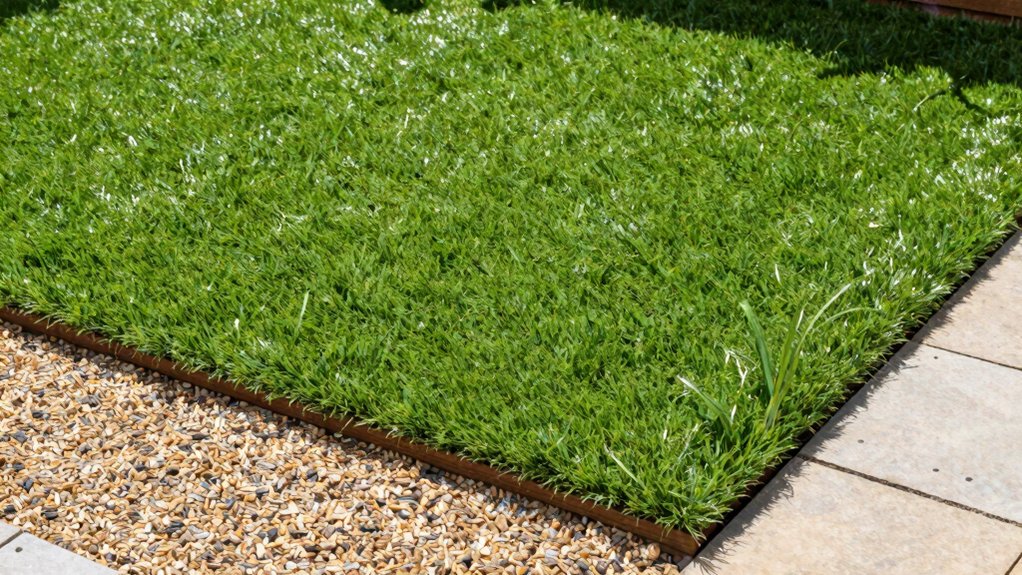
Artificial grass is a synthetic surface designed to mimic natural turf using polymer fibers embedded in a backing material. You’ll understand that the fibers form a dense, resilient mat engineered to resist compression and recover after foot traffic.
In outdoor environments, the backing stabilizes the pile height, helps water drain through, and prevents soil intrusion. The primary materials—typically polyethylene or polypropylene—balance softness, durability, and UV resistance to withstand sun exposure.
Weighing the system involves infill choices, which support tuft stability and ballast the surface against wind. You’ll find backing perforations facilitate drainage, while a proper installation sequence aligns edging and slope for runoff.
Maintenance remains straightforward: remove debris, brush fibers, and rinse as needed to maintain appearance and performance.
True Cost Breakdown: Upfront Prices, Installation, and Hidden Fees
Upfront costs for artificial grass hinge on material quality, installation scope, and site preparation, so get a clear, itemized quote to avoid surprises. You’ll pay for the turf itself, sub-base materials, edging, and joining seams, with prices scaling by pile height, density, and UV stability.
Labour dominates installation fees, reflecting ground preparation, weed suppression, and security of the underlay. Consider drainage work, surface grading, and excavation if existing surfaces need leveling.
Hidden fees frequently appear as delivery surcharges, waste disposal, and removal of old turf or debris. DIY kits save some expense but risk warranty voids and incomplete sealing.
Seasonal demand can shift rates, so confirm lead times and contingency buffers. Request a written breakdown, including per-square-meter costs, estimated hours, and payment milestones to keep expenditures predictable.
Longevity and Durability: How Long Artificial Turf Lasts in UK Conditions
In UK conditions, you’ll assess lifespan by weather tolerance and ground load, focusing on how well the turf resists wear over time.
Expect wear-resistant performance to hinge on blade density, backing quality, and drainage efficiency under typical UK rainfall and foot traffic.
This will frame long-term durability by comparing practical lifespans and maintenance needs for different turf constructions.
Lifespan in UK Weather
When you install artificial turf in UK conditions, durability hinges on weather exposure, maintenance, and the quality of the backing and infill, which determine how long the surface remains effective under frequent rain, frost, and temperature swings.
In this climate, expect a typical lifespan of 10 to 15 years for standard piles with proper installation and routine upkeep.
High-density, UV-stabilized fibers resist fading and mechanical wear better, extending service life in sun-exposed areas.
Regular brushing, debris removal, and appropriate infill refresh slow ballast loss and keep pile recovery intact after compression from foot traffic.
Installation that guarantees proper drainage prevents pooling, microbial growth, and surface degradation.
Extreme temperature cycles can stress seams, so quality joining and seam sealing are essential for long-term performance.
Wear-Resistant Turf Performance
Wear-Resistant Turf Performance: In UK conditions, durability hinges on the turf’s engineered fibers, backing, and infill, which together resist abrasion, compression, and UV exposure under frequent rain and temperature swings.
You’ll find that high-density fibers reduce matting and texture loss, while coated or layered backings improve dimensional stability and drainage, preventing standing water that accelerates wear.
Infill choice matters: ideal silica-based infills support tuft resilience, control heat buildup, and maintain pile height after heavy foot traffic.
UV-stable colorants and anti-oxidant treatments slow fading and fiber breakdown, extending service life.
Regular brushing, debris removal, and timely resealing of seams minimize edge fraying.
For longevity, match pile height to sun exposure and use a professional installation with proper sub-base preparation and drainage.
Maintenance and Long-Term Savings Compared to Real Turf
Even though it requires an upfront investment, maintenance and long-term savings favor artificial grass over real turf. In practical terms, you reduce ongoing costs by eliminating mowing, edging, seasonal fertilisers, and irrigation demands. Expect lower water bills in summer months and fewer chemical inputs, which also simplifies environmental compliance.
Over a decade, the steady maintenance footprint stays relatively flat, while real turf incurs progressive depreciation from wear, disease, and re-turfing intervals that reintroduce substantial capital outlays. Artificial grass maintains a consistent appearance and drainage performance with minimal seasonal disruption, meaning you can allocate time and resources to other outdoor projects.
For UK homes, the long-term value lies in predictable upkeep, reduced resource consumption, and steadier outdoor usability regardless of weather.
Types of Artificial Grass: Piles, Densities, and Suitability for UK Climates
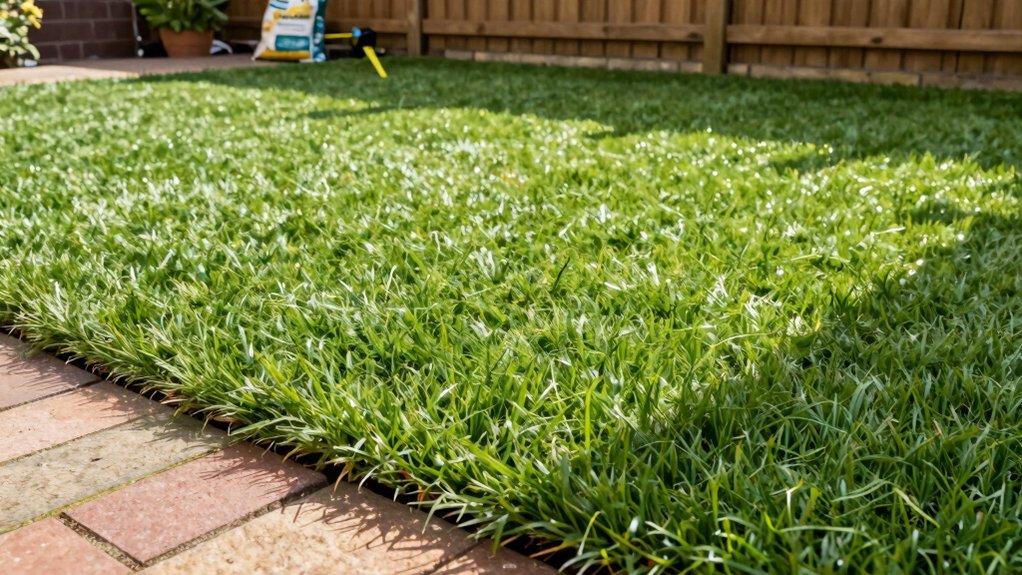
You’ll assess pile types and feel to match foot traffic and use, balancing softness with durability.
Consider density and weave to control resilience, drainage, and how the turf behaves in UK weather.
Factor climate—cold, damp winters and seasonal sun—into suitability and maintenance implications for long-term performance.
Pile Types and Feel
When choosing a pile type, you’ll weigh the look, feel, and performance under UK climates, since blade style and backing affect lift, resilience, and drainage.
Synthetic blades come in multiple constructions: monofilament, which delivers uniform height and crisp definition; fibrillated blends that improve resilience in high-traffic areas; and curled or textured profiles that better mimic natural grass under foot.
Density, spacing, and yarn height dictate underfoot softness and return force, influencing how the surface compresses and recovers after use.
Backings vary from woven to latex, controlling stability and infill retention.
For outdoor durability, select a pile with sufficient stiffness to resist bending in cooler weather, while preserving soft gait.
Consider light-to-moderate shading to avoid excessive wear patterns on low-cost constructions.
Density, Durability, Climate
Density, durability, and climate define how well artificial grass holds up in UK conditions. You assess pile height and density to match foot traffic, pets, and play—higher densities resist compression and maintain uniform appearance longer.
Durability hinges on fiber quality, backing construction, and seam integrity, which limit collapse, shedding, and UV degradation over years of outdoor exposure.
Climate considerations matter: cooler, damp regions demand UV-stable fibers and antifungal backing, while hotter, sunny areas require heat-resistant yarns and drainage efficiency to prevent matting.
Underfoot feel and drainage performance influence maintenance cycles and cleaning needs. Choose a product with a proven warranty, appropriate density for its intended use, and a climate-specific formulation.
Proper installation and ongoing care maximize resilience, appearance, and usability across UK seasons.
Installation Methods: Ground Preparation, Laying Techniques, and Drainage
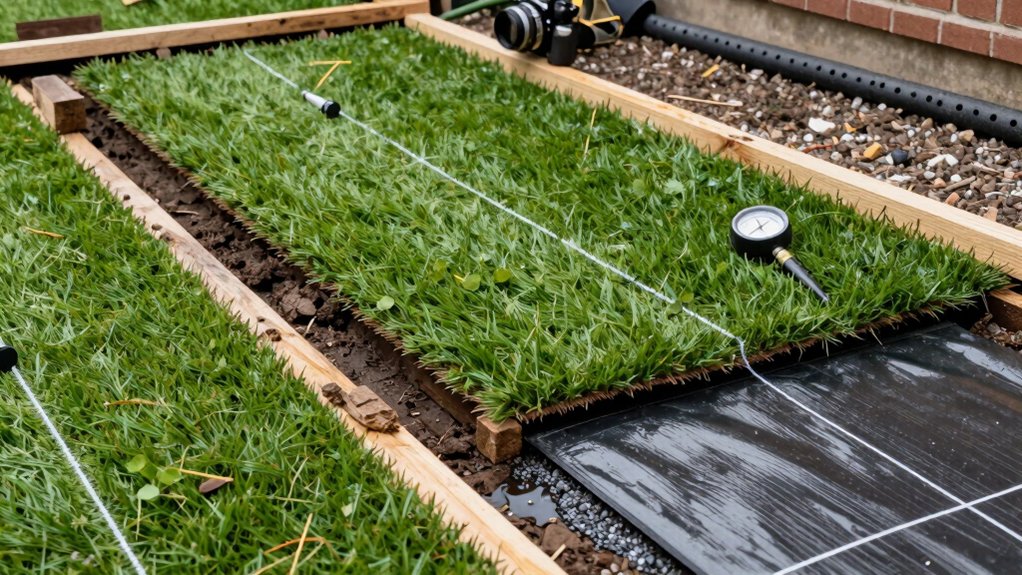
Ground preparation sets the foundation for a durable artificial lawn: you’ll remove debris, level the subsoil, and compact the base to minimize settling, shouldering the load across foot traffic and equipment.
You’ll install a permeable sub-base—typically sharp sand or crushed aggregate—graded for drainage and stability. A geotextile weed barrier is laid to prevent root intrusion and mixing of materials.
Laying techniques then follow: align rolls along the longest straight line, stagger joints, and secure with low-profile fixings or adhesive where appropriate. Guarantee a precise edge detailing to prevent creep and ensure drainage paths remain open.
Drainage is critical: design falls at 1–2% where feasible, install perforated pipes or French drains, and test with water to verify rapid surface flow and sub-base saturation control.
Pros and Cons: Practical Benefits and Drawbacks for UK Homes
Artificial grass offers a clear balance of benefits and drawbacks for UK homes, given the climate, garden uses, and planning constraints you’ll encounter. You’ll gain year-round color, low maintenance, and consistent play surfaces, especially in wet periods, without mowing or watering demands.
Durability varies by pile height, backing, and traffic; proper infill preserves springiness and drainage. Aesthetics align with established borders, yet glare, pet mess, and UV fading can affect realism over time.
Installation costs factor with underlayment and edging, influencing long-term value. Heat retention may raise surface temperatures in summer, impacting barefoot use and surrounding plant health.
Noise reduction and accessibility improve usability for families, while ongoing maintenance includes occasional brushing and weed prevention.
Budgeting Tips and Key Considerations Before You Buy
Even before you buy, map out a realistic budget that accounts for both materials and installation variables, so you don’t overlook hidden costs. You’ll want to quantify product grades, pile height, backing, and drainage needs, then pair them with site preparation and installation fees.
Consider sub-base depth, weed suppression, edging, and in-fill if required, plus delivery and VAT. Factor seasonal pricing, contractor availability, and potential weather-related delays that extend labor time.
Add warranty terms and maintenance costs—cleaning, brushing, and occasional infill top-ups. Compare supplier quotes, confirming inclusions and exclusions to avoid scope creep.
Plan for waste disposal, header trenching, and any required permits or regulations. Finally, build a contingency reserve—usually 10–15%—to absorb unexpected site-specific hurdles.
Prioritize durability, drainage efficiency, and long-term maintenance when evaluating options.