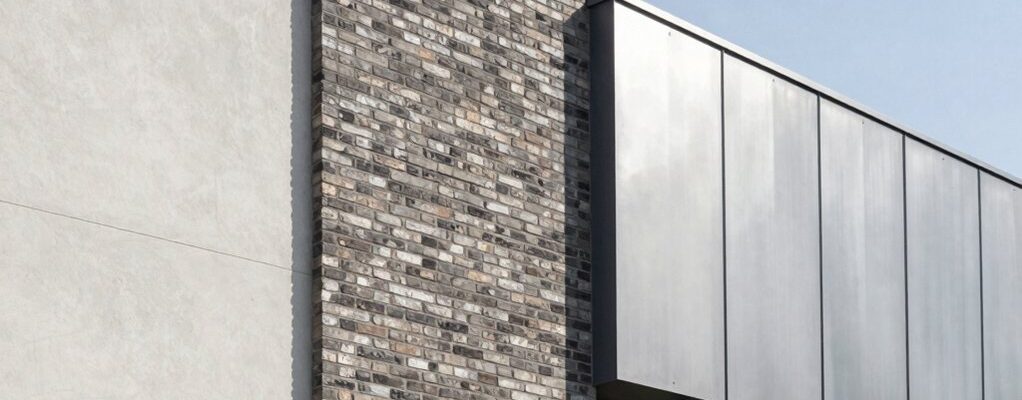
When you’re choosing between render and cladding for external walls, you weigh aesthetics, installation, durability, and long-term costs to see which fits your project. Render offers a seamless, cost-efficient finish with ongoing maintenance, while cladding provides durable, varied materials and better insulation but higher upfront prices. Each path affects yearly upkeep and resale value, so consider your climate, design goals, and long-term budget now to avoid surprises later. The next step breaks down how these factors translate into real-world choices.
Understanding Render and Cladding: What They Are and How They Differ
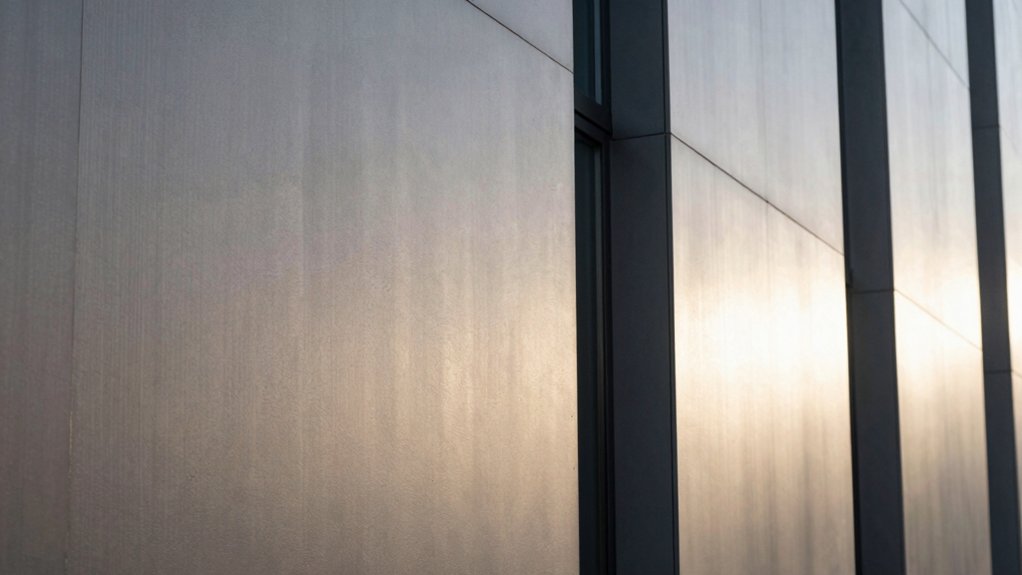
Render and cladding are exterior finishes that protect a building and influence its appearance, but they serve different roles. You’ll consider render as a continuous, sprayed, or brushed layer applied to substrates, forming a weatherproof envelope with a unified face. It provides monolithic continuity, micro-crack resistance, and potential insulation benefits when combined with appropriate mixes or coats.
Cladding, by contrast, consists of discrete panels or boards fixed to an underlying frame, creating a ventilated or rigid facade with intentional joints, profiles, and material choices. You assess performance factors such as permeability, impact resistance, thermal mass, and maintenance cycles.
Both systems aim to resist moisture ingress and deter deterioration, yet their installation sequences, substrate requirements, and service life differ, guiding selection for durability, costs, and compatibility with structure.
Aesthetics and Style: How Each Finish Shapes Your Building’s Look
Cladding instantly signals architectural intent through its visible joints, profiles, and material choices, offering distinct rhythms and textures that can emphasize scale or softness depending on panel size and spacing. You assess finish choices for their optical weight, texture, and reflectivity, recognizing how these elements interact with light, shadow, and surrounding context.
With render, you’ll observe a smooth, uniform surface that reads as monolithic or subtly textured, often enhancing modern, minimalist expressions. Cladding, by contrast, introduces tactile variation and stratification, enabling granular or metallic finishes that highlight detailing and corner conditions.
Materiality drives perceived durability and climate behavior, so you weigh color constancy, aging, and maintenance implications alongside stylistic goals. In all cases, alignment with the project’s perimeter rhythm, fenestration, and landscape integration shapes overall aesthetic coherence.
Installation Methods: Steps, Tools, and Timeframes
To install these finishes efficiently, follow a structured sequence: site prep, substrate assessment, material acclimation, and assembly.
You begin with surface preparation—clean, repair, and cure any defects that compromise adhesion. Next, assess substrate compatibility for render or cladding, verifying moisture, flatness, and bonding conditions. Acclimate materials to the project environment per manufacturer guidelines to prevent premature curing or swelling.
Proceed with framing or backing installation as required, ensuring plumb and level planes, then apply primer where specified. Mixing, batch control, and temperature limits govern material handling, with standardized working times observed to avoid cold joints or premature set.
Apply specified coats or panels using approved tools, maintaining uniform thickness, joint progression, and fastener schedules. Cure, seal, and inspect for uniform finish, confirming tolerances.
Durability and Weather Resistance: Performance in Different Environments
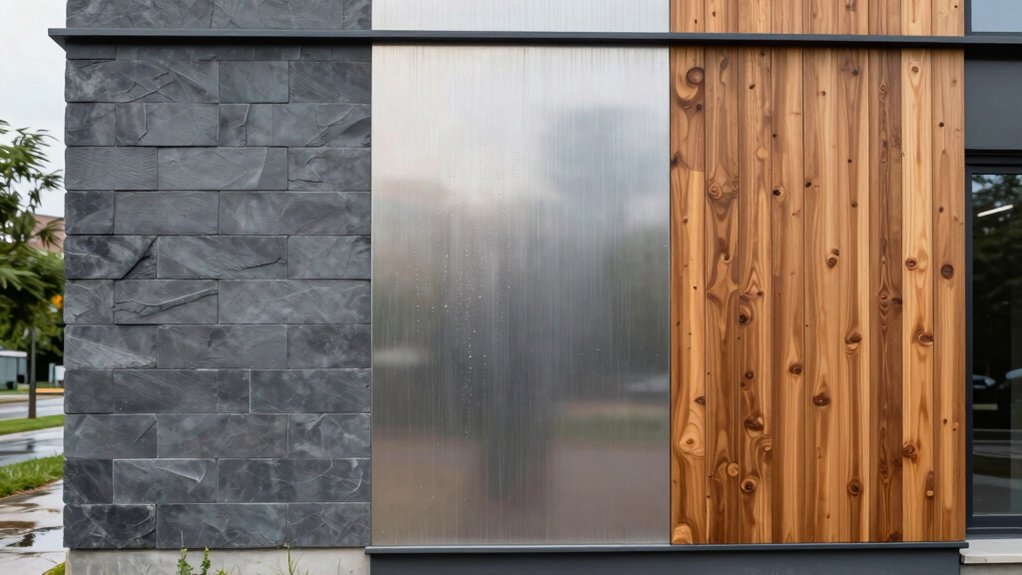
You’ll examine how environmental exposure tolerance, weather durability variations, and climate-specific performance define long-term behavior of renders and claddings.
Differences in moisture, temperature swings, and UV exposure inform material selection and detailing strategies for durability.
This discussion starts by mapping each factor to performance outcomes across representative environments.
Environmental Exposure Tolerance
Environmental exposure tolerance refers to how well render and cladding withstands factors like moisture, UV radiation, temperature fluctuations, and pollutants across different climates; it encompasses both durability and weather resistance.
You evaluate materials by their resistance to moisture ingress, freeze–thaw cycling, and capillary absorption, informing long-term structural integrity and surface stability.
Cladding systems typically offer higher puncture and UV stability when properly installed, while renders depend on binder chemistry, aggregates, and protective coatings to resist cracking and delamination.
You consider thermal expansion coefficients, joint details, and substrate compatibility to prevent microcracking.
Performance is quantified through rated weathering cycles, substrate moisture management, and edge protection.
Weather Durability Variations
Weather durability varies by environment, with cladding generally maintaining higher UV and puncture resistance when properly installed, while renders rely on binder chemistry and protective coatings to resist cracking and moisture ingress.
In this section, you examine how environmental factors influence performance without delving into climate-specific adjustments. Material choices determine deformation tolerance, notional resilience, and long-term upkeep.
You evaluate UV exposure, wind-driven rain, and aggressive pollutants as stressors that can accelerate surface weathering. Cladding systems derive durability from substrate rigidity, finish formulation, and shielded joints, reducing permeation paths.
Render systems depend on binder chemistry, aggregate characteristics, and compatible sealants to control microcracking and capillary uptake. Installation quality, substrate preparation, and detailing critically shape actual resistance, with premature failures often traceable to workmanship rather than material grade alone.
Climate-specific Performance
How does climate shape durability and weather resistance in render versus cladding systems? In practical terms, climate governs material fatigue, moisture transport, and thermal expansion. Render systems rely on continuous coatings that resist rain impact and capillary draw, but are vulnerable to cracking from freeze-thaw cycles and substrate movement in colder, wetter regions.
Cladding, by contrast, provides a ventilated air gap and drainage, reducing sustained moisture exposure and mold risk in temperate to hot-humid climates. In hot, arid environments, high solar exposure accelerates curing and surface degradation for some renders, while metal or fiber-cement claddings excel with solar resistance and low maintenance.
In coastal zones, salt-laden air can attack finishes; protective sealants and corrosion-resistant framing become decisive. Overall, climate dictates maintenance intervals, detailing, and substrate compatibility for durable performance.
Insulation, Energy Efficiency, and Acoustic Benefits
You’ll see how insulation impact, energy savings, and acoustic performance interact with render and cladding systems. These points drive material choices, thicknesses, and installation details that affect overall building efficiency.
Insulation Impact
Insulation directly affects a building’s thermal performance, reducing heat transfer through walls and roofs while limiting energy loss in all seasons. You’ll evaluate how wall assemblies interact with insulation types to influence U-values and surface temperatures, improving comfort without added moisture risk.
In render or cladding systems, the cavity, continuous insulation, and airtightness play integrated roles; each choice alters heat flux paths, latent heat potential, and thermal bridging. You’ll consider lower thermal resistance materials for interior partitions and higher resistance for exterior skins, balancing cost with performance goals.
Acoustic benefits hinge on density, stiffness, and decoupling within the facade; selective mineral wool, foam, or composite insulations modify sound transmission. Structural compatibility and vapour control must align with chosen finishes to maintain long-term performance.
Energy Savings
Energy savings in render and cladding systems result from optimizing insulation, improving overall energy efficiency, and leveraging acoustic benefits. You assess boundary performance by comparing U-values, thermal mass, and airtightness implications of each system.
In practice, higher insulation thickness or advanced substrates reduce heat transfer without increasing surface area, lowering heating and cooling loads. You quantify gains through standardized tests and modeled annual energy use, noting that installation quality and detailing directly affect realized savings.
Dynamic façades or continuous insulation strategies can minimize thermal bridging, while properly sealed joints preserve room comfort and reduce ghost drafts. Acoustic considerations are secondary to energy performance here, yet massing effects and decoupled layers can marginally influence interior climate stability.
Precision in specification guarantees measurable, replicable energy reductions.
Acoustic Performance
How does acoustic performance interact with render and cladding systems when optimizing overall building comfort and energy use? You select assemblies based on airborne and impact sound transmission targets, guaranteeing the outer layer contributes to mass, damping, and continuity.
Render systems add minimal mass bleed if applied thickly, while certain claddings boost insulation density or introduce acoustic breaks at joints. You’ll combine cavity insulation, continuous air barriers, and proper sealing to reduce flanking paths, enhancing overall sound reduction without sacrificing thermal performance.
Consider mineral wool, composite panels, or perforated facades for targeted absorption and mid-frequency control. Ensure sealants, joints, and terminations maintain airtightness, preventing energy loss.
Balance acoustical performance with moisture management to preserve long‑term durability.
Maintenance, Repairs, and Longevity: What to Expect Over Time
Maintenance, repairs, and longevity for Render vs Cladding depend on material choice and exposure; with proper care, you can expect stable performance and minimal downtime over the system’s life.
In this section, you assess durability indicators: coating integrity, substrate compatibility, and protective seal efficiency. Render systems rely on substrate adhesion, render type, and crack management; chloride ingress and weathering can shorten service intervals if joints aren’t properly detailing.
Cladding governs performance via panel connections, fastener corrosion resistance, and moisture barriers; proper flashing, gaps, and back-venting mitigate moisture buildup.
Routine inspections should target delamination, coating deterioration, efflorescence, and fastener looseness. Maintenance cycles vary by climate, substrate, and exposure class, but preventive resealing and timely repairs extend replacement timelines and sustain façade functionality without compromising structural safety.
Cost Breakdown: Material, Labor, and Long-Term Value
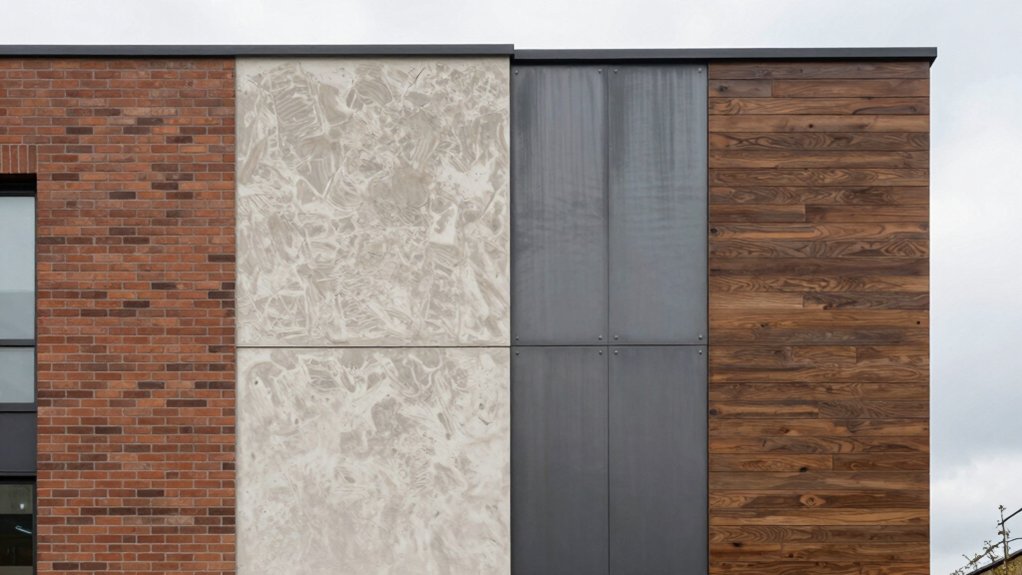
Cost breakdown for render vs cladding hinges on material costs, installation complexity, and long-term value. You’ll compare upfront inputs: render mixes, backing boards, insulation, and finishes; vs cladding panels, battens, fixings, and substrates.
Material costs drive initial budgets, yet long-term value depends on durability, maintenance cycles, and energy performance. Labor impacts completion time, scaffold needs, curing requirements, and skill level.
Render systems often incur higher labor for application, curing, and weather protection, while cladding installations emphasize precise panel alignment and fastening sequences.
Consider durability warranties, impact resistance, and flood or wind exposure when projecting lifecycle costs. Factor ongoing maintenance: cleaning, repainting, sealing, and potential repairs.
A transparent total-cost-of-ownership view clarifies which option yields lower 5 to 15-year costs and better resale value.