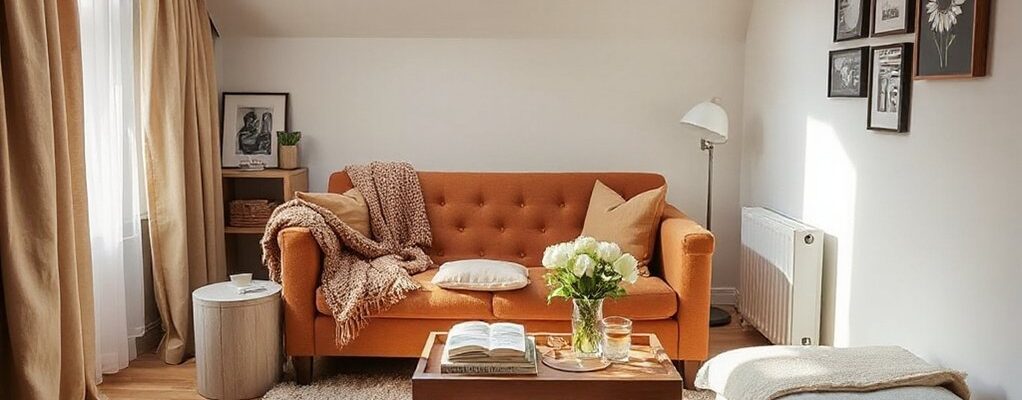
You might think a studio is too small to feel like home, but with mindful zones and cozy details, it can. Start by defining a vibe and carving practical areas for sleep, work, and relaxation without walls. Smart storage and multi-functional furniture keep clutter down, while layered lighting and textures add warmth. Ready to transform your space into a cohesive sanctuary that reflects you, even in a compact footprint? Keep going for practical steps that make it real.
Define Your Studio Vibe: Feelings, Functions, and Goals
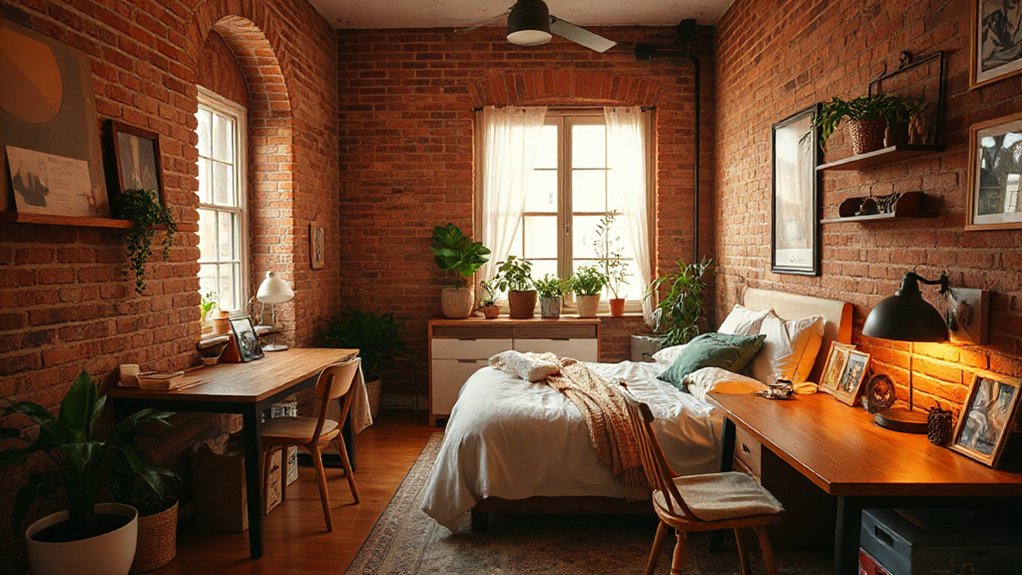
If you want a studio that truly feels like a home, start by naming its vibe, the feelings you want it to evoke, the functions it must support, and the goals you’re aiming to reach. Define a clear emotional roadmap: what artistic expressions you’ll invite, and how they’ll shape daily rhythms. Decide on practical zones—sleep, work, cook, reflect—without cluttering. Align materials, textures, and colors to sustain an emotional ambiance that supports focus, rest, and connection. Prioritize flexibility: can the space morph for guests, workouts, or quiet study? Set measurable goals—comfort level, noise tolerance, storage efficiency, natural light use. Document these choices; revisit quarterly to tweak as life shifts. Your studio becomes intentional, resonant, and uniquely yours.
Zone a Small Space Without Walls: Practical Approaches
When you’re working with a space that has no walls to partition, you’ll rely on perceptual zones, furniture placements, and tactile cues to define each area. In an open plan, create clear sightlines and distinct vibes with rugs, lighting, and color blocks, not barriers. Use furniture grouping to imply function: a low sofa to separate living from dining, a desk tucked beside a window for focus. Consider wall division concepts through vertical elements like shelves or tall plants that hint boundaries without closing zones. Track flow so movement feels natural, not forced. Swap heavy contrasts for cohesive palettes and varied textures to cue different routines. Keep scale balanced, so every corner reads as purposeful, welcoming, and connected within the same compact footprint.
Smart Storage Ideas That Free Floor Area
Smart storage can transform a cramped studio into a calm, usable home. You’ll reclaim floor space by tucking items into discreet solutions. Start with hidden storage under beds, sofas, and ottomans to keep daily clutter out of sight while preserving surface area for living. Use vertical shelving to draw the eye upward and replace bulky units with slender, modular columns that adjust as your needs shift. Choose containers that stack neatly and label them for quick access. Install wall hooks and a pegboard near entry points to corral coats, bags, and tools without stealing footprint. Consider magnetized strips for metals and small metal organizers inside cabinets to maximize every inch. Smart storage keeps rooms breathable, inviting, and clearly structured.
Multi-Functional Furniture for a Tiny Footprint
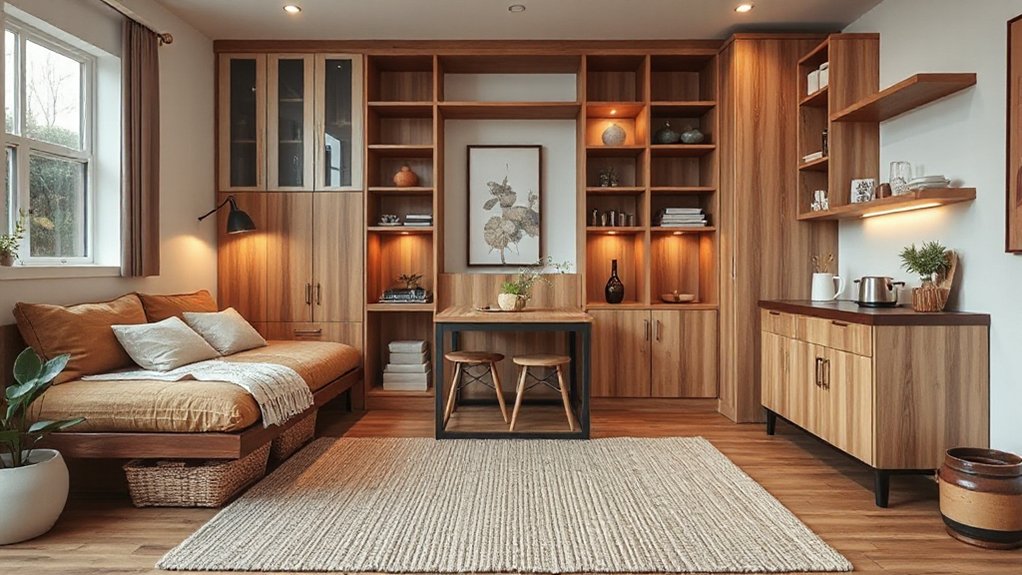
Multi-functional furniture is your best ally in a tiny studio: it folds, tucks, and multitasks so every inch earns its keep. You organize with intent, choosing pieces that serve more than one function. A convertible bed becomes a sofa by day, freeing floor space for work or dining without sacrificing guests or comfort. When you need storage, a bench or ottoman doubles as a chest, keeping essentials out of sight but accessible. Modular shelving lets you tailor vertical flow: stack, reconfigure, or expand as your needs change, maintaining a clean line and avoiding clutter. Prioritize surfaces that resist wear and simplify maintenance, so you gain ease, not extra chores. With thoughtful pieces, you create room to breathe, work, and relax without compromise.
Texture, Color, and Lighting to Feel Warmer and Bigger
Texture, color, and lighting are your trinity for making a studio feel warm and bigger: layer tactile surfaces, choose a cohesive palette, and light thoughtfully to carve cozy zones without shrinking floor space. You’ll boost warmth with natural fibers—linen, wool, cork—as wall textures or soft furnishings that invite touch. Pick a restrained color scheme with warm neutrals and accent tones that repeat across rug selection and wall decor to create continuity. Elevate depth by mixing matte and subtle gloss finishes, then simulate daylight with layered lamps: floor, task, and ambient options angled toward living and sleeping nooks. Keep sightlines clear and furniture low, so light travels. Use wall decor sparingly but purposefully, and guarantee rug selection anchors zones while extending perceived floor area.
Personal Touches That Reflect Your Style Without Clutter
Personal touches should express your style without turning the space into a museum. You want personality, not clutter, so curate with intention. Choose a few decorative accents that resonate daily—unobtrusive, meaningful, easy to relocate. Focus on balance: artwork arrangement at eye level, grouped in small clusters that feel intentional rather than random. Rotate pieces seasonally or by mood, keeping favorites visible and others stored neatly out of sight. Use meaningful objects as anchors—photos, travel souvenirs, a single handmade item. Let textiles tie colors together, not overwhelm; limit to two complimentary patterns per area. Maintain clean surfaces by storing away excess items, and label storage so you can refresh without chaos. This approach creates a lived-in vibe that remains calm, cohesive, and uniquely yours.
Practical Layouts and Routines to Keep the Home Cohesive
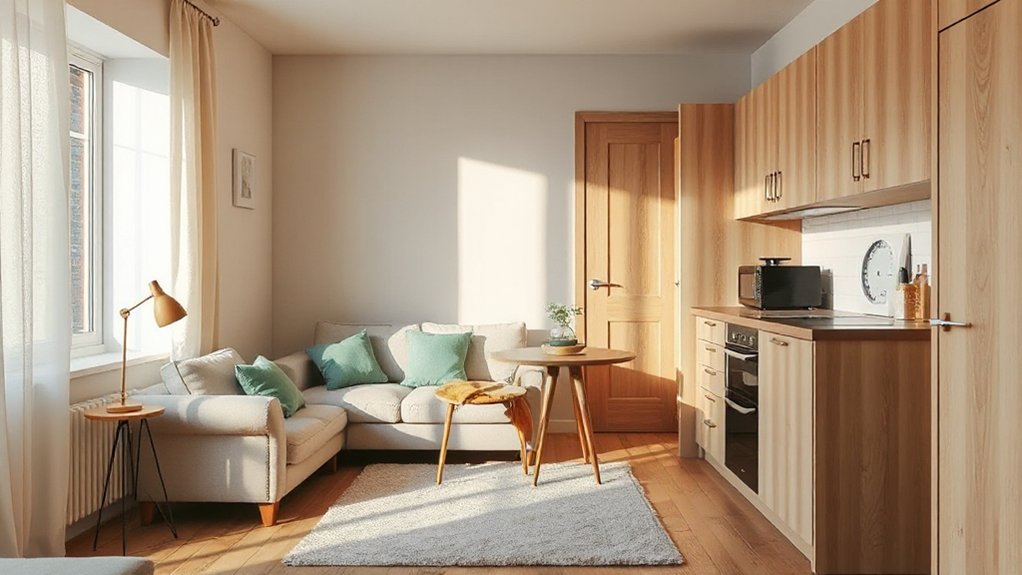
Smart layouts and simple routines keep a studio feeling organized without stealing its charm. You design zones that coexist, not compete: a compact cooking nook, a sleeping area, a work desk, and a lounging corner. Prioritize flow by placing the kitchen near entry points and syncing storage with daily tasks. Use multifunction furniture to reduce clutter—think a bed with drawers, a coffee table that tilts to reveal storage, and wall-mounted shelves. Establish a quick daily reset: wipe surfaces, fold throws, stash gadgets. Kitchen organization hinges on vertical pull-outs, clear bins, and a single, reachable utensil tray. For bathroom essentials, dedicate one shelf for every item and keep a small caddy at the sink. Consistency in color, texture, and placement sustains cohesion while preserving charm.
Frequently Asked Questions
How Can I Make a Studio Feel Cozy Without Adding Bulk?
Yes—start with soft lighting and tactile textiles to feel cozy without bulk. Use space saving furniture, mirror placement, and multi-purpose decor. Decorating tips: keep clutter minimal, color warmth, and note: choose compact, functional pieces for daily comfort.
What Scent Choices Best Enhance a Small Living Space?
Choose Aromatherapy blends like citrus with vanilla for brightness and warmth, then practice scent layering to maintain balance; you’ll create a calm, inviting space without overpowering it, keeping small areas fresh, practical, and evocative for daily living.
How Do I Balance Privacy With Openness in a Studio?
You balance privacy with openness by defining privacy zones within your open layout, using curtains, screens, or furniture as flexible barriers. Keep sightlines clear, light flowing, and zones adaptable, so you feel sheltered yet connected in every room.
Which Plants Thrive in Low-Light, Compact Areas?
Succulents thrive in low light and compact areas, surprisingly. You’ll enjoy air purifying plants tucked everywhere, irony included: you say you can’t, yet you easily nourish succulent varieties with sparse sun, practical setups, evocative routine, and structured care.
What Daily Routines Keep a Studio Feeling Organized?
You keep a routine: tidy daily, then reset before bed. Efficient furniture placement and Storage solutions define flow; you group items, swap out clutter, and reveal space. You prune surfaces, label bins, and commit to a calm, organized rhythm.
Conclusion
You can test a simple theory: small spaces feel bigger when you define clear zones and layers of texture. By placing a soft rug under a compact sofa, adding a pendant light above your workspace, and tucking storage into every nook, you create daily rituals that calm and orient you. Your studio then becomes a living map: sleeping, working, relaxing—each with its own mood, yet united by color, light, and personal touches that echo who you are.