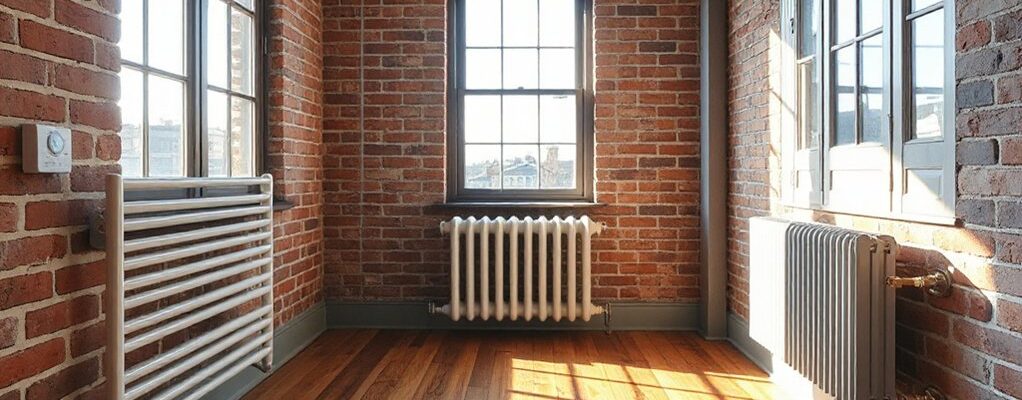
You want comfort, efficiency, and character preserved equally; you want compact radiators, careful insulation, and smart controls that don’t overwhelm delicate details. You’ll assess heat needs, pick space-saving units that fit narrow walls, and tailor sealing to cut losses. You’ll compare boiler options, weigh zoning advantages, and plan a phased install that respects historic features. Stay with me as we map practical steps, budgets, and timelines that keep the building’s charm intact while you gain reliable warmth.
Understand Heating Challenges in Historic Flats
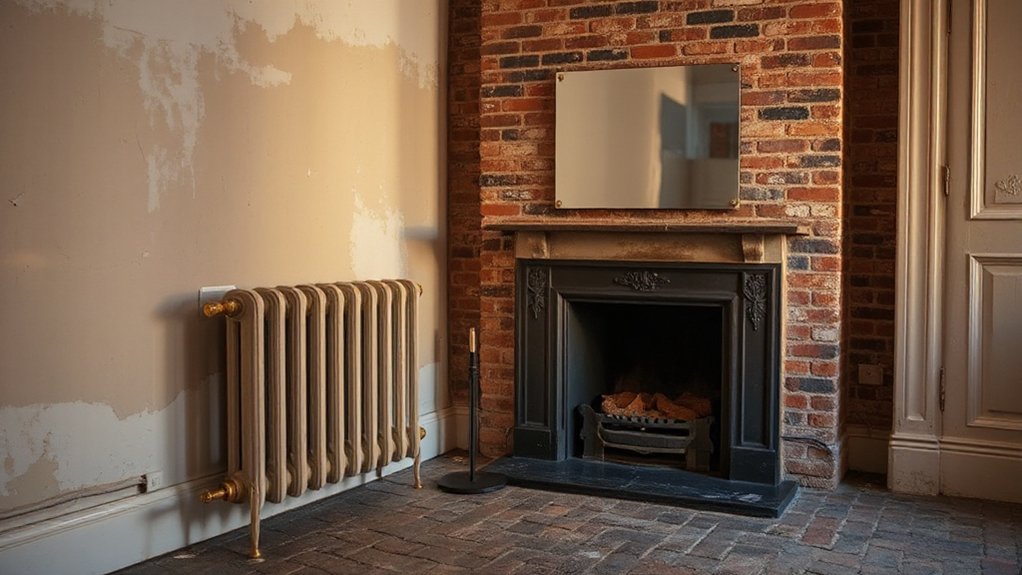
Old buildings often struggle with heat retention and uneven temperatures, which means you may notice drafts, cold spots, and higher energy bills. In historic flats, you’ll encounter older radiant systems, single-glaze windows, and irregular insulation paths that complicate comfort.
Architectural preservation often limits major structural upgrades, so you’ll rely on targeted insulation techniques that respect the building’s character. Focus on airtight sealing around sash lines, exterior cavities, and penetrations to minimize heat loss without invasive renovations.
Use reflective or mineral wool insulation where feasible, balancing performance with historic fabric. Monitor thermal gaps room by room to identify hotspots and adjust heating schedules accordingly.
Data shows modest improvements from strategic sealing and selective insulation can cut bills while preserving architectural integrity. Prioritize Documentation, measurement, and adherence to preservation guidelines.
Diagnose Your Space for Efficient Heat
To start, you’ll use space assessment tools to map heat sources, airflow, and insulation gaps so you can spot where heat leaks are happening.
You’ll compare measurements to basic heat-loss rules to estimate annual energy waste and identify high-impact fixes.
This data-driven approach keeps you focused on practical improvements that deliver measurable comfort and lower costs.
Space Assessment Tools
Curious how much space actually dictates your heating bills? Space assessment tools help you quantify size-related needs without guesswork. You’ll chart room volumes, ceiling heights, and furniture layouts to estimate air and heat transfer paths.
Use a laser measure for accuracy, a room-by-room grid for occupancy patterns, and an energy calculator to translate measurements into draft risk and comfort scores. Prioritize data-driven results over assumptions: identify peak heat loads, radiator placement effects, and where insulation gaps matter most.
Tools should respect historic aesthetics while guiding modern technology choices, so you can preserve charm without compromising efficiency. With clear outputs, you compare scenarios, budget smarter, and set realistic expectations.
The goal: actionable, concise insights you can implement this week.
Heat Loss Basics
Now that you’ve mapped space and usage, it’s time to pinpoint where heat leaks fastest. Heat loss basics focus on measurable gaps between indoors and outdoors. Start with your walls, windows, and doors: even small gaps add up in older flats.
Use a simple infrared scan or a smoke test to identify drafts, then quantify lost heat with your thermostat readings and draft-only hours. Prioritize thermal insulation improvements where the numbers show the greatest impact: attic hatch access, exterior walls, and rim joists.
Implement draft prevention strategies first—seal cracks with high-quality weather stripping, expanding foam, or sealant. Pair these steps with insulation upgrades to minimize heat transfer, improve comfort, and reduce energy bills over time.
Choose Radiators That Fit Historic Layouts
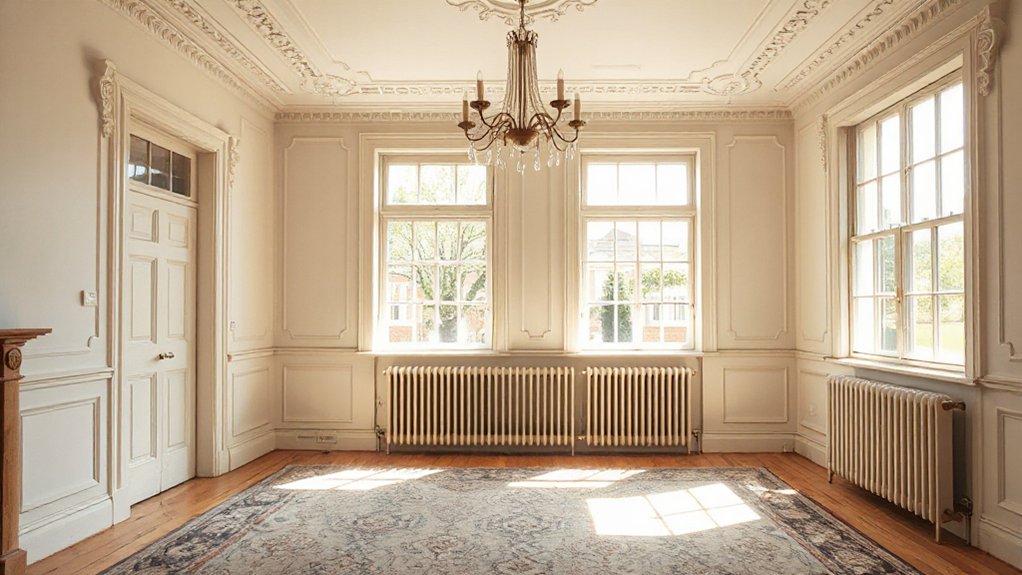
You’ll want radiators that complement historic layouts, balancing size, heat output, and wall real estate. Look for options that fit narrow walls, under windows, and unusual room shapes, so you don’t crowd precious features.
Prioritize layout-friendly choices that pair well with your space and keep heat delivery efficient.
Subheading 1: Fit Historic Radiators
To keep historic layouts intact while modernizing heat, choose radiators that align with the building’s original plumbing and spatial constraints. Start by measuring available wall depth and height, then compare tube sizing to current mains pressure and boiler outputs.
Opt for panel radiators with slim profiles or column radiators that mirror era proportions, minimizing retrofits. Prioritize units with standard connection centers to ease installation and reduce custom piping. Consider finish options that blend with vintage aesthetics without sacrificing heat output.
Check compatibility with your system’s zoning and control options to preserve efficiency. Factor in radiator maintenance needs: access for cleaning, bleed valves, and corrosion resistance.
Collect performance data from installers, select models with verified efficiency, and document installation limits for future upgrades.
Subheading 2: Layout Friendly Options
When choosing radiators for historic layouts, prioritize options that preserve original room proportions and don’t crowd existing features like alcoves, windows, or cabinetry.
Opt for slim profiles, narrow column or panel designs, and compact piping routes that tuck along skirting lines or behind furniture.
Measure available wall length and consider corner or recess placements to maximize heat without disrupting flow.
Choose units with simple mounting and adjustable heat output so you can fine-tune performance around festive gatherings or heavy drape use.
Favor models with efficient convection to reduce room clutter.
Pair radiators with insulation upgrades to minimize heat loss and maintain comfort.
This approach delivers vintage charm while meeting practical needs and energy efficiency goals.
Historic- Friendly Boiler and Heat-Source Options
Historic-friendly boiler and heat-source options prioritize systems that fit within older buildings’ constraints while delivering reliable comfort. You’ll weigh compact footprints, existing chimney connections, and electrical readiness to minimize renovations.
Prefer boilers and heat sources with proven thermal efficiency and low overheat risk, such as sealed-combustion units or modulating boilers that match real-life heat loads.
When possible, consider hydro-tube radiators or baseboard systems that align with ceiling heights and wall widths without major reconfigurations.
Prioritize durable components, easy maintenance access, and standardized parts to reduce downtime.
The design should honor Antique aesthetics while delivering predictable performance, and you’ll notice Vintage efficiency in equipment with long service lives and robust warranties.
Choose installers who document efficiency gains with clear payback estimates.
Smart Controls and Zoning for Odd Layouts
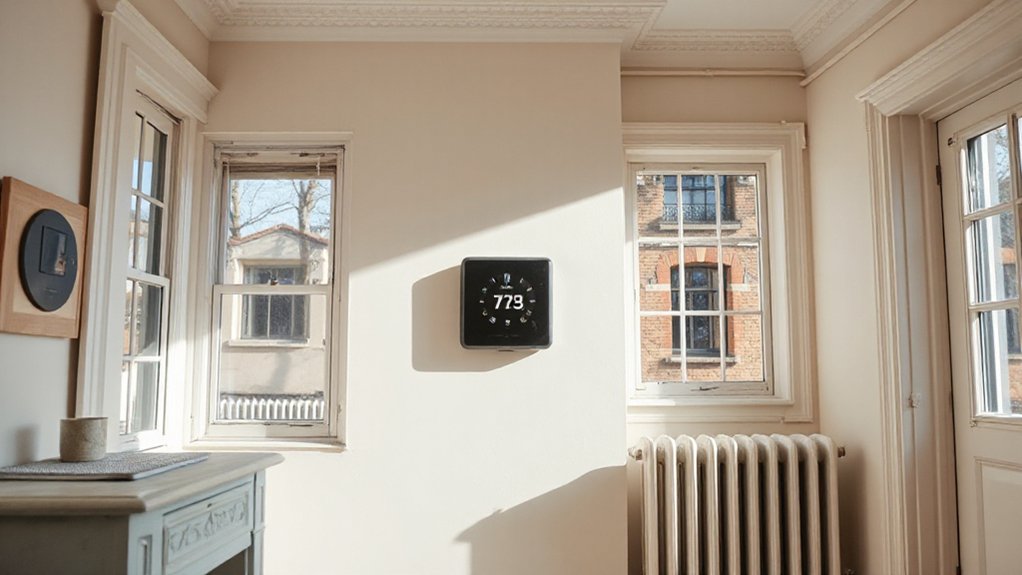
Smart controls and zoning are game changers for odd layouts, letting you tailor comfort to each room without over-sizing the system. You’ll gain precise temperature management through smart zoning, which isolates areas that heat differently and reduces waste.
Adaptive controls learn occupancy patterns, adjusting settings automatically to match daily routines and seasonal shifts. In practice, start with a zoning plan that maps rooms by usage and exposure, then pair dampers or zone valves with a compatible thermostat.
Monitor energy data to verify savings and comfort improvements, adjusting thresholds for mornings, evenings, and occupancy gaps. For older flats, connect zones to a central control hub for quick overrides during guests or repairs.
This approach delivers consistent comfort, lower bills, and easier maintenance.
Space-Saving Solutions That Preserve Character
Space-saving strategies don’t have to sacrifice character; smart design can free up space while preserving a building’s charm. You’ll gain practical layouts by selecting compact radiators, low-profile underwindow units, and slimline piping that minimizes bulk without sacrificing heat output.
Prioritize modular screens, folding panels, and wall-integrated panels that blend with vintage finishes, sustaining vintage charm while you reclaim floor area. Choose venting and control logs that reduce clutter, enabling clean sightlines and preserved architectural details.
For efficiency, pair high-heat-retrofit radiators with superior insulation and smart zoning, ensuring Modern efficiency with fewer energy spikes. Measure room volumes and heat loss to tailor outputs precisely, avoiding overhangs or oversized cores.
The result: a warm, orderly space that respects history while delivering dependable comfort.
Plan Safety, Budget, and Installation Timelines
Planning safety, budget, and installation timelines is the next step after choosing compact, space-conscious radiators. You’ll assess safety codes, electrical capacity, and venting requirements before purchasing any kit.
Create a transparent budget that includes equipment, delivery, labor, and contingencies. Then document a realistic timeline with milestones.
Prioritize emergency preparedness by specifying shutoffs, alarms, and temporary heating plans during retrofit gaps.
Schedule maintenance windows and tell your installer to align with building access constraints and peak demand periods.
Use a phased approach: core system first, controls second, then finishing touches.
Track progress daily and adjust based on supplier lead times.
Maintain a living plan for maintenance scheduling, inspections, and battery or sensor replacements to prevent outages and guarantee lasting performance.
Frequently Asked Questions
How Do I Assess Humidity Impact on Heating Efficiency in Old Flats?
Assess humidity impact by monitoring humidity levels and indoor air quality; high moisture lowers heating efficiency. Track moisture control with a dehumidifier or venting, compare thermostat readings, and optimize insulation. You’ll save energy and stay comfortable with data-driven adjustments.
Can Underfloor Heating Suit Irregular Historic Floor Plans?
Underfloor heating can suit irregular historic floor plans, but you must account for Historic flooring constraints and insulation considerations; guarantee slab or screed compatibility, zones for uneven heat distribution, and thermal loss data to optimize performance and comfort.
Are There Noise Concerns With Retrofitted Heating in Quiet Buildings?
Yes, there can be noise concerns, but you’ll mostly notice negligible impacts with proper installation. Focus on sound insulation and noise mitigation strategies, like vibration-damping mounts and insulated manifolds, to keep your retrofit quiet and data-driven.
What Permits or Permissions Are Typically Required for Retrofits?
You’ll typically need building codes compliance and permit applications filed with your local authority. Prepare plans, notify neighbors if required, and schedule inspections to confirm safety and adherence to standards for retrofits. This data-driven approach minimizes delays and disputes.
How Often Should Historic Radiators Be Serviced for Efficiency?
Radiator maintenance should be performed annually, with heating inspections every 12 months. You’ll keep efficiency high and surprises low, spotting leaks early and saving energy costs through proactive care and practical, data-driven maintenance routines.
Conclusion
If you prioritize space, save energy, and protect character, you can modernize without compromises. Data shows that smart controls and zoning can cut heating waste by up to 30%, especially in irregular layouts. Start with a phased plan: seal leaks, pick slim radiators, and pair a efficient boiler with smart thermostats. Track costs, calibrate rooms, and schedule tweaks. You’ll enjoy steadier comfort, lower bills, and preserved historic charm—without sacrificing safety or aesthetics.