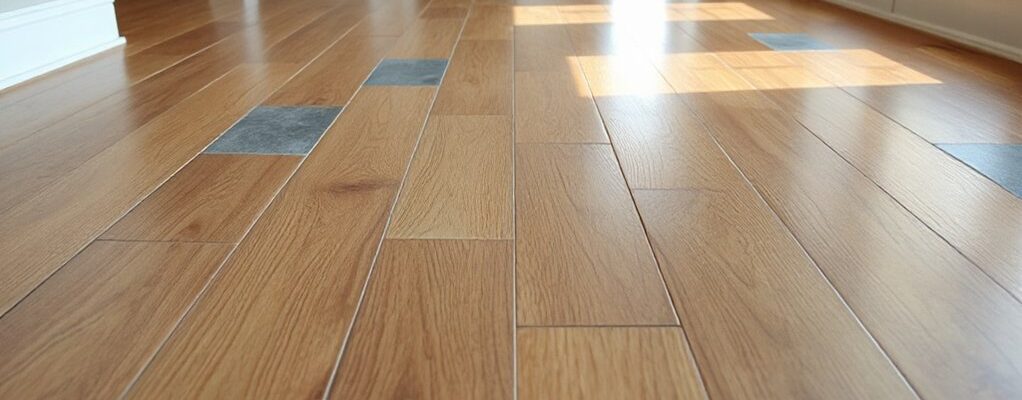
You’ll create a smooth flow between rooms by grounding each space in a shared color palette and similar undertones, then reinforcing it with consistent sheen, plank width, and grain direction. Use textures and warmth to bridge areas without shouting passages, and plan intentional thresholds or borders that read as design choices, not interruptions. Keep rhythm with scale and direction, and layer rugs for comfort. Start with the basics, then ask what your next move should be to keep the journey cohesive.
What Coordinating Flooring Really Means Across Rooms
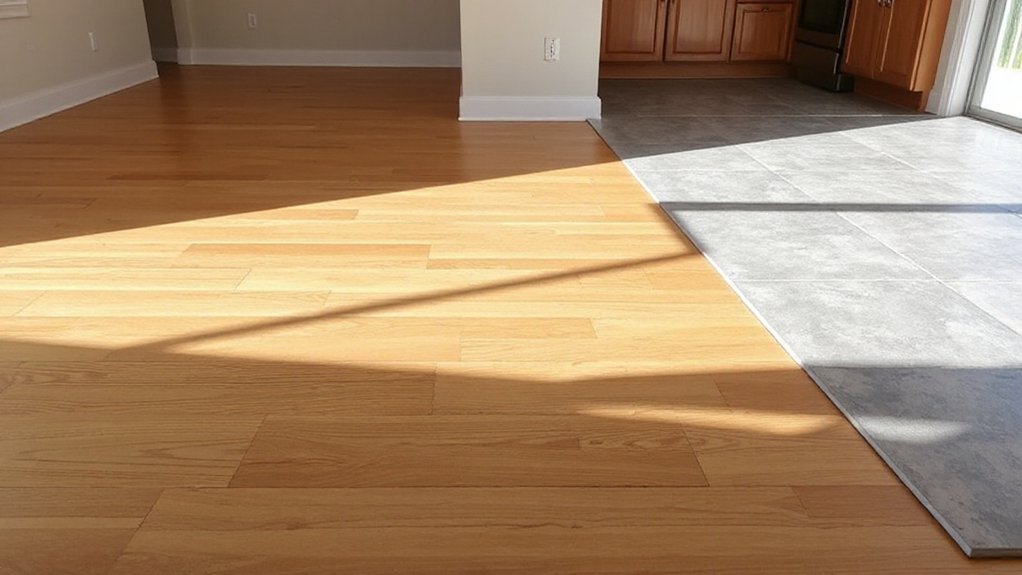
Coordinating flooring across rooms means choosing materials, colors, and patterns that create a cohesive flow from one space to the next. You’ll define a unifying base—like a shared timber tone or a subtle tile scale—that travels through entryways, living areas, and hallways. Then you layer texture and contrast thoughtfully, so each room reads as part of a larger story. Focus on furniture placement to guarantee sightlines remain clean and movement uninterrupted, avoiding abrupt shifts in direction that disrupt rhythm. Maintain lighting consistency by selecting finishes that reflect similar warmth or coolness, so shadows and highlights feel related rather than jarring. Finish with purposeful transitions, such as step-down thresholds or area rugs, to guide the eye and preserve continuity.
Start With a Shared Color Palette and Undertones
A shared color palette and undertones set the foundation for seamless shifts, so start by picking a base set of hues that appear throughout each room. Choose two or three core colors that recur in walls, large accents, and flooring to anchor the space. Consider undertone matching across tiles and finishes; guarantee warm, cool, or neutral bases align so you don’t fight lighting. Test color harmony under different lighting—morning, noon, and artificial light—before committing. Map a simple swatch plan, labeling each room with its dominant shade and the supporting hues. Favor neutral backdrops that allow the floor to shine, then bring in accents that riff subtly without clashing. With a cohesive palette, progression feel intentional, cohesive, and visually calm.
Bridge Spaces With Material Choices (Texture, Warmth, Continuity)
Texture and warmth are your connectors between rooms, so choose materials that feel cohesive yet inviting. You should aim for subtle continuity rather than exact matches, letting texture and tone tie spaces together. Consider flooring installation details that support flow: align plank widths, runs, and grain direction across doorways, and use transitions that remain quietly programmable rather than jarring. Favor materials with natural warmth—soft finishes, low sheen, and color undertones that echo adjacent rooms. Balance durability with comfort; pick surfaces that tolerate traffic yet feel welcoming underfoot. Test acoustics by pairing soft rugs in busy zones with resilient underlayment to reduce tread noise. Prioritize material durability in high-traffic paths, ensuring a consistent vibe without sacrificing practicality or style.
Transitions That Read as Intentional Design Elements
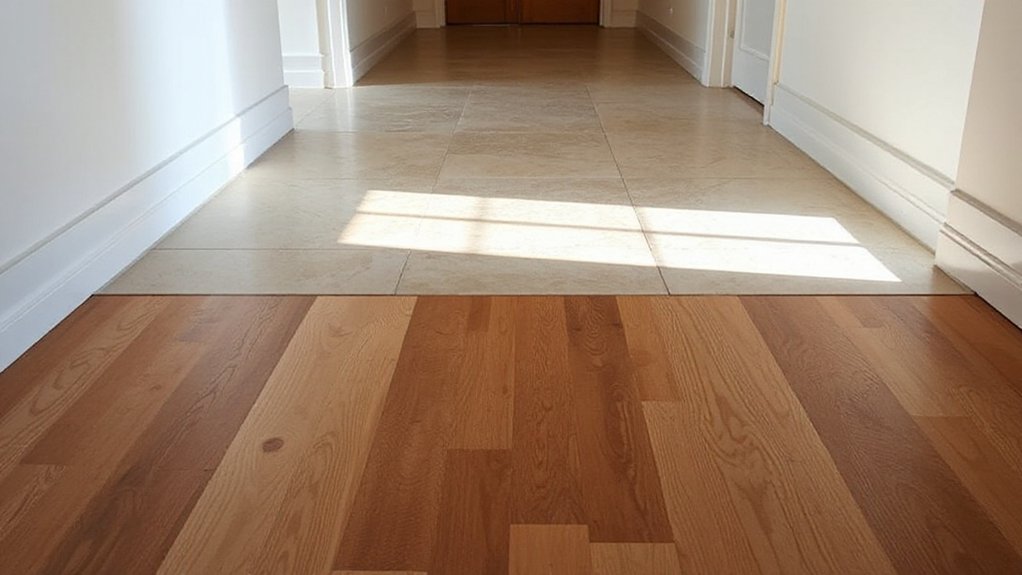
You can make shifts read as intentional design elements by choosing seamless material changes that feel deliberate and cohesive. Consider how a continuous edge or a subtle threshold guides the eye from room to room, while intentional color play adds a purposeful cue without jarring shifts. Prioritize consistent sheen and scale so the progressions feel like a single, curated story rather than a stop-and-start change.
Seamless Material Transitions
Seamless shifts between flooring materials hinge on intentional planning and precise execution, so you can walk from room to room without a perceptible break. To achieve cohesion, align thicknesses, passages, and joins in a single line that feels natural. Use decorative borders or contrasting trims to mark logical boundaries without shouting change, then taper the edge with a gentle ramp or reducer strip.
- Choose compatible substrates and profiles, ensuring underlayment and subfloor are level and stable.
- Install a connection strip that complements both materials, keeping a slim gap for expansion.
- Verify sightlines and lighting so the passage reads as a designed feature, not a flaw.
Intentional Color Play
Color can be a deliberate tool to unify or delineate spaces; when used with intention, shifts become design statements rather than incidental changes. In this section, you’ll learn to create intentional color play that reads as cohesive design, not random contrast. Start with a restrained palette across rooms, then use color blocking to signal function or flow, keeping changes visually purposeful. Choose one dominant shade per zone and add a supporting hue at doorways or thresholds to cue movement. Pattern mixing adds texture without chaos: pair a geometric rug with a subtle painted floor band, or combine matte and gloss finishes within the same hue family. Use color as a narrative thread, ensuring each modification feels deliberate and legible, reinforcing overall rhythm and balance.
Patterns and Textures That Foster Flow (Direction, Scale, Rhythm)
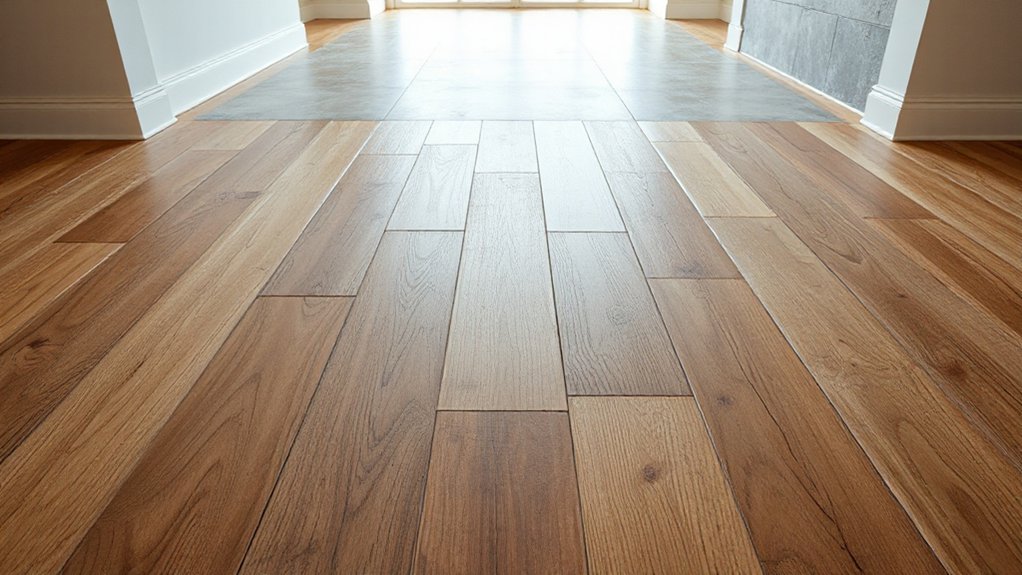
Patterns and textures guide the eye and set a rhythm that unifies spaces across rooms. You’ll shape flow by aligning direction, scale, and rhythm so changeover feel seamless rather than abrupt. Focus on pattern harmony and texture contrast to keep variety without fragmentation.
- Choose repeating motifs that travel from room to room, maintaining consistent scale for a unified look.
- Alternate textures strategically—matte surfaces with a subtle sheen create depth while guiding movement.
- Vary pattern density gradually, so energy shifts feel intentional rather than jarring.
In practice, keep borders quiet and shiftings predictable, letting the eye glide rather than bounce. Your goal is cohesive movement: patterns echo, textures differentiate, and the overall tempo stays calm and purposeful.
Practical Tips for Busy, High-Traffic Homes
High-traffic homes demand flooring choices and layouts that withstand daily wear while still feeling inviting. You’ll maximize durability by selecting resilient materials, such as hard-wearing vinyl, ceramic tile, or reclaimed hardwood with a tough finish. Prioritize wide grout lines and slip-resistant surfaces near entryways and kitchens to improve safety and cleanliness. Use coordinated flows, so rooms read as one, not disjointed. Consider layering with area rugs that feature simple, durable fibers and decorative accents to hide inevitable footprints without cluttering style. Add practical underfoot comfort with sound-dampening underlayment under hard surfaces, reducing noise and fatigue. Maintain flooring durability with consistent cleaning routines and prompt spill management, preserving color, texture, and sheen while keeping spaces welcoming.
Common Mistakes to Avoid: and Quick Fixes
Even with the best plans, common flooring mistakes can undermine durability and flow unless you spot and fix them early. You’ll save time, money, and headaches by recognizing these pitfalls and applying quick fixes now.
1) Skip testing moisture or underlayment requirements. Quick fix: run a moisture test and install the correct underlayment to prevent warping and gaps, especially in kitchens and basements.
2) Ignore level changes between rooms. Quick fix: fill low spots and sand high spots; use transition strips designed for your chosen material to preserve a smooth, even path.
3) Overlook budget considerations. Quick fix: reconcile material costs, labor, and long-term maintenance up front; select durable finishes that fit your budget and reduce future repairs.
Remember flooring installation success hinges on planning, precision, and practical adjustments.
Frequently Asked Questions
How Do I Choose Flooring That Hides Wear in Busy Areas?
Sure—choose durable, forgiving flooring like luxury vinyl or porcelain with matte finish; darker tones hide wear better. Do durability testing and material comparisons, noting scratch resistance, grout durability, and foot traffic impact to guide your selection.
What Color Undertones Work Best Across Different Rooms?
Undertone matching guides color harmony across spaces; choose neutral bases with subtle warmth or coolness. You’ll balance undertones by testing samples in lighting, ensuring consistent undertone matching, then select complementary hues for cohesive, durable flooring throughout your home.
Which Transitions Feel Seamless Without Door Thresholds?
Seamless shifts happen where doorways align visually and floor heights match, creating a smooth, uninterrupted flow. You’ll love doorway design that respects sightlines and color, maximizing visual flow across rooms without thresholds, avoiding abrupt jolts or mismatched shifts.
How Many Flooring Materials Are Too Many in One Home?
You should limit to 3–4 flooring materials per home. Too many complicates flows and costs. Focus on flooring durability and material compatibility, ensuring shifts are smooth, durable, and cohesive across rooms. Choose durable, compatible options and maintain consistent tones.
Can Patterns Unify Diverse Room Styles Without Clash?
Yes, patterns can unify diverse room styles without clash. Maintain pattern continuity across spaces and furniture, use a restrained color palette, and prioritize proportional scale. This creates visual harmony you’ll notice in how rooms feel as one.
Conclusion
Coordinating flooring isn’t about matching every plank; it’s about pairing colors, textures, and trims so spaces feel connected. Start with a shared palette, then bridge rooms with similar sheens, widths, and grain directions. Use gentle thresholds and purposeful patterns to cue passages, not interrupt them. Think of your home as a single river—each room a bend that keeps current flowing. Plan for durability with rugs and ramps, and keep rhythm steady for a calm, cohesive flow.