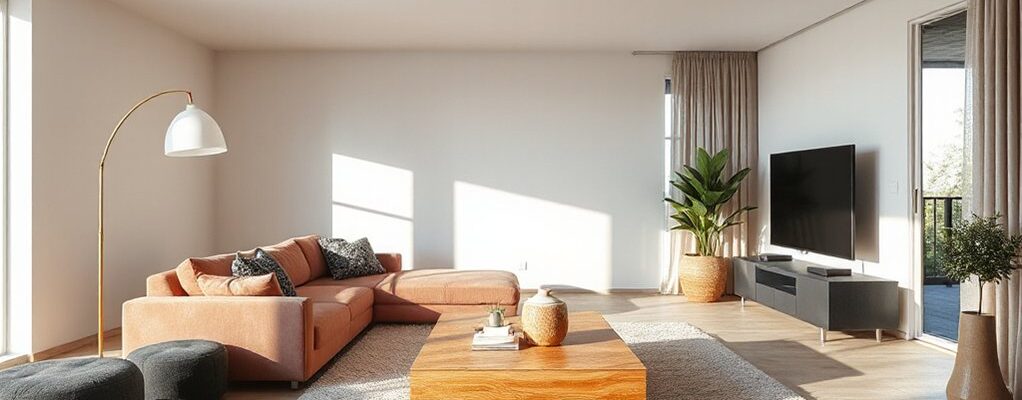
To modernize a new-build living room, you’ll define a clean, cohesive language—neutrals with bold accents, exposed timber or concrete, and purposeful metals. Layer lighting for function and mood; choose modular furniture with concealed storage to keep lines uncluttered. Prioritize durable finishes and easy maintenance, then add textured textiles and statement art for depth. Stay disciplined with a restrained palette, and you’ll see where the space asks to go next… compelling you to map the details.
Define Your Modern New-Build Aesthetic: Establishing a Cohesive Design Language
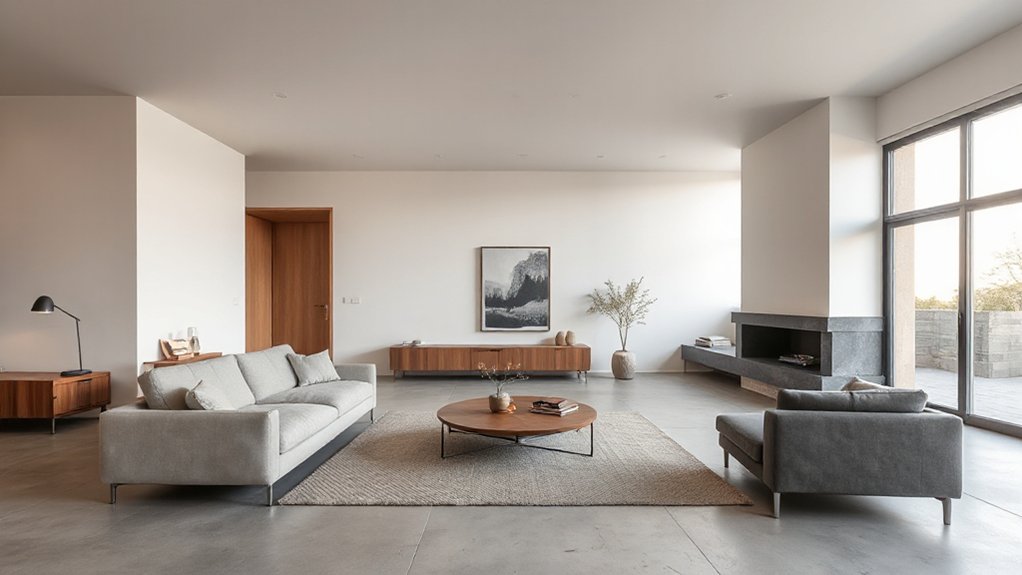
To define a modern new-build aesthetic, start with a clear design language: choose a restrained palette, clean lines, and purposeful materials that echo across spaces. You shape this language by aligning architectural form, furniture, and surfaces into a single, readable footprint.
Start with structural honesty: exposed timber, concrete, or metal accents that signal intentionality. Then layer texture and tactility through minimal details, avoiding ornament for impact.
Consider historical influences to ground the space and guide restraint, ensuring references feel natural rather than nostalgic. Let artistic expressions emerge through carefully placed objects, lighting, and wayfinding cues that amplify cohesion without crowding sightlines.
Maintain consistency in scale and proportion, letting every element reinforce the overarching narrative. Your cohesive aesthetic communicates confidence, control, and a forward-looking, timeless appeal.
Choose a Flexible, Longevity-Focused Color Palette
Color choices should anchor your modern living room while staying adaptable over time. You select a flexible palette built on neutral anchors, then layer with accents that can shift as trends move.
Prioritize color harmony across walls, textiles, and furniture so shifts feel intentional, not arbitrary. Choose midtone neutrals with cool and warm undertones that riff subtly with timber, metal, and stone finishes.
For longevity, prefer matte or eggshell finishes that resist showing wear and wipe clean easily. Limit high-contrast pairings; lean into tonal progressions that let you swap decor without repainting.
Consider a core palette that remains consistent for years, then introduce small, temporary accents that you can update. Remember paint durability matters: durable formulas, proper prep, and quality tools maximize lasting impact.
Layered Lighting for Mood, Function, and Tech
Layered lighting sets the tone and boosts function, starting with basics like ambient, task, and accent layers.
You’ll tune mood with dimmers and warm tones, while pairing smart tech for scenes and schedules.
This approach keeps your space adaptable, visually crisp, and ready for tomorrow’s gadgets.
Layered Lighting Basics
Layered lighting blends mood, task, and tech so you can switch from a bright daytime vibe to a cozier evening feel without clutter. You’ll balance ambient, task, and accent layers to control atmosphere with precision.
Use ceiling fixtures for even base light, then add directional lamps for focused tasks and artwork. Dimmers matter: they preserve color accuracy and energy use while adjusting mood on demand.
Place lighting to minimize glare and shadows, aligning with seating and work zones. Accent elements like an accent wall or statement art become focal points when lit softly, without overpowering the room.
Keep wiring tidy, choose compatible color temperatures, and test at different times of day. This foundation supports future upgrades and seamless adaptability.
Mood-Setting With Illumination
How you light a space shapes mood as much as mood shapes usage. You layer illumination to balance ambiance, task needs, and tech restraint.
Begin with ambient glow—soft, even, and indirect—to create a calm backdrop without glare. Add task lighting where you read, work, or craft, choosing adjustable fixtures that angle precisely and minimize shadows.
Keep color temperature consistent: warm for relaxation, cooler for focus, with a unified dimming system to shift atmospheres quickly.
Elevate texture with directional accents that highlight architectural details or art without overpowering the room. Limit exposed bulbs and synchronize fixtures to avoid visual clutter.
Prioritize clean lines, matte finishes, and discreet cabling. The result is a versatile, modern living room that feels intentional and timeless.
Smart Tech Integration
Smart tech integration unifies mood, function, and control by embedding lighting into a seamless system. You’ll design layered lighting that responds to scenes, not to gimmicks. Use a centralized hub for core commands, then add room- and task-specific layers to avoid overlighting.
Voice command lets you shift from bright work to intimate evenings without lifting a finger; keep routines simple and predictable. App integration should mirror real usage: quick toggles, presets, and calendar-triggered scenes.
Prioritize compatibility over novelty, ensuring devices share common ecosystems and standards. Place dimmers and tunable LEDs at key zones—sofas, dining, entry—while sensors modulate intensity automatically.
Keep cables tidy, outlets accessible, and firmware current. A restrained setup yields lasting ambience, effortless control, and a quietly modern living room.
Textures and Modular Furniture That Adapt to Life
Textures anchor a living room’s mood, so mix tactile surfaces—soft felt, woven cord, and matte concrete—in restrained accents that soften lines without shouting. You select pieces that flex with daily life, embracing modular adaptability to reconfigure layouts as needs shift.
Start with a neutral groundwork: low-profile sofas, modular modules, and coffee tables that slide or stack. Layer textiles for tonal depth, then swap cushions for mood or season without overhauling structure. Prioritize materials with durable finishes that wear gracefully under frequent reassembly.
Keep hardware minimal, so edges feel crisp rather than cluttered. Use texture as the primary driver of contrast: combine matte surfaces with subtle sheen in controlled doses. This approach preserves space perception while enabling fluid adaptation to activities, guests, and evolving routines through intentional, compact modularity.
Textural contrast reinforces purposeful simplicity, and modular adaptability underpins lasting versatility.
Sleek, Hidden Storage Solutions for Small Footprints
Hidden storage should vanish into the room’s footprint while staying immediately usable. You’ll design with purpose, not excess, prioritizing accessible concealment over visual clutter.
Start with concealed compartments integrated into seating platforms, coffee tables, and window benches, so every surface earns utility without expanding the footprint.
Choose multi functional furniture that morphs from display to storage with quiet efficiency—think lift-top consoles, hollow ottomans, and slim desks that tuck away essentials.
Use rails, slim dividers, and label-friendly bins to keep items organized yet invisible.
Favor matte finishes and flush handles to preserve clean lines.
Measure gaps carefully, letting built-in nooks breathe—corners become opportunities, not dead zones.
The result is a calmer, more flexible living room where form and function align.
Durable Materials and Finishes for a New Build
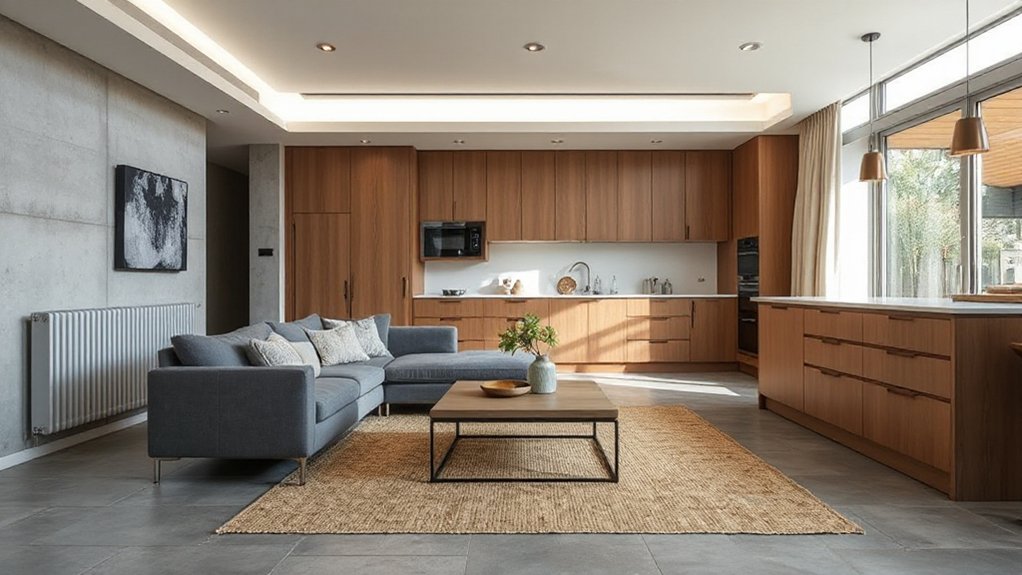
Durable materials set the backbone of a new build, pairing long-term performance with clean, modern lines. You select surfaces that resist wear while echoing your design intent, avoiding faddish overreaches.
Prioritize materials with stable dimensions, low VOCs, and easy maintenance, so you retain a pristine look over time. Opt for solid-wood or high-grade laminates for cabinetry, and treat floors with durable finishes that resist scuffs and moisture.
Eco-friendly finishes reduce ecological impact without sacrificing durability, while industrial-inspired textures add character through tactile, built-for-life surfaces.
Choose Certifications and warranty-backed options to verify performance and sustainability. Balance matte and subtly reflective textures to preserve light, depth, and clarity.
Finally, align finishes with hardware, fixtures, and trim for cohesive modern appeal.
Quick, Budget-Smart Upgrades That Elevate Immediately
Consider quick-fit upgrades that you can install this weekend, no fluff, just impact. Start with budget-smart essentials that instantly refresh mood, lighting, and texture.
We’ll zero in on practical tweaks you can implement now to elevate the space without overhauling it.
Quick-Fit Upgrades
Quick-fit upgrades deliver immediate impact without breaking the bank. You’ll redefine the room with fast, deliberate changes that don’t require major upheaval.
Start by swapping oversized accessories for lean silhouettes: a slim media console, low-profile lighting, and a curated rug hero.
Lean into faux finishes on a single feature wall or console surface to add texture without full renovation, keeping the palette cohesive and restrained.
Introduce statement art in a decisive, well‑framed piece to anchor the seating zone and guide the eye.
Opt for modular seating or a rethink of your throw pillows to sharpen contrast without clutter.
Finally, fine-tune hardware and trim details; small touches create a polished, modern vibe in minutes.
Budget-Smart Essentials
Budget-smart upgrades deliver immediate lift without blowing your budget. You’ll focus on crisp choices that read as intentional, not cluttered.
Swap in versatile essentials: a compact coffee table with clean lines, monitor your lighting plan, and select textiles that pull color across the room.
Choose finishes that echo your walls and floors to avoid visual noise. Incorporate vintage accessories sparingly to add character without overwhelming; one well-placed piece can spark conversation and depth.
Elevate the palette with a limited mix of neutrals and a bold accent hue.
For impact, hang statement art at eye level, keeping frames slim and cohesive.
Seek durable materials, easy maintenance, and modular furniture that adapts as needs evolve.
Subtle upgrades, maximum coherence.
Frequently Asked Questions
How Can I Future-Proof My Living Room Layout for Changes in Family Size?
Future-proof your living room by choosing modular furniture and flexible storage, so layouts adapt as family size changes. You’ll reconfigure rooms effortlessly, keep clutter down, and preserve sightlines with adjustable seating, airy dashboards, and scalable storage that grows with you.
What Budget-Friendly Tech Upgrades Blend Seamlessly With Modern Design?
Smart lighting and wireless speakers are budget-friendly upgrades you can blend with clean lines; you’ll enjoy minimalist control, effortless integration, and subtle tech presence that keeps your modern design precise, functional, and trend-conscious without clutter.
Which Low-Maintenance Plants Suit a Sunlit New-Build Living Space?
These sunlit spaces thrive with indoor greenery: choose low-maintenance plants like snake plants, pothos, and ZZ plants. You’ll enjoy easy care, strong air quality, and minimalist appeal, keeping your living room sleek while still lush and trend-conscious.
How Can I Integrate Sustainable, Durable Flooring Without a Showroom Look?
You can, by choosing eco friendly materials and reclaimed wood, achieving durable, sustainable flooring without a showroom feel. In fact, 72% prefer authenticity; lean into texture, simple lines, and tight joins for a timeless, minimalist, trend-conscious result.
What Instant Décor Accents Achieve a High-End Vibe on a Tight Timeline?
You can elevate instantly with statement pieces and statement lighting, choosing bold forms and clean lines. You’ll mix textures, keep surfaces uncluttered, and stay precision-focused, making a chic, trend-conscious impact even on a tight timeline.
Conclusion
You’ve set a strong foundation for a modern, adaptable living room. Keep your palette restrained, layers intentional, and storage discreet, so space remains calm and flexible. Choose durable finishes that age gracefully, and loom in texture with purpose. Updates should feel strategic, not faddish, delivering impact with minimal clutter. Think of your room as a well-tuned instrument—every element in harmony, ready to shift with life’s tempo, yet always precise in its note.