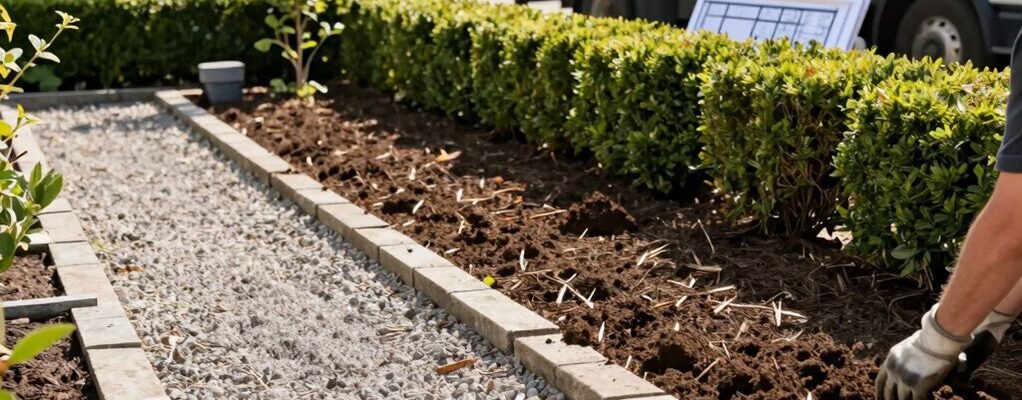
Choosing between DIY and hiring a landscaper hinges on goals, budget, and timeline. Start with clear objectives—space for rest, entertaining, food, or wildlife—and assess site constraints like sunlight, drainage, and soils. Compare DIY costs (materials, tools, time) against pro value (design, permit handling, guarantees). Budget for soil health tests and resilient plants. Reserve professional help for high‑impact tasks like grading, drainage, or canopy changes. If you want precise guidance on matching approach to site realities, you’ll uncover more.
Assessing Your Goals for the Garden Makeover
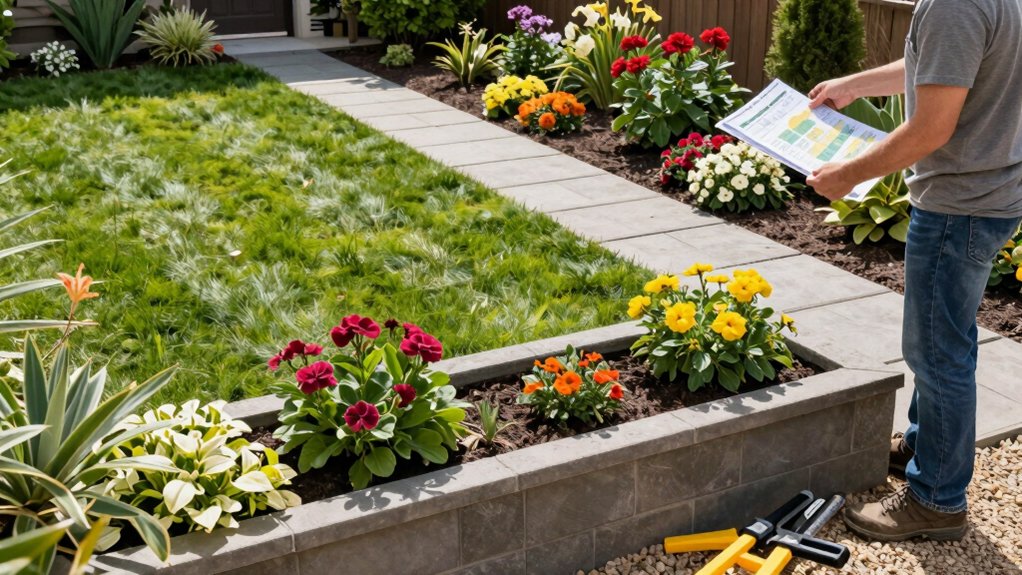
Evaluating your goals for the garden makeover starts with clarifying what you want the space to accomplish. You’ll translate priorities into measurable criteria, then align them with site constraints and resources.
Start by identifying primary functions: relaxation, entertaining, food production, or wildlife support. Quantify success using objective metrics—area covered by usable seating, anticipated plant density, shade levels, and irrigation efficiency.
Map constraints like sunlight hours, soil type, drainage, and nutrient availability. Prioritize requirements into must-haves and nice-to-haves, and establish a sequence for implementation.
Consider accessibility, maintenance workload, and seasonal timing to avoid conflicts. Develop a baseline performance target for each goal, enabling you to compare design options later.
Document assumptions, select evaluation methods, and prepare for iterative refinement as plans evolve.
Budgeting: DIY Costs vs. Hiring a Pro
You’ll compare DIY cost breakdowns with pro installation value to gauge where added expertise saves time and fixes potential mistakes.
Consider hidden budget risks like material waste, scheduling delays, and warranty gaps that shift costs after you start.
This shows where DIY is efficient and where a pro’s accountability matters for long-term performance.
DIY Cost Breakdown
Budgeting for a DIY garden project hinges on a clear cost breakdown: material prices, tool investments, labor time, and potential overruns. You must map each category to a usable figure, then sum to establish a realistic ceiling.
Material prices drive the baseline; account for waste, delivery, and seasonal fluctuations.
Tool investments represent one-time caps vs. long-term reuse, so evaluate rental versus purchase and maintenance.
Labor time translates to opportunity costs and schedule risk, not merely hours, but efficiency gains from existing skill.
Overruns stem from design changes, soil conditions, and permit or inspection needs; quantify contingencies—typically 10–20% of total.
When comparing DIY to pro, normalize ancillary costs like waste disposal and landscape fabric, ensuring apples-to-apples.
A disciplined, data-first approach enables credible cost forecasting and informed decision-making.
Pro Installation Value
Pro installation value comes into focus when you compare professional costs to your DIY budget estimates. You’ll quantify labor hours, material sourcing, and project sequencing to assess value.
Professionals bundle design, permitting familiarity, and workflow efficiencies into a single rate, then justify it against your anticipated time investment and learning curve. Consider upfront quotes, contingency buffers, and post-installation guarantees; these factors translate into reduced risk and predictable outcomes.
You should evaluate scope specificity—grading, drainage, plant maturity—and how each task maps to crew productivity. Analyze equipment ownership versus rental, scheduling reliability, and site access constraints that affect cost.
Finally, compare long‑term maintenance implications and warranty coverage, recognizing that higher initial spend can yield lower lifecycle costs when performance targets are met.
Hidden Budget Risks
Hidden budget risks arise when DIY costs creep beyond initial estimates due to underappreciated tasks, scope drift, and unreliable supplier data. You’ll encounter frequent mismatch between planned and actual quantities, triggering overruns as material waste, freight, or permit charges surface late.
Labor assumptions often ignore soft costs: project management, access limitations, and scheduling conflicts that stall progress and force expedited purchases.
When you automate purchasing or substitute materials, you risk durability shortfalls, leading to replacements and warranty disputes that cycle into further expenses.
Proactive budgeting requires explicit contingency buffers, traceable cost breakdowns, and supplier risk assessments.
You should track variance monthly, revalidate scope with design intent, and document decisions to prevent retroactive price escalations from eroding expected ROI and garden reform timelines.
Time and Commitment: How Much DIY Is Realistic
Assess how much time you’ll actually invest by mapping a realistic time investment across tasks and seasons. Then compare it to your available bandwidth.
Assess your skill gap honestly—identify where training or pro help is needed to avoid costly missteps.
Use budget-friendly planning to align scope with time, ensuring a feasible DIY pace without sacrificing outcomes.
Time Investment Realities
Allocating time for DIY garden work is a practical constraint you’ll face early on, since hands-on tasks escalate with plant selection, soil prep, and ongoing maintenance. You’ll map a weekly cadence that aligns with seasonal demands, irrigation checks, and fertilization cycles, avoiding overcommitment.
Realistic estimates require breaking tasks into discrete durations: inspection, planning, execution, and verification. Expect churn from weather delays, pest monitoring, and material delivery windows, which compress or extend windows for each project phase.
Time intensity scales with container setups, soil amendments, and mulching, not just planting. Track labor hours against objective milestones to prevent scope creep. Consider contingencies for weekend-only work or contractor handoffs, ensuring you can sustain momentum without burnout.
Informed pacing reduces rework and clarifies when outsourcing for limited, high-precision tasks.
Skill Gap Assessment
How much DIY is realistic hinges on a clear skill map and time budget. You map essential tasks to concrete abilities: soil assessment, drainage tweaks, plant placement, tool handling, and light carpentry.
Then you quantify proficiency against required competency, scoring gaps from novice to expert. Next, translate gaps into time estimates, noting learning curves and practice legitimacy.
You prioritize tasks by risk and impact, reserving high-stakes work for qualified hands when necessary. You validate your self-assessment with small experiments and documented outcomes, adjusting plans as you learn.
You identify resource constraints, equipment access, and safety considerations, confirming whether error tolerance is acceptable. Finally, you create a phased plan that aligns skills, schedule, and project milestones, ensuring realism without sacrificing quality.
Budget-Friendly Planning
Determining a practical DIY scope hinges on balancing time, cost, and skill access. You’ll map tasks to capability, then estimate effort per item using objective units (hours, material costs, maintenance needs).
Prioritize high-value gains—soil prep, irrigation, and structural fixes—before cosmetic touches. Use a phased plan with milestones to prevent scope creep and to reveal budget shocks early.
Compare material options by life-cycle cost, not just upfront price, and factor delivery time into sequencing. Build a realistic calendar that reserves buffer for weather and learning curves; mark critical-path activities and optional contingencies.
Track actuals versus estimates in a simple spreadsheet, adjusting as you go. Finally, recognize when collaboration or outsourcing reduces total time or risk without inflating total spend beyond reasoned limits.
Soil Health and Plant Selection: What You Need to Know
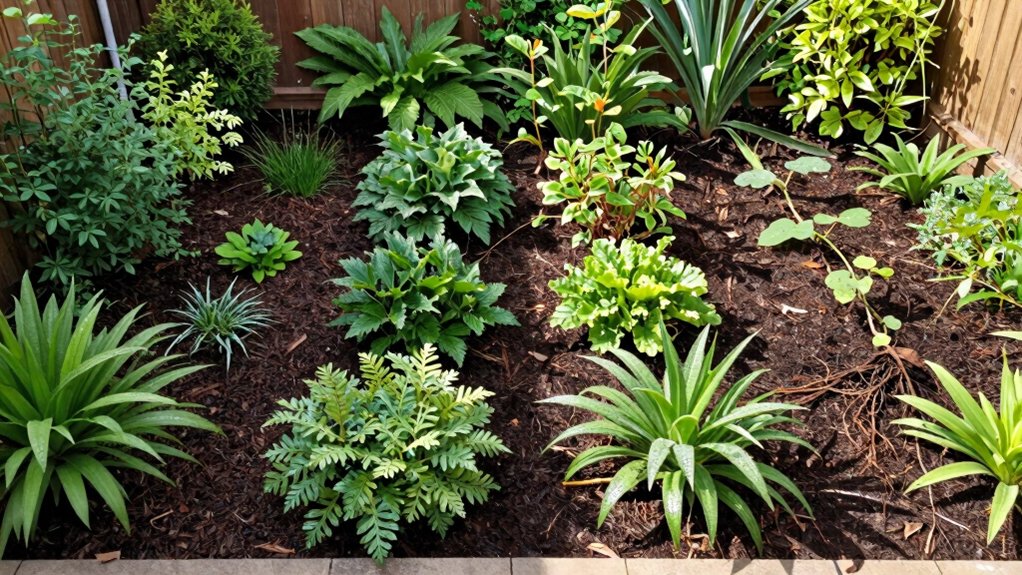
Soil health sets the stage for successful plant selection by defining how deeply roots can penetrate, how efficiently nutrients are taken up, and how well the site resists pests and disease. You evaluate soil texture, structure, and organic matter to estimate water retention and aeration.
Conduct a basic pH test and nutrient screen to align species with available macro- and micronutrients. Choose resilient varieties that tolerate local moisture regimes and salinity, then match root morphology to soil depth and compaction.
Consider mycorrhizal compatibility to improve nutrient exchange and drought tolerance. Plan for soil amendments only when tests indicate deficiencies, targeting compost, biochar, or specific minerals without overcorrection.
Finally, prioritize plant diversity to foster functional redundancy and reduce disease pressure. Use data-driven selections to minimize maintenance and maximize establishment success.
Design Freedom vs. Professional Vision
Design freedom and professional vision must be balanced after evaluating soil capacity and plant requirements. You’ll compare your preferred aesthetic with functional constraints, noting how space, light, and drainage influence design choices.
You’re not just selecting colors; you’re aligning goals with project feasibility, cost, and maintenance implications. A DIY approach grants experimentation latitude, yet professional vision provides seasonal scheduling, mature planting sequences, and risk assessment grounded in horticultural science.
You’ll assess where your spontaneity enhances vitality versus where expert planning minimizes soil disruption, irrigation errors, or root conflicts. Communicate intent clearly, documenting constraints, milestones, and success criteria.
The outcome hinges on decision points: scope, plant compatibility, irrigation accuracy, and material durability. Seek a synthesis that delivers both expressive form and resilient performance within established budgets.
Maintenance Needs: Long-Term Care After Renovation
Post-renovation maintenance hinges on establishing a practical cadence for plant health, irrigation discipline, and material durability; without that, gains from the renovation quickly erode. You’ll implement a scheduled inspection routine to detect stress, disease, and irrigation inefficiencies before they escalate.
Track soil moisture with calibrated sensors and adjust watering to match seasonal evapotranspiration, avoiding overwatering that promotes root rot or under-watering that stunts growth. Prioritize mulching, pruning, and selective fertigation to sustain vigor without encouraging nutrient runoff.
Material durability requires periodic cleaning, protective coatings, and timely repairs to prevent accelerated degradation from weather exposure. Document all interventions, quantify performance metrics, and revise thresholds seasonally.
A data-driven cadence minimizes reactive work, preserves plant establishment, and sustains your landscape’s structural integrity after renovation.
When to Call in a Pro for a High-Impact Change
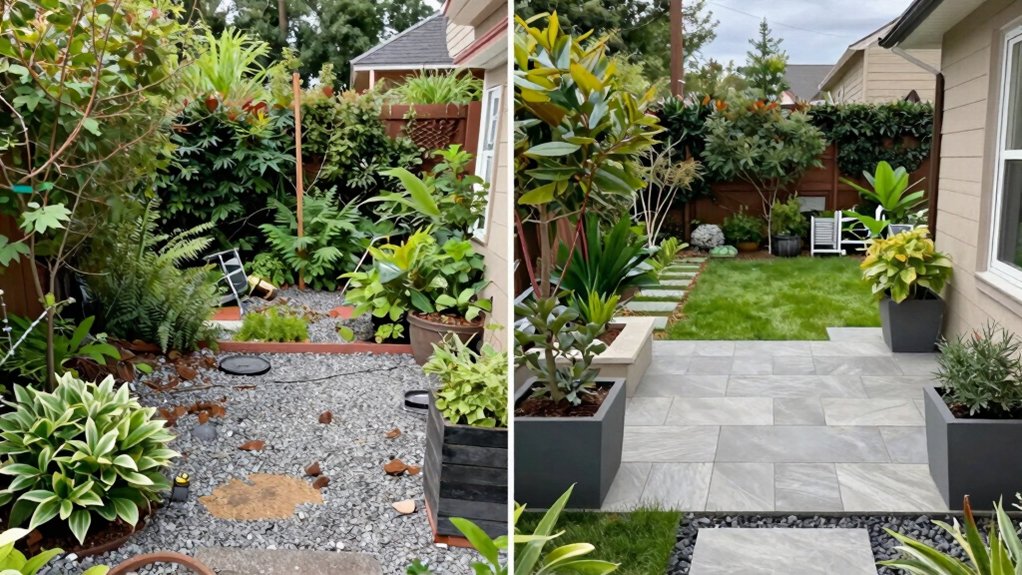
Recognize when a high-impact change warrants professional input: if a planned modification risks structural integrity, safety, or long-term plant health beyond your in-house capabilities, bring in a licensed arborist, landscape architect, or irrigation specialist.
You assess site constraints, load bearing, drainage, and subsurface conditions before committing resources.
When pilot testing reveals persistent drainage issues, soil instability, or incompatible plant–space relationships, a pro’s formal assessment saves time and expense.
Structural alterations, grading shifts, or changes to hardscape footprints demand code compliance and precision modeling; DIY adjustments here increase risk of failure.
For complex irrigation, soil remediation, or canopy management, you’ll benefit from calibrated specifications, performance criteria, and warranties.
In these cases, professional collaboration accelerates result predictability and sustains long-term garden health.
Conclusion
You can align garden goals with reality by weighing DIY costs against pro fees, then factoring time, soil health, and maintenance. A key stat: homes with professionally redesigned landscapes see an average 15–20% uptick in property value, alongside healthier soil and plant performance when ongoing care is planned. If you crave design freedom but lack time, a hybrid approach—concepts from a pro, execution by you—often yields the strongest, most sustainable results. Decide, then commit with a clear, data‑driven plan.