Yes, you can paint Trex decking, but only after proper prep and using a compatible, UV-stable coating system with a high-adhesion primer designed for composite substrates. Start by inspecting the surface, removing peeling coatings, lightly sanding, and cleaning with deck detergent until dry. Choose 100% acrylic, water-based topcoats with mildew resistance and UV stability, then apply primer evenly and in thin coats. Sealing after curing helps durability and warranty considerations; more details await to guide you step by step.
Can You Paint Trex Decking? Yes: Here’s When to Do It
Yes, you can paint Trex decking, but you should wait until it’s properly prepped and you’re using coatings compatible with composite surfaces. You’ll assess existing finishes first, since some coatings won’t bond well.
If you see paint peeling, remove loose material with a scraper and medium-grit pad, then clean thoroughly to remove contaminants.
For color matching, choose a coating labeled for composite substrates and verify UV resistance and flexibility to prevent cracking.
Sand the surface lightly to create a mechanical key, then mask non-deck areas.
Apply a high-adhesion primer formulated for plastics or composites, followed by two thin topcoats rather than one heavy coat.
Monitor for adhesion issues and repaint sooner if color shifts or peeling recurs.
Why Trex Decking Behaves Differently From Wood
Trex decking behaves differently from wood primarily because it’s a composite material, not solid wood. You’ll notice material behavior rooted in polymer binders and wood flour, which alter expansion, contraction, and heat response compared with natural timber.
This composition yields lower moisture absorption, yet greater sensitivity to ultraviolet exposure, driving long-term dimensional stability but potential surface aging. You’ll see wood grain patterns embedded in the surface, but they aren’t true grain fibers; they’re a printed or molded likeness.
Color fading occurs unevenly as UV exposure targets pigments and surface textures, not the same way as stain on wood. Cleaning and refinishing schedules must respect the product’s formulation, avoiding solvent-based coatings that could compromise adhesion or void warranties.
When Painting Trex Makes Sense (And When It Doesn’t)
There are times when painting Trex makes sense, and others when it doesn’t. You should consider painting if you need a uniform color, hide fading or staining on pale Trex, or match adjacent structures.
Painting can extend service life of certain Trex cores facing harsh light, heavy traffic, or weather exposure, but not all boards respond identically. You’ll evaluate color options that maintain UV resistance and finish uniformity, since improper pigment choices can peel or chalk.
Be mindful that paint durability varies with coating systems and substrate specifics; some Trex materials perform best with solid-body or tinted sealers rather than standard latex paints.
In general, expect longer-term maintenance demanded by painted surfaces, and plan for periodic inspections, touch-ups, and timely recoats to sustain appearance.
How to Prep Trex Surfaces Before Painting
Before painting, prepare the Trex surface to guarantee adhesion and a uniform finish. Start with cleaning to remove dirt, oils, and sealants using a deck detergent and soft bristle brush. Rinse thoroughly and allow complete drying; moisture traps prevent bonding.
Inspect for old coatings, then lightly abrade glossy areas to create a key, avoiding deep scratches that could show through. Remove loose fibers with a stiff brush or broom.
If color matching matters, test a small area to confirm tint compatibility and finish. Address surface texture concerns by smoothing raised grains with controlled gentle sanding, not stripping the plank.
Protect adjacent areas and mask joints. Reclean, dry, and recheck for uniform dryness before determining primer or topcoat suitability.
Best Primers and Paints for Trex Decks
Choosing the right primers and paints for Trex decks guarantees lasting adhesion and a uniform finish after proper prep. You should select products labeled for composite materials, with high adhesion ratings and flexible films to tolerate movement.
Use a bonding primer designed for PVC/wood composites to maximize grip on the Trex surface. For topcoats, choose a 100% acrylic, water-based formula, preferably with mildew resistance and UV stability. Avoid solvent-heavy enamels that crack on expansion joints.
Apply in dry conditions between 50–90°F and follow can instructions for recoat windows. If you’re doing deck staining, stick to solid or semi-solid stains compatible with Trex.
Test a small area first and monitor for paint removal under moisture exposure, adjusting application or product choice as needed to prevent peeling.
Step-By-Step Painted Trex: Cleaning, Priming, Painting, Sealing
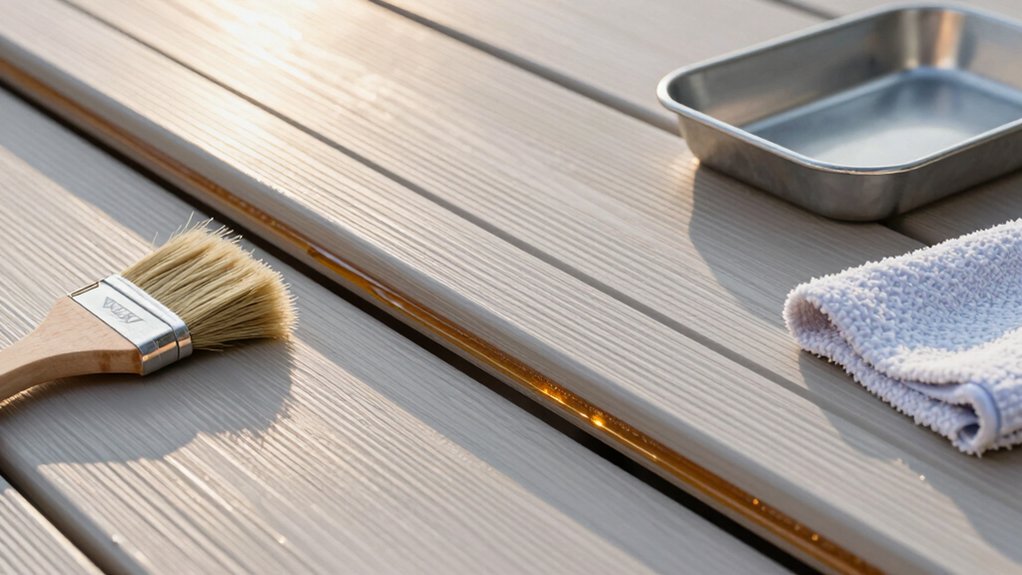
Start with Cleaning Before Painting to remove surface contaminants and guarantee proper adhesion. Then apply Priming For Adhesion to create a uniform base that bonds the coating to Trex.
Follow with Painting with a compatible, solid film for durability. Finish with Sealing For Longevity to guard against weathering and UV exposure, extending the deck’s life.
Cleaning Before Painting
To prep Trex for painting, you must thoroughly clean the surface to remove dirt, mildew, and old finishes that can hinder adhesion.
Begin with a thorough dry brush to knock loose debris, then wash with a high-pressure sprayer on a low setting to avoid gouging the board edges. Use a cleaner formulated for composite materials, not solvent-based products that can stain or degrade surfaces. Rinse completely and dry before inspection.
If you detect mildew, apply a mildewcide cleaner and rinse; repeat if necessary.
For color matching, verify faded planks under shade and compare to new boards to anticipate tone difference after painting.
If paint removal is needed, use a plastisol-safe remover and follow directions to prevent residue.
Allow surfaces to dry fully before priming or painting.
Priming For Adhesion
Priming is essential for adhesion, ensuring the paint bonds uniformly to Trex after cleaning. You choose a high-adhesion, exterior primer compatible with composite surfaces, applied evenly with a roller or brush.
Surface temperature should sit between 50–90°F, avoiding direct sun. Dry times vary by product, but you’ll wait until the primer’s surface feels tack-free before proceeding.
Scrape away any dust and re-clean lightly if you see fibers or grit after priming. For color matching, select a primer that supports the topcoat’s hue without altering shade or opacity.
Weather considerations matter: plan around humidity, rain risk, and overnight dew. If moisture appears, pause and recheck adhesion before painting.
Proper priming minimizes peeling, ensures uniform pigment, and enhances overall durability.
Sealing For Longevity
Sealing your Trex deck locks in the work you’ve done to protect color and finish, guarding against moisture intrusion and UV fade. This final step closes the system, extending coat adhesion and color stability rather than merely blocking wear.
Choose a compatible sealer or topcoat specified for composite decking, and apply per manufacturer guidance after curing. Confirm surface is dust-free and fully dry; recheck weather considerations to avoid moisture entrapment or streaking.
For color matching, select a sealer with a tint that aligns with your deck color system and won’t alter gloss excessively. Apply evenly, in thin coats, and follow cure times precisely before foot traffic.
Regular maintenance cycles may be required; document application dates for future color matching and refurbishment cycles.
Durability, Maintenance, and Trex Warranty Implications
You’ll want to understand how paint compatibility affects durability and long-term performance on Trex decking, including how coatings interact with the substrate and any color or finish limits.
Consider warranty implications and maintenance scheduling as part of your coating plan, since improper products or application can impact coverage.
We’ll explore practical guidelines for selecting compatible paints, monitoring wear, and aligning maintenance with warranty terms.
Durability and Paint Compatibility
Trex decking is designed to resist paint adhesion issues, but coating performance depends on surface condition, substrate integrity, and within-warranty rules.
You’ll assess durability by examining substrate stability, paint-stripping history, and any prior coatings that could trap moisture. Use high-adhesion primers compatible with composite surfaces, and apply thin, even coats to minimize trapping and peeling risk.
In practice, expect slightly reduced long-term color retention versus bare deck finishes, and plan for recoat intervals that reflect traffic, exposure, and cleaning regimen.
Color options and texture matching influence perceived durability; choose hues and textures that align with the substrate’s microtexture to reduce adhesion stress.
Maintain cleanliness, avoid solvent-heavy stripping, and document surface prep to support warranty considerations.
Warranty Implications and Maintenance
Warranty implications hinge on both durability outcomes and maintenance discipline. When you paint Trex decking, you affect warranty considerations by demonstrating adherence to recommended preparation, products, and application temps. You must document fade resistance and color stability, since color matching can influence perceived wear and claim outcomes.
Any coatings that interrupt Trex’s surface moisture exchange or trap heat may undermine weather resistance, risking delamination or warranty denial. Routine cleaning, debris removal, and prompt stain or mildew treatment preserve surface integrity and prevent coating failure.
Use manufacturer-approved, non-alkyd, non-silicone products compatible with composite substrates. If you notice edge lifting, cracking, or coating peeling, halt further paint application and consult technical guidance.
Proper maintenance supports longevity and clearer warranty interpretation.
Troubleshooting Common Issues After Painting Trex
When you’re troubleshooting after painting Trex, start by identifying whether adhesion issues, peeling, or color fading are the root causes. If adhesion is weak, verify surface preparation, priming compatibility, and coating cure times; re-clean and reseal where needed.
Peeling signals coating delamination or improper film formation; remove loose layers, scuff the surface, and reapply with a compatible system.
Color fading points to UV exposure or dye incompatibility; assess pigment stability and consider color matching with a UV-resistant finish.
For all paths, document failure modes and perform controlled re-testing on a small area before full recoat.
Use removal techniques that minimize substrate damage, then re-apply with precise environmental controls.
Maintain color matching accuracy through standardized samples and consistent application thickness.
Frequently Asked Questions
Can Paint Affect Trex Warranty Coverage and Requirements?
Painting can affect Trex warranty coverage if non-approved paints or improper prep cause damage; follow Trex cleaning guidelines and guarantee paint adhesion tests pass. You must use approved coatings; improper prep voids warranty, so verify before proceeding.
How Long Does Painted Trex Last Before Re-Coating?
You’ll generally recoat every 3–5 years, depending on wear, cleaning, and climate. Start with deck cleaning to guarantee paint adhesion, then inspect for peeling. Anticipate warranty concerns, and document maintenance to support ongoing protection of Trex.
Are There Color Restrictions With Trex After Resurfacing?
Color options exist after resurfacing, but limitations apply; you’ll see tighter options and finish variations. Use approved resurfacing techniques, follow manufacturer guidelines, and verify coating compatibility to maintain warranty and durability.
Can I Stain Trex Without Painting, and Is It Durable?
Yes, you can stain Trex without painting, and it’s durable if done right—but you’ll hate the maintenance. Start with deck cleaning, choose a suitable solvent-based stain, and expect periodic touch-ups rather than true longevity. Irony intended.
What Prep Steps Are Required After Years of Weathering?
Yes. After years of weathering, you start with deck cleaning to remove grime, then surface sanding to smooth the boards. Follow with thorough drying, and inspect for damage before refinishing for best adhesion and durability.
Conclusion
Ever wonder if you should paint Trex after all? You’re close, but not there yet. The choice hinges on climate, usage, and warranty terms, not just aesthetics. If you paint, you’ll gain color control and concealment—but you’ll sacrifice some slip resistance and recoat intervals. You’ll also navigate primer compatibility and seam sealing. Do the prep, choose the right products, and seal meticulously. The result might be striking, yet the true question lingers: will this protection outlast the next season’s surprises?