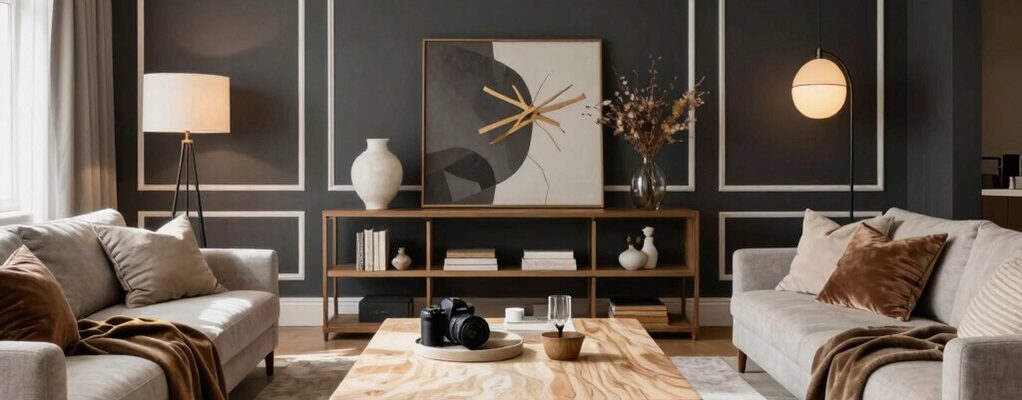
Upgrade on a budget with five high-end tricks: map zones for smart lighting to add depth, layering central fixtures, accent lamps, and dimmable LEDs. Add budget textures like faux finishes, plaster-look walls, and fabric panels for warmth. Use a tight palette—one base, two supporting tones—plus matte walls and a subtle gloss feature wall. Introduce one bold focal piece and refined hardware. Tackle durable weekend upgrades and document costs; more tips await as you keep scrolling.
Smart Lighting for Depth and Drama
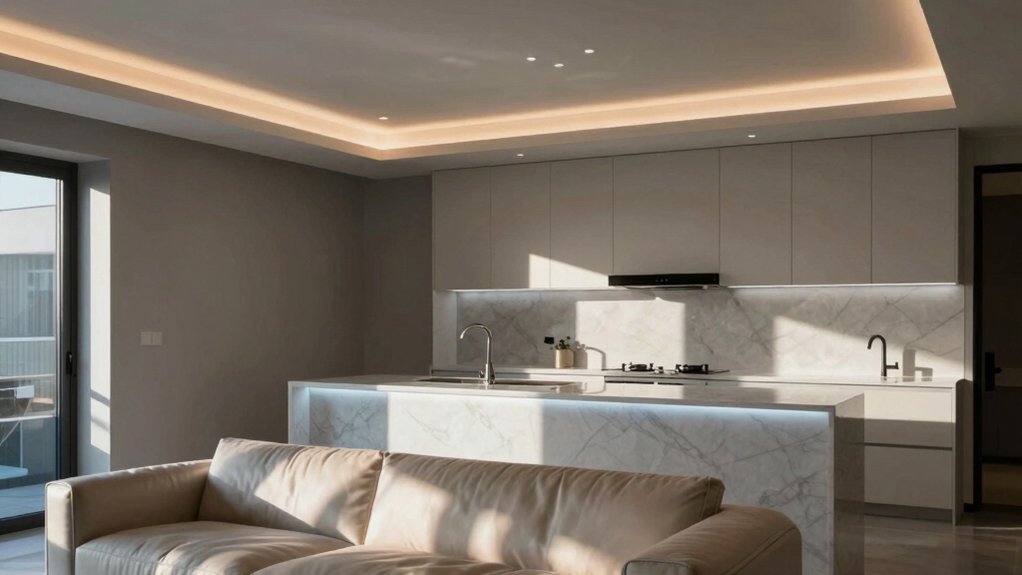
Smart lighting can transform a room’s depth and mood without breaking the bank. You’ll map zones for task, ambient, and accent use, ensuring efficiency and impact. Begin with dimmable LED strips under cabinets or shelves to create subtle boundaries that make surfaces pop. Choose warm whites for living areas and cooler tones for workspaces, aligning color temperature with activity.
Install smart bulbs in key fixtures to adjust scenes with spoken commands or a quick app tap. Layer lighting: a central fixture, directional spotlights, and indirect glow from lamps. Use shading and dimming to control glare and contrast, guiding the eye toward architectural features.
Block harsh reflections by offsetting light sources, and keep cables concealed for a clean, high-end finish.
Budget-Friendly Textures That Elevate Surfaces
Textures can make flat surfaces feel tangible and inviting, often without a big budget. You’ll elevate walls, floors, and furnishings by choosing affordable, tactile options that read high-end. Consider faux-finish paints, like subtle glaze over matte bases, to add depth without glare.
For walls, plaster-look stencils or sand-texture rollers create nuance without hefty costs. Layer fabric panels or woven wall hangings to introduce warmth and quiet acoustics; pick natural fibers for longevity.
In flooring, go with robust vinyl planks that mimic stone or wood textures, paired with a low-pile rug to soften *passages*. Elevate surfaces with beveled edges, chamfered trims, or brushed metallic accents on cabinetry fronts.
Balance *texture* variety with restraint to maintain a cohesive, refined look.
Color Play: Achieving Luxe Visuals With Palette Tricks
Color can transform a room quickly, but the right palette does the heavy lifting: it sets mood, defines space, and makes focal points sing.
You’ll start with a base color that feels timeless, then layer two supporting tones to add depth and contrast. Use a cool neutral for walls to widen the room, then introduce a warm accent on architectural details or textiles to create warmth without clutter.
Limit the palette to three key hues to maintain cohesion. Test swatches in multiple lighting conditions, and observe how reflections shift throughout the day.
Consider matte finishes for walls, satin for trim, and a subtle gloss on a single feature to catch the eye. Finish with purposeful color placement, not random pops.
Statement Details Without the Splurge
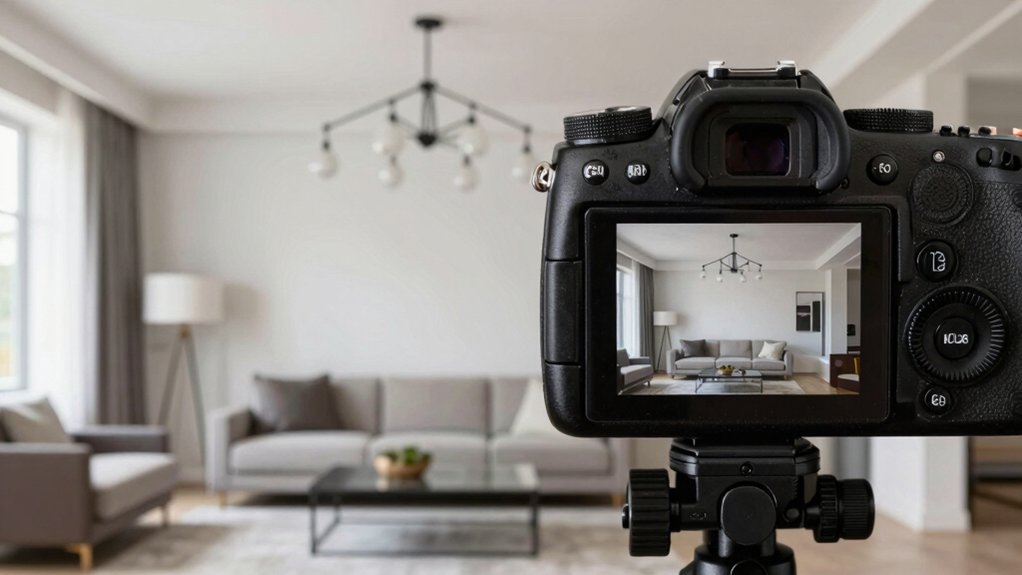
Inexpensive upgrades can redefine a room without museum-splurges, starting with deliberate details you already own or can snag for less. You’ll course-correct scale, texture, and finish to elevate presence without buying new.
Focus on statement elements: one bold focal piece, like a lamp or mirror, positioned to reflect light and create depth. Choose hardware with a refined silhouette—drawer pulls, cabinet hinges, or switch plates—that instantly reads “designed.” Layer texture with a spare throw, a single gallery-worthy print, or a runner that ties colors together.
Match metals sparingly for cohesion: one warm accent, one cool, and a unifying frame. Let negative space breathe; avoid crowding surfaces. Test with temporary accents, then replace only what truly earns its place.
Small, intentional details compound into a high-end feel.
DIY Weekend Upgrades for Lasting Impact
If you want lasting impact from a weekend project, plan for quick wins that compound over time. You’ll start with one high-visibility upgrade that relies on durable materials and precise execution, then layer improvements as you go.
Choose projects that don’t require a full reno but deliver measurable changes: resurfaced countertops, refreshed cabinetry, or smart lighting that highlights architectural details. Use a tight color palette with contrasting textures to elevate space without clutter.
Measure twice, cut once, and document progress with photos to track gains. Target efficiency first: low-flow fixtures, better insulation, or sealing drafts so savings pile up.
Finish strong with hardware upgrades and clean, professional caulking. Maintain momentum by documenting costs, timelines, and methods for repeatable, cost-efficient successes.
Conclusion
You walk into a room and feel a story shift, like a door opening to a richer chapter. Lighting becomes a quiet heartbeat, texture a tactile memory, color a mood that lingers. Each budget-friendly trick acts as a key, opening rooms you already owned in a new light. The小, simple details—shadows, fabric, finish—are anchors you build around your life. When you stand back, the space isn’t expensive; it’s earned, symbolizing that taste can outshine price.