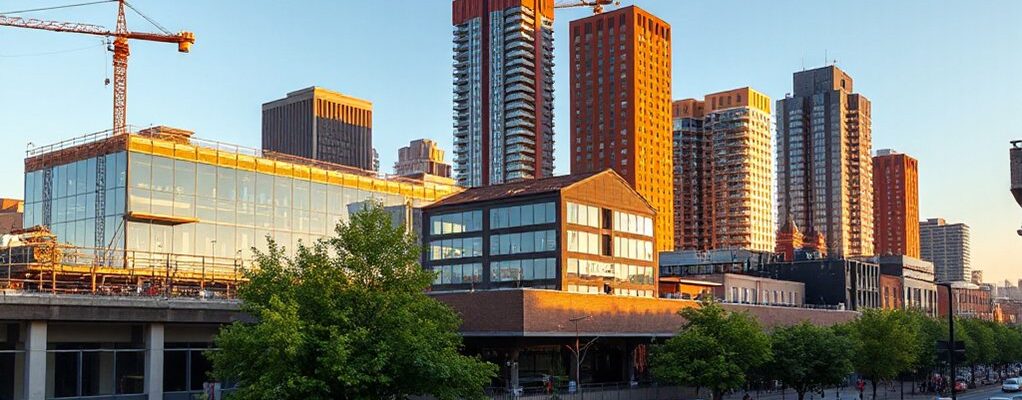
You’ll see Birmingham’s regeneration push reshape the property market through better infrastructure, mixed-use schemes, and green spaces that lift values and attract diverse investment. With corridors, transport upgrades, and new housing, demand shifts toward revitalized zones, while planning safeguards balance growth and conservation. This is shaping longer-term resilience, but milestones, funding gaps, and delivery timelines create a nuanced landscape you’ll want to track as opportunities and risks unfold.
Key Takeaways
- Regeneration integrates mixed-use districts and transit upgrades, boosting demand for housing and commercial space in walkable cores.
- Public investments in schools, parks, and culture elevate amenity value, accelerating property absorption and price stabilization.
- Heritage preservation alongside new development creates location-specific appeal, supporting pricing resilience and message to investors.
- Transparent governance and data dashboards reduce uncertainty, improving timelines, approvals, and confidence for capital deployment.
- Design moves that emphasize sustainability, energy efficiency, and placemaking attract tenants, stabilize rents, and diversify markets.
What Birmingham Regeneration Really Includes: Projects, Zones, and Goals

Birmingham’s regeneration packages a clear mix of projects, zones, and goals designed to drive sustained growth. You’ll see a structured portfolio that targets housing, employment, and resilience, underpinned by transparent metrics and timelines.
Projects cluster around urban refurbishment, transport-enabled accessibility, and digital infrastructure to attract investment and improve living standards. Zones designate prioritized districts with tailored incentives, land-use flexibility, and streamlined approvals, aligning public and private funding toward shared outcomes.
The overarching goals emphasize inclusive growth, climate adaptation, and cultural vibrancy, measured through job creation, wage growth, and energy efficiency gains. Urban green spaces are integrated as climate and health assets, while cultural preservation safeguards heritage assets and communities’ sense of place.
Data-driven reviews keep strategies adaptive, ensuring long-term value creation for Birmingham’s property market.
The Major Regeneration Corridors Shaping Birmingham’s Market
You’ll see how the major regeneration corridors are reshaping Birmingham’s market through diversified activity, investment density, and housing-to-work balance.
Data indicate corridor-led growth channels are widening product offerings and attracting new operators, while policy levers target resilience and affordability.
Looking ahead, these corridors should drive market diversification, aligned with outcomes-based planning and measurable economic benchmarks.
Major Corridor Impacts
Which corridors are driving Birmingham’s next phase of growth, and what does that mean for land use, investment, and community outcomes? You’ll see intensified redevelopment along transit-adjacent routes, with zoning shifts to mixed-use, higher density, and affordable-housing targets.
Data indicate corridor-led investment creates measurable uplift in land values, tax receipts, and employment density, while planning frameworks embed safeguards for displacement and green infrastructure.
Policy instruments prioritize corridor improvements that unlock catalytic projects, streamline approvals, and coordinate street-level public realm enhancements.
Cultural venues and green spaces become anchor assets, elevating quality of life and attracting creative industries.
Future projections show equitable access to amenities along corridors, with metrics tracking transit reliability, air quality, and community benefits to guide ongoing refinements.
Birmingham Market Diversification
A mix of growth drivers is reshaping Birmingham’s market, driven by the major regeneration corridors identified earlier and a broader push toward diversified, resilient land use. You’ll see diversification reflected in mixed-use intensification, targeted brownfield redevelopments, and sector-aligned zoning that reduces risk and supports long-term value.
Data indicates higher throughput of capital from cross-sector investments, with commerce, housing, and logistics integrating along corridors to stabilize cycles. Policy focuses on safeguarding urban yields while expanding capacity, infrastructure, and accessibility.
Future projections show resilient demand anchored by urban green spaces and well-preserved heritage assets that attract residents and employers alike. Prioritizing stewardship, you’ll balance market growth with conservation, ensuring inclusive opportunity and measurable gains across Birmingham’s evolving landscape.
How Transport Upgrades Boost Property Demand and Access
Upgraded transport links boost property accessibility, making Birmingham neighborhoods more appealing to buyers and renters alike.
As access improves, demand grows across corridors, supported by data on journey times, frequency, and reliability.
Looking ahead, targeted infrastructure investments should align with housing supply to sustain price performance and wider neighbourhood value.
Transport Links Benefit Property
The transport upgrades underway in Birmingham are expected to considerably raise property demand and improve access for residents and businesses alike. You’ll see faster commutes, reduced travel times, and more reliable service influencing value by highlighting corridor-led growth.
Data show demand elasticities rise where connectivity improves and where transfer options consolidate into integrated networks. Policy implications point to housing supply alignment near new stations, with zoning that supports mixed-use, affordable options, and reduced car dependence.
We expect higher foot traffic around stations to boost local economies, including green spaces and cultural hubs that sustain liveability without compromising efficiency.
Future-proof planning should prioritize last‑mile connectivity, sustainable design, and equitable access to prevent overconcentration and ensure resilient, inclusive property gains.
Access Drives Demand Growth
When transport upgrades expand access, property demand follows as buyers and investors prize shorter, more reliable journeys and broader catchment areas. You’ll see demand lift where timetables shorten travel times, reliability improves, and modal options converge into cohesive networks.
Data indicate price acceleration and faster sale cycles in corridors with reduced commutes, supporting policy aims for inclusive growth. Urban greenery and cultural landmarks become anchors, shaping walkable, biodiverse enclaves that complement rapid connectivity.
Access growth also shifts investment toward mixed-use clusters, where transit-oriented development aligns housing, employment, and services. Future-oriented planning should prioritize equitable access, predictable fares, and last-mile services to maximize affordability and resilience.
Infrastructure Upgrades Attract Buyers
Infrastructure upgrades reshape buyer behavior by directly expanding catchment areas and shortening travel times. You’ll notice data showing higher demand around new transit nodes, with commute reductions translating into larger pools of eligible buyers.
Property values tend to spike where accessibility intersects with reliable service frequency, and policy analyses project continued uplift as networks mature.
By prioritizing integrated land use, planners align housing supply with demand, lowering vacancy risk and improving resale stability.
Historical preservation appears in evaluation models as a factor enriching neighborhood character without deterring investment, while cultural integration enhances appeal to diverse buyer cohorts.
Future-focused metrics—latency to stations, modal transfer efficiencies, and ridership growth—signal sustained demand, guiding developers toward transit-adjacent projects that balance affordability, quality of life, and long-term economic resilience.
Birmingham’s New Housing Schemes: Sparks of Activity and Investment
Birmingham’s new housing schemes are accelerating investment and shaping future growth, with mixed-use developments and affordable options driving demand across several neighborhoods.
You can see a clear, data-driven pattern: higher density near transit, lender-backed incentives, and more inclusive housing policies targeting first-time buyers and lower-income renters.
Local planning dashboards show faster permitting, reduced vacancy rates in pilot districts, and stronger year-over-year price stability.
Policy levers focus on ensuring quality standards, green space, and resilience against market shocks.
Historical preservation and cultural integration appear in zoning briefs and stakeholder charters, balancing new construction with heritage continuity.
Looking ahead, schemes aim to liberate public-private funding, catalyze employment hubs, and sustain long-term affordability without compromising neighborhood character.
From Plan to Build: The Regeneration Lifecycle in Birmingham
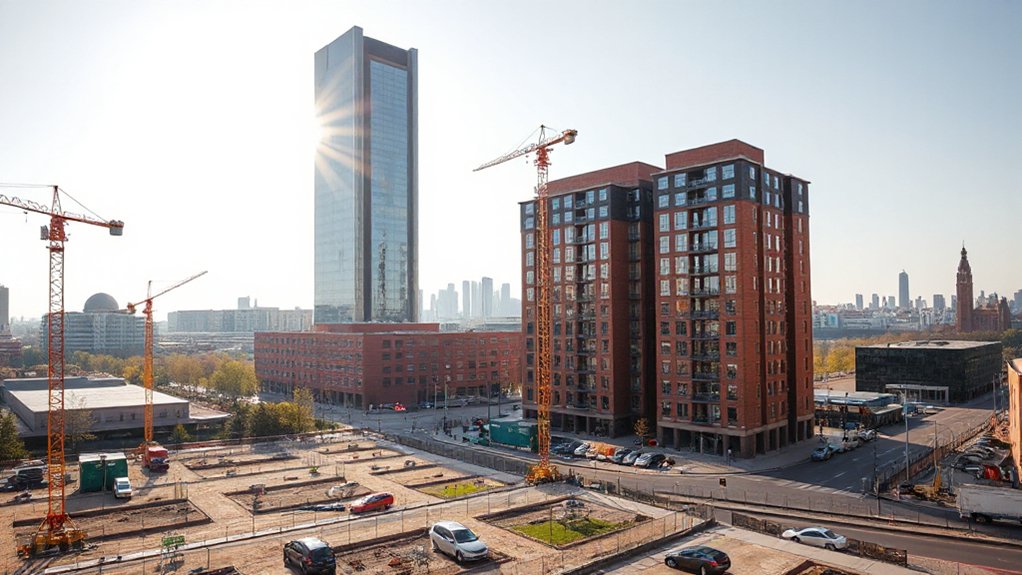
From the planning desk to on-the-ground construction, Birmingham’s regeneration lifecycle translates policy into tangible outcomes through a tightly choreographed sequence of steps. You’ll trace project approval, funding alignment, and stakeholder engagement, all calibrated to deliver measurable milestones.
Data dashboards track planning approvals, environmental reviews, and procurement timelines, ensuring transparency and accountability. Future-oriented metrics drive risk management, from site readiness to phased delivery.
Historical preservation is integrated early, balancing modern needs with heritage constraints to maintain city character while releasing development potential.
Cultural integration guides placemaking, ensuring inclusive programming and resident participation.
Construction sequencing prioritizes efficiency, safety, and local hiring, aligning with policy targets for sustainability and economic impact.
How Regeneration Impacts Property Values: Where Gains Come From
Regeneration raises property values by reshaping demand fundamentals, leveraging new amenities, improved accessibility, and enhanced perceived safety. You’ll see gains driven by a shift in resident and investor expectations, as markets price in longer-term growth and resilience.
Demand strengthens where mixed-use districts, walkable cores, and transit-oriented development reduce commuting costs and time penalties. Property value uplifts also stem from public investment in schools, parks, and cultural facilities, which raise appeal and absorption rates for cash-flow properties.
Historical preservation informs investors about durable, location-specific appeal, stabilizing pricing during cycles. Cultural influences shape neighborhood character, supporting premium rents and resilience to shocks.
Policy focus matters: predictable timelines, zoning clarity, and performance metrics amplify confidence, guiding capital toward high-impact regeneration zones.
Investor Opportunities Across Birmingham’s Regeneration Zones
Investment opportunities in Birmingham’s regeneration zones hinge on measurable catalysts: project pipelines, stakeholder commitments, and outcomes aligned with growth forecasts. You’ll assess district-by-district data on public-private partnerships, procurement pipelines, and early-stage zoning approvals to identify low-risk, high-yield entry points.
Focus on zones with documented cultural heritage assets and clear plans for environmental sustainability, where conservation intersects with new development to attract grant funding and green finance.
Monitor performance metrics such as job creation, resident uplift, and occupancy rates against targets in policy documents and regeneration strategies. Favor proposals with transparent governance, risk-adjusted returns, and measurable community benefits.
Frontline Sectors in Birmingham Regeneration: Commercial, Residential, and Mixed-Use

Frontline sectors in Birmingham’s regeneration drive are anchored by commercially viable districts, residential upgrade campaigns, and high-density mixed-use schemes that catalyze further investment. You’ll see procurement and zoning data point to steady demand for office floors, retail ready spaces, and scalable housing prototypes in the city core, supported by city-wide transport improvements.
In commercial districts, occupancy rates, rent trajectories, and small business grants indicate resilience despite macro shocks. Residential components reflect unit mix shifts, energy efficiency mandates, and draft timelines that aim to reduce vacancy risk while boosting last-mile accessibility.
Mixed-use projects increasingly couple cultural anchors with housing and incubation spaces, linking urban art and green spaces to livability metrics. Policy cases emphasize inclusive growth, measurable returns, and long-term sustainability for Birmingham’s dynamic frontier.
Regeneration Risks in Birmingham: Timelines, Funding Gaps, and Mitigation
You’ll assess how project timelines and delays affect overall delivery, using current data to project future milestones and dependencies.
We’ll map funding gaps against phased needs, quantify shortfalls, and identify where policy adjustments can secure predictable finance.
You’ll explore mitigation strategies that close gaps, reduce schedule risk, and keep Birmingham’s regeneration on a credible, evidence-driven path.
Timelines and Delays
Delays in Birmingham’s regeneration programs are driven by funding gaps, construction bottlenecks, and shifting project scopes, which together threaten milestones and cost projections. You’ll see timelines challenges emerge as coordination across public authorities, private partners, and communities tightens schedules and raises risk of sequencing conflicts.
Data show that late design approvals, utility diversions, and supply-chain fragilities extend critical paths, meaning forecasted completions slip further from planned dates. Effective delay management requires transparent milestone tracking, scenario planning, and proactive risk reserves, plus clear accountability for decision-makers.
Policy focus should prioritize modular phasing where feasible, contingency funding, and real-time dashboards that flag deviations early. By centering evidence-based adjustments, you reduce exposure to cost overruns and preserve investor confidence in Birmingham’s long-term regeneration trajectory.
Funding Gaps Analysis
Funding gaps pose a core risk to Birmingham’s regeneration timetable, with finite capital, shifting project scopes, and rising construction costs tightening the available funding envelope.
You’ll compare project budgets against milestones, measuring cash-flow timing, contingencies, and debt capacity to identify shortfalls before they stall delivery.
By isolating recurrent funding gaps, you can surface how revenue streams, grant cycles, and equity contributions align with phases of construction and occupation.
Financial planning becomes a discipline for prioritization, sequencing, and risk transfer, enabling you to reallocate resources without sacrificing core outcomes.
Scenario analysis, sensitivity tests, and probabilistic funding forecasts inform decision points and governance approvals.
The aim is transparent, defensible allocations that sustain momentum, reduce delays, and safeguard long-term value creation across Birmingham’s regeneration portfolio.
Risk Mitigation Strategies
What risk mitigation strategies can best safeguard Birmingham’s regeneration timelines and bridge funding gaps over the coming years? You’ll rely on rigorous risk assessment to identify critical bottlenecks, including planning delays, procurement disputes, and macroeconomic shocks.
Your approach combines phased milestones with trigger-based controls, enabling proactive escalations when indicators slip. Contingency planning should cover financing gaps, with diversified funding streams, reserve funds, and scalable debt instruments that preserve liquidity during downturns.
Integrate scenario analysis to quantify potential delays across transport, housing, and public domain works, informing adaptive procurement and sequencing.
Embed governance that reinforces accountability, transparent reporting, and independent reviews at quarterly intervals.
Finally, couple risk registers with data dashboards, guiding policy adjustments and ensuring resilience as regeneration trajectories evolve.
Design Moves in Birmingham Regeneration: What Shifts Buyer Confidence
Design moves in Birmingham’s regeneration are reshaping buyer confidence by aligning new developments with projected economic returns, infrastructure upgrades, and tenant-demand trends. You’ll see developers prioritising mixed-use schemes that front-load revenue forecasts with flexible leasing.
Data indicates higher value per square foot where transit accessibility improves and where public domain investments anchor footfall. Policy signals favour sustainability, energy efficiency, and social amenities, translating into lower operating costs and longer tenant tenancies.
Urban art and Cultural festivals are leveraged as placemaking tools to broaden appeal while stabilising risk profiles, appealing to institutional buyers and private investors alike.
You’ll note tighter underwriting around occupancy scenarios and longer-term demand curves, supporting confidence in capital recapture. Future-proofing remains central, guiding approvals, delivery timelines, and tenant-mix targets.
The Local Economy Ripple: Jobs, Skills, and Demographics Across the City

Across Birmingham, the local economy is already shifting as jobs, skills, and demographics evolve in tandem with regeneration momentum. You’ll see local employment patterns that concentrate around mixed-use districts, with growth linked to public–private investment and digital infrastructure.
Data indicate expanding roles in construction, lifecycle maintenance, healthcare, and green services, signaling resilient demand beyond traditional sectors.
You’ll track urban demographics shifting toward a younger, skilled workforce drawn by new training programs and relocation incentives, while aging populations remain steady in suburban nodes.
Policy implications are clear: align apprenticeship pipelines, mobility access, and developer requirements to maximize job creation and wage progression.
The trajectory favors inclusive gains, measured by persistent job quality, upward earnings, and sustained local procurement to anchor prosperity citywide.
Navigating Community and Governance in Birmingham Regeneration
How can Birmingham’s regeneration balance community needs with effective governance to sustain momentum? You’ll map who’s involved, what powers exist, and how decisions travel from proposal to delivery.
Data shows that robust community engagement correlates with quicker approvals, higher trust, and fewer delays, so you’ll design inclusive forums, transparent dashboards, and timely updates.
Governance structures must align with project milestones, clarify accountability, and prevent mission drift as funding streams evolve.
You’ll quantify participation, track outcomes, and adjust policies to reflect evolving local priorities.
Future-oriented, this approach integrates resident insights with regulatory practicality, ensuring schemes remain responsive rather than reactive.
Frequently Asked Questions
How Do Regeneration Plans Affect School Quality in Birmingham?
Regeneration plans can improve school quality in Birmingham by boosting funding through better infrastructure development and strengthened community engagement, which attract stable families and skilled teachers; policy-driven investments and data monitoring guide continuous improvements and equitable educational outcomes.
What Role Do Green Spaces Play in Property Pricing?
You notice green spaces boosting urban biodiversity and air quality, which lift property prices as buyers seek healthier neighborhoods; data shows these benefits persist, guiding policy to protect parks, expand corridors, and improve resilience under future development plans.
Which Tax Incentives Accompany Birmingham Regeneration Projects?
You’ll access tax benefits and incentive programs tied to Birmingham regeneration projects, including relief schemes and potential business rates adjustments, shaping future development. Data-driven forecasts suggest ongoing policy tweaks will optimize returns, guiding decisions toward sustainable, high-impact investments.
How Will Utility Upgrades Influence Redevelopment Timelines?
Utility upgrades will shorten redevelopment timelines, but infrastructure delays could push schedules back. You’ll see smoother progress when funding aligns with project milestones, data-driven monitoring, and policy coordination reduce bottlenecks and accelerate critical utility connections for Birmingham’s regeneration.
Are There Equity Considerations for Local Residents in Schemes?
Yes, you’ll see deliberate community involvement guiding decisions, with affordable housing targets helping stabilize neighborhoods while uplift occurs; you’ll weigh trade-offs, track outcomes, and advocate policies that balance growth with residents’ long-term equity and security.
Conclusion
regeneration is reshaping Birmingham’s property market through targeted zones, transport upgrades, and mixed-use schemes. you’ll see sustained demand as infrastructure open up value, housing schemes catalyze investment, and governance aligns funding with long-term resilience. the data point to improved prices, higher occupancy, and broader socioeconomic benefits across corridors. stay aware that timelines and funding gaps exist, but proactive planning and risk mitigation can keep momentum. as the saying goes: slow and steady wins the race.