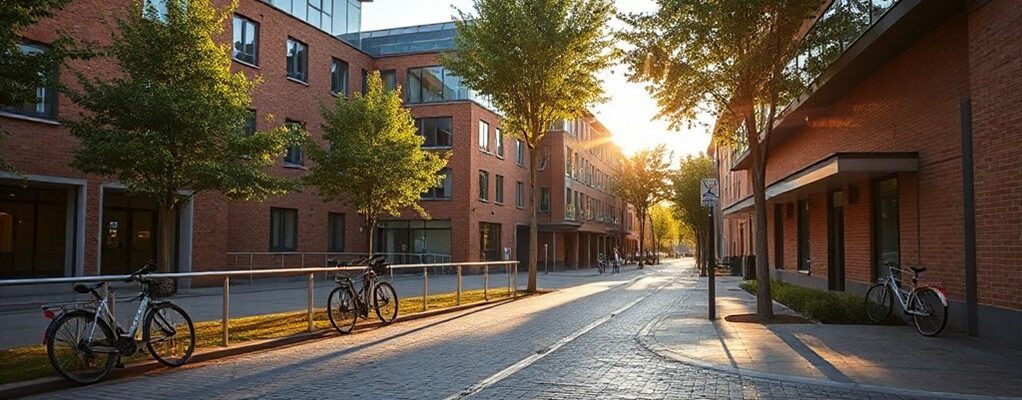
In UK university cities, the right upgrades can lift rental value without broad disruption: modern interiors with durable, low-maintenance finishes, energy-efficient components like double-glazing and smart thermostats, and targeted bathroom refreshes often yield solid premiums. Add smart security and sturdy communal spaces to reduce wear and vacancy. With a clear plan, realistic budgets, and compliant pricing, you’ll position your property for sustainable demand—but the next step is to map these upgrades to your specific block and tenants.
How Upgrades Boost Rental Value in Student Housing
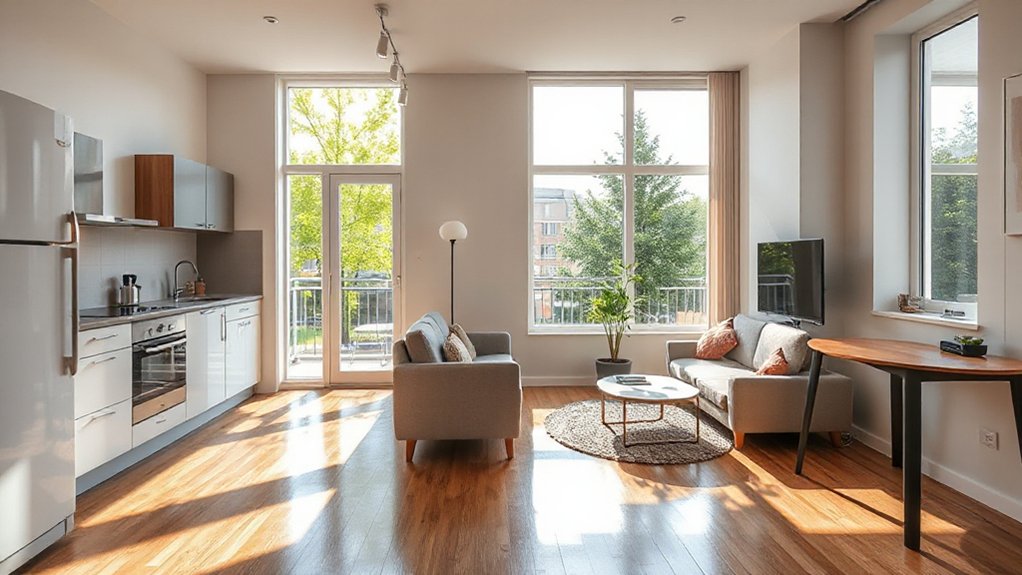
Upgrades that modernize student housing tend to lift rental value by enhancing desirability and reducing operating risk. When you compare portfolios, you’ll see units with modern interiors attract higher rents and faster occupancies, especially in competitive city markets.
Amenities enhancement and aesthetic improvements correlate with longer tenant stays and lower vacancy rates, improving cash flow certainty. In-room tech, flexible study spaces, and contemporary furnishings drive premium rents without dramatically increasing maintenance cycles.
Market data shows premium pricing ramps up as you standardize upgrades across buildings, creating a cohesive brand appeal for students and parents alike. Focus on scalable enhancements—new flooring, refreshed bathrooms, modern lighting, and quality shared spaces—to boost perceived value, optimize occupancy, and sustain rent growth over multiple lease cycles.
Energy Upgrades That Slash Bills and Attract Tenants
Energy upgrades don’t just cut costs—they boost demand among students and parents who prioritize predictable bills. You’ll see higher occupancy when rents reflect stable energy spend, not volatile bills.
Install efficient heating, double-glazing where available, and smart thermostats to lower daytime peaks, improving comfort and rentability across city-center and campus-adjacent properties.
Data shows that properties with modern insulation improvements achieve lower energy consumption per bedroom, translating to more competitive total costs for tenants.
Embrace renewable energy sources where feasible, like solar PV or heat pumps, to further shave bills and appeal to sustainability-minded cohorts.
Track metrics: heating degree days, occupancy duration, and renewal rates. In markets with high energy costs, upgrades pay back quickly and sustain long-term demand.
Smart Security Upgrades for Peace of Mind in Shared Flats
Smart security upgrades aren’t just about peace of mind—they’re a market differentiator in shared flats, where tenants value predictable safety costs and rapid incident resolution. You’ll see higher occupancy and longer tenancies when you install smart locks and security cameras, especially in areas with rising incident reports.
Data shows predictable monthly costs reduce turnover anxiety, while remote monitoring lowers response times for maintenance calls and emergencies. Prioritize integration with existing access control to avoid friction at move-in.
From a rental-management perspective, lock activity analytics and camera visibility can inform risk-based budgeting for repairs and insurance premiums. Guarantee clear tenant consent and data policies to maintain trust.
Smart locks and security cameras translate into measurable, tenant-driven value in competitive UK university markets.
Durable Communal Spaces That Withstand Student Use
Durable communal spaces pay off when students value longevity and low maintenance, so design and materials choices should prioritize high-use resilience, easy cleaning, and scalable wear patterns.
In practice, you should select durable furnishings and finishes that withstand frequent movement, spills, and rough handling without visible wear. Evaluate material data on abrasion resistance, stain resistance, and fade performance for high-traffic rooms, lounges, and study pods.
Communal design should promote easy reconfiguration for evolving needs, reducing replacement cycles and downtime. Track maintenance costs and replacement timelines to demonstrate value to landlords and tenants alike.
Prioritize modular furniture that stacks, tidies, or expands as occupancy shifts. Align with market expectations for low-cost upkeep, predictable repair cycles, and cleanable surfaces that maintain a polished, professional atmosphere.
Budget-Friendly Kitchen and Bathroom Upgrades With Big Impact
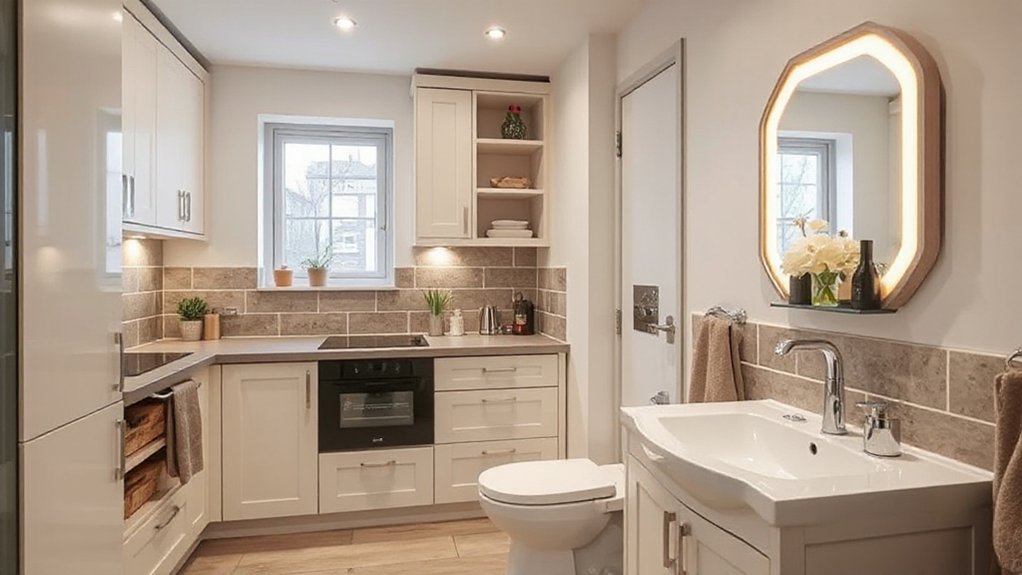
Budget-friendly kitchen upgrades and practical bathroom refreshes can yield outsized rental value, especially in cities with high student demand.
You’ll see stronger turnover, faster occupancy, and clearer ROI when tweaks target perceived quality per pound, like updated fixtures, durable surfaces, and modern layouts.
Data shows tenants prize low-cost improvements with high impact, making these changes a smart, rental-focused investment.
Budget-Friendly Kitchen Upgrades
Upgrading a rental kitchen on a budget can yield disproportionate value, especially in UK university towns where tenants prioritize practicality and pace of turnover. You should target high-impact, low-cost changes that show measurable returns in occupancy and rent comparisons.
Focus on: appliance upgrades that improve energy efficiency and reliability, updating older units without full replacement; and cabinet enhancements that refresh storage without a full remodel.
Leverage data on drying cycles, energy bills, and tenant satisfaction to justify selective investments. Prioritize durable finishes, easy-clean surfaces, and standardized dimensions to reduce maintenance requests.
Quick projects like upgrading door fronts, adding under-cabinet lighting, and resealing countertops can boost perceived value with minimal downtime.
Track vacancy durations pre- and post-upgrade to quantify effectiveness.
Practical Bathroom Refreshes
Renovating a bathroom in UK university towns can yield strong rental value with targeted, cost-efficient updates. You’ll boost appeal by prioritising high-impact, low-cost changes that tenants notice daily.
Begin with durable, easy-clean surfaces: regrout tile lines, reseal the shower, and swap dated fittings for matte-finish chrome or brushed brass. Consider a compact vanity with built-in storage to maximise space in smaller bathrooms.
Update lighting with bright, neutral LEDs to create a sense of roominess. Add luxury fixtures sparingly—single, well-chosen taps or a rainfall shower head can elevate perceived value without breaking the budget.
For a contemporary feel, weave modern decor through towels, mats, and accessories in cohesive tones. Focus on reliability, ease of maintenance, and consistent quality to sustain higher rents and lower turnover.
How to Comply, Plan, and Price Rent Increases Without Surprises
Plan rent increments carefully by mapping current market trends, tenant demand, and vacancy rates, so you can set increases that balance value with retention.
We’ll cover managing compliance standards upfront to minimize surprises and guarantee your increases align with regulations and lease terms.
Price increases strategically by testing scenarios, tracking housing data, and communicating clearly to tenants to preserve trust and minimize turnover.
Plan Rent Increments Carefully
To set rent increases on solid footing, you should start with a clear framework that aligns price with market demand, regulatory constraints, and your property’s performance metrics. You’ll map historical occupancy, turnover costs, and maintenance trends to projecting future yields.
Build tiered increments aligned with observable demand signals and tenant preferences, not gut feeling. Test scenarios: mild, moderate, and strong market moves, then stress-test for vacancy risk and renewal rates.
Document a transparent timeline, notification cadence, and rent-assignment rules for each unit type. Price adjustments should reflect relative value gaps across competing properties and unit features.
Communicate succinctly, justifications included, to minimize surprises. Regularly review data, adjust plans, and keep compliance gaps out of your planning math.
Market demand drives sustainable rent growth; tenant preferences shape acceptable increases.
Navigate Compliance Standards
Charting compliance standards starts with a clear, data-driven framework that ties rent planning to regulatory rules, market norms, and operational metrics. You’ll align tenancy processes with local laws, university policies, and licensing where applicable, ensuring consistency across properties.
Focus on robust tenant screening to verify income, references, and eligibility, reducing default risk without bias. Maintain transparent lease enforcement to set expectations and avoid disputes, documenting every action, notice, and deadline.
Use market benchmarks to price renewals within legal limits, and map exemptions for statutory increases where allowed. Build a compliance calendar that flags lease expirations, safety audits, and notice periods, so you never miss a deadline.
This approach minimizes unexpected costs, protects reputations, and sustains long-term occupancy in competitive university markets.
Price Increases Strategically
With compliance groundwork in place, you can price rent increases confidently by tying them to verifiable data, market norms, and regulatory boundaries. Start by analyzing current market demand trends for student housing in your city, then map those signals to your unit mix and lease terms.
Use transparent justifications: cost of living adjustments, maintenance upgrades, and service-level improvements. Plan increases alongside renewal cycles to minimize disruption and maximize tenant retention.
Communicate clearly in advance, citing sources and expected benefits for tenants. Avoid surprises by offering phased steps or loyalty incentives for long-term renters.
Track results quarterly, adjusting where warranted to stay competitive without eroding occupancy. This data-driven approach supports budgeting, compliance, and stable occupancy in a competitive market.
Frequently Asked Questions
What Unseen Depreciation Risks Affect Upgrade ROI in University Markets?
You’ll face unseen depreciation risks like technology obsolescence and shifting tenant preferences, which can erode ROI as markets tilt toward Luxury amenities and Energy efficiency, especially in university areas, where demand responds to data-driven, rental-focused signals.
Which Upgrades Add the Most Value per Square Meter in Student Lets?
You’ll maximize value per square meter by adding luxury amenities and smart technology, which drive rents fastest. Data shows high-demand studios gain premium from these features, boosting occupancy and stability in student lets while lowering vacancy risk and maintenance costs.
How Do Local Licensing Rules Impact Renovation Timelines and Costs?
Licensing delays and renovation permits can extend timelines and raise costs. For example, a student-flat remodel in Manchester faced a four-week permit review, delaying completion by 25% and increasing costs by 6%. Plan contingencies accordingly.
Do Student Leases Limit Long-Term Value From High-End Finishes?
Student leases can cap long-term value gains from high-end finishes, but you still capture premium rents when you pair Luxury amenities with aesthetic improvements, supported by local demand data and market trends.
What Maintenance Plans Best Preserve Rental Value Post-Upgrade?
To preserve rental value, implement proactive maintenance plans that target tenant satisfaction and energy efficiency. You’ll reduce vacancies, document condition codes, schedule preventive tasks, track metrics, and adjust services, ensuring consistently high occupancy and favorable renewal prospects.
Conclusion
You’ll see value rise when upgrades align with the market: modern interiors, energy efficiency, and smart security attract tenants and justify premium rents. Data shows tenants pay more for comfort and lower bills, while durable communal spaces boost occupancy stability. Plan costs, compare benchmarks, and price increases transparently to avoid shocks. Think of your property as a high-demand campus hub—few tweaks, big returns, and predictable tenancy in a competitive UK university town.