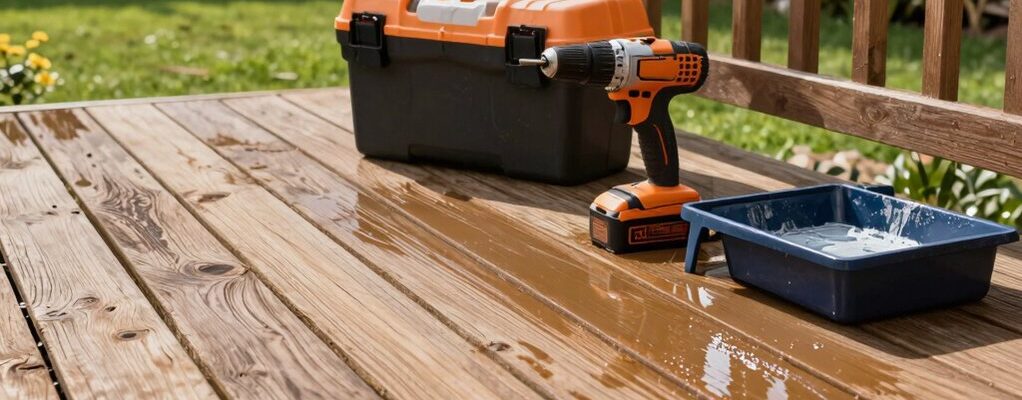
Garden decking maintenance costs more than you expect once you total yearly cleaning, coatings, fasteners, and repairs. Start by budgeting quarterly, tracking actual spend, and converting DIY time into money. Expect 3–8 board replacements over a decade, plus periodic sealing or staining every few years, depending on exposure. Choose coatings with durability and low moisture absorption to extend intervals, and keep a reserve for emergencies. Stick with preventive checks and you’ll uncover the full picture soon.
Assessing Your Yearly Cleaning Budget
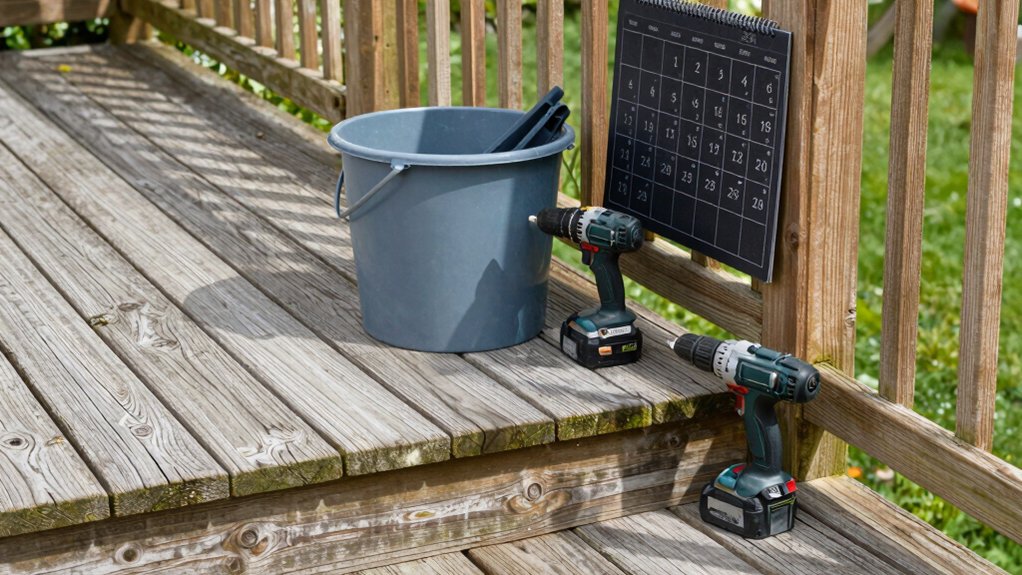
Evaluating your yearly cleaning budget starts with a clear snapshot of what you spent last year and what you expect to spend this year. You’ll collect quarterly receipts, note seasonal spikes, and separate decking from interior cleaning.
Identify fixed costs (service plans, brushes, cleaners) and variable costs (emergency repairs, weather-related wear). Track product efficiency: cost per use, dilution rates, and waste.
Convert intangible time into money by assigning an hourly rate to DIY tasks, then compare to outsourcing. Build a simple spreadsheet with categories, totals, and year-over-year changes.
Factor in maintenance cycles, predicted weather impacts, and deck material life. Use the data to set a conservative annual budget, reserve a buffer for unexpected fixes, and review quarterly to stay aligned with actual spending.
Stain, Seal, or Paint: Which Finishes Cost More?
You’ll weigh stain versus seal costs upfront, since stains are often cheaper per application but may need more frequent refreshes than seals.
When you compare paint versus seal durability, consider coating lifespan and recoat frequency to budget correctly.
The goal is to balance upfront price with long-term maintenance in a data-driven way.
Stain vs. Seal Cost
Stain, seal, or paint—each option has a distinct upfront cost and long-term value for deck maintenance. If you’re budgeting, stain generally costs less initially than seal or paint, but you’ll spend more over time on reapplication with stain because it fades, dries unevenly, and needs re-dipping or satches of maintenance more often.
Sealants, especially penetrating ones, run mid-range upfront and offer longer intervals between applications, yet some require yearly reapplication in sun-exposed areas.
Paint typically carries the highest upfront price due to materials and labor, but it can extend intervals between maintenance if a solid coat protects against moisture and UV.
In practice, compare total 3–5 year costs, including preparation, labor, and frequency of reapplication, to determine the most economical choice for your deck.
Paint vs. Seal Durability
Paint vs. seal durability hinges on how long each finish lasts between reapplications and how well it protects against moisture and UV. Durability drives cost: paints typically need redoing every 3–5 years, seals last 2–4 years, and stains vary by product.
You’ll pay more upfront for higher-quality sealants with UV blockers, but you’ll save on frequent rework. Data shows downtime and labor compose a large share of annual cost, not just materials. Sealants often win for moisture resistance, while paints offer a thicker barrier and color longevity, reducing visible maintenance.
If you prefer minimal yearly work, choose a long-lasting seal with good mildew resistance. For color and surface renewal, budget for periodic repaint.
In practice, balance initial cost, recoat interval, and real moisture exposure.
Replacing Damaged Boards: When and How Much
You’ll want to know when a board is too damaged to save, so inspect for deep cracks, rot, and loose fasteners before replacing.
The cost varies by material and length, but plan for a per-board price plus labor; calculate total by counting affected boards and their sizes.
Then follow a step-by-step replacement process, from removal and sizing to securing new boards and checking for proper spacing and drainage.
When to Replace Boards
Damaged boards shouldn’t wait. You should replace when structural signs appear, not after a collapse. Look for rot, soft spots, cracks that run deep, and fastener corrosion. If moisture has darkened wood or sagging occurs underweight, treat those as red flags.
Seasonal checks are practical: inspect after wet periods and before winter, then again in spring.
Calculate replacement in two steps: identify total board area affected and estimate board type for durability (tine or treated pine). If more than 15–20% of the deck shows damage, plan a partial or full board swap to maintain load paths and prevent spreading rot.
Budget time for proper removal, flashing checks, and resealing to extend life. Prioritize safety; never ignore compromised joists.
Cost of Damaged Boards
Replacing damaged boards isn’t optional—you need to know the costs up front to budget accurately. The price to replace a single board typically mirrors material costs plus labor, with common decking boards priced per linear foot and labor charged per hour or project.
In many projects, expect to replace 5–15% of boards over a decade due to rot, impact damage, or water intrusion; this rate drives annualized maintenance budgets. Material options vary: pressure-treated lumber is cheapest, composite or hardwood lasts longer but costs more upfront.
Include fasteners, flashing, and potential substructure checks in the estimate. Don’t overlook disposal or permit fees if required.
On average, plan for 3–8 full board replacements every 10 years on a medium deck. Annualized, that’s a small but steady maintenance line item.
Replacement Process Steps
To time a replacement effectively, start by evaluating which boards are damaged and how extensive the deterioration is, then translate that into a targeted repair plan and cost range. Begin by confirming the extent of rot, cracks, or cupping with a hand probe and flashlight.
Remove any loose fasteners and inspect framing for damage; replace rotten joists if needed before new boards go in. Choose a matching material and profile, and calculate board count plus waste (5–10%). Budget for fasteners, spacers, and sealant.
If only a few boards are compromised, you can replace them individually; otherwise, plan a full strip and staggered reboard to avoid repeating failure. Schedule dry weather, allow for cut waste, and test stability after installation.
Record costs and time to refine future estimates.
Weathering Treatments and Protective Measures
Weathering treatments and protective measures help your garden deck stay sturdy and look good longer. You’ll benefit from choosing finishes with proven UV resistance and low moisture absorption, then applying per manufacturer specs.
Start with a clean surface; dirt and algae raise maintenance costs by increasing chemical use and sanding frequency. Use breathable sealants on softwoods to reduce surface checking, while hardwoods may tolerate penetrating oils if you monitor for gloss loss.
Conduct annual inspections for cracks, warping, and rot, and document findings to guide future treatments. Data shows decks lose roughly 10–20% of protective film effectiveness after five years; recoat intervals depend on exposure, foot traffic, and composite vs. wood.
Prioritize wind- and water-facing areas, and store tools in a dry, ventilated space.
Frequency of Maintenance Visits (DIY vs. Pros)
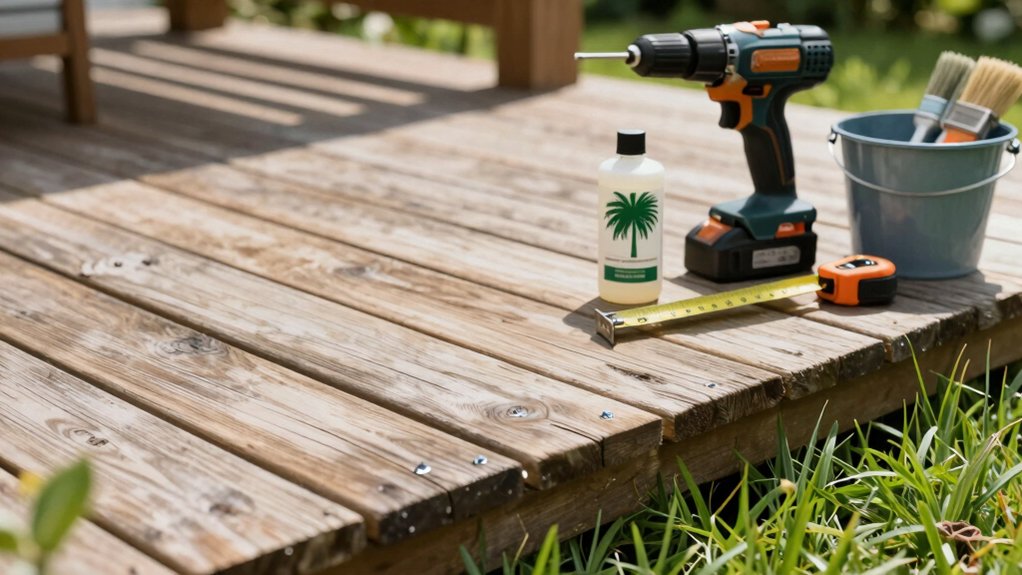
Maintenance visits come down to a practical mix of DIY capability and professional help, shaped by deck materials, age, and exposure. For cedar or composite decks, smaller touchups can be DIY with seasonal inspections, while hardware checks and structural concerns require pros.
In pressure-treated wood, you’ll often handle cleaning and sealing yourself, but you’ll want a pro for re-screwing loose fasteners or replacing compromised boards.
Concrete-anchored or complex joist systems tend toward professional assessment every 3–5 years, plus annual safety checks.
Metal substrates demand corrosion inspection and coating refreshes from specialists.
Schedule depends on traffic and climate: high-use, sun exposure, or cold, wet winters accelerate needs.
Track results, not hours, and align visits with visible wear rather than calendar-only reminders.
Hidden Costs: Tools, Cleaners, and Consumables
Hidden costs aren’t as obvious as a new deck board; they come from the tools, cleaners, and consumables you need to keep it looking and lasting. Your annual tally includes sandpaper, brushes, brushes for gaps, thresholds, and a reliable power sander if you DIY.
Budget for deck-safe cleaners, sealers, and stain applicators; cheaper choices may fail sooner, adding rework. Don’t overlook replacement parts—gaskets, blades, drill bits, screws, and oak-friendly fasteners—these wear out with use.
Maintenance scales with deck size and wood type, so estimate a per-square-foot cost and apply it to your substrate. Storage and safety gear add up, too.
Track actual spends over a year to refine future budgets, avoiding surprise spikes and supporting steadier upkeep investments.
Seasonal Checks: What to Inspect and When
Seasonal checks keep your deck durable and safe year-round, so start with a quick, systematic walk-through for the current season and note anything that stands out. Inspect boards for warping, cracks, or raised nails; note uneven surfaces that could cause trips.
Check railings for looseness, corrosion, and loose balusters, testing handrails with steady pressure. Look for mold, mildew, and moisture pockets, especially after rain or snow; record spots needing cleaning or sealing.
Examine fasteners—screws, nails, and screws—replacing any that show rust or looseness. Verify drainage: ensure gaps aren’t blocked and that water sheds properly.
Assess staining or coating wear, projecting the timeline for reapplication. Track sun exposure effects on color fading and fiber swelling.
Compile a season-by-season log to guide proactive maintenance and budgeting needs.
Budgeting Tactics to Extend Deck Lifespan
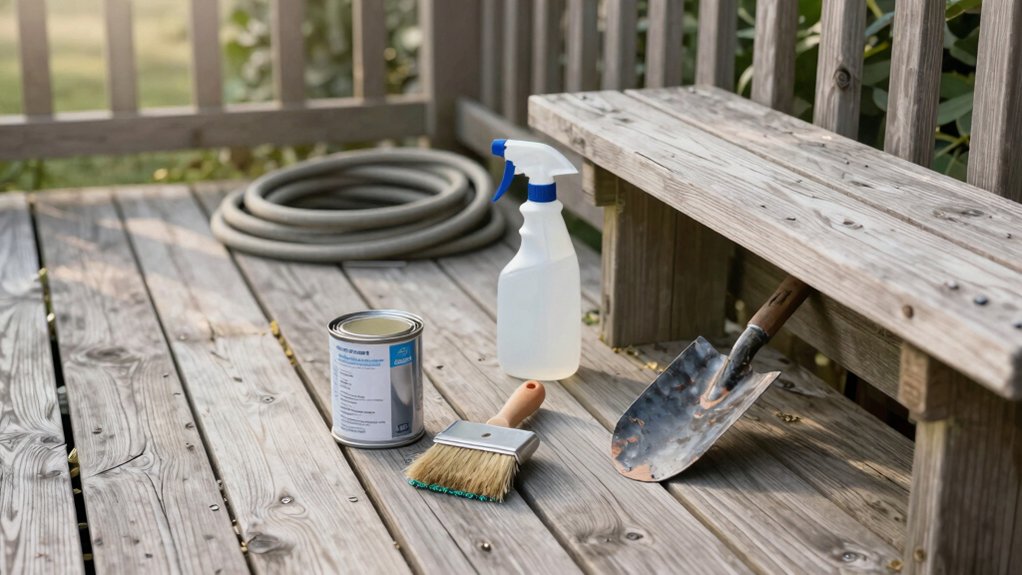
To extend your deck’s lifespan without breaking the bank, start by prioritizing budgeting for preventive maintenance and timely upgrades that offer the best return on investment. Track annual costs across materials, labor, and inspections to identify high-impact activities. Use data to schedule proactive tasks—cleaning, sealing, and fastener replacement—before failures occur, reducing costly repairs later.
Compare alternative coatings and decking types with lifecycle costs, not just upfront price, and favor options with proven longevity in your climate. Allocate a predictable monthly reserve for unexpected fixes, avoiding debt and downtime. Build a simple cost model that weighs maintenance frequency against failure risk, then adjust as you collect real-world results.
Prioritize cost-effective upgrades with documented durability gains to maximize value over time.
Conclusion
Maintaining your garden deck isn’t a one-off task—it’s a yearlong plan. Track cleaning costs, finish types, and board replacements to forecast yearly outlays, then compare DIY vs. pros to optimize labor. Use data: stain longevity, seal intervals, and weather impact to refine your budget and timing. Think of your deck as a living ledger—every maintenance decision adds to its value. When you stay proactive, the payoff rises like a well-timed harvest, steady, resilient, and enduring.