
If you want steady comfort and lower energy bills, a UK-compatible smart thermostat is a smart move. You’ll want reliable scheduling, clear app controls, and solid heating system compatibility, plus smart features like adaptive schedules and multi-room sensing. The choices range from budget-friendly under £100 to feature-heavy premium models. Start with what matters most to your home while keeping future tweaks in mind—the real gains come from how you set it up and adjust over time.
How to Choose a UK Smart Thermostat: Core Needs and Criteria

Choosing a UK smart thermostat starts with your daily routines, home layout, and budget. You’ll assess your heating schedule, occupancy patterns, and whether you prefer boiler-based or heat-pump control. Prioritize compatibility with your current system, existing radiators, and your home’s insulation quality. Temperature calibration matters: guarantee the device lets you set precise targets and correct offsets so you don’t overshoot comfort or waste energy. Check Wi Fi connectivity stability, since a reliable link keeps scheduling, firmware updates, and mobile control seamless. Look for user-friendly setup, clear app dashboards, and responsive support. Consider multi-zone needs, compatibility with voice assistants, and energy reports that translate into actionable savings. Finally, verify installation requirements and potential professional integration costs to align with your budget.
How to Compare Models: Essential Features That Save Money
When you compare models, look for energy-saving scheduling that matches your daily routine and can be adjusted easily. Pay attention to sensor accuracy metrics so you’re not wasting energy due to false readings or slow responses. Clear, reliable data on these features helps you pick a thermostat that truly lowers your bills.
Energy-Saving Scheduling
Smart thermostats save money mainly through smart scheduling that matches your daily routines. You’ll program when heat rises or falls, so rooms aren’t kept warm or cooled needlessly. Look for adaptive schedules that learn occupancy patterns, and guarantee manual overrides are simple during changeovers. Focus on how the device recognizes “home” vs. “away” via presence sensing, since consistent patterns reduce wasted energy. Check how quickly the system responds to changed room conditions, keeping indoor air comfortable without overshooting temperatures. Prioritize fine-grained control, such as separate schedules for weekdays and weekends, plus temperature bands that align with UK weather quirks. Confirm the interface clearly communicates daily energy use, and that smart sensors and room-by-room adjustments appear in practical, easy-to-read dashboards. Indoor air matters, and it should be reflected in every schedule.
Sensor Accuracy Metrics
Sensor accuracy matters because your thermostat can only save money if it truly reads ambient conditions. To compare models, focus on how sensors interpret room temperature, humidity, and wind or door gap effects. Look for sensor calibration details from manufacturers—whether automatic self-calibration is supported and how often you’ll need to verify readings. Check how fast a unit reacts to sudden changes and whether multiple sensors mean better zoning or simply redundant data. Consider placement guidance and any built‑in compensation for radiant heat sources. Data privacy matters too, so review what the manufacturer collects and how it’s stored or shared. In practice, prefer models with transparent calibration processes and clear privacy controls to avoid biased or lagging readings.
Best Value Smart Thermostats Under £100
If you’re shopping under £100, you’ll want clear value without sacrificing core features, so I’m focusing on budget-smart thermostats that deliver reliable scheduling, easy setup, and solid energy reporting. We’ll compare Best Value Picks and budget-friendly options that still feel premium in performance and app support. This discussion starts by sizing up what makes a value thermostat truly worth your money and how these kits stack up for everyday use.
Best Value Picks
Looking for real value without breaking the bank? These Best Value Picks under £100 prove you don’t have to overpay for solid performance. You’ll find models that prioritize core features over gimmicks, so you get reliable scheduling, remote control, and decent temperature accuracy without premium-cost frills. Focus on compatibility with your existing systems and the ease of setup, since a painless install saves time and frustration. When you compare, consider Smart thermostat aesthetics and how it fits your wall space, not just its specs. User interface design matters too: a clear, intuitive app and responsive touchscreen make daily tweaks quick and frustration-free. Choose a dependable, affordable option that delivers consistent comfort and straightforward energy insights.
Budget Smart Thermostats
Where can you get solid thermostat performance without paying a premium? Budget smart thermostats under £100 deliver reliable control without the sticker shock. You’ll prioritise straightforward setup, responsive scheduling, and solid compatibility with common UK systems. Look for clear app interfaces, intuitive temperature presets, and dependable connectivity, even if the hardware feels modest. Smart thermostat aesthetics matter here: a clean display and compact mount help it blend with your décor. Brand reputation still counts—choose makers with proven updates and solid customer support, rather than flashy marketing. Expect decent energy insights, programable routines, and remote control. If you want value, compare sensor quality, ease of installation, and whether the device works with voice assistants you already use. Budget success hinges on dependable performance and lasting software reliability.
Mid-Range Smart Thermostats: Learning Schedules and Price Alerts
Mid-range smart thermostats strike a practical balance between features and price, offering robust learning schedules and price alerts without the premium cost of high-end models. You’ll notice solid learning algorithms that adapt to your routines, reducing unnecessary heating and keeping you comfortable. Setup is straightforward, with clear prompts that guide you through device pairing and schedule tweaks. Price alerts, delivered as timely notifications, help you catch favorable rate changes or discount windows, so you can optimize comfort and costs without constant monitoring. These models typically support auto-boost and geofencing, enhancing efficiency without complexity. Battery life and compatibility stay solid bets, ensuring you won’t chase features you won’t use. In short, sensible automation meets predictable budgeting in a compact package.
Premium Thermostats: Advanced Automation and Voice Control
Premium thermostats take automation to the next level with advanced scene-based routines, proactive learning, and hands-free control, so you can guarantee comfort without sacrificing convenience. You’ll set up automation routines that adjust heating and cooling based on your daily patterns, occupancy, and preferred temperatures. Voice commands let you tweak settings without reaching for a phone, making quick tweaks effortless. These devices often learn your habits over time, predicting when you’ll be home and what temperature you’ll want, then auto-adjusting accordingly. Look for multi-room sensing, precise zoning, and fast responsiveness to assure comfort remains consistent. Expect clear dashboards that show energy impact and runtime. While premium features vary, the payoff is smoother climate control and meaningful energy savings.
Compatibility Matters: Boiler Types, Systems, and Installs
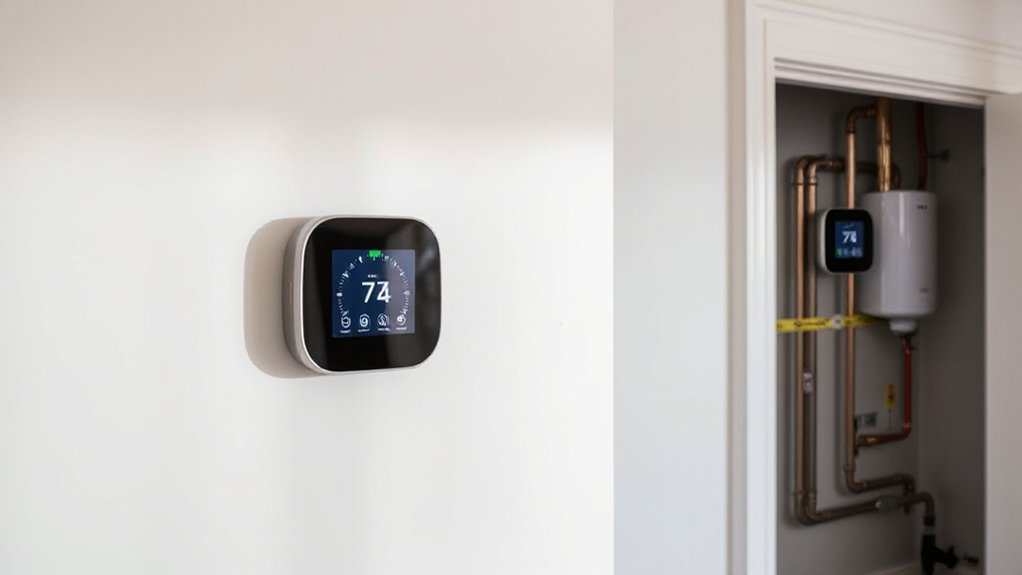
Choosing the right boiler compatibility is essential for reliable smart thermostat performance, because not all systems support the same controls or wiring. You’ll encounter variations in boiler types (combi, system, heat-only), wiring schemes, and communication protocols. Before shopping, confirm compatibility with your specific boiler model, courtesies of voltages, and whether a common rail or indirect connection matters for your setup. Installation challenges can include limited access to wiring terminals, the need for power or C-wire adapters, and compatibility with existing zone valves or thermostatic radiator valves. Some systems require a professional integration, while others support DIY wiring with clear diagrams. Expect to verify supported apps, data formats, and boiler brand compatibility to avoid gaps between planned schedules and real-world performance.
Install and Set Up for Maximum Savings
To maximize savings, start with the basics: pick a thermostat that supports energy-saving features like schedule-based heating, adaptive or learning algorithms, and remote control via a mobile app, then verify it works with your boiler and home wiring. Smart home integration and aesthetic design should guide placement and setup, ensuring discreet wiring and thoughtful mounting.
- Visualize a clean, wall-mounted hub next to a dimmed display and a connected пару of sensors.
- Program a daily schedule that matches your routine, then test auto-adapt after a week.
- Link to the app, enable remote adjustments, and set geofencing for occupancy-based tweaks.
- Tidy cables, label zones, and run a quick boiler check to confirm compatibility and efficiency gains.
Real-World Savings: Case Studies and Quick Optimization Tips
Real-world savings don’t just hinge on flashy features; they come from data-driven tweaks you can implement after install. Start with quick wins: review your heating schedule weekly, trimming unnecessary on-time, especially during milder UK mornings. Track thermostat usage for two weeks to spot idle periods and adjust setbacks accordingly. Leverage smart home integration to synchronize devices—connect radiator thermostats, smart plugs, and room sensors for coherent comfort zones without overheat. Calibrate occupancy and weather data to fine-tune comfort vs. cost, quickly. Prioritize a clean, intuitive user interface design so family members interact consistently, avoiding conflicting schedules. Readouts should be actionable: target daily kWh, cost estimates, and override histories. Use these insights to refine routines, ensuring steady savings without sacrificing comfort.
Frequently Asked Questions
Do Smart Thermostats Work Effectively in Rental Properties?
Smart thermostats work, but rental compatibility matters and tenant control varies. You’ll need landlord permission, easy temperature sharing, and clear installation terms; you’ll benefit from remote control, energy reports, and breach-free operation within agreed limits.
How Secure Are Smart Thermostats Against Hacking?
Smart thermostats are reasonably secure, but cyber risks exist. You should expect occasional software updates, strong unique passwords, and two-factor authentication. Be aware of cybersecurity concerns and data privacy; monitor devices and vendor privacy practices actively.
Can I Use Them With Solar Power or Battery Storage?
Yes, you can, with solar compatibility and battery integration in mind; many thermostats offer to run on solar or charge from solar, and integrate with home battery storage, though check inverter compatibility and expected efficiency during outages.
Do UK Energy Suppliers Offer Any Rebates or Incentives?
Yes, some UK energy suppliers offer rebates and incentives. You can claim government rebates and take advantage of renewable energy schemes, sometimes tied to energy efficiency upgrades. Check eligibility, application deadlines, and supplier-specific terms before purchasing or installing.
How Long Is the Typical Payback Period for Savings?
Typically, you’ll see payback in 1–3 years with energy efficiency upgrades, depending on usage and unit cost. Do a cost comparison, factor in installers’ fees, and you’ll know when savings outweigh the upfront price.
Conclusion
You’ve got the tools to cut heating costs without sacrificing comfort. Pick a model that fits your UK boiler, supports adaptive scheduling, and offers easy setup. Track your energy use, tweak schedules, and enable geofencing when you’re out. With the right thermostat, savings multiply—like a well-timed chorus keeping the home in tune. Start simple, then dial in advanced features as you learn what truly moves your bills. Your smarter, warmer home is within reach.