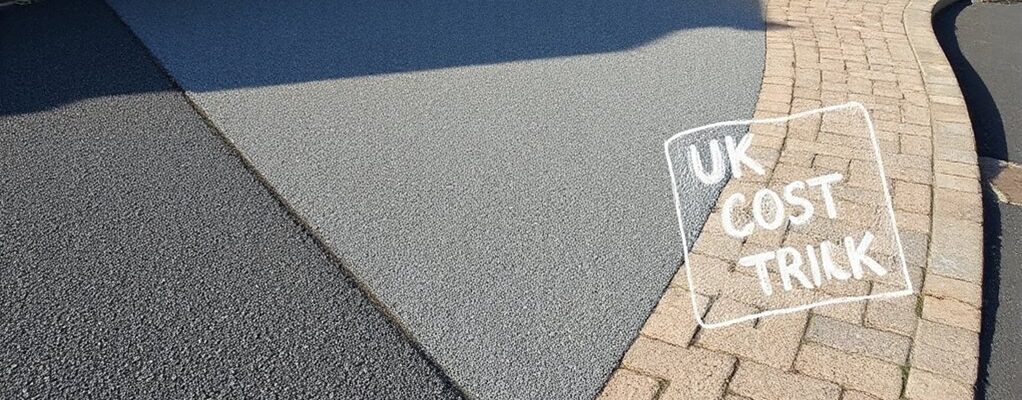
This is the most important decision you’ll face this year, with costs and durability clashing in a single choice. You’ll weigh materials from budget gravel to resin-bound setups, each offering a different lifespan and upkeep profile. Expect total costs to hover around £15–£70 per m², plus prep and labour, and plan for potential environmental impacts. To choose wisely, you’ll compare longevity, maintenance needs, and visual appeal before committing. Let’s map options, budgets, and practical trade-offs step by step.
Explore UK Driveway Resurfacing Options
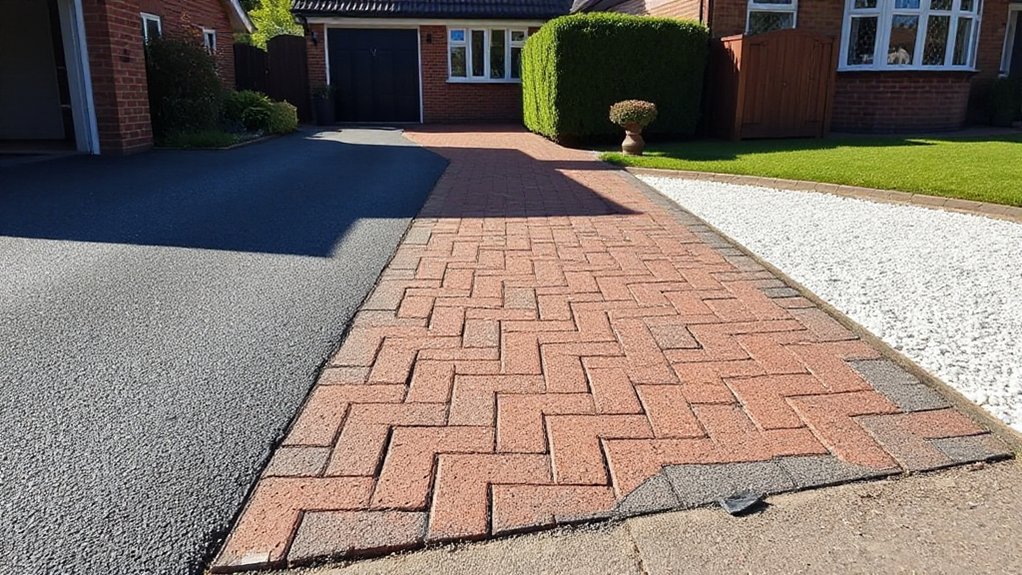
There are several UK driveway resurfacing options to contemplate, each with distinct performance, cost, and durability profiles. You’ll evaluate asphalt, concrete, tarmac, resin-bound, and block paving by measurable factors: surface stiffness, skid resistance, load capacity, and freeze–thaw resilience. For asphalt, anticipate mid-range initial cost (£40–£70 per m²) with moderate longevity (12–25 years) and easy repairability. Concrete costs run higher (£60–£110 per m²) but yield superior compressive strength and longer service life (20–40 years) under heavy traffic. Resin-bound presents premium pricing (£70–£120 per m²) and notable aesthetics, with good permeability and maintenance predictability; expect 15–25 years. Block paving delivers design versatility and repair ease, though joint maintenance influences durability. Consider garden landscaping integration and consider drive illumination—driveway lighting—for functional, aesthetic outcomes without compromising performance estimates.
Compare Durability and Maintenance by Material
Durability and maintenance vary sharply by material, so you’ll want concrete, resin-bound, asphalt, tarmac, and block paving ranked by expected life and upkeep. Concrete offers 20–40 years with minimal maintenance, featuring rigid surface finish and high weather resistance, requiring occasional sealing. Resin-bound surfaces deliver 15–25 years, with a smooth surface finish and excellent weather resistance but periodic weed and europe infiltration checks. Asphalt lasts 15–25 years, shows moderate surface finish durability and strong weather resistance, yet needs periodic resealing. Tarmac provides 15–20 years, with good surface finish and decent weather resistance, but potential brittleness in freezes. Block paving ranges 20–30 years, offers variable surface finish based on jointing and drainage; maintenance involves re-sanding and occasional relaying. Overall, choose by expected life, upkeep, and local climate implications.
Break Down Costs: Prep, Materials, and Labour
Prep is the first cost gate, followed by materials and labour, with each category tightly defined and spectrums of price depending on scope. You’ll quantify a cost breakdown by phase: prep costs include site clearance, grading, and drainage prep; materials cover chosen surface system and any ancillary components; labour accounts for crew hours and supervision. For prep, document cubic metres of excavation, compaction tests, and edge trenching, then assign unit rates. For materials, specify product type, coverage per square metre, batch variability, and delivery fees, noting material selection impacts long-term performance and maintenance needs. Labour should reflect hours, crew size, and rate bands, plus contingency. Track subtotals and cumulative total. This approach clarifies budgeting, supports decision making, and highlights how Material selection drives overall value.
Resin, Block Paving, Asphalt, Tarmac, and Gravel : Pros and Best Uses
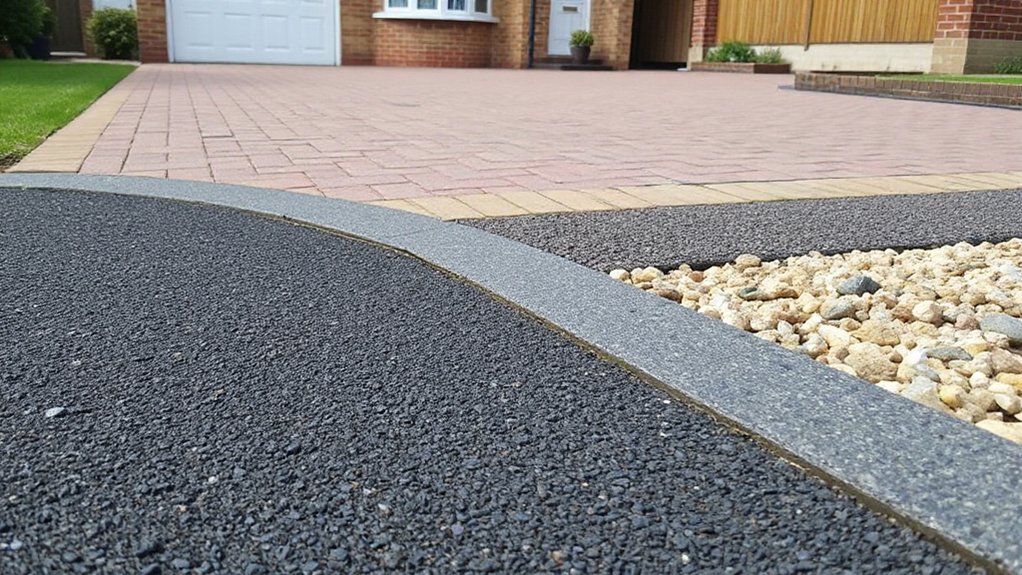
Resin, block paving, asphalt, tarmac, and gravel each serve different performance profiles and cost drivers, so choosing the right option hinges on traffic load, drainage needs, maintenance tolerance, and long-term value. You’ll compare strength, durability, and surface finish across materials, noting load ratings, skid resistance, and rutting risk. Resin offers seamless joints, high aesthetic flexibility, and rapid curing but higher material costs and maintenance vigilance. Block paving delivers modular repair, strong wheel load support, and varied colors, yet joints require periodic re-shedding. Asphalt and tarmac provide excellent water shedding, economical upfront costs, and ease of installation, with trade‑offs in surface texture and color consistency. Gravel minimizes costs and enhances drainage but demands ongoing replenishment and edging. Color options, installation techniques influence final appearance, maintenance needs, and long-term performance.
Budget by Method: A Practical UK Framework
When you plan a driveway project, costs hinge on method, scale, and local labor rates. In this UK framework, assign a base per‑square‑metre figure for each option: concrete or asphalt tends to mid‑range, block paving higher due to materials and joints, resin bound and gravel lower but with long‑term maintenance variances. Add removal and sub‑base preparation, drainage, and edging as separate line items. Consider installation window and cure times, which affect daily labour costs and project duration. Prioritize cost effective solutions that meet performance needs while minimizing downtime. Factor maintenance budgets into the first year; a small annual reserve reduces life‑cycle surprises. Balance aesthetic considerations with durability, ensuring the chosen method aligns with expected utilisation and long‑term value.
Environmental Impact and Curb Appeal of Each Option
You’ll compare options by their Environmental Footprint, tagging tradeoffs in embodied materials, production energy, and end-of-life recyclability, with a quantitative lens on CO2e per square metre and expected waste. You’ll weigh Curb Appeal Impact by measurable factors like colour permanence, texture, and visibility from street level, linking it to property perception surveys or stated resale Value ranges. You’ll connect Longevity and Maintenance to projected renovation intervals and annual upkeep costs, so you can forecast long-term environmental and aesthetic performance.
Environmental Footprint Tradeoffs
Several factors drive the environmental footprint and curb appeal of driveway options, and quantifying them helps a homeowner choose wisely. You compare embodied carbon per square meter, lifetime durability, maintenance cycles, and end-of-life disposal. Concrete typically shows lower initial carbon but higher heat island impact, while asphalt adds bitumen emissions and recycling constraints. Pavers with recycled content reduce raw material needs but may require more transport. Eco friendly materials, such as permeable surfaces and recycled aggregates, lower runoff and heat buildup, yet may demand higher upfront labor. Resin bonds offer low maintenance but can increase volatile organic compound exposure if not properly ventilated. Overall, you should compute a life cycle carbon footprint and estimate aesthetic integration with surrounding elements to balance performance and curb appeal.
Curb Appeal Impact
Curb appeal is driven by measurable, asset-integrated factors, not just color or texture: each driveway option alters the visual weight, texture, and cohesion with the surrounding landscape, and these changes translate into specific aesthetic and market signals. You evaluate curb impact by quantifying contrast with adjacent pavings, setback harmony, and line continuity, then translating those metrics into perceived value. Paved choices with lighter finishes reduce heat absorption by up to 15%, while darker aggregates increase starkness by 8–12% in street presence. Gravel varieties improve micro-saturation tolerance, affecting perceived maintenance needs by 20–30% in surveys. Garden lighting enhances nighttime depth by 25–40%, and driveway security perception rises when edges are clearly delineated. Choose options that optimize both visibility and safety without sacrificing structural integrity or solar efficiency.
Longevity And Maintenance
Longevity and maintenance vary by material and environmental factors, but you can quantify impact to compare options. You monitor expected lifespan, failure modes, and maintenance intervals to estimate total cost of ownership. For asphalt, anticipate 15–25 years with seal coats every 3–5 years, reducing surface wear but requiring ongoing patching for cracks. Concrete offers 25–40 years with joint maintenance and periodic resurfacing; expect lower seasonal wear but higher initial cost. Pavers provide 20–30 years, though maintenance depends on joint sand replacement and weed control. Resin-bound surfaces deliver 15–25 years with routine brushing and occasional rebind. Weather resistance and seasonal wear metrics drive performance; account for freeze–thaw cycles, UV exposure, and root intrusion. Choose options with compatible maintenance schedules to optimise curb appeal and environmental footprint.
Quick Decision Guide: Pick the Right Option for You
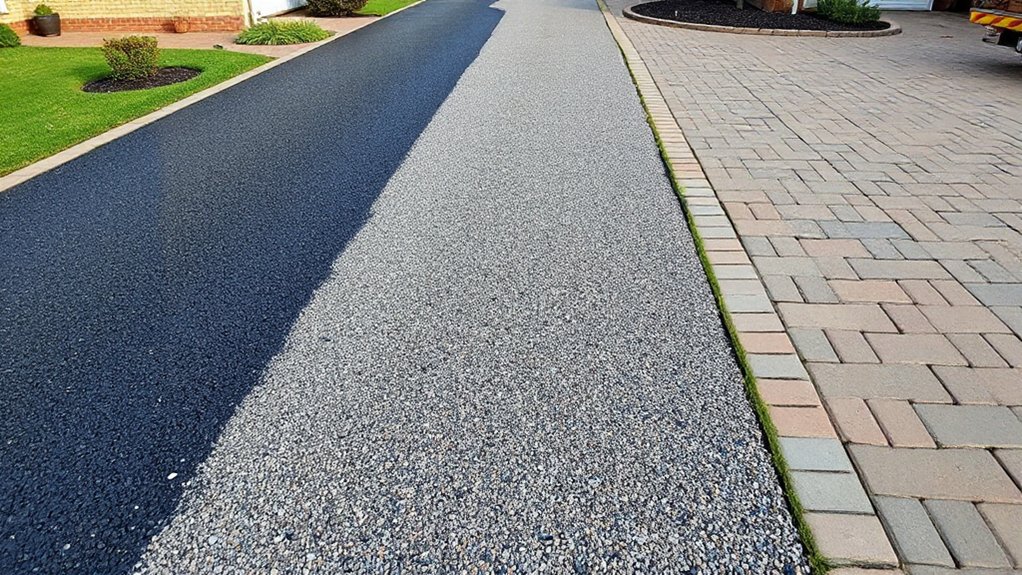
So, how do you choose the best driveway resurfacing option for your needs? Start by listing performance targets: load class, resistance to cracking, and weather durability. Assign numeric thresholds: traffic rating 7–9/10, freeze–thaw tolerance 8–10, and warranty 5–15 years. Compare cost per square meter: asphalt £10–£25, concrete £25–£60, block paving £30–£90, resin £40–£120. Time to lay and cure: asphalt 1–2 days, concrete 2–4 days, block paving 3–7 days, resin 1 day. Maintenance costs: annual £0–£5 (resin) up to £200 (treet, weed, sealing). Consider aesthetics and security: garden lighting and driveway security implications influence choice. Prioritize options meeting ≥80% targets within budget to minimize future costs.
Frequently Asked Questions
How Long Does Replacement Driveway Work Typically Take in the UK?
Replacement driveway work typically takes about 2–5 days in the UK, depending on size, weather, and material. You’ll need pothole repairs beforehand and guarantee proper driveway drainage to avoid future issues during the project.
Which Option Has the Lowest Maintenance After Installation?
Coppered resilience, you’ll get the lowest maintenance with concrete. In cost comparison terms, durability factors favor poured concrete long-term; it wears evenly, resists cracking, and reduces upkeep compared to asphalt or gravel.
Are There Grants or Incentives for Eco-Friendly Driveways?
Yes, you can access eco grants and green incentives. You’ll typically qualify for partial funding or tax relief, with total support varying by project type and region; quantify eligible amounts, application deadlines, and required certifications to maximize funding.
Can I Resurface Over an Existing Cracked Surface Safely?
Yes, you can, but only if cracks are stabilized first. Conduct crack repair, then guarantee surface preparation with cleaning, drying, and priming; apply moisture-tolerant resurfacer in thin, even layers, following manufacturer instructions for full cure.
What Is the Typical Lead Time From Decision to Completion?
About 2–6 weeks from decision to completion, depending on scope. With a 1,000–1,500 square foot driveway, you’ll see ~20–30% fewer cracks year one. Driveway durability and material longevity hinge on timely, precise scheduling of prep.
Conclusion
In conclusion, you’ll balance cost, durability, and look by material: resin-bound for longevity and curb appeal, block paving for flexibility and resale value, asphalt or gravel for budget projects, and concrete or tarmac for a durable mid-range. On average, UK resurfacing costs range £15–£70 per m², with prep often driving up to 30% of the price. Fun stat: resin-bound surfaces can last 15–25 years, reducing annualized maintenance versus gravel, which may shift more frequently in poorer drainage areas.