
In 2026, you’ll find a mix of upfront grants, performance-based incentives, and regional programs across England, Scotland, Wales, and Northern Ireland that can cut solar costs and improve payback. Eligibility hinges on property type, income, system size, and certification standards, with application steps that demand thorough documentation and compliance checks. The landscape varies by scheme and region, so your next move should map out options, compare criteria, and confirm installer credentials before proceeding. Let’s identify where you stand and what’s most advantageous.
What Funding Options Exist in 2026 for UK Solar Panels?
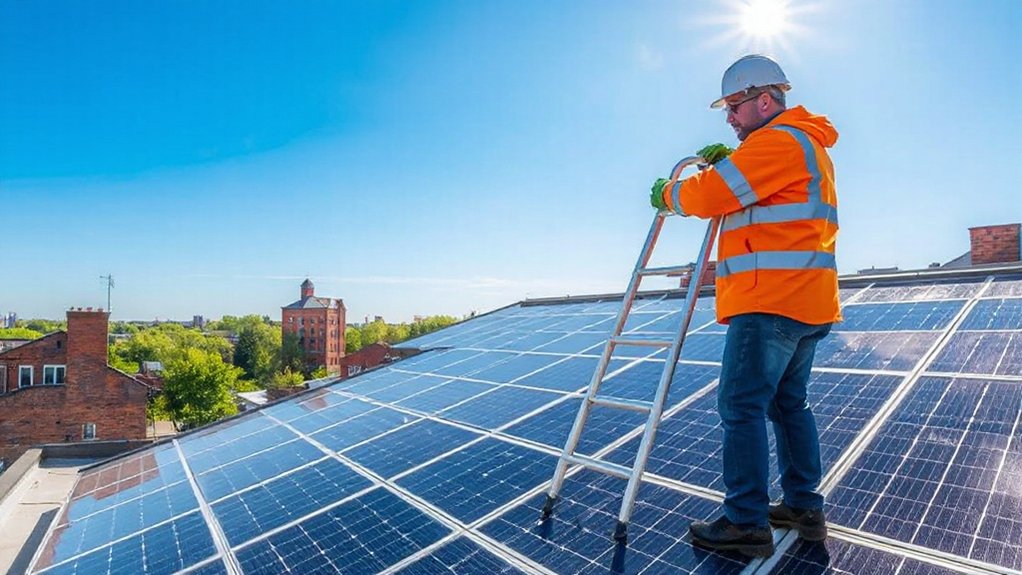
In 2026, there are several funding options for UK solar panel installations, ranging from government grants and subsidies to market-based support. You’ll see grants targeting domestic and commercial adopters, plus feed-in tariff shifts and Smart Export Guarantee payments that reward excess generation. Loans and equity schemes remain, including low-interest options via devolved administrations and green finance programs that factor in environmental impact. Partnerships with energy suppliers and local authorities may open accelerated depreciation or community energy funding, while installer incentives can lower upfront costs. Consider durability data when evaluating returns, since solar panel durability influences long-term performance and cost-per-kilowatt-hour. Environmental impact metrics—embodied carbon, recycling pathways, and end-of-life planning—shape eligibility and grant prioritization.
How to Tell if You Qualify for UK Solar Grants 2026
Do you qualify for UK solar grants in 2026? Eligibility hinges on current government policy and concrete program criteria. You’ll likely qualify if you’re a homeowner or business meeting income, property, and installed-capacity thresholds set by the relevant scheme when you apply. Data point: grants increasingly target higher energy efficiency, which can influence eligibility for solar-related support. Check whether your property is within eligible regions and whether you’re using approved equipment or installers, since program rules emphasize certified products and workmanship. Solar panel durability matters only to the extent it affects warranty requirements and long-term grant maintenance. Review annual caps, application windows, and documentation needs, then compare your situation against official policy summaries to determine if you should proceed with an application.
Planning Permissions and Grant Eligibility: What Homeowners Need to Know
While planning permission isn’t always required for solar installations, you must verify regional rules and scheme-specific limits to avoid delays or refusals, especially for larger systems or non-standard properties. In practice, grant eligibility hinges on site type, system size, and adherence to program criteria, not just installation date. You’ll need documented evidence of rooftop orientation, electrical capacity, and compliance with building and fire safety standards to secure funding. Authorities increasingly weigh environmental impact and lifecycle performance in scoring, so demonstrate efficient equipment and proper waste handling. Technological advancements influence eligibility thresholds, with newer modules and inverters often qualifying for updated caps or streamlined approval. Stay current with policies, submit accurate installations plans, and track grant timelines to minimize audit risk and maximize potential funding.
Compare UK Solar Grants and Incentives for 2026
You’ll compare UK Grants 2026 and Incentives Overview 2026 to see how support differs across schemes. This analysis focuses on eligibility criteria, funding limits, and administration processes to help you assess available options. We’ll highlight where programs align or diverge, enabling a clear, data-driven ranking for 2026.
UK Grants 2026
How do UK solar grants and incentives stack up for 2026? You’ll find a mix of grant programs, tax reliefs, and feed-in tariff adjustments, with regional variations shaping total value. Data shows a steady shift toward upfront capital support and performance-based schemes, while maintenance subsidies remain limited. You may see clearer eligibility criteria for small installers and homeowners, plus expanded eligibility windows in some nations. Policy focus emphasizes energy security, decarbonization targets, and grid resilience, which influences loan terms, interest rates, and payout timelines. Expect ongoing emphasis on transparent reporting and postcode-specific incentives. Solar panel maintenance costs stay a minority consideration in overall ROI, while Renewable energy myths persist as barriers to uptake; address them with solid, cited data and clear guidance.
Incentives Overview 2026
What incentives exist in 2026, and how do they compare across the UK? You’ll see a mix of cash grants, tax credits, and feed-in tariffs, with regional nuances shaping total project economics. Northern Ireland emphasizes standalone grants for low-income households, while Scotland and Wales blend grants with accelerated capital allowances to boost early adopters. England leans on simplified, non-repayable grants paired with performance-based savings, encouraging larger systems. Across all nations, incentive amounts correlate with system size, usage, and grid export rules, affecting payback periods. You should weigh Solar panel durability against projected maintenance costs, and factor in battery storage options to maximize self-consumption. Policy timelines favor scalable storage and durable equipment, reducing long-term costs and emissions despite upfront investments.
Eligibility And Comparison
Across the UK, solar grants and incentives vary by nation but share a common goal: reduce upfront costs and shorten payback periods through a mix of grants, tax relief, and export incentives. Here you’ll see how eligibility differs and how to compare schemes quickly. Key data points guide decision-making, focusing on value, durability, and ongoing costs. You’ll assess whether you qualify, the grant cap, application timelines, and required proofs of income or property status. Then compare return-on-investment estimates and installation conditions. 1) Eligibility criteria by region 2) Capacity and grant limits 3) Compliance, maintenance requirements, and durability considerations. This evidence-driven approach helps you choose programs that maximize Solar panel durability and minimize maintenance requirements over time.
How to Apply for Solar Grants in Your Area
To apply for solar grants in your area, start by identifying local programs through official sources such as your council’s website, national funding portals, and trusted energy charities. Then verify eligibility criteria, required documents, and application windows, noting any regional limits or prioritizations for low-income households or rural properties. Collect proof of ownership, recent energy bills, and a cost breakdown for solar panel maintenance and any required equipment. Track deadlines with a master calendar and set reminders. Compare grant amounts against project costs, ensuring you meet minimum installation thresholds where applicable. If your area supports battery storage or hybrid systems, confirm compatibility and funding rules. Finally, document outcomes for audits and consider long-term financing strategies to optimize benefits.
What Costs Remain After Grants and How to Budget
Even after grants, you’ll still face several costs that can affect your total project budget. In this section, you’ll quantify residual items and prioritize mitigation through disciplined financial planning and energy efficiency improvements. By focusing on durable expenses, you’ll reduce non-recoverable outlays and align spend with policy-backed targets. Key costs to anticipate include system integration, maintenance, and monitoring upgrades, which persist beyond installation. Plan for inflation, interest, and potential permit fees, all of which influence long-term affordability. Use evidence-based budgeting to compare quotes, estimate lifetime savings, and justify contingencies. A disciplined approach helps you allocate funds to high‑impact areas and avoid gaps in service.
- System integration and permits
- Ongoing maintenance and monitoring
- Contingency and inflation buffers
How Much You Can Save With Grants and Subsidies
Grant eligibility basics determine what you can claim, so you know which grants or subsidies apply to your project. Next, we’ll outline potential saving calculations to show how grants reduce upfront costs and long-term payback. Finally, we’ll walk you through subsidy application steps so you can act efficiently and track your progress.
Grant Eligibility Basics
Eligible households can save substantially on solar costs through grants and subsidies, but the exact amount depends on income, property value, and location. You’ll see eligibility vary by scheme, with caps aligned to energy efficiency data and regional funding. To understand your potential support, focus on how grants intersect with renewables policies and maintenance costs over time. Use the following ideas as a quick reference:
- Eligibility windows and required documentation
- Income and property value thresholds shaping grant size
- Local policy differences affecting timelines and installers
Assessment tips: verify program alignment with solar panel maintenance needs and longer-term subsidies, ensuring compliance with renewables energy policies and reporting requirements.
Potential Saving Calculations
From the grant eligibility basics, you can move to a practical view of savings by calculating how much grants and subsidies reduce upfront costs and boost long-term returns. You’ll see net price reductions when grants cover installation and equipment rebates, and subsidies offset VAT or interest charges. Use a transparent calculator to compare upfront expenditure against projected lifetime savings from reduced energy bills. Include maintenance costs to assess true payback periods. Consider energy storage options, which can maximize self-consumption and minimize export losses, strengthening return on investment. Factor in system performance assumptions, warranty spans, and policy horizon changes to avoid overstating savings. Regularly review maintenance planning and potential retirements of incentives to keep your financial case accurate.
Subsidy Application Steps
Getting grant and subsidy money into your project is a structured process: identify eligible schemes, gather required documentation, and submit applications through official portals or installers. You’ll assess program eligibility, confirm required proof, and track deadlines to minimize delays. Funds flow is contingent on correct compliance data and timely submissions, with outcomes varying by scheme.
- Confirm eligibility windows and document requirements for each grant.
- Prepare proof of ownership, energy estimates, and installation invoices before submission.
- Monitor application statuses and respond to requests to avoid delays.
Focus areas: Solar panel durability assessments, precise maintenance tips, and post-installation reporting. Data shows durability claims influence grant approval rates; routine maintenance tips reduce suspension risk and protect subsidy value.
Choosing a Trustworthy Installer: Credentials, Quotes, and Warranties
Choosing a trustworthy installer is essential to guarantee your solar panel system performs reliably and meets warranty terms; verify credentials, obtain detailed quotes, and confirm warranty coverage before committing. You should assess installer reputation through independent reviews, project portfolios, and completion rates, as these metrics correlate with long-term performance and post-install support. Demand adherence to Certification standards from recognized bodies, and check that credentials cover system design, safety, and electrical work. Compare quotes for scope, equipment brands, and labor terms, ensuring you get a breakdown that supports apples-to-apples evaluation. Require explicit warranty details on panels, inverters, performance guarantees, and workmanship. Consider aftercare commitments, inspection cadences, and response times. Document timelines and cancellation policies to avoid latent liabilities. This data-driven approach strengthens compliance and protects your investment.
Case Study: ROI From a Grant-Enabled UK Home Solar Install
Across UK homes, grant-enabled solar installations deliver measurable ROI by reducing upfront costs, lowering energy bills, and increasing property value, all while meeting policy targets for decarbonization. In this case study, you’ll see how a typical UK home recoups investment through a combination of grant savings, tariff support, and reduced consumption. Real-world metrics show payback timelines of 6–12 years, with annual bill cuts translating to hundreds of pounds. You’ll also note long-term value from improved energy resilience and potential resale premiums, aligned with environmental targets.
- Grant-subsidized capital reduces initial expenditure, accelerating break-even.
- Annual energy savings compound with tariff adjustments and usage patterns.
- Ongoing solar performance, solar panel maintenance, and environmental impact over time.
Next Steps: Installation Timeline and Practical Tips
You’ll align your project with a clear installation timeline, outlining key milestones from permits to commissioning. We’ll highlight practical tips for site assessment, module layout, and contractor coordination, backed by data on typical lead times and risk factors. This discussion sets the stage for concrete next steps and policy-aligned benchmarks to track progress.
Installation Timeline Steps
To move from planning to implementation, follow a clear installation timeline that maps key milestones, dependencies, and responsible parties. You’ll align policy requirements with site readiness, permitting, and expected panel efficiency gains, then coordinate material delivery and installation windows. Track performance metrics, including solar panel efficiency projections and battery storage feasibility, to inform milestone decisions and funding eligibility.
- Establish baseline readiness by confirming permits, grid access, and site constraints; assign owner and deadline.
- Schedule procurement and delivery windows, align with weather and workforce capacity; verify equipment compatibility and storage options.
- Execute installation with quality checks, commissioning, and documentation; validate performance targets and update stakeholders.
Outcome focus: timeline clarity, risk mitigation, and accountable governance.
Practical Installation Tips
Effective installation hinges on practical on-site practices that bridge planning and execution. You should align timeline milestones with site assessments, ensuring scaffold, permits, and electrical work meet safety standards. Inspect roof integrity, verify roof penetrations minimize leaks, and schedule weather-aware windows to avoid rain delays. Prioritize solar panel durability by selecting qualified mounting systems and weather-rated inverters, while documenting torque specs and cable routing for long-term performance. Adhere to maintenance requirements by planning accessible inverter panels and clean, debris-free modules. Track performance metrics from day one, comparing expected vs. actual output to flag issues early. Data-driven checks, contractor coordination, and clear handoffs reduce rework. Maintain compliance with policy guidelines on warranties and inspections, ensuring sustainability, cost control, and reliable energy generation.
Frequently Asked Questions
Do Grants Cover All Solar Panel System Components?
Grants generally don’t cover every component; you’ll often receive funding for installation, inverters, and wiring, but maintenance or non-standard equipment may fall outside. This affects environmental impact and financial incentives, shaping overall cost-effectiveness and policy comparisons.
Are There Regional Differences in Grant Availability?
Regional variations exist: grant eligibility differs by region, funding streams, and schemes. You’ll see measurable gaps in uptake and approval rates, so you should compare local policies, deadlines, and criteria to optimize your application. Data-driven, policy-focused.
Can Grants Affect Eligibility for Other Subsidies?
Grants can affect eligibility for other subsidies, depending on income thresholds and reporting rules. You should track financial literacy and program criteria, because your choices influence the Environmental impact calculations and potential eligibility for multiple incentives.
Do Grants Require a Specific Installation Contractor?
No, grants don’t require a specific installation contractor. Instead, verify contractor requirements and guarantee they meet policy standards; this affects installation costs and compliance. Follow eligible qualifications, documentation, and timelines to maximize grant reliability and outcomes.
How Long Does Grant Approval Typically Take?
Grant approval typically takes several weeks, varying by program. You should expect 4–8 weeks for processing, with faster timelines for complete applications. You’ll assess financial eligibility early, and the application process hinges on accurate documentation and timely submissions.
Conclusion
You’ve got clear options: upfront grants, performance-based incentives, and regional tweaks—each shaping costs, payback, and eligibility. Use solid data to compare schemes, confirm property and income requirements, and verify installer credentials and warranties. Align timelines with planning permissions and compliance to avoid delays. Think of the grants as a lighthouse—guiding investment toward predictable ROI amid policy shifts. By mapping incentives to your home’s specifics, you’ll maximize savings and speed up your path to sustainable energy.