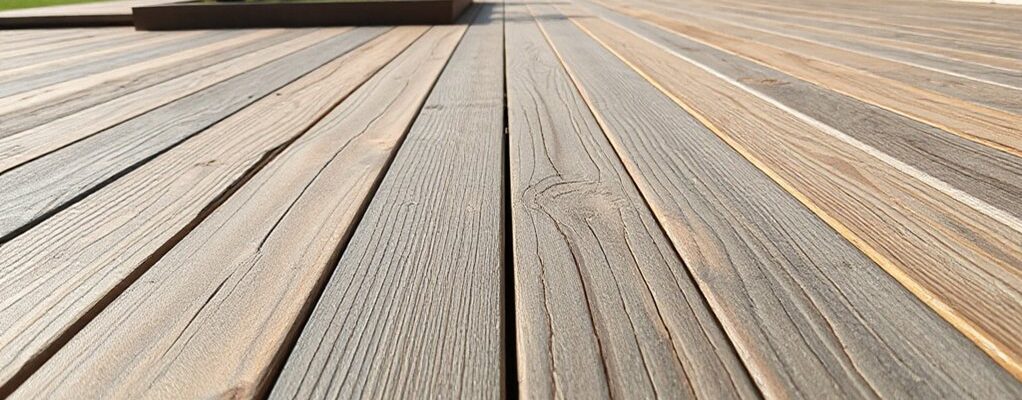
You’re weighing composite decking against timber for a UK home, focusing on durability, maintenance, and climate resilience. Data show composites outperform timber on UV stability, moisture resistance, and lifecycle costs, while timber offers natural aesthetics and warmth with higher upkeep. Environmental impact also trends toward composites, yet local preferences and budget remain pivotal. With the trade-offs clear, the next part maps out how longevity, upkeep, and cost shape the practical choice for your project.
Composite Decking Vs Timber: Which Is Best for UK Homes?
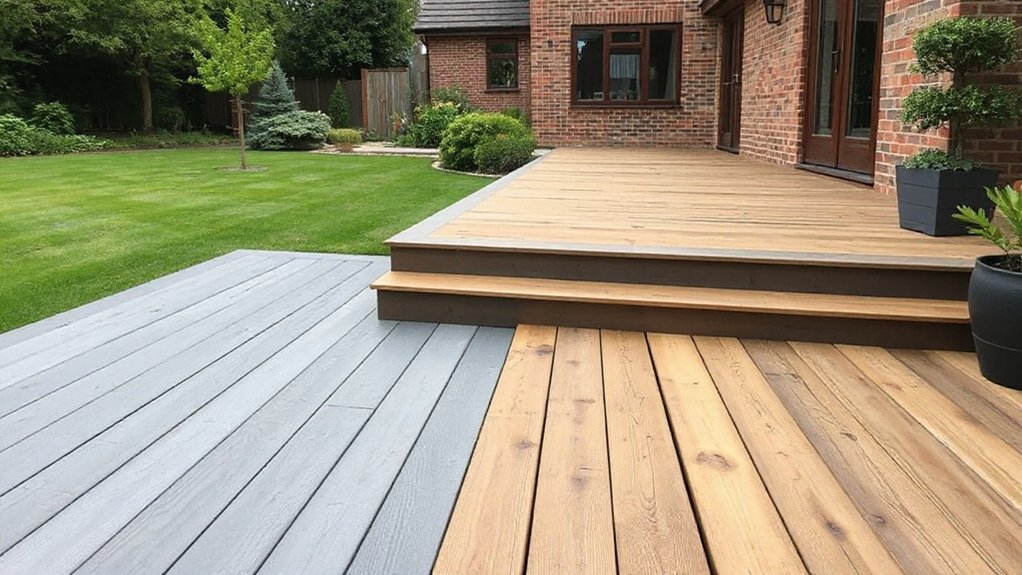
Composite decking and timber each offer distinct advantages for UK homes, but the best choice depends on performance, cost, and sustainability goals. You evaluate long-term maintenance, weather exposure, and lifecycle impacts to decide between materials. Design aesthetics influence appearance consistency, texture variety, and colorfastness, affecting curb appeal and resale value. Timber provides natural warmth and a traditional grain that some homeowners prefer, yet it requires ongoing treatment to resist rot, pests, and moisture ingress. Composite decking offers predictable performance with improved seasonal durability, lower maintenance, and enhanced slip resistance, though initial costs may be higher and color options rely on blends. You should quantify emissions, recycling potential, and end-of-life handling to align with environmental objectives while balancing upfront versus ongoing costs. Overall, data-driven comparisons guide material selection for UK climate and goals.
What Is Composite Decking (And Why It Matters in 2026)
In 2026, composite decking has evolved from a niche alternative to a mainstream material defined by performance, longevity, and sustainability metrics. You evaluate it through data on thermal stability, moisture resistance, and impact durability, reducing maintenance compared with traditional timber. Composite formulations combine recycled and virgin materials, producing predictable behavior under UK climate conditions and lower life-cycle emissions when scaled. You consider installation ease, dimensional stability, and slip resistance as core indicators of value, not merely cost. The material’s aesthetic appeal is enhanced by consistent pigmentation and finish options, aligning with architectural standards and modern outdoor living trends. Synthetic materials enable controlled performance without traditional wood’s variability, supporting certified sustainability claims and market transparency for consumer decisions in 2026.
How Long Do Decks Last in the UK? Longevity Compared
Deck lifespans in the UK hinge on material choice, installation quality, and climate exposure, with data showing notable differences between timber and composite options. You’ll see longer service lives from properly installed composites, backed by research on UV stability, moisture resistance, and dimensional stability. Timber decks depend on species, treatment, and maintenance cycles; untreated ranges exhibit accelerated deterioration under wet winters. Across climates, composites typically offer superior weather resistance and fewer warping events, translating to lower lifecycle costs when factoring replacement frequency. Durability metrics reveal deck durability for high-grade timber may approach two to three decades with meticulous upkeep, whereas composite systems commonly exceed 25 years with minimal refinishing. Consider embodied energy and end-of-life recyclability for sustainability; longevity is a central driver of overall environmental impact in this comparison.
Maintenance Showdown: Cleaning and Upkeep for Timber vs Composite
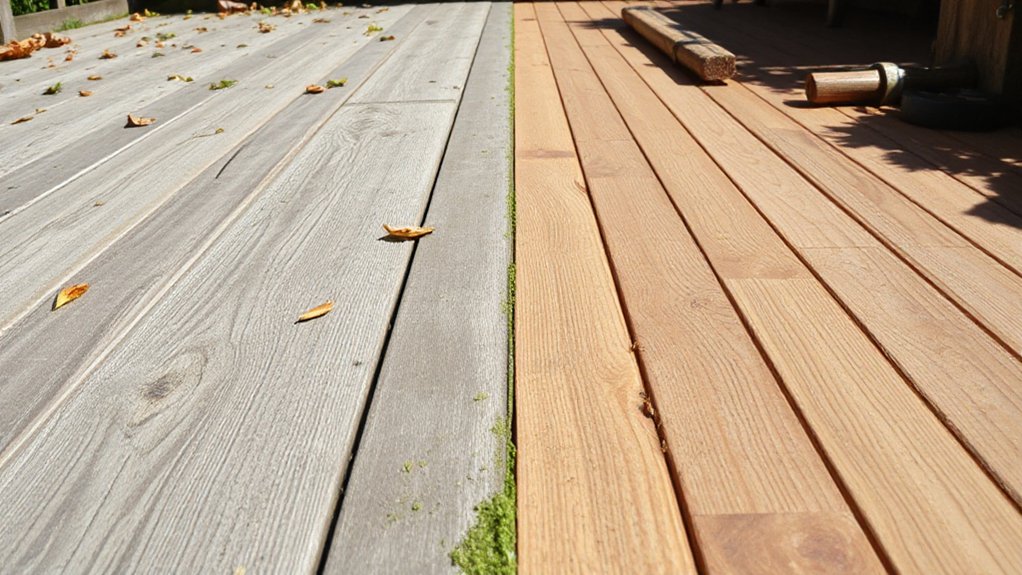
Cleaning and upkeep drive lifecycle costs and performance for both timber and composite decks, with composites typically needing less frequent refinishing and fewer cleaning-intensive maintenance steps. You compare cleaning regimes by material, noting that timber requires periodic sanding, staining, and sealant renewal, whereas composites tolerate mild cleaning with soap and water and rare re-coating. Durability factors include moisture resistance, UV stability, and mold mitigation, influencing long-term maintenance intervals. You should quantify maintenance time, costs, and material resilience across typical UK climates, using test data where available. Aesthetic appeal factors into upkeep planning, with timber showing natural patina when maintained, and composites offering consistent color without frequent refinishing. Overall, maintenance efficiency aligns with durability factors and visual expectations, guiding material selection for lifecycle performance.
Environmental Impact: Timber vs Composite in UK Gardens
Environmental impact frameworks for UK gardens show timber and composite decking differ in lifecycle emissions, resource use, and end-of-life outcomes. You assess material footprints by tracking extraction, processing, transport, and installation energy, then weigh maintenance and replacement frequency over the deck’s lifespan. Timber typically exhibits lower initial embodied energy but higher ongoing treatment needs, potentially elevating long-term emissions unless sourced from certified, rapidly renewing forests. Composite materials often centralize recycling challenges due to mixed polymer and wood fibers, complicating end-of-life separation and recovery. In practice, you’ll compare carbon footprint across maintenance cycles, weather resistance, and durability under UK climate conditions. Consider recyclability options, repurposing opportunities, and landfill avoidance. Overall, decision thresholds hinge on balancing material stewardship, lifecycle duration, and the feasibility of end-of-life recovery strategies.
Cost, Installation, and Practicalities for 2026 UK Decks
You’ll want a data-driven view of Material Cost Trends and Installation Practicalities to compare 2026 UK deck options. Recent pricing signals show initial material costs for timber vs composite fluctuating with supply chains, while installation time and labour requirements influence total project spend. We’ll outline where durability, maintenance intervals, and sustainability metrics intersect with practical choices to guide budgeting and planning.
Material Cost Trends
Material costs for 2026 UK decks are shifting due to volatile timber and composite supply chains, fluctuating import duties, and evolving plastic component pricing. You’ll see price dispersion across species and profiles, with bulk orders mitigating spikes but not eliminating volatility. Material durability remains a value driver; higher-grade boards often demonstrably reduce lifecycle costs through lower maintenance, longer service life, and predictable resupply. Composite options may offer stable unit costs relative to solid timber when financing, warranties, and recycling streams are considered, though initial premiums persist. Exchange-rate sensitivity and regional transport costs contribute to regional price variation. Aesthetic appeal and end-user preferences continue to shape procurement choices, influencing gloss, texture, and color consistency. In sum, cost trajectories hinge on supply-chain resilience, sustainability certifications, and circular economy incentives.
Installation Practicalities
Installation practicality for 2026 UK decks hinges on cost discipline, installation efficiency, and fit-for-purpose detailing, with a focus on scheduling, site logistics, and warranty-backed performance. You evaluate material choices, substructure compatibility, and fastener systems to minimize waste and maximize safety, while aligning with safety regulations and design flexibility.
- Predictable timelines reduce labor risk and budget overruns.
- Modular framing improves site logistics and warranty coverage.
- Standardized detailing enhances long-term sustainability and performance.
You should prioritize data-driven decisions: lifecycle costs, maintenance intervals, and end-of-life recycling options. Prioritise fire and slip resistance, moisture control, and drainage as part of design flexibility. Documentation, inspections, and contractor qualifications drive compliance and outcomes. Informed procurement minimizes returns, supports warranties, and sustains resilience across UK climates.
Quick Decision Framework: Pick Timber or Composite for Your Home
Which option makes the most sense for your home—timber or composite—depends on performance priorities and lifecycle costs. In this quick decision framework, you compare input data on durability, maintenance, and environmental impact. Material durability informs long-term replacement risk, while maintenance demands shape annual lifecycle costs. Timber offers natural aesthetic versatility and lower initial embodied energy, yet higher ongoing upkeep and susceptibility to weathering. Composite decking delivers consistent performance, superior decay resistance, and reduced maintenance, although embodied energy and end-of-life recyclability vary by formulation. Consider decorative patterns to match architectural language, and quantify expected service life, stain resistance, and slip performance. Align your choice with supplier transparency, warranty terms, and regional climate data. Use a decision matrix to balance initial cost, long-term expenditure, and sustainability objectives.
Frequently Asked Questions
How Do Timber and Composite Decks Affect Home Resale Value?
Timber decks typically lower resale risk but may require ongoing maintenance; composite decks tend to boost aesthetic appeal and resale value with lower maintenance. You’ll benefit from durable, sustainable choices, as deck maintenance costs and aesthetic appeal influence buyers’ perceptions.
Are Warranties on Composite Decks Transferable in the UK?
Warranties for composite decks are often transferable in the UK, though terms vary by manufacturer. About 60% of major brands offer transferability. You’ll benefit from deck staining guidance and material durability assurances across the warranty.
Can Composite Decking Be Repaired if Damaged?
Yes, you can repair composite decking; minor damage is fixable with matching repair kits or filler. Practice deck cleaning and damage prevention to extend life, quantify outcomes, and assess warranty implications for sustainable, data-driven maintenance.
What Are Uk-Specific Building Regulations for Decks?
UK deck regulations vary by local authority; you’ll need building control approval for decks over 0.3 meters, guarantee safe access, waterproof detailing, and structural calculations. You’ll assess installation methods and environmental impact, prioritizing sustainability and compliance.
Which Deck Option Has Better Slip Resistance in Rain?
You’ll find slip resistance favors composite decking, especially in rain safety tests showing higher textured surface grip. Rain exposure data indicates better performance under wet conditions, aiding long-term traction while emphasizing durability, sustainability, and reduced maintenance.
Conclusion
In the UK, composite decking now outperforms timber on longevity, maintenance, and environmental resilience, making it the pragmatic pick for many homes. A key stat: composites typically boast lifespans 25–30 years with lower annual maintenance costs than timber. For durability, UV/moisture resistance, and lifecycle efficiency, composites reduce environmental impact over time, despite higher upfront costs. If you prioritise long-term performance and sustainability, composites offer the strongest data-driven value proposition for 2026 UK decks.