
To attract young professionals, plan flexible, multi-use living areas with modular furniture that reconfigures for work, socializing, and rest. Create bright, Instagrammable communal spaces with layered lighting, warm neutrals, and durable, matte finishes that photograph well. Include quiet work nooks, smart storage, and discreet tech, plus durable surfaces and hidden hardware for low maintenance. Maximize daylight and views with expansive glazing and balconies. If you want more ideas, you’ll uncover practical layouts and finishes that elevate everyday living.
Plan Flexible, Multi-Use Living Areas (Layouts and Furniture That Adapt)
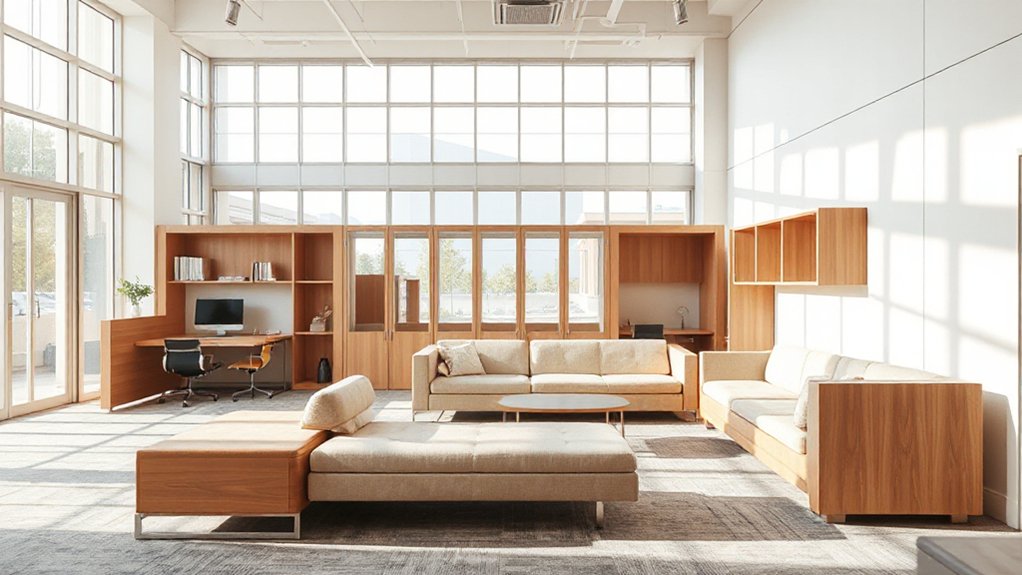
Flexible, multi-use spaces are essential for attracting young professionals who value efficiency and adaptability. You design zones that fluidly shift from work to rest to social time, minimizing wasted square footage.
Use modular furniture to reconfigure rooms in seconds, keeping traffic clear and sightlines open. A compact desk can tuck into a living nook, then unfold into a collaborative station when peers drop by.
Replace single-purpose pieces with adaptable layouts that serve multiple functions, like a sofa bed paired with a foldaway table for presentations or study sessions.
Elevate flow with concealed storage that eliminates clutter and preserves open, breathable atmospheres.
Prioritize zones that encourage spontaneous interaction without sacrificing focus, delivering a turnkey environment that evolves as needs change.
Design Bright, Instagrammable Communal Areas (Lighting, Color, and Materials)
To create communal areas that feel bright, inviting, and endlessly shareable, prioritize lighting, color, and materials that photogenerate well on feeds. You’ll maximize impact with strategic artificial lighting—layer ambient, task, and accent to sculpt mood, highlight textures, and keep spaces versatile for photos.
Choose a cohesive color palette that flows from entry to lounge, using warm neutrals with bold accents to guide attention without overpowering the frame. Materials should read well on camera: matte finishes for walls, gloss accents sparingly, and textures that add depth in daylight or glow under fixtures.
Balance scale and furniture placement so sightlines lead to focal features, then test shots under different times of day to confirm consistency. End results: spaces that feel premium, purposeful, and highly shareable.
Create Quiet Nooks for Focused Work (Acoustics and Zoning)
You’ll design quiet work nooks with thoughtful acoustic zoning that carves out focus without isolating residents. Consider soft barriers, measured sound reflections, and strategic placement to minimize disruption across the floor plan.
This approach blends practical noise control with flexible spaces that adapt to daily work rhythms.
Quiet Work Nooks Design
Quiet work nooks are where focus happens—and they’re essential in an open-plan layout aimed at young professionals. You design with intent, pairing visual calm with acoustic control to sustain productivity.
Begin by defining clear zones using bookshelves, screens, or low partitions that reduce distractions without closing off light. Prioritize sound by integrating soundproofing strategies that target impact and airborne noise, such as dense panels, door seals, and ceiling treatments tailored to high-traffic hours.
Choose ergonomic furniture that supports upright posture, adjustable seating, and reachable storage so you don’t trade comfort for quiet. Light matters: layer task lighting and ambient glow to prevent eye strain.
Finally, guarantee accessible power and charging stations, plus a small, welcoming plant cue, reinforcing a sophisticated, efficient workspace mindset.
Acoustic Zoning Principles
In open-plan layouts, acoustic zoning creates focused zones that feel distinct yet cohesive. You’ll design quiet work pockets by pairing visual cues with strategic acoustics, so focus returns without feeling isolated.
Start with clear boundaries: shelving, low partitions, or soft lighting define zones while preserving sightlines. Use sound-dampening materials at source—soft ceilings, absorbent wall panels, and cushioned furnishings—to curb noise drift between areas.
Integrate furniture that doubles as acoustic treatment solutions, such as upholstered benches and bookcase walls that trap reverberations. Position work zones away from high-traffic or communal hubs, then layer soundproofing strategies with plants and textile textures to soften reflections.
Track sound levels with simple indicators and adjust layouts as needs shift, keeping spaces adaptable for evolving resident routines and conversations.
Maximize Daylight, Ventilation, and Views for Productivity
To boost productivity, maximize daylight by aligning unit layouts with sun paths and using reflective finishes to brighten every corner.
Guarantee smooth ventilation flow through strategic stacking and operable windows that promote cross-ventilation without compromising privacy.
Elevate views along the perimeter with expansive glazing and sightlines that connect residents to cityscape cues, supporting focus and well-being.
Maximize Daylight Tracts
Use creating zones that leverage sun angles, so desks, meeting pods, and circulation stay evenly lit through the day. Focus on daylight optimization through operable windows, skylights, and high-performance glazing that minimizes heat gain while maximizing brightness.
Align glazing with open-fabric layouts to reduce reliance on artificial lighting, cutting operating costs and enhancing mood. Incorporate light shelves and translucent partitions to bounce daylight deeper into interiors.
This approach reinforces a competitive edge, delivering healthier, more productive environments for young professionals.
Optimize Ventilation Flow
Even as you optimize daylight and views, prioritizing ventilation flow is essential for productivity and wellbeing. You’ll harness airflow optimization by aligning fresh-air intake with high-occupancy periods and cross-ventilation paths that reduce stagnant zones.
Implement subtle pressure differences through operable windows, vents, and quiet exhausts to steady airflow without draft discomfort. Pair these moves with targeted ventilation strategies that support habit-driven use—opening at peak sun, closing during noise spikes, and integrating sensors for automatic adjustments.
Maintain air quality with easy-to-clean filters and plain-language indicators for residents. Design cues like columned shafts and perforated panels keep circulation efficient while preserving privacy and noise control. Your scheme sustains focus, comfort, and energy efficiency across layouts.
Elevate Views Perimeter
When you elevate the perimeter for daylight, ventilation, and views, you create a productivity-forward edge that feels expansive yet intimate. A perimeter strategy channels natural light deeper into each unit, reducing artificial lighting while boosting mood and focus.
Place operable windows at key zones to encourage cross-ventilation without sacrificing privacy, and align living spaces with early-morning sun for a gentle wake.
Incorporate scenic balconies to extend outdoor living without expanding the core footprint, offering micro-retreats that refresh attention spans between tasks.
Integrate rooftop gardens to soften heat gain, improve air quality, and provide flexible social spaces that foster networking.
This approach signals contemporary amenity value, inviting tenants who prioritize wellness, connection, and a visually engaging, low-maintenance environment.
Install Smart Tech That Simplifies Daily Routines (Systems to Prioritize)
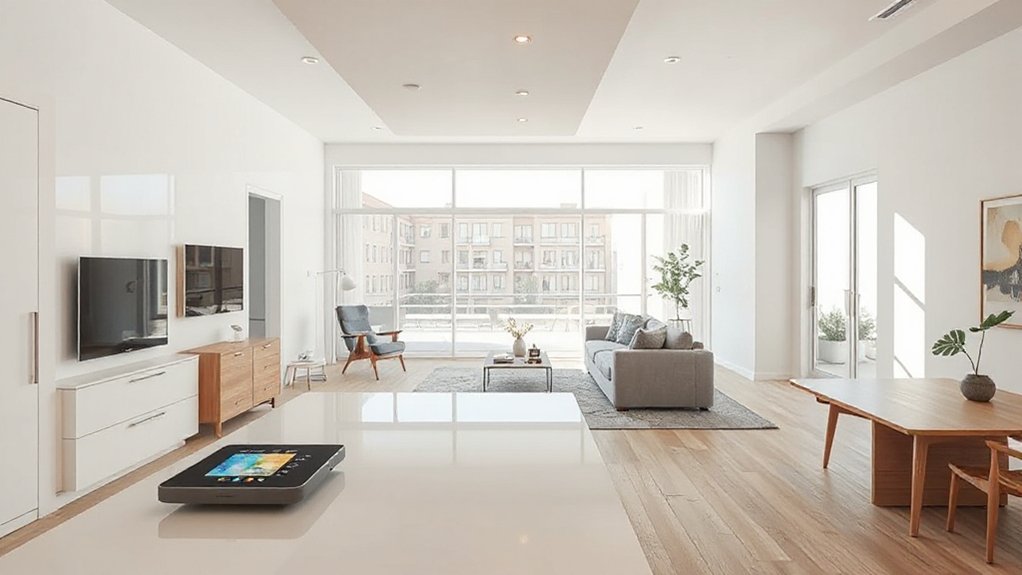
Smart home tech isn’t just a gimmick—it’s the backbone of a streamlined lifestyle that busy young pros actually want. You’ll prioritize systems that cut routine friction, from morning to night, by selecting scalable solutions that blend security, efficiency, and ease of use.
Focus on automation that genuinely saves minutes, not gadgets for gadget’s sake. Integrate smart security to monitor entrances, cameras, and access with simple alerts. Pair this with energy management to optimize lights, climate, and power usage based on occupancy.
The result is a cohesive flow that supports work and social life, without constant fiddling. Build a tech layer that’s reliable, privacy-conscious, and future-ready.
- Smart security
- Energy management
- Seamless automation
- Scalable integration
Implement Smart Storage and Durable Finishes for Shared Living
To keep shared living organized and durable, prioritize smart storage that adapts to changing routines and shared habits, paired with finishes built to withstand daily wear. You’ll design storage modules that slide, stack, and tuck into alcoves, using modular wardrobes, labeled carts, and under-bed bins to reduce clutter.
Choose durable finishes—hard-wearing laminates, matte sealants, and epoxy-coated accents—that resist dents, moisture, and fingerprints while remaining easy to clean. Integrate multi-purpose surfaces: a desk that doubles as a dining area, and a kitchen island with built-in bins for recycling.
Prioritize concealed hardware and soft-close systems for quiet daily use. Coordinate color and texture to disguise wear, while sustaining a cohesive, contemporary vibe. Smart storage and durable finishes together support scalable, low-maintenance shared living.
Frequently Asked Questions
How Do You Balance Privacy With Openness in Compact Shared Spaces?
You balance privacy and openness by creating clear privacy zones and fostering openness balance through flexible partitioning, sound dampening, and shared zones; use modular furniture, smart storage, and zoning cues to maintain privacy without stifling collaboration.
What Are Cost-Effective, Low-Maintenance Finishes for Shared Areas?
Low-maintenance, cost-effective finishes include durable laminate, vinyl plank, quartz, and porcelain tiles. You’ll use decorative accents and cohesive color schemes, keeping maintenance simple, but stylish. You’ll choose consistent textures, practical patterns, and seamless shifts for lasting appeal.
Which Materials Resist Wear From High-Traffic Jeunes Professionals?
Durable flooring and scratch resistant surfaces stand up best to high-traffic jeunes professionals. You’ll want hard-wearing finishes, like updated vinyl planks or ceramic tiles, plus sealed grout, ergonomic underfoot comfort, and low-maintenance upkeep that preserves a polished look.
How Can Layouts Optimize Noise Control Without Sacrificing Light?
You optimize noise control by deploying soundproofing strategies alongside transparent partitions; you don’t lose light. Pair acoustical paneling with layered ceiling and floor treatments to keep brightness. You project expert, trend-aware precision throughout the space.
What Are Best Practices for Leasing and Insurance in HMOS?
Like a seasoned captain, you navigate best practices for leasing and insurance in HMOs. You screen tenants, draft solid Lease agreements, and shield assets, steering confidently through risk while you optimize occupancy, compliance, and value.
Conclusion
You plan flexible spaces, then crave stillness. You crave bright, buzzworthy lounges, then value quiet focus nooks. You chase Instagrammable vibes, yet you protect durable finishes and smart storage that actually lasts. Juxtapose social energy with retreats for concentration; daylight and vistas energize you, while acoustics soften the buzz. You automate routines, but neighbors share the same light and air. In this balance, young professionals find layouts that adapt, perform, and feel effortless—habitats built for both ambition and ease.