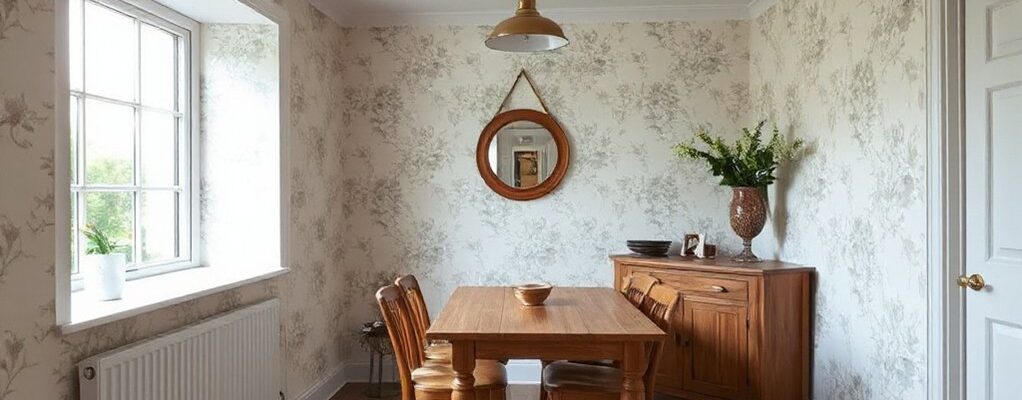
Did you know that walls with large-scale patterns in pale hues can visually widen a small dining room by up to 15%? You’ll want patterns that pull the eye upward and reflect light without overpowering the space. Consider soft textures, durable vinyl finishes, and subtle verticals to boost height, then layer with strategic accents to keep the room cohesive. Curious how to balance bold touches with calm walls without clutter? Keep reading for practical tips and sourcing ideas.
How Wallpaper Makes Small Dining Rooms Feel Bigger
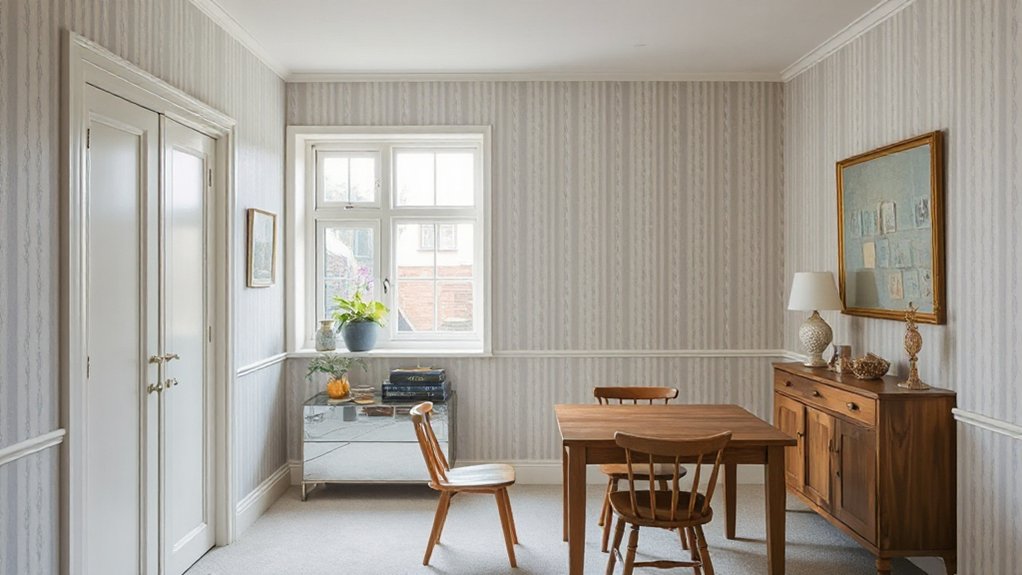
Wallpaper tricks transform small dining rooms by adding depth and light without overwhelming the space. You’ll notice you feel more open when you choose large-scale patterns in pale, reflective hues, because bigger motifs mirror and expand walls instead of compressing them. Use vertical stripes or tonal textures to draw the eye upward, creating a sense of height without clutter. Color psychology matters: cool blues and greens promote calm and perceived airiness, while warm neutrals keep the room inviting rather than clinical. Historical influences—like mid-century geometric motifs or classic damask—can offer timeless sophistication without crowding sightlines. Pair patterns with minimal furniture and strategic accent lighting to maximize perception of space, staying practical, trend-aware, and detail-focused.
Light-Maximizing Patterns for Compact Spaces
Light-maximizing patterns exploit layout and light to make compact dining rooms feel airier. You’ll choose patterns that reflect light and direct attention upward, widening perceived space. Choose large-scale motifs in thin, luminous lines or geometric repeats that don’t dominate ceilings. Position vertically oriented patterns to draw the eye upward, enhancing height without overwhelming walls. If you prefer a softer approach, pair bright backgrounds with subtle reflective inks to bounce daylight around the room. Use lighter hues as ground tones and reserve darker accents for architectural features or trim, keeping balance intact. Include vintage motifs or botanical prints as carefully calibrated accents: a single wall panel with a vintage motif adds character without crowding. In practice, test samples in natural light and adjust alignment for ideal flow.
Soft Textures and Warm Undertones for Coziness
Soft textures and warm undertones create instant coziness, offsetting the gloss of brighter elements from the previous topic. You’ll notice tactile interest when you mix textured fabrics with smooth surfaces, adding depth without crowding the space. Choose wallpaper that features subtle nubs, linen-like sheens, or velvety flecks to invite touch while keeping visuals refined. Pair these textures with warm color palettes—creamy beiges, toasted oat, and muted terracotta—to enhance intimacy in a small dining nook. Consider repeating a gentle grain or woven pattern across a single feature wall for cohesion, then introduce soft textiles in nearby seating to amplify warmth. Keep contrast intentional: avoid harsh shine, and let natural light highlight the cozy undertones throughout the day.
Durable, Easy-Clean Wallpaper Options for Busy Homes
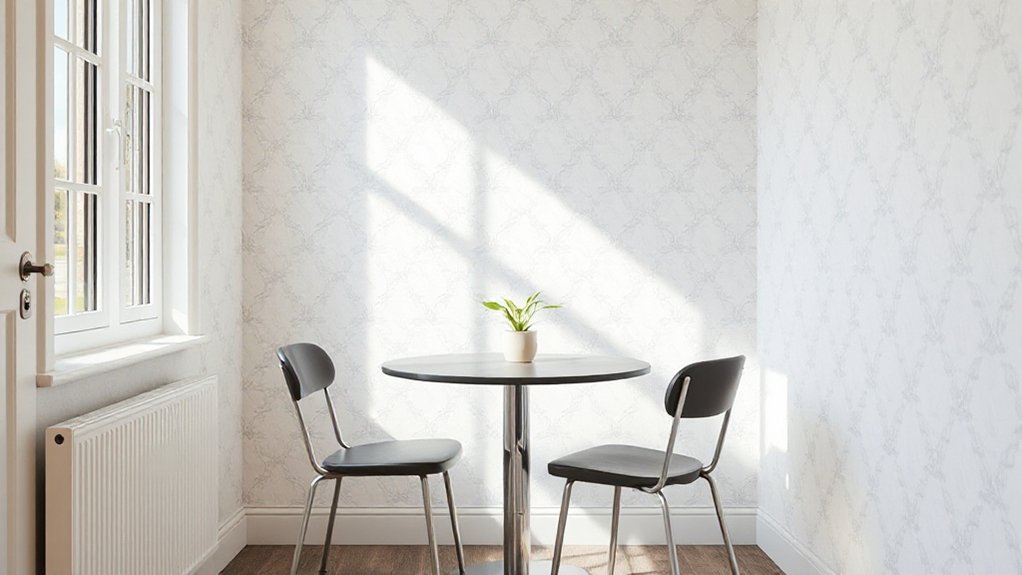
You’ll want easy-clean surface finishes that shrug off spills and fingerprints without dulling. Choose durable material options that resist wear in a busy dining space while staying stylish. Prioritize maintenance-friendly designs that keep your walls looking fresh with minimal effort.
Easy-Clean Surface Finishes
Durable, easy-clean wallpaper is a practical choice for busy UK dining rooms, where meals, spills, and high traffic are the norm. You’ll want finishes that resist stains and wipe clean without abrasion. Look for coatings that tolerate damp cloths and mild detergents, not just initial looks. Textured finishes add tactile depth while hiding fingerprints, so you don’t feel pressured to obsess over every mark. Choose patterns that mask small scuffs yet stay crisp after cleaning. Pattern contrasts—dark motifs on lighter backdrops or vice versa—help define dining zones and keep surfaces visually forgiving. Prioritize vinyl or breathable vinyl-coated options for longevity and ease. Avoid high-gloss sheens that show every smear. In busy homes, practical surface finishes translate to tidy walls and longer intervals between refreshes.
Durable Material Options
What durable material options keep busy UK dining rooms looking sharp without sacrificing style? You’ll choose wallpaper built for daily life, balancing resilience with design. Look for substrates that resist peeling, scuffing, and moisture, ensuring lasting appeal in compact spaces. Prioritize finishes that stay clean with minimal effort, preserving wallpaper longevity through constant use. Material durability matters when you host and tidy, not just when it’s pristine.
- Vinyl-coated wallpapers for wipeable surfaces and strong scrim
- PVC-free vinyl options that resist stains while staying breathable
3.Textured vinyl non-woven mixes for added damage resistance
4. High-density paper with protective lacquer for easy maintenance
Maintenance-Friendly Designs
If you want wallpaper that stands up to daily life in a busy dining room, prioritize wipeable surfaces, stain resistance, and easy maintenance. Maintenance-friendly designs focus on durable substrates like vinyl or vinyl-coated papers, plus coatings such as pearl or texture finishes that resist fingerprints and splashes. Look for breathable, eco friendly materials that still wipe clean without sacrificing color integrity. Choose patterns that hide minor marks, like small-scale textures or subtle, tonal motifs, which stay practical over time. For busy homes, opt for vintage styles reimagined in modern palettes; they pair well with compact dining spaces and timeless furniture. Pair with a matte or satin topcoat to reduce glare while preserving clarity of design. Finish with easy-to-replace panels for future refreshes.
Pale Bases With Bold Accents (Used Sparingly)
Pale bases set a calm, versatile backdrop in small UK dining rooms, while bold accents punch through sparingly to energize the space. You’ll use restrained color pops to avoid overpowering the room, letting texture and form do the talking. Color psychology guides your choices, favoring warm neutrals with a single, crisp highlight to sharpen focus during meals. Historical influences show through subtle detailing—tight patterns, vintage-inspired silhouettes, or muted metallics—that add character without crowding the area. Use sparingly placed accents to sustain rhythm and balance.
1) A single bold accent wall or panel
2) One patterned roll paired with solid tones
3) Small metallic trim for depth
4) Minimal repeat motifs for quiet cohesion
Layering Wallpaper With Furniture and Decor for Cohesion
Layering wallpaper with texture and your furniture creates a cohesive dining space that reads as intentional, not matchy. Start by picking a wallpaper texture that echoes textiles or woodgrain in your chairs and table, so elements overlap without competing. Keep color and scale balanced, letting the wallpaper support the decor rather than overwhelm it.
Layering With Texture
Texture layers your small dining room without crowding it. You’ll master cohesion by pairing textured wallpapers with strategic decor, keeping scale and contrast in check. Focus on natural light, and let tactile surfaces play off each other rather than compete.
- Combine textured wallpapers with smooth furniture to highlight depth without heaviness.
- Use layering techniques that mix matte textures with subtle sheen for visual interest.
- Choose a single accent wall and repeat a secondary texture in cushions or a rug for cohesion.
- Balance bold patterns with restrained accessories to avoid overwhelming the space.
Textures read as calm and current when you align color, texture, and placement. Textured wallpapers work best with mindful lighting and clean lines, ensuring you stay modern and practical.
Coordinating With Furniture
If you want the wallpaper to feel integrated, coordinate it with the room’s furniture and decor from the start. Begin by selecting a dominant wallpaper hue that echoes your primary furniture color, creating a natural link between walls and pieces. For small dining rooms, lean toward restrained patterns and softer contrasts so accents don’t overwhelm. Aim for color coordination across upholstery, table linens, and accessories, using two or three repeat colors to reinforce cohesion. Mix textures thoughtfully: a matte wall with a glossy finish on cabinetry can add depth without clutter. Consider scale—large motifs can overpower a compact space, so opt for medium or small patterns that still read as intentional design. Balance, then, is achieved through style harmony.
Vertical Patterns and Ceiling-Lift Techniques
Vertical patterns can dramatically open up a small dining room by drawing the eye upward and adding height without consuming floor space. You’ll leverage vertical lines to create a sense of loftiness, while ceiling lift techniques add drama without crowding the walls. Choose wallpaper with clean, repeatable vertical motifs and pair with a slim, unobtrusive lighting plan to maximize impact.
1) Align patterns with ceiling features to enhance height perception
2) Use vertical stripes or architectural motifs to guide the eye upward
3) Implement ceiling lift techniques with hidden fixtures for a seamless look
4) Balance bold verticals with solid colors at chair rail height to avoid overwhelm
Practical Planning: Budgeting, Sourcing, and Installation Tips
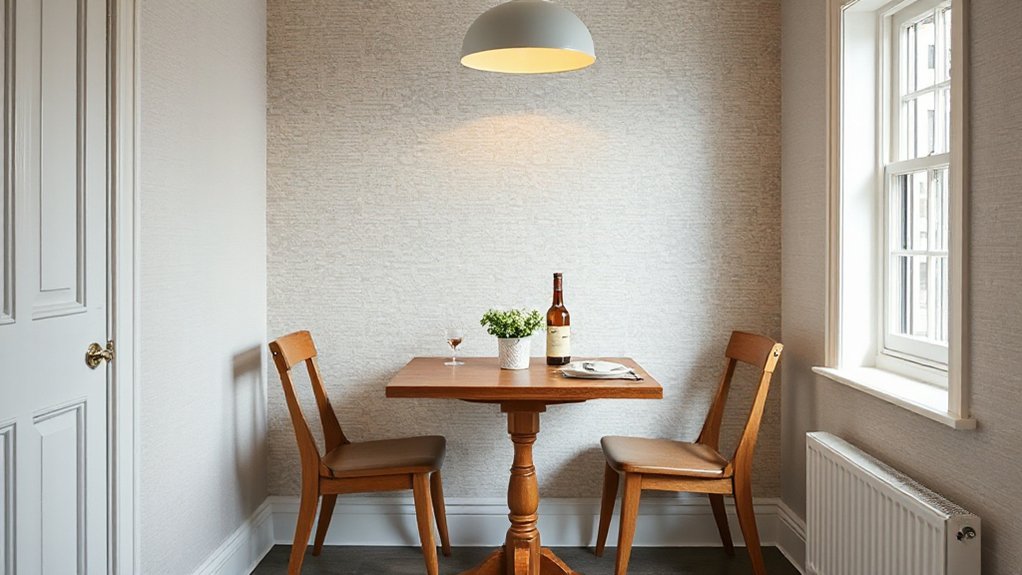
With vertical patterns setting the tone, practical planning brings this look into real life without blowing your budget. First, set a clear budget and allocate for primer, adhesive, and samples, then compare total costs across local suppliers and online outlets. Source midweight wallpapers with durable finishes to minimize replacement cycles, and look for patterns that visually expand space—large-scale textures suit small rooms without overpowering them. Color psychology matters: choose calm, warm hues to invite dining, or subtle contrasts for height without clutter. Seek historical influences in motifs that echo classic UK interiors, but modernize with updated palettes. For installation, prep walls, align panels precisely, and use a single roll type to avoid waste. Track delivery times, and confirm return policies before purchasing.
Frequently Asked Questions
How to Choose Wallpaper for Awkward Room Shapes?
Yes, choose wallpaper with reflective patterns and soft, continuous color to visually elongate shapes; use decorative accents to balance focal points, and guarantee color coordination across walls and trims for cohesive flow and practical styling.
Can Wallpaper Hide Uneven Walls or Wobble?
Yes, wallpaper can hide wobble if you prep properly and use textured finishes. Remember, “practice makes perfect.” Do wall prep, seal cracks, and choose a forgiving textured finish to reduce unevenness while you decorate.
Which Finishes Resist Humidity in Dining Areas?
Yes, you should pick moisture resistant finishes, or even waterproof wallpaper options, for dining areas. They resist humidity and spills, keep colors stable, and stay practical, trend-focused, and detail-oriented as you refresh walls.
Are Wallpaper Repairs Easier Than Repainting in Small Rooms?
If you’re worried about mess, wallpaper repairs are easier than repainting in tight spaces. You’ll save time, appreciating wallpaper durability and the cost of wallpaper long-term, though prep matters; fixes stay neater, and touch-ups don, not disappear.
Do Patterns Affect Crowding Perception With Furniture Layouts?
Patterns affect crowding perception: bold patterns can make spaces feel smaller, while subtle patterns let furniture arrangement breathe. You’ll optimize layout by balancing scale, rhythm, and contrast, improving pattern perception and overall room function with deliberate furniture arrangement.
Conclusion
You’ll feel the space breathe when you wallpaper with pale bases, vertical lines, and light-reflecting textures. Choose durable vinyl for busy rooms, but don’t skimp on soft undertones that cozy things up. Use bold accents sparingly to punch up interest, not crowd the view. Layer patterns with furniture for cohesion, and let ceilings rise with clever vertical motifs. Plan smart, source confidently, and install with care—your dining nook will look bigger, brighter, and wonderfully you.