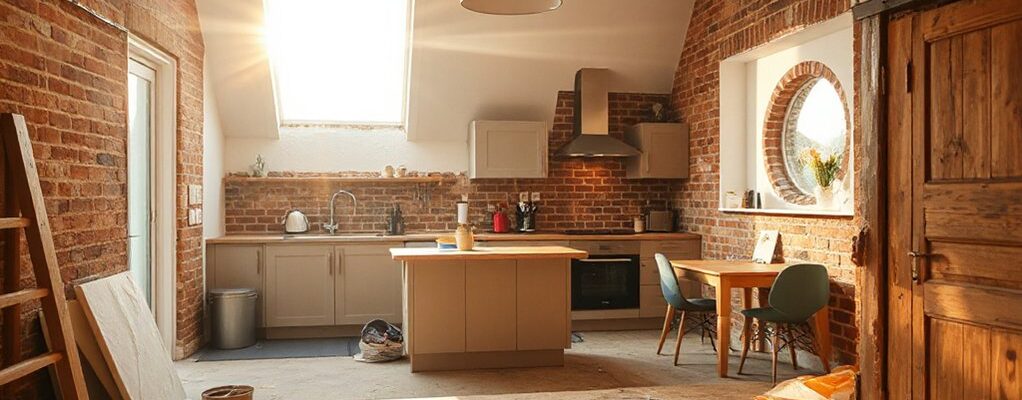
You think a kitchen-diner knock-through always improves flow, but truthfully, success depends on boundaries, party-wall rights, and precise structural logic. You’ll verify load paths, secure notices, and align with neighbours before drawing details. With limited back-space, you must optimize light, zoning, and utility runs while constraining disruption. The plan hinges on clear budgets, timelines, and trade definitions—and the next step holds the key to a seamless completion, if you navigate risks and permissions correctly.
What a Kitchen Diner Knock-Through Involves (Step-by-Step)
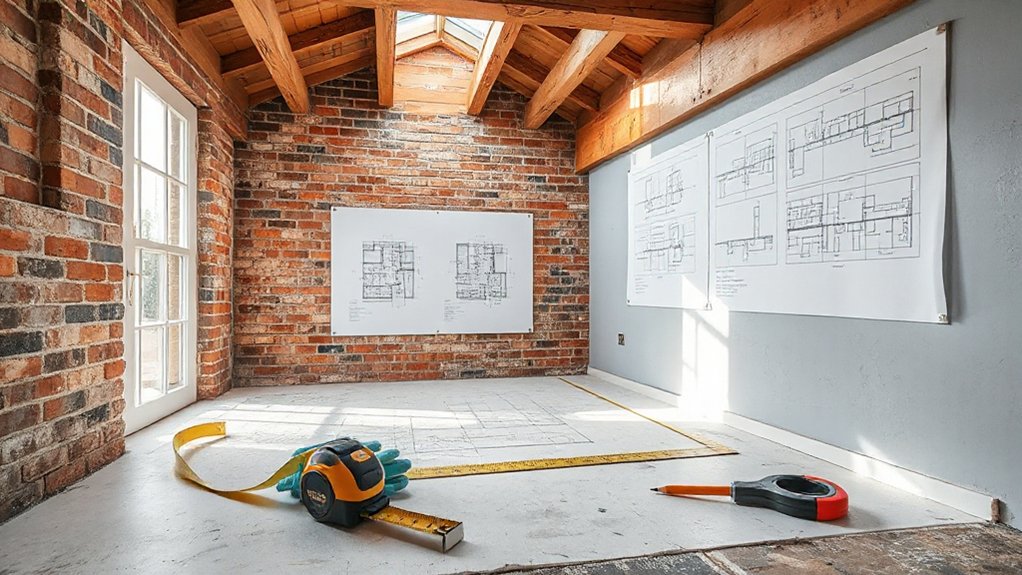
A kitchen-diner knock-through combines existing rooms into a single, open-plan space by removing non-load-bearing partitions and reconfiguring services. You audit structural implications, confirm floor continuity, and plan service runs before demolition. You identify essential routes for electrical, plumbing, and ventilation upgrades, sequencing trades to minimize disruption. Appliance placement is optimized for workflow, ensuring zones for cooking, cleaning, and storage align with user habits. Material selection guides choices for durability, moisture resistance, and ease of maintenance, with attention to heat and splash zones near ovens and sinks. Design intent prioritizes daylight integration, ventilation effectiveness, and acoustic comfort while preserving fire compartment integrity. Documentation includes updated drawings, specifications, and a risk assessment, enabling safe, compliant execution and predictable outcomes.
Permissions and Boundaries for UK Terraces
You’ll start by confirming whether planning permissions are required for your terrace extension and, if so, prepare the submission path with clear design intent and measurable outcomes. Next, map the site boundaries and party wall obligations, identifying shared structures, neighbor considerations, and any needed notices. Finally, align constraints with build feasibility, outlining risk factors, timelines, and the roles of boundary agreements and permitted development rules.
Planning Permissions Basics
In planning a kitchen diner knock-through on a UK terrace, grasp the core planning-permission landscape and its boundaries before drawing up specs. You assess whether you need consent from the local planning authority, and identify permitted development rights that apply to rear extensions, changes of use, and alterations to elevations. You verify whether a Listed Building or conservation-area designation affects your proposal, and you map any applicable Article 14 or condition-placed restrictions. You focus on how planning conditions might govern structural work, demolition, and exterior finishes. You plan for essential utilities alignment, ensuring Kitchen appliances positioning respects safe zones and access routes. Consider Flooring options early, since floor-level changes influence compliance and future adaptability. Document decisions clearly for streamlined approvals.
Boundaries and Party Walls
Boundaries and party walls shape every terrace knock-through, so you must identify ownership, scope party-wall notices, and any rights to access or execute work on shared structures before drawing up specs. You assess boundary regulations to determine where lines lie, who bears costs, and what protective measures apply to adjoining dwellings. You then establish a precise party wall strategy, clarifying notice timing, response expectations, and potential mediation routes. Your plan specifies permitted works, excavation support, and vibration controls, aligning with statutory requirements and architectural intent. You secure formal party wall agreements, addressing access for inspections and remedial works, while documenting safeguards for moisture, sound, and fire performance. Clear, auditable documentation minimizes risk and accelerates approvals.
Designing Light, Flow, and Zoning in a Small Back Room
You allocate daylight and artificial light based on task zones, ceiling height, and glare control to preserve tonal balance in a small back room. Clear flow is defined by sightlines, doorway alignment, and furniture footprints that minimize bottlenecks while maintaining access to utilities and storage. Zoning concepts separate cooking, dining, and circulation with legible shifts, using material contrasts and lighting cues to reinforce function.
Light Allocation Techniques
When planning light in a small back room, prioritize a layered approach that balances ambient, task, and accent illumination to support a kitchen-diner flow. You allocate lighting using a grid of zones: primary ambient ceiling luminaires, task-specific under-cabinet and island lighting, and selective wall or shelf accents for depth. Apply illuminance targets by zone, avoiding glare and making certain of uniform distribution across work surfaces. Consider light loss factors for fixtures chosen in a constrained ceiling height and narrow plan. Integrate natural light with daylight-responsive controls to modulate artificial lighting and minimize energy use. Use dimmers and scene presets to reconfigure mood for dining versus prep. Make certain of compatibility between natural light, artificial lighting, and finishes to maintain color fidelity and material clarity.
Flow and Zoning Concepts
In a compact back room, flow and zoning hinge on deliberate space planning that aligns movement with function. You establish clear zones: prep, cook, dining, and circulation, minimizing cross-traffic through defined thresholds and sightlines. Primary circulation should form an unobstructed path from entrance to the dining area, with secondary routes kept short and direct. Furniture placement controls scale, avoids clutter, and reinforces adjacency—work surfaces aligned to appliance line, seating oriented to sightlines, storage tucked to perimeter. Color schemes support zoning by tonal shifts that read as distinct areas without abrupt breaks; use cohesive materials to maintain unity while differentiating zones through luminance or accent hues. Guarantee light, ventilation, and acoustics reinforce comfort within each zone, preventing overlap. Continuous evaluation of space, ergonomics, and accessibility preserves design intent.
Budgeting, Timelines, and Clear Trade Language
Budgeting, timelines, and clear trade language are essential to keep a kitchen diner knock-through on track: establish a fixed, itemized cost baseline, set a realistic project timeline with milestones, and codify terminology in a shared glossary to prevent scope creep.
- Material costs: itemize every component, capture unit rates, and lock prices where possible to avoid drift.
- Contractor selection: evaluate track record, propose schedule fidelity, and confirm sub-trade coordination upfront.
- Milestone sequencing: define, sign, and monitor critical path tasks to maintain budget integrity and pace.
Clear communication through a glossary reduces ambiguity, assigns accountability, and accelerates decision-making under pressure. Maintain strict change control to preserve design intent and financial viability throughout the knock-through.
Minimising Disruption and Keeping Neighbours Calm
Minimising disruption and keeping neighbours calm starts with disciplined site management that follows the cost and sequence plan from budgeting and milestones. You implement a formal notification protocol, detailing work windows, access routes, and anticipated outages to pre-empt conflicts. Establish a single point of contact for neighbourly communication, mailbox drops, and timely responses to concerns. Schedule progressive works to limit simultaneous trades in shared spaces, ensuring waste removal is coordinated to reduce bin clutter. Deploy acoustic strategies and temporary enclosure where feasible to support noise mitigation without compromising access or safety. Maintain daily logs, update stakeholders, and adjust buffers if weather or logistics impact sequence integrity. Clear expectations, documented approvals, and proactive communication sustain cooperation and minimize disruption.
Phase-by-Phase Build Guide for a Snag-Free Finish
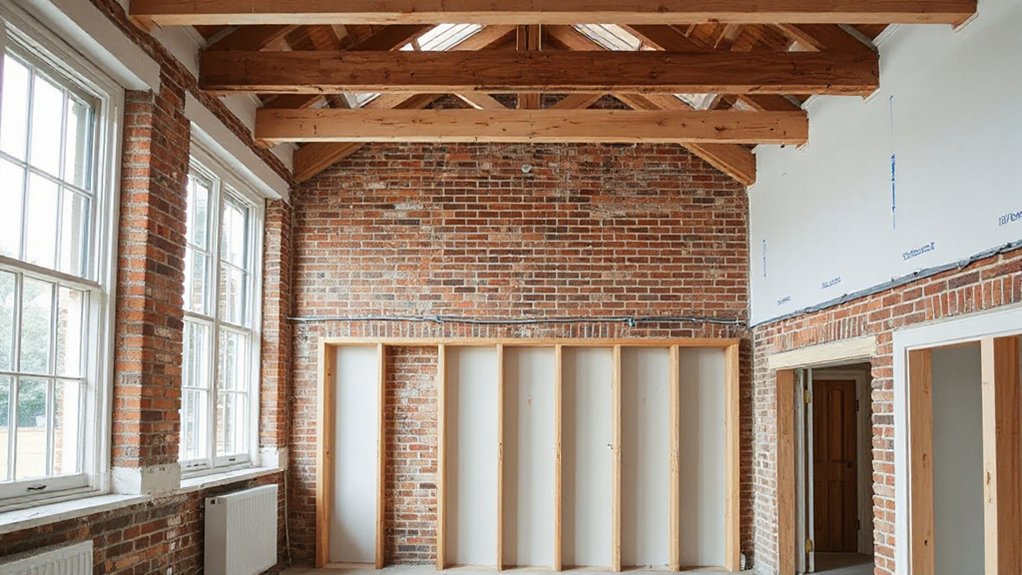
Phase-by-phase, this build guide maps a snag-free finish through each stage of a UK terrace kitchen-diner knock-through, aligning trades, materials, and inspections with the project timeline. You follow a tight sequence: framing, services, drywall, and finishes, with critical inspections scheduled before enclosing trades proceed. A disciplined approach minimizes rework and guarantees on-time handover.
- Coordinate trades and utility routes upfront to prevent clashes and delays.
- Lock in Kitchen appliance positioning early to validate clearances and servicing.
- Confirm Flooring options and substrate prep before final finishes to guarantee flat, level surfaces.
Ongoing checks: mock-ups, material deliveries, and snag lists, all documented for traceability and accountability. This phase ensures predictable performance and a snag-free finish.
Aesthetics, Lighting, and Storage Solutions for a Terrace Kitchen Diner
Aesthetics, lighting, and storage strategies for a terrace kitchen diner must align with the earlier snag-free finish plan while acknowledging the constrained footprint and external envelope. You select a cohesive color schemes palette that expands perceived space, pairing light neutrals with strategic accent tones to preserve tonal balance. Material textures are chosen for durability and tactile clarity: quartz or solid-surface worktops, matte cabinetry, and minimal metal hardware. Lighting prioritizes layers: ambient from recessed luminaires, task lighting under wall cabinets, and feature lighting for dining zones, controlled by zones and dimmers. Storage solutions emphasize integrated units, pull-outs, and corner optimizers to maximize slim depths without visual clutter. Finishes, joints, and hardware maintain a clean, seamless flow between kitchen and diner, reinforcing functional clarity.
Frequently Asked Questions
What Are Typical Hidden Costs Not Covered in the Plan?
Hidden expenses include permit fees, snagging, and professional fees you might overlook; expect drainage, electrical variations, and insulation upgrades to surface during works. You’ll encounter access, scaffolding, and waste disposal costs that quietly escalate beyond initial plan.
How Long Can Disruption Affect Daily Routines?
Disruption duration varies, but expect weeks, not days, to reframing spaces. You’ll notice routine impact during core work hours, with temporary access changes and noise. Plan buffers; document milestones, minimize downtime, and maintain clear, precise communication.
Which Party Wall Considerations Apply to Terraces?
You need to know party wall agreements govern shared walls, boundaries, and construction impact, while boundary dispute issues arise from setbacks or encroachments; guarantee notices, schedules of condition, and appointment of a surveyor are addressed before works commence.
How to Choose a Contractor With Good Warranty Terms?
You should select a contractor with strong reputation and transparent warranty coverage, verify prior project performance, request detailed terms, insist on written coverage limits, exclusions, and durations, and confirm post-completion support aligns with your design intent and timelines.
What Ventilation Solutions Are Best for Small Spaces?
Ventilation types best for small spaces rely on balanced options and smart airflow strategies. You’ll install compact extractors with heat recovery or non-ducted systems, ensuring portable compliance, controllable zones, and minimal noise for precise, efficient air exchange.
Conclusion
In sum, a kitchen diner knock-through in a UK terrace hinges on clear notices, boundary awareness, and a well-communicated plan with neighbors. You’ll lock in precise design intent for light, flow, and zoning, while budgeting rigorously and sequencing trades to minimize disruption. Example: a mid-terrace reconfiguration where party-wall mediation and a phased fit-out delivered an open-plan space with 20% faster completion and zero major disputes. Follow the phase-by-phase build guide for a snag-free finish.