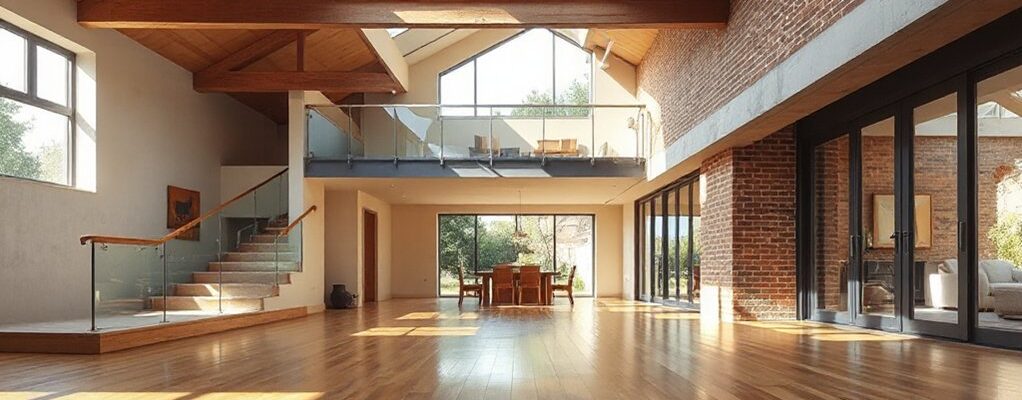
When you’re weighing a loft conversion against an extension, you must assess space, budget, planning rules, and structural limits to determine feasibility and impact on your home’s layout. A loft conversion can add usable rooms with lower external impact and shorter timelines, while extensions offer flexible space but often require more cost and coordinating permissions. The decision hinges on your long-term goals, local regulations, and how you prioritise costs versus disruption; a precise appraisal will sharpen your next steps.
Loft vs Extension: A Clear Decision Framework
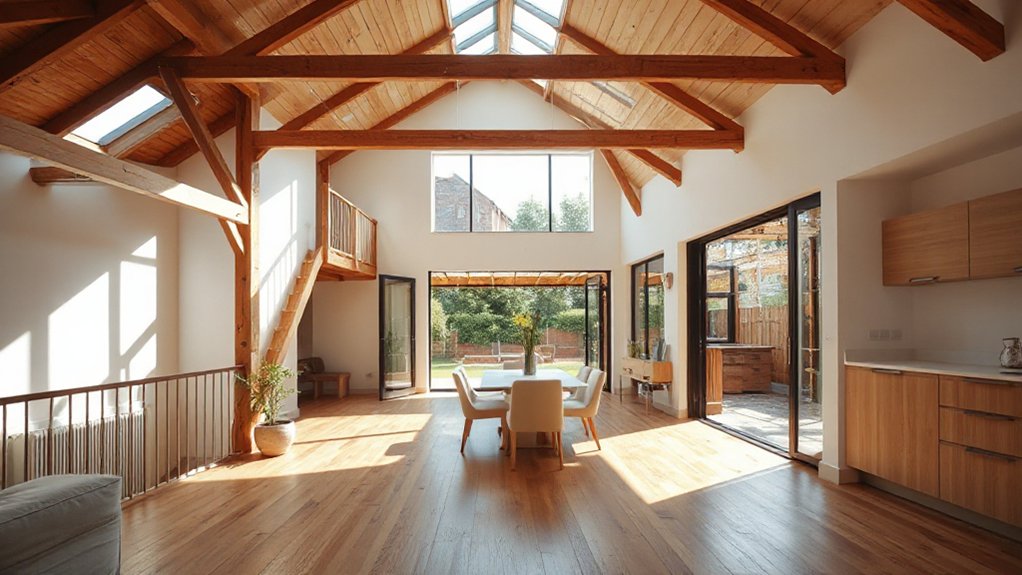
When deciding between a loft conversion and an extension, use a clear decision framework to compare key feasibility factors: space potential, planning and building constraints, cost, and impact on your home’s structure and value. You assess space potential by evaluating usable floor area, headroom, and potential for natural light, noting how architectural styles influence internal layouts. Planning constraints hinge on local Building regulations, permitted development rights, and the likelihood of statutory approvals, which affect timelines and risk. Building constraints include roof structure, load-bearing walls, and insulation requirements that determine method and scope. Cost considerations encompass construction, services, and potential disruption. Finally, consider the impact on your home’s structure and value, ensuring ongoing compatibility with your dwelling’s design integrity and resale appeal.
What a Loft Conversion Adds to Your Home
A loft conversion adds usable living space without expanding your footprint, enabling you to reconfigure upstairs areas for bedrooms, offices, or hobbies. It often increases property value by enhancing overall floor area and perceived utility, subject to design quality and market demand. With flexible room uses, you can tailor the space to your evolving needs while maintaining efficient circulation and daylight considerations.
Added Living Space
Loft conversions effectively add usable living space by converting unused attic areas into habitable rooms with appropriate headroom, insulation, and ventilation. You’ll gain extra bedrooms, home offices, or storage areas without expanding the building footprint. The layout should maximize usable floor area while preserving essential circulation space and complying with building regulations. Consider ceiling height, eaves clearance, and natural light to avoid cramped environments. Interior aesthetics matter for perceived quality, incorporating proportioned dimensions, consistent materials, and appropriate finishes. From a structural perspective, guarantee joist adequacy, ridge stability, and tie-in details with existing floor and walls to maintain structural integrity. Ventilation, thermal performance, and fire safety remain integral to long-term habitability and compliance, alongside durable, low-maintenance finishes suitable for frequent use.
Increased Property Value
A loft conversion typically elevates property value by expanding usable living space without increasing the building’s footprint, compelling buyers with added bedrooms, workspaces, or flexible uses. You assess market impact by considering how additional square footage translates into sale price, competitive positioning, and appraisal benchmarks. Value gains hinge on design quality, ceiling height, natural light, and integration with existing aesthetics, not merely size. Historical preservation considerations may temper gains in conservation areas, while zoning regulations influence feasibility and resale appeal, affecting perceived value. In modern markets, energy efficiency upgrades and compliance with building regulations further bolster value, as buyers prioritize low ongoing costs. Overall, a well-executed loft conversion can modestly or substantially lift perceived and actual value, contingent on compliance, quality, and market context.
Flexible Room Uses
How can a loft conversion reshape your home’s functional landscape by enabling flexible room uses? You gain adaptable spaces that evolve with your needs, supported by structured layouts and compliant headroom. This transformation enhances design flexibility, allowing rooms to switch purposes without major upheaval. Thoughtful zoning and access corridors optimize circulation, while retrofit lighting and climate controls sustain comfort across diverse functions. Creative storage integrates into walls, alcoves, and under eaves, reducing clutter and preserving usable area. The result is a versatile portfolio of rooms that can morph from study to guest retreat or studio, preserving resale appeal through efficient, future-proof design decisions.
- Seamless transitions between work, rest, and recreation
- Hidden storage that maximizes floor area
- Multi-use zones with scalable furniture
- Bright, balanced illumination for any task
- Quiet, private spaces within a shared home
What an Extension Could Deliver Downstairs
If an extension is built downstairs, it can immediately expand usable living space by adding a new kitchen, dining area, or lounge contiguous with the existing footprint, improving flow and accessibility. You’ll achieve functional integration through deliberate layout planning, guaranteeing seamless sightlines and clear circulation paths. Interior lighting is critical; design should maximize natural light via windows, skylights, and glazing where appropriate, complemented by layered artificial lighting to support task, ambient, and accent needs. Structural modifications may be required to accommodate new spans, load paths, and openings, with load-bearing considerations and support details clearly defined. MEP services should be planned to minimize disruption and assure service continuity. Finishes, acoustics, and moisture management are specified to maintain comfort and durability throughout the extended envelope.
Planning Rules You Should Know for Loft Conversions and Extensions
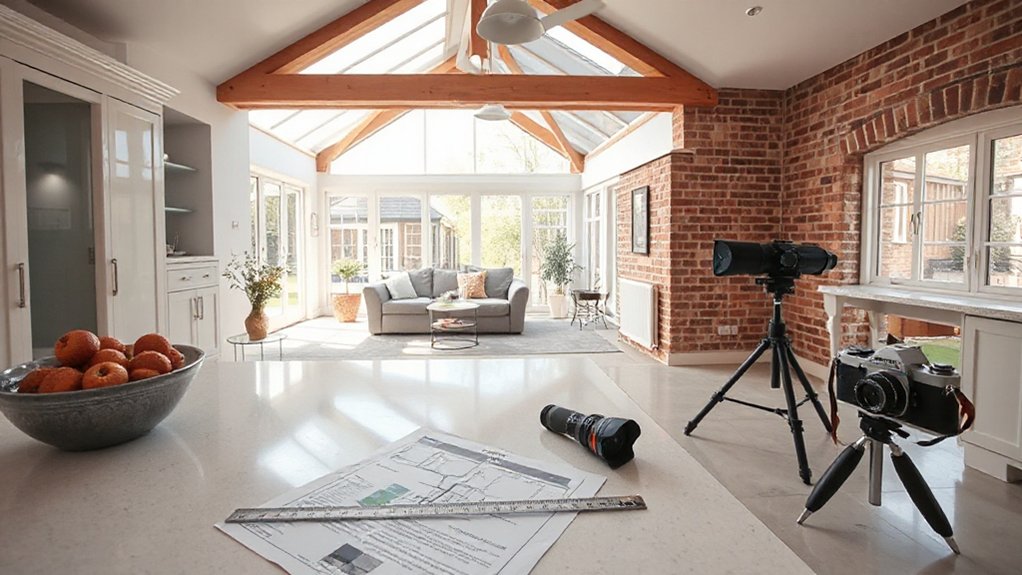
Planning rules for loft conversions and extensions are governed by national and local planning frameworks, building regulations, and permitted development allowances, which you must navigate to avoid costly compliance issues. You assess zoning constraints, confirm structural safety, and verify form, scale, and impact align with local policies. In particular, you must consider Zoning regulations and any historical restrictions that could restrict alterations to heritage areas or listed properties. Compliance hinges on accurate documentation, timely consent, and clear conditions for use and access.
- You’ll feel the stakes as approvals hinge on precise scope and conformity
- You’ll appreciate clarity when restrictions or exceptions apply
- You’ll gain confidence from documented evidence and timelines
- You’ll mitigate risk by verifying heritage or conservation statuses
- You’ll anticipate revision requirements before submitting plans
Cost Ranges and Timeframes: Loft Conversions vs Extensions
You’ll compare costs between loft conversions and extensions, noting the typical price bands for materials, labor, and permits. Timeframes differ: loft projects often take longer due to roof work and access constraints, while extensions hinge on foundation and parcel constraints. Plan scheduling carefully, as variances arise from design complexity, approvals, and site conditions.
Cost Comparison Overview
Loft conversions generally present lower upfront costs and shorter timeframes than extensions, though totals vary by scope and property. You evaluate cost ranges by factoring structure, finishes, and required compliance, then compare long-term value and disruption. Materials selection influences budget variance, as premium components raise prices but may reduce maintenance. Contractor reputation shapes estimates through thoroughness and risk management, potentially reducing overruns. In this overview, you assess initial expenditure versus potential ancillary costs, such as underpinning, scaffolding, and access solutions. You should anticipate permissions, surveys, and professional fees, but distinguish these from construction costs to avoid misleading comparisons. Clear documentation of inclusions and exclusions aids independent benchmarking and decision-making. Overall, lofts offer predictable, scalable budgeting when you align scope with planned use.
Timeframe Differences
Do these timeframes and cost ranges align more with a loft conversion or a house extension? You assess timeframe differences by considering required approvals, design finalisation, and construction sequencing. Loft conversions typically span shorter durations, averaging 6 to 12 weeks for preparation, structural alterations, insulation, and staircase integration, with longer build phases for complex roof adaptations. Extensions often extend 8 to 16 weeks, influenced by foundation work, utility upgrades, and external envelope, plus potential planning or building-control contingencies. Cost ranges tend to diverge: loft conversions focus expenditure on roof work, structural reinforcement, and interior aesthetics, while extensions accumulate expenses for foundations, walls, roofing, and finish materials. Both demand careful scheduling of structural modifications, dependencies on weather, and coordination between trades to minimise disruption and ensure compliant outcomes.
Project Scheduling Variances
Project scheduling variances between loft conversions and extensions hinge on distinct cost ranges and timeframes driven by approvals, design finalisation, and construction sequencing. You assess construction permits timelines, then compare required approvals for roof alterations versus full-scale extensions. Loft conversions typically incur shorter, sharper permitting windows, while extensions may demand longer negotiations with planners and neighbors. Contractor selection impacts sequencing decisions, as skilled teams align material lead times with design milestones. You’ll encounter cost ranges that reflect structural work, insulation, and compliance standards, influencing total duration. Clear coordination between architects, surveyors, and builders reduces delay risk. For accuracy, lock in milestones early and track permit progress against construction phasing. Effective scheduling minimizes overruns and preserves project momentum.
- Clear milestones reduce uncertainty and boost confidence
- Early contractor selection accelerates permit alignment
- Precise sequencing mitigates waste and delays
- Transparent cost ranges sustain stakeholder trust
- Proactive planning prevents retrospective scope changes
Energy Efficiency and Comfort: Insulation, Wet Rooms, and Heat Loss
Energy efficiency and occupant comfort hinge on well‑planned insulation, appropriate wet room design, and minimization of heat loss. You analyse thermal performance by locating exposed heat paths and selecting suitable Insulation materials for walls, floors, and roofs, prioritising continuous barriers and minimised thermal bridging. In loft conversions, you guarantee airtightness with quality junction detailing and address ventilation to prevent condensation. Wet room design requires waterproofing, drainage efficiency, and robust underfloor heating integration to balance humidity without sparing energy. You assess glazing performance, solar gains, and shading strategies to optimise comfort year‑round. Heat loss mitigation depends on door and window rebates, mechanical ventilation with heat recovery, and appropriate insulation thickness, harmonised with U‑values and building regulations. Implementing these practices yields durable, efficient, comfortable spaces.
Hidden Disruptions and How to Minimise Them During Work
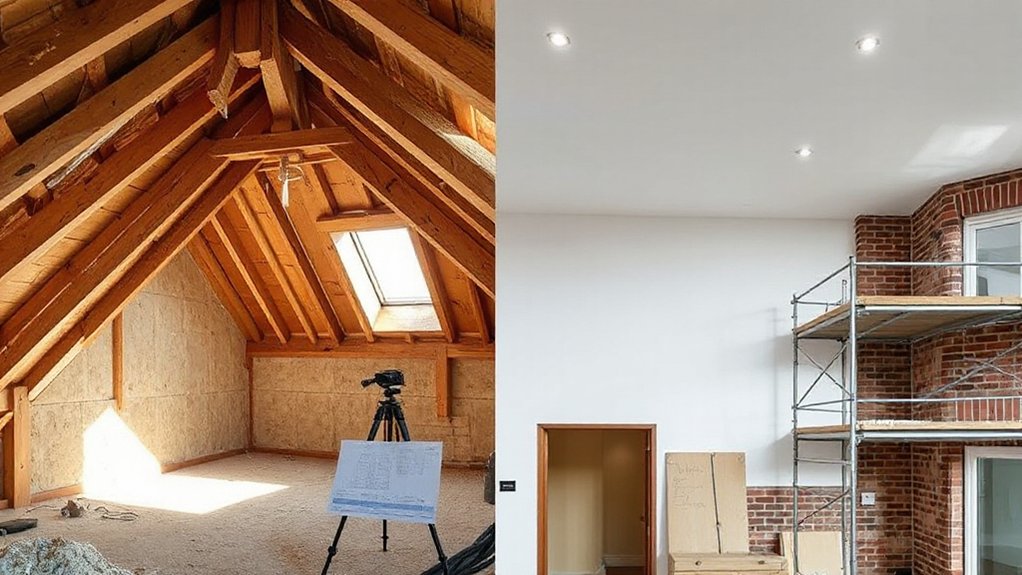
Hidden disruptions can undermine progress and inflate timelines if not anticipated and managed. During works, you face unpredictable events that threaten schedule integrity, budget, and safety. To guarantee impact, implement rigorous sequencing, strict access control, and proactive communication channels. Maintain documentation of changes, notify stakeholders promptly, and verify permits remain current. Monitor equipment calibration, vibration levels, and waste management to preserve site discipline. Address potential noise disruption proactively with containment strategies and schedule considerations that respect neighbours and compliance. Regular structural checks help assure structural stability as loads shift and new connections form. Establish a fault-response protocol to rapidly isolate issues, preventing cascading delays and cost overruns. Your approach should be data-driven, auditable, and consistently applied across trades.
Making Your Choice: Which Route Fits Your Home and Lifestyle
Choosing between a loft conversion and a traditional extension requires a disciplined assessment of how each option aligns with your home’s structure, your daily routines, and your long-term plans. In this section, you evaluate scope, disruption, and value. You should examine structural compatibility, load-bearing elements, and potential for existing services alignment, ensuring compliance with local regulations. Consider access constraints, ceiling heights, and potential impacts on insulation, ventilation, and natural light. Budget considerations must reflect not only construction costs but long-term running expenses and resale implications. Design aesthetics should align with your current architectural language and future-proofing goals, avoiding excessive deviations that could hinder cohesion. Finally, quantify lifestyle benefits, prioritising options that optimise space, adaptability, and return on investment without compromising structural integrity.
Frequently Asked Questions
How Do Permits Affect Project Timing for Lofts Vs Extensions?
Permits can lengthen timelines; extensions often require planning permissions, while lofts may rely on permitted development plus potential approvals. Building codes enforce safety, and construction delays arise from inspections, revisions, and coordination with contractors, architects, and utilities.
What Resale Value Difference Should I Expect by Choice?
A loft or extension’s resale value difference depends on design quality and market demand; expect roughly 5–15% variation. You’ll boost Interior design appeal with thoughtful finishes, while Cost considerations govern demand-driven recoveries and overall ROI.
Which Option Impacts Garden Size and Access Most?
A extension typically reduces garden accessibility more than a loft conversion, as footprint expansion constrains outdoor space. You’ll notice garden accessibility and outdoor space impact primarily with ground-level additions, while loft conversions preserve yard size and circulation.
Can Both Options Be Done in Stages or Simultaneously?
Can investments can proceed concurrently; coordinated sequencing supports staged success, so you can start interior design and plan structural modifications while some aspects proceed simultaneously, or separately, depending on permits, budget, and structural feasibility.
How Will Neighbours View the Proposed Change?
Neighbour approval hinges on clear communication; you should anticipate privacy concerns, address sightlines and overlooking, and provide mitigations. You’ll document steps, seek formal feedback, and guarantee compliance with planning guidelines to minimize objections and gain support.
Conclusion
You’ll weigh space, budget, and rules until your plans feel lighter than air—then the decision lands like a truth hammer. If you crave attic airiness and a swift, cost-smart upgrade, a loft conversion can deliver a whisper-quiet revolution in minutes. If you crave dramatic downstairs transformation, an extension might release a whole new world beyond your back door. In short, choose the route that maximizes function while minimizing disruption, and your home will thank you with flattened budgets and lifted living.