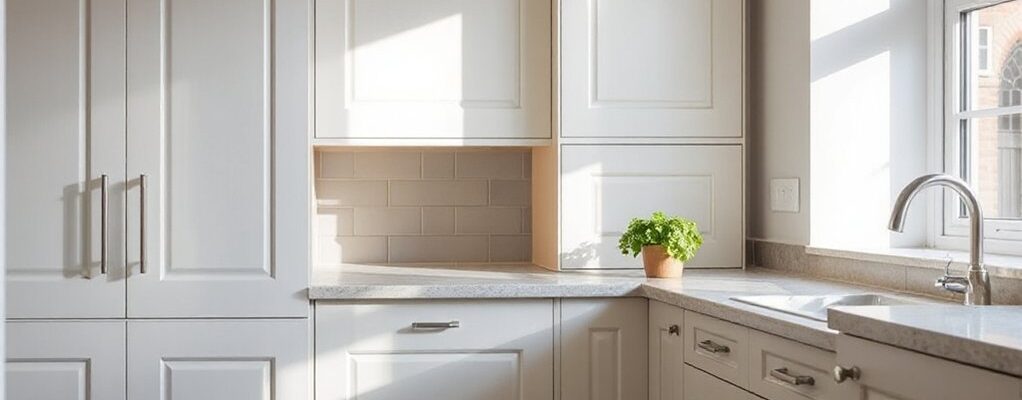
If you’re thinking about revitalizing tired UK kitchen cabinets without replacing them, start by evaluating what’s really off—is it grime, dull paint, or wonky hinges? You’ll want a practical plan that includes cleaning, light sanding, and choosing a durable, low-VOC finish suited to kitchens, plus updated handles for an instant lift. Tackle hardware first and then apply two coats for a smooth, lasting result. There’s more to contemplate before you begin, and the steps you’ll take will shape the outcome.
Identify Cabinet Issues and Set a Budget
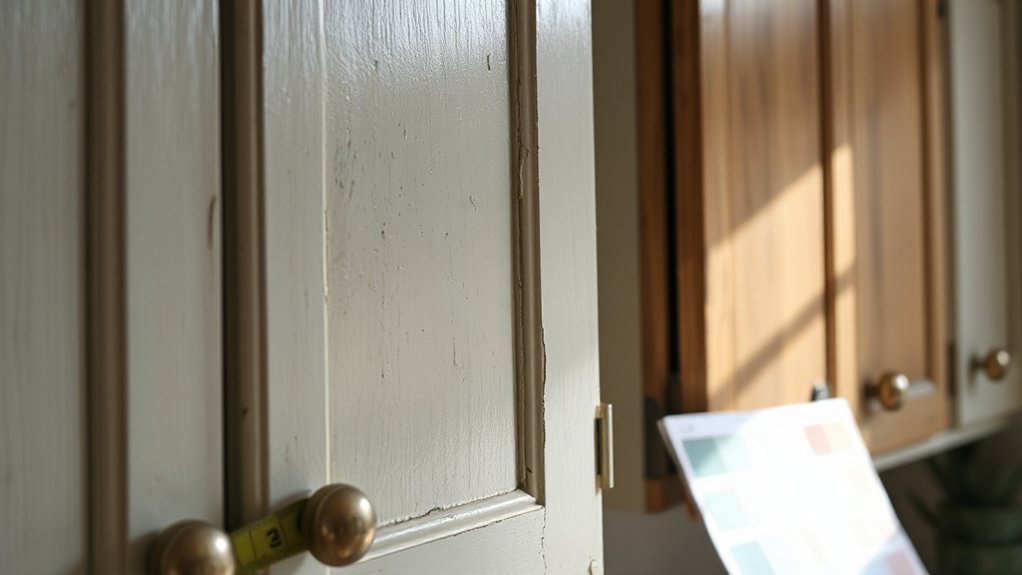
Start by inspecting your cabinets and noting what’s actually wrong. You’ll check hinges, doors, and drawers for alignment, sticking, or loose fittings, then look for worn finishes or water damage. Pinpoint whether issues stem from cabinet material, frame joints, or soft-close mechanisms. Create a simple inventory: list damaged areas, age, and any soft spots. This keeps you grounded as you plan. Next, set Budget planning goals that fit UK realities, prioritising fixes that restore function first. Estimate costs for parts, tools, and potential contractor help, then assign a ceiling you’re comfortable with. Separate must-dos from nice-to-dos, and be honest about resale value versus cosmetic gains. With clear issues and a practical budget, you’ll proceed confidently toward a refreshed, coherent look.
Choose Durable, Low-VOC Finishes for UK Kitchens
Choosing durable, low-VOC finishes for UK kitchens starts with understanding how finishes wear in domestic use. You’ll encounter heat, moisture, spills, and daily scrapes, so pick coatings that tolerate constant use. Look for eco friendly coatings that still deliver durable hardness and easy washability. For cabinets, stain resistant finishes help prevent marks from coffee, wine, and sauces without needing frequent re-application. Consider a water-based acrylic or polyurethane that cures to a robust, low-gloss film, resisting yellowing and fingerprints. Check VOC labels to ensure they meet UK guidelines and indoor air–quality standards. Test a small panel under your lighting to observe how it ages. Follow manufacturer instructions for curing times, ventilation, and cleaning. With careful selection, you’ll gain long-lasting, low-maintenance protection. Eco friendly coatings matter. stain resistant finishes matter.
Quick Cosmetic Upgrades That Make a Difference
Small changes can refresh UK kitchen cabinets quickly without a full remodel. You’ll notice impact from quick, practical tweaks that don’t require a full overhaul. Focus on two proven moves: cabinet painting and hardware replacement. A fresh coat can brighten tones and revive worn surfaces, while new hardware changes the feel without changing layout. Choose durable paints and sealers suited to UK kitchens, and prep surfaces thoroughly for lasting results.
- Cabinet painting: clean, sand, prime, and apply two coats for a smooth finish.
- Hardware replacement: swap handles and knobs for a cohesive look.
- Finishing touches: seal edges and wipe spills promptly to protect the update.
These small steps deliver a noticeable update with minimal disruption and cost.
Swap Hardware for an Instant Refresh
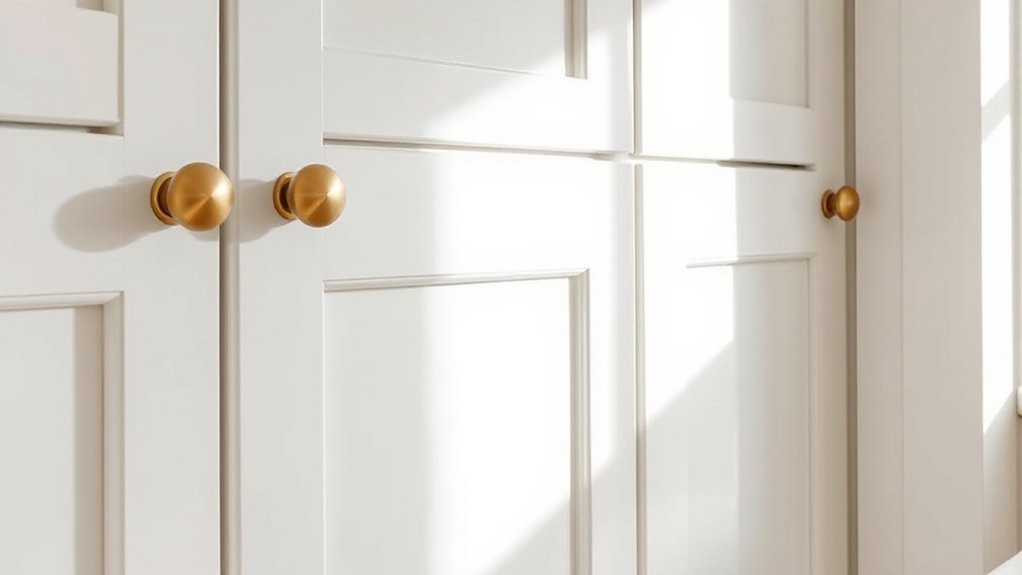
Want a quick upgrade? Swap hardware to refresh cabinets without a full redo. Begin with cabinet cleaning to reveal clean surfaces and true color, then choose hardware that complements your style and the room’s scale. You’ll find knobs, pulls, and handles in finishes from satin chrome to aged brass; pick a finish that echoes your faucets and lighting. Measure hole spacing and door thickness so screws align and sit flush. Opt for mid-range options if you’re unsure—quality matters over flash. Install is straightforward: drill pilot holes, screw in hardware, and stand back to compare. A cohesive hardware set can modernize without altering cupboards, while lasting durability minimizes future replacements. Hardware selection guides your finish, and cleaning ensures your hardware looks as good as new.
Maintenance and Troubleshooting for Longevity
Regular upkeep keeps cabinets looking fresh and functioning smoothly, so you’ll want to establish simple routines and quick fixes you can lean on. For longevity, focus on consistent maintenance and practical troubleshooting. Clean regularly to prevent grime buildup that can strain hinges and finishes. When joints creak or doors misalign, don’t rush to replace—address the root cause with targeted fixes. Use proper cabinet cleaning methods to protect surfaces and finish. If doors stick, inspect alignment and hardware before applying lubricant. Keep a simple plan for seasonal checks, so issues don’t escalate.
- Schedule light cleaning weekly to preserve finish
- Check hinges and alignment quarterly for smooth operation
- Apply hinge lubrication sparingly to reduce squeaks and wear
Frequently Asked Questions
How Long Will a Cabinet Refresh Last Before Needing Another Update?
A cabinet refresh typically lasts 5–10 years, depending on use and upkeep. You’ll boost longevity by sealing surfaces, addressing joints, and choosing durable finishes. Cabinet durability hinges on wear patterns, humidity, and routine maintenance, plus longevity factors like cleaning habits.
Can I Refinish Cabinets Myself Without Professional Help?
Yes, you can refinish cabinets yourself. Start with thorough cabinet cleaning, then proper paint preparation, like sanding and priming. You’ll save money, gain control, and achieve a durable, refreshed look with steady, methodical steps.
Will Repainting Cupboards Affect Kitchen Resell Value?
Painting cupboards can boost resale if you choose durable paint; it won’t hurt value if done well. Like a fresh coat on old wood, consider cabinet material and paint durability to protect long-term appeal and market fit.
Are There Eco-Friendly Primers Suitable for UK Kitchens?
Yes, you can; look for eco friendly paints and sustainable primers that are low VOC and UK-suited. You’ll get durable finishes, better indoor air quality, and credible results for your kitchen project.
What Budget-Friendly Tools Do Beginners Need for Refinishing?
Like a quick spark, you’ll need basic tools: sandpaper, a putty knife, rollers, brushes, masking tape, and a drop cloth. You’ll budget-friendly, pick color options, and plan hardware upgrades to refresh cabinets confidently and affordably.
Conclusion
You’ve learned how to refresh tired UK kitchen cabinets without replacing a thing. Clean, sand lightly, and choose a durable, low-VOC finish, then apply two coats for a solid, kitchen-ready look. Swap the hardware for instant impact, and keep hinges lubed for longevity. If you hit a snag, troubleshoot before you repaint. By treating small updates like a DIY spa day, you’ll save cash and time—and feel like you’ve conquered a humble but mighty renovation, even in true 1999 fashion.