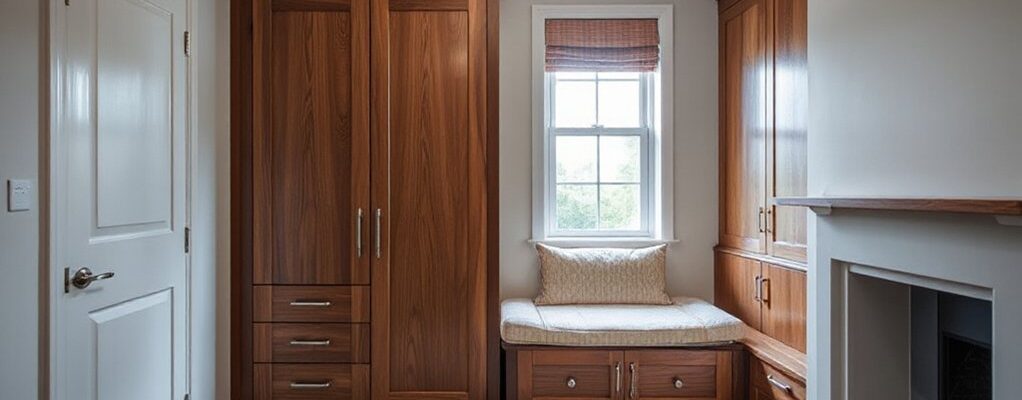
Awkward UK spaces demand you think in terms of flush fittings, adjustable rails, and tailored storage that hug awkward walls and slope lines. You’ll shape corners into work zones and alcoves into compact desks, with finishes that hide gaps and set the mood. Smart lighting, power integration, and durable materials keep it tidy and usable. It’s all about precise measurements and practical layouts that justify a bespoke route—and there’s more to explore beyond the obvious.
Why UK Awkward Spaces Are Perfect for Fitted Furniture
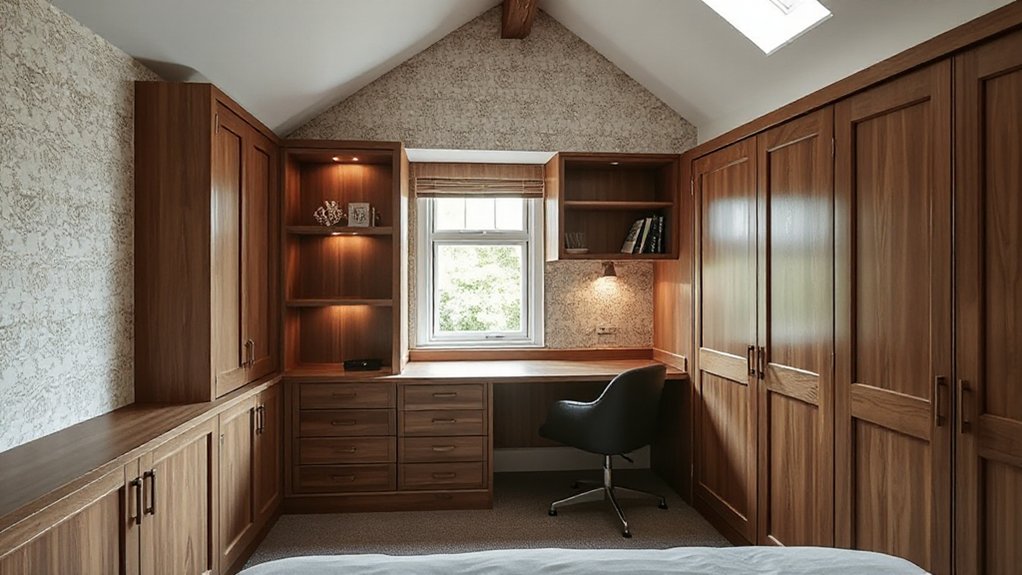
UK homes often present awkward nooks and irregular layouts, but that’s precisely where fitted furniture shines. You see a chance to transform awkward gaps into practical zones you actually enjoy using. Fitted pieces let you control every measurement, every edge, and every angle, so nothing feels wasted or awkward anymore. With smart color coordination, you’ll create a visually cohesive space that reads as one unit rather than a collection of odd shelves. Material durability matters here, because tight fits tolerate daily bumps and frequent access much better when you choose solid carcasses, robust DM, and reinforced joints. You’ll notice faster installs and fewer compromises, since everything is built around your actual space. The result: a streamlined, accessible, long-lasting setup you can trust.
Small-Space Planning: Measuring for Exact Fits
Getting tight measurements right is the foundation of a successful fitted solution in small spaces. You’ll start with walls, floors, and ceiling lines; don’t assume they’re perfectly square, because sites rarely are. Use a steel tape for accuracy, and record multiple readings at different heights and depths. Note door swings, baseboard thickness, and any irregularities that affect clearance. Create a simple grid of key points: wall-to-wall, wall-to-object, and corner radii. When you draft, include a small tolerance for door clearance and hardware. This is where custom measurement becomes critical, guiding every join and reveal. Prioritize space optimization by mapping alcoves, alcoves, and dead zones, then translate measurements into precise cut plans. Precision now saves rework later, yielding a neat, robust fit.
Wardrobes That Hug Slopes and Angled Ceilings
Do you have slopes and angled ceilings that make standard wardrobes look out of place? You can tailor storage solutions to fit irregular rooms without sacrificing access or style. Start with angled-ceiling carcasses that sit flush against walls, then add adjustable rails and shallow depth drawers to use every inch. Use tall, slim sections for hanging space alongside low, wide shelves for folded garments and boxes. Choose doors that follow the ceiling line—slanted paneling or mirrored fronts visually lengthen the room and hide awkward angles. Integrate lighting inside: LEDs along shelf rims or inside tall runs to reveal contents clearly. The result blends practicality with design aesthetics, delivering neat, accessible storage that respects your space’s geometry.
Corner and Alcove Desks That Turn Dead Space Into Study Zones
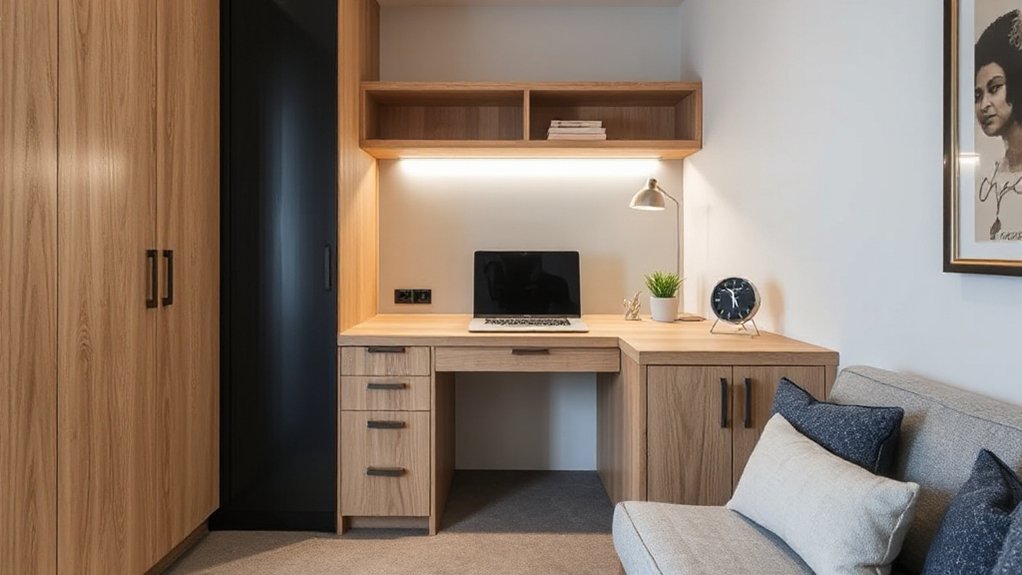
Corner and alcove desks prove you don’t need a full footprint to create a focused study nook. You’re carving out space in tight UK rooms by using niches, eaves, or under-stair alcoves, turning dead zones into productive corners. Choose a compact, L-shaped or single-panel desk that fits the contour without crowding traffic flow. Prioritize ergonomic design: adjustable chair height, a keyboard tray, and screen height aligned with eye level to reduce strain. Build in cable channels and wall-mounted shelves to keep surfaces clear, boosting space optimization. Use soft lighting and a finishing material that resists scuffs, since corners collect wear. Handcraft details like rounded edges, discreet drawer pulls, and flush-fitting panels enhance the space while keeping functionality straightforward and durable.
Modular Systems That Grow With Your Family
You can start with a modular system that expands as your family grows, so today’s investment stays useful for years. Choose adaptable units that snap together and reconfigure without major remodeling, keeping clutter down and flow up. As needs shift—more kids, workspaces, or guest spots—your setup should flex, not force a new layout.
Growing With Family Needs
Growing with a growing family means your furniture should flex as your space does. You’re designing around inevitable changes, so choose modular components that reconfigure without full rebuilds. Start with tall, stable frames and trackable panels that shift between storage, seating, and work zones. Prioritize edge-to-edge joints and dead-simple connectors, so each reassembly stays precise and quick. Use adjustable heights and folding surfaces to accommodate children, teens, and guests, keeping circulation clear for everyday life. Build in extendable shelves and under-seat drawers to capture clutter at the source, supporting space optimization. Favor neutral finishes that wear well as family growth alters room use. Document each configuration, ensuring you can repeat successful layouts when needs evolve, not just today.
Adaptable Modular Solutions
Adaptive modular solutions let your fitted furniture flex as your family does. You design around changing needs, then add or remove sections without redoing major builds. Start with a solid frame in sustainable materials, so every expansion stays strong and durable. Use modular rails, hinged dividers, and telescoping sections to reconfigure for different spaces or activities—study nooks today, bedtime storage tomorrow. You’ll appreciate clean lines, precise joins, and a craft-focused finish that ages gracefully. For kids’ gear, integrate pull-out bins and hidden compartments; for guests, fold-away desks and compact wardrobes. Consider vintage finishes to cultivate warmth while keeping modern practicality. Plan future-proof *shifts* now: adjustable heights, modular back panels, and compatible hardware. Your space becomes flexible, efficient, and proudly personal.
Finishes That Hide Gaps and Set the Mood
When you’re dealing with gaps in awkward UK spaces, choose finishes that hide seams while shaping the mood you want. You’ll lean on purpose-made furniture finishes that reflect light, absorb sound, and feel solid to the touch. Opt for matte or satin sheens to conceal micro-misalignment and prevent glare from awkward angles. Use uniform timber tones or seamless painted surfaces to avoid visual breaks, enhancing perceived room scale. Consider edge-banding and continuous panels to reduce sightlines where gaps would scream. For mood setting, pair warm neutrals with tactile textures—linen, wool, or brushed oak—that invite use. Avoid high-gloss contradicting reflections. Prioritize consistent grain direction and tight tolerances, ensuring the finish supports durable, practical use while delivering refined, quiet confidence.
Clever Hidden Storage: Pull-Outs, Lift Lids, Micro Compartments
Hidden storage isn’t an afterthought here—it’s a design tool. You’ll fit clever hidden compartments into tight gaps, choosing pull-out trays that glide on sturdy runners and stay level under load. Opt for lift lids with soft-close dampers to hush the everyday rummage, so you never wake the house with squeaks. Micro compartments give you exacting control: slim-dividers for sewing notions, shallow bins for cables, and nested pockets for small tools. Prioritize mechanisms that don’t wobble when you open drawers in awkward angles, and test clearance against doors and skirting boards. Build with robust hardware, label interiors, and leave breathing space around each unit. This is practical storage engineering—clean, accessible, and purposefully hidden, for a calmer, more usable space.
Lighting and Power Integration in Fitted Designs
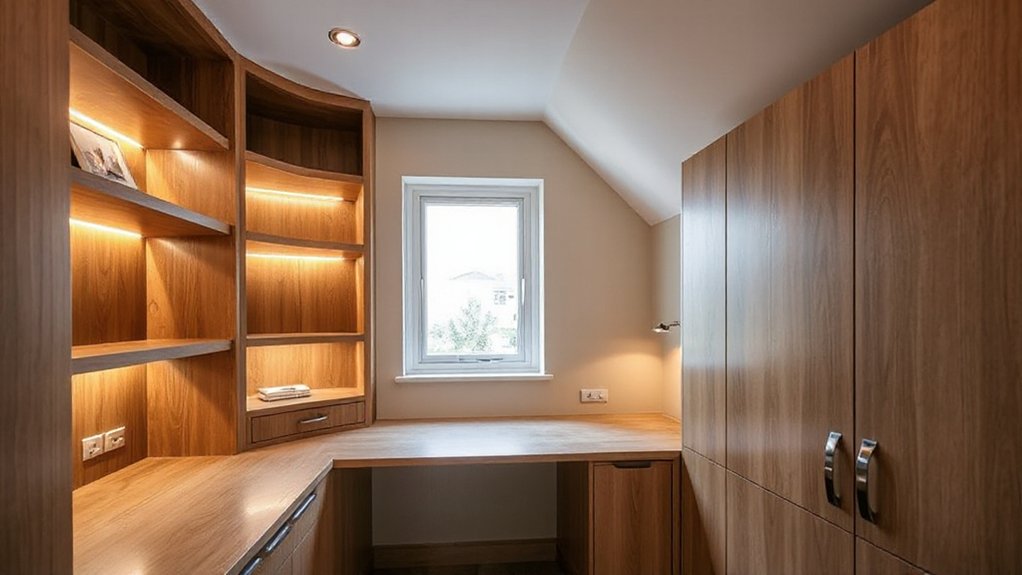
Lighting and power integration isn’t an afterthought in fitted designs—it shapes how you actually use the space. You plan routes for cables behind back panels, so outlets and switches stay accessible yet discreet. Prioritize ambient lighting that complements task lighting, avoiding harsh glare in tight corners. Integrate dimmable fixtures in shelving coves to gently define zones without clutter. Use plug-in transformers or low-profile power outlets that sit flush with carcasses to keep lines clean. Place outlets where you’ll need them for charging devices or powering lamps, but tuck extras behind doors or in pull-out boards to minimize visible clutter. Consider dedicated USB charging ports near desks or TV niches for convenience. Finally, test switches from typical seating positions to ensure smooth, intuitive control.
Budgeting and Choosing a Bespoke Fitter for Awkward UK Spaces
Balancing budget with effort here matters: commissioning a bespoke fitter for awkward UK spaces pays off when you define clear scope, budget bands, and milestones from the start. You’ll compare quotes, check portfolios, and ask for detailed timelines. Prioritize fitters who specialise in awkward layouts and demand practical site visits before pricing. For cost estimation, request itemized breakdowns: joinery, fittings, delivery, and contingencies. Align on milestones that reflect design decisions, measurements, and on-site checks. Material selection should be part of early discussions, balancing durability, aesthetics, and budget. Choose a fitter who explains trade-offs plainly and provides accurate lead times. Once you lock in price bands and responsibilities, maintain momentum with documented revisions and regular progress updates to prevent scope creep.
Frequently Asked Questions
How Long Does a Bespoke Fitting Project Typically Take?
A bespoke fitting typically takes a few weeks from measurement to installation. You’ll see steady progress, with careful craftsmanship and on-site tweaks. Expect furniture durability and design customization to influence timing, ensuring precise fit and lasting, quality results.
Can I Modify Designs After Measurements Are Done?
Yes, you can modify designs after measurements are done. You’ll benefit from design flexibility and customization options, adjusting details before final fabrication. Stay practical: prioritize fit, functionality, and craft quality, and communicate changes promptly with your fitter.
Do Bespoke Fitters Offer Virtual/Digital Planning Sessions?
Yes, you can access a virtual consultation with our fitters, and they’ll guide you through digital design. You’ll share measurements, discuss constraints, and see 3D layouts, so you decide before any physical work begins.
What Maintenance Is Required for Fitted Furniture in UK Climates?
Maintenance is simple: follow a regular cleaning schedule, monitor humidity, and address minor issues promptly. You’ll protect finishes through climate considerations, avoiding excess moisture. Clean softly, wax periodically, and inspect joints for shifts; your craftsmanship stays resilient.
Are There Eco-Friendly/Materials Options for Awkward Spaces?
Yes—you can use sustainable materials and eco friendly options in awkward spaces. You’ll prioritize bamboo, solid wood from certified sources, recycled MDF, and low-VOC finishes, crafting durable, compact fittings that minimize waste while maximizing usable storage and style.
Conclusion
You’ve seen how awkward UK spaces can become clever, tailored allies. A practical stat to underscore this: up to 40% of a room’s usable area is often wasted by poor layout in awkward spaces, a gap fitted furniture can reclaim. With measured planning, robust materials, and smart storage, you’ll transform nooks, slopes, and alcoves into functional, stylish zones. Your fitter’s craft—flush carcasses, hidden pulls, and integrated lighting—delivers a calmer, more usable home.