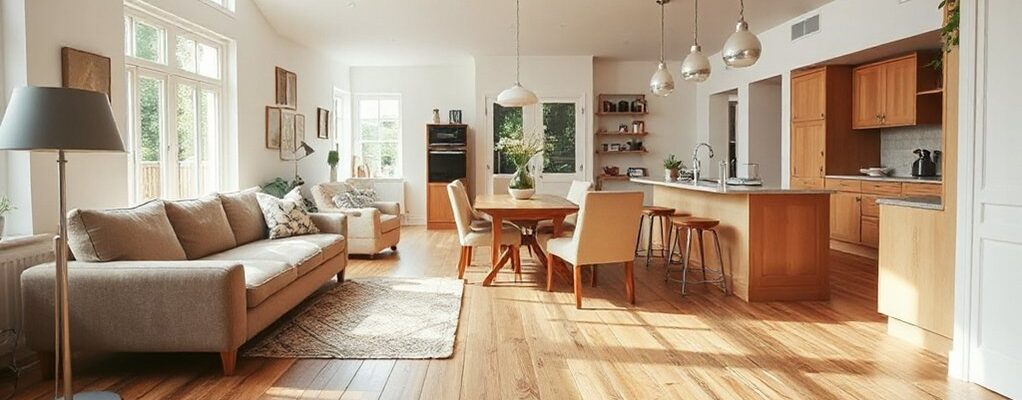
You might not want to admit it, but open-plan zones deserve a careful balance of flow and function. You’ll map core routines—kitchen, living, study—then choreograph sightlines, texture, and light to carve spaces without walls. Subtle dividers, soft furniture boundaries, and layered lighting create intent without isolation. Your budget leans on flexible furniture and smart storage, yet the plan must adapt as family needs shift. There’s more to align before you test and tweak the layout.
Open-Plan Zoning for UK Homes: Start With a Practical Framework
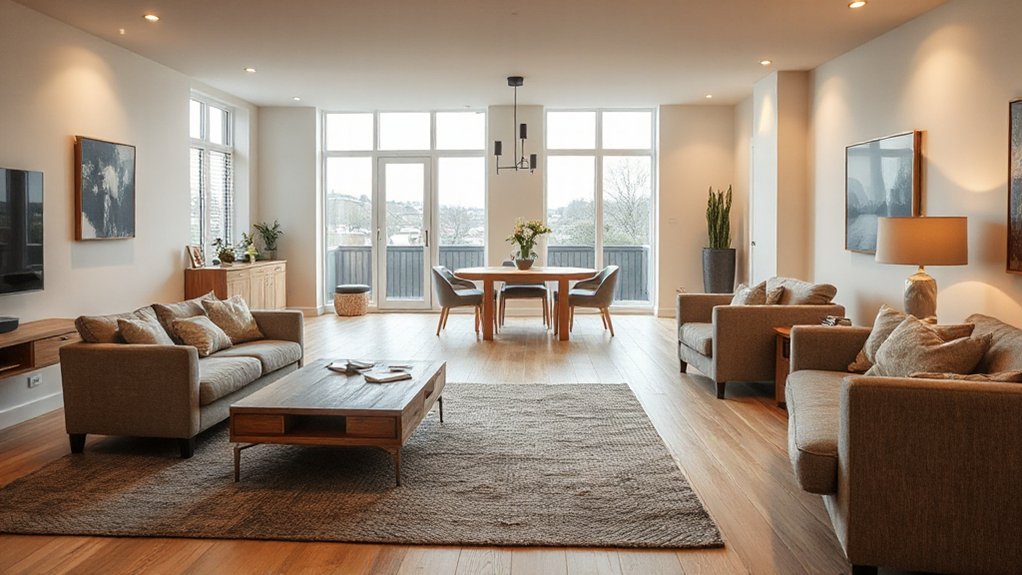
Open-plan zoning in UK homes begins with a practical framework that translates broad openness into defined, usable zones. You assess vertical and horizontal sightlines, material continuity, and likely footpaths to map transition corridors that minimize conflict between activities. This framework establishes core zones—civic, family, and retreat—without walls, using furniture, rugs, and lighting as soft boundaries. You’ll harness color psychology to cue moods and function, selecting cool tones for calm work areas and warmer hues for social zones, ensuring psychological flow aligns with spatial use. Storage solutions become essential enablers, concealing clutter while preserving openness; integrate built-in cabinets, under-island drawers, and wall niches that keep surfaces clear. This approach yields scalable zoning that adapts to evolving family needs, maintaining clarity and efficiency throughout the open-plan plan.
Define Your Zoning by Kitchen, Living, and Study Needs
You’ll shape zones by aligning kitchen flow, living activity, and study privacy to daily rhythms. Consider how kitchen flow zones guide movement and noise, how living activity boundaries define social vs. quiet zones, and how study privacy areas create focus without isolating the family. This perspective-driven approach uses precise spatial logic to map how each function interfaces with the others.
Kitchen Flow Zones
To establish efficient kitchen flow zones, define clear relationships among the kitchen, living, and study areas and map how people move through the space. You’ll assess pathways, turning radii, and task-related distances to minimize disruptions. Prioritize ergonomics by aligning prep zones with sink, fridge, and cooking appliances, while keeping the study nook accessible without crossing high-traffic routes. Use sight lines to maintain visual connection between tasks, yet preserve privacy where needed. Zone flexibility emerges through modular furniture, movable screens, and adaptable storage that redefines boundaries without structural changes. Apply material and color cues to reinforce function, buffering noise between work and social zones. Document flow notes and update them as routines shift. This approach enhances kitchen aesthetics while sustaining functional, people-centric circulation.
Living Activity Boundaries
What defines a room’s role when the lines between kitchen, living, and study blur, and how do you codify those roles into tangible boundaries? You map functions to zones: cooking and cleanup, social gathering, and focused work or study, then translate them into airborne and tactile cues. Spatial hierarchy matters: sightlines, traffic routes, and ceiling height shifts cue users to switch intensity. Use furniture placement to create micro-rooms—snug seating near the kitchen for quick chats, open desks behind acoustic screens for concentration, and lounge nooks for casual interaction. Material contrast and lighting progression reinforce duties without visual clutter. Prioritize Outdoor integration where possible to blur boundaries with garden activity, while Acoustic privacy protects study tasks without isolating family life. These boundaries support fluid, safe, and efficient daily routines.
Study Privacy Areas
Study privacy areas emerge from how you assign presence and focus within open-plan kitchens, living rooms, and work nooks. You define distinct zones by cues, sightlines, and acoustic intent, aligning desk time with quieter corridors and meals near activity hubs. Precision in materials and layouts reinforces boundaries without abrupt separations, keeping flow intact. Implementing soundproofing strategies helps suppress cross-traffic noise between tasks, while strategically placed privacy screen options offer visual relief when you need solitude. Test each boundary at typical hours to guarantee it supports both collaboration and concentration, then refine by adjusting heights, finishes, and routes.
- Define line-of-sight blockers that maintain openness elsewhere
- Choose acoustic panels that blend with cabinetry and shelves
- Select movable screens for flexible privacy
- Align desk orientation with natural light and kitchen activity
Plan Furniture to Carve Space Without Walls
You should map how furniture layout defines function, using pieces to carve zones without enclosing walls. Consider how each item’s scale, placement, and sightlines create distinct areas—reading, dining, work—while maintaining openness. This approach prioritizes spatial clarity and flow, guiding decisions about furniture to delineate space efficiently.
Plan Furniture Layout
Plan furniture layout to carve space without walls begins with aligning pieces to create directional cues and zones. You’ll deploy furniture arrangement tactics that emphasize sightlines, flow, and purpose, letting scales and groupings suggest boundaries without solid dividers. Apply zoning principles by clustering related activities—living, dining, and work—into coherent micro-areas. Prioritize low-profile shapes and vertical accents to retain openness while signaling function. Maintain consistent material language and color warmth to unify zones; avoid clutter that interrupts circulation. Use performance metrics like walk-through width, sightline clarity, and edge-to-edge symmetry to verify balance. Iterate placements via movable furnishings before committing, ensuring acoustic comfort and visual privacy where needed.
- Align pieces to create directional cues and zones
- Group by function to reinforce zoning principles
- Prefer scalable, low-profile furniture
- Test circulation and sightlines continuously
Carve Space With Pieces
With careful piece selection, you carve space by shaping sightlines and flow rather than adding walls. You’ll exploit furniture as a plant-like divider, anchor points, and subtle cues that redefine zones without rigid boundaries. Begin with seat heights and backrests that direct permeability, inviting circulation while signaling purpose. Use low-profile sofas to maintain sight through rooms, and place consoles or sideboards to create vertical rhythm that suggests distinct areas. Integrate rugs and tactically located lighting to reinforce zone boundaries without enclosing. Embrace decorative partitions—lattices, open shelving, or slatted screens—where you need implied edges rather than solid separations. Prioritize space optimization, ensuring scale and placement support functionality. Reassess the layout after each move, documenting how pieces alter flow and perception.
Light-Permeable Dividers That Subtly Separate Zones
Light-permeable dividers subtly deline zones without closing them off, preserving sightlines and daylight flow. You choose forms that guide movement while keeping rooms visually connected, avoiding claustrophobic partitions. The objective is micro-separation that reads as a continuum, not a barrier, using vertical perforations, open shelving, or lattice overlays to frame tasks and traffic. Consider decorative screens and sliding panels as core tools, balancing texture with translucence to modulate light and shadow throughout the day. You assess material scale, fixings, and maintenance, ensuring stability without bulky profiles. The aim is disciplined zoning that remains flexible, adapts to family rhythms, and preserves spatial hierarchy.
- decorative screens
- sliding panels
- material transparency
- adjustability and access
Acoustic Tweaks That Create Natural Boundaries
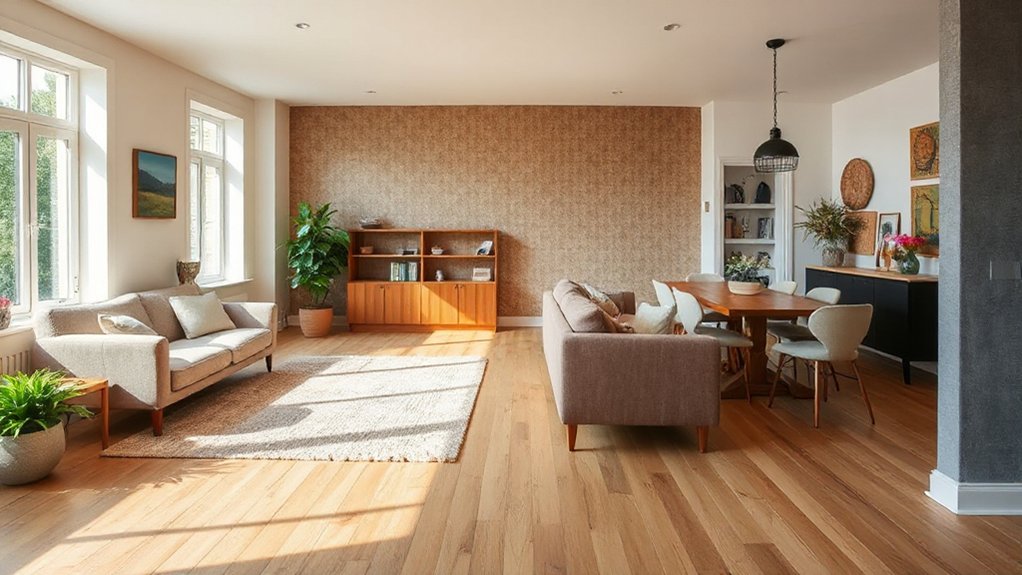
Acoustic tweaks can carve natural boundaries in open-plan UK homes without sacrificing flow. You tailor soundscapes by aligning reverberation targets with room use, using strategic zoning that respects adjacency. In practice, select soundproofing techniques that dampen cross-talk between zones while preserving daylight and sightlines. Implement decoupled ceilings or floating floor interfaces where traffic concentrates, reducing the transmission path without creating visual barriers. Integrate acoustic paneling on key surfaces—midwall screens or perforated timber—to absorb mid-to-high frequencies, clarifying speech zones without dulling ambiance. Consider material contrasts that cue function: softer textile panels near living spaces, timber-veneer fronts near kitchens. Calibrate hardware—doors, trims, seals—for air-tight boundaries, not fortress walls. Your goal is balanced acoustic intimacy that maintains, rather than obstructs, flow.
Lighting and Color to Distinguish Each Zone
Lighting and color act as the visible cues that delineate each zone, guiding users through the open-plan layout without relying on walls. You’ll harness color psychology to cue function, while lighting techniques sculpt mood and progression across spaces. Focus on a cohesive scale, avoiding jarring shifts, so movement remains intuitive. Use cooler tones for circulation areas and warmer hues to invite gathering zones, calibrated to reflect natural light levels. Layered lighting—ambient, task, and accent—emphasizes the intended use of each zone without physical dividers, preserving flow. Dimmers and zoned fixtures provide flexibility as activities change.
- Color psychology guides zone identity and emotional response
- Lighting techniques shape mood and function
- Layered lighting creates depth and clarity
- Dimmers and zoning preserve flow with control
Budget-Smart Zoning: Real UK Examples and Tips
Budget-smart zoning in UK homes hinges on leveraging affordable, non-structural cues to define flow. You identify how daily activities map across surfaces, then deploy subtle distinctions that don’t rely on walls. Practical examples include using open shelving as “smart storage” to signal transition between living and dining areas, while keeping sightlines intact. Floor finishes, area rugs, and furniture grouping create clear, readable zoning zones without breaking the open plan. Consider modular screens or tall bookcases to carve perimeters while maintaining flexibility. Lighting layers and acoustic panels reinforce purpose without heavy construction. You’ll prioritize low-cost accessories, multi-functional storage, and height variation to cue function. This approach keeps reconfiguration simple as needs shift, preserving cohesion and avoiding visual clutter.
Plan, Test, and Tweak Your Open-Plan Layout
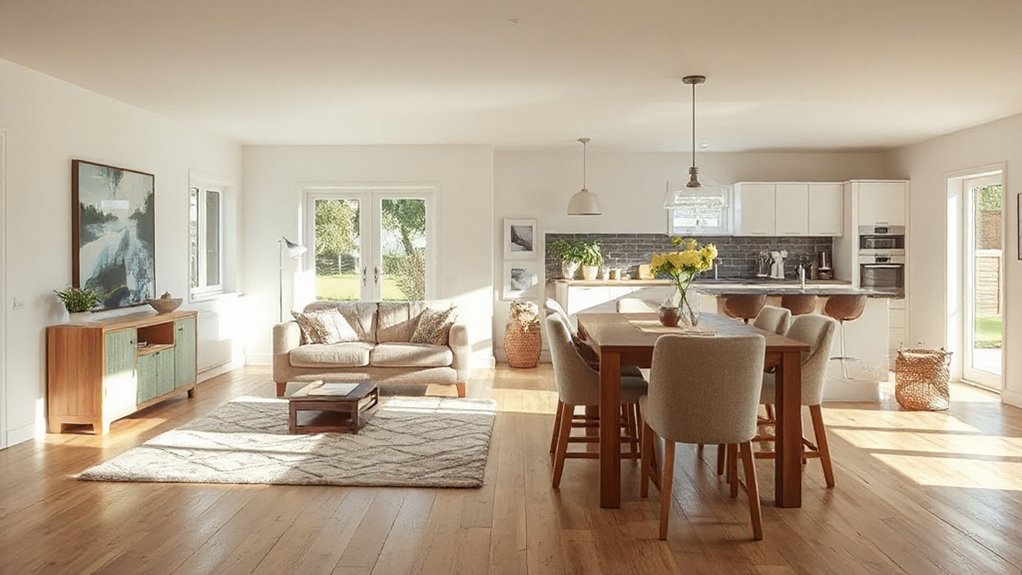
To move from practical zoning ideas to a workable plan, you start by mapping your daily routines onto the open-plan space and then prototype with flexible cues. Plan, test, and tweak with a feedback loop: observe flow, measure friction, and adjust furniture clarity. Use decorative accents to cue zones, not overwhelm, and ensure zone signage remains legible from key sightlines. Establish a repeatable method: define intended uses, implement a temporary layout, and time tasks to reveal bottlenecks. Iterate until spatial transitions feel deliberate, not accidental. Your objective is predictable, durable circulation, not clutter. Document changes, compare outcomes, and lock in a final arrangement that supports multi-tasking, acoustics, and light. Precision over novelty sustains long-term usability and resale value.
- Map routines to space and prototype with cues
- Use decorative accents for zoning without clutter
- Test signage legibility across zones
- Iterate based on real-use feedback
Frequently Asked Questions
How Do I Measure Furniture to Avoid Crowding Zones?
To measure furniture and avoid crowding zones, you should map footprints precisely, leaving clear circulation paths. Consider Furniture placement, guarantee space optimization with modular pieces, identify chokepoints, and test layouts using shadows and scale references for accurate planning.
Can Zoning Affect Resale Value or Mortgage Requirements?
Yes, zoning can influence resale value and mortgage requirements, especially when interior lighting and acoustic solutions are well integrated; you’ll boost perceived quality, compliance, and energy efficiency, while signaling precise spatial planning and future adaptability to lenders and buyers.
What Are Cost-Effective Ways to Add Invisible Storage?
Hidden compartments prove cost-effective; you’ll install modular solutions discretely, leveraging walls, furniture, and joist cavities. You design around imperceptible storage, maximizing spatial balance, accessibility, and durability while minimizing material waste and project downtime. You’ll love the concealed efficiency.
How Do Pets Influence Open-Plan Zoning Decisions?
Pets influence open-plan zoning you design by prioritizing durable, pet-safe materials and creating pet activity zones; you select finishes that resist scratches, plan separations for play and rest, and guarantee sightlines, airflow, and maintenance remain central.
Which Building Regs Apply to Open-Plan Walls and Screens?
Take a case like a partial-height screen; you’ll follow Building Regulations that govern structural integrity and fire safety for walls and partitions. Guarantee privacy solutions meet acoustic and visual privacy criteria while structural considerations remain compliant and documented.
Conclusion
In time, your open plan becomes a living map, not a maze. You’ll carve purpose with subtle dividers, much like a craftsman chisels contours from timber, revealing clear paths and quiet nooks. Start with a practical framework, test, tweak, and let light, texture, and acoustics do the talking. Your spaces will breathe with flexible zones—living, kitchen, study—each distinct yet intrinsically linked, a quiet nod to the long winter evenings and the bright UK mornings.