
Did you know that a well-timed upgrade to insulation and glazing can cut annual energy bills by a third or more, even before factoring in smart controls? If you’re renovating in 2026, you’ll want a plan that prioritizes value and long-term savings, not just fresh finishes. You’ll set a realistic budget, source durable materials, and lock in trades with clear guarantees—all while timing purchases around price cycles. There’s more to it, and the approach matters as much as the choices.
What You Should Know About Renovating on a UK Budget in 2026

Renovating on a UK budget in 2026 means prioritizing value over vanity: identify projects that deliver durable improvements with the best cost-to-benefit ratio, and plan around current price signals, energy costs, and labour availability.
You’ll benefit from focusing on efficiency upgrades, material longevity, and reliable suppliers. Use data to compare ROI across rooms and systems, targeting fixes that reduce ongoing costs rather than flashy upgrades.
Eco-friendly materials can lower long-term energy and maintenance expenses, while supporting local supply chains helps manage prices and delivery times.
Vintage restoration adds character with potential value, but price trackings and condition assessments guard against overpaying.
Build a phased plan that aligns with budget cycles, permits, and contractor capacity to avoid costly delays.
Prioritise Updates That Boost Value and Cut Long-Term Costs
Prioritize updates that raise resale value and trim future costs by choosing durable, energy-efficient options.
Data shows that insulation, efficient boilers, and low-maintenance surfaces pay back over time through lower bills and smarter resale pricing.
You’ll want a clear cost-benefit plan that targets high-impact upgrades first.
Value-Boosting Upgrades
Add value and curb long‑term costs by prioritising upgrades with proven ROI, such as energy efficiency, durable finishes, and layout improvements that boost usability. You’ll gain more usable space and lower running expenses if you focus on practical, trackable improvements.
Start with a quality insulation upgrade and efficient glazing to reduce heat loss. Then opt for durable, low-maintenance surfaces that resist wear. Include smart touches like home automation controls that streamline energy use without overengineering the system.
Choose eco-friendly materials where possible to future‑proof the home and appeal to buyers. Prioritise flexible layouts that enhance functionality and resale appeal, such as open plans with defined zones.
Keep costs predictable by sourcing standard sizes and widely available components to minimise custom trades.
Long-Term Cost Savings
Focusing on long‑term savings means leaning into updates that reduce ongoing costs and preserve value over time. You should prioritise systems and materials with low operating costs and durable performance, even if upfront spend is modest.
Target efficiency gains, like insulation improvements, heat pumps, and smart controls, to slash energy bills year after year. When evaluating projects, use a simple payback model to compare energy savings against installation costs.
Consider luxury upgrades only if they demonstrably add long-term value, such as enhanced comfort or better resale appeal, not just surface appeal. Pair efficiency with aesthetic enhancements that avoid frequent refresh costs, preserving value without frequent remodels.
Document performance metrics to justify decisions and track actual savings after completion.
Create a Realistic, Flexible Renovation Budget
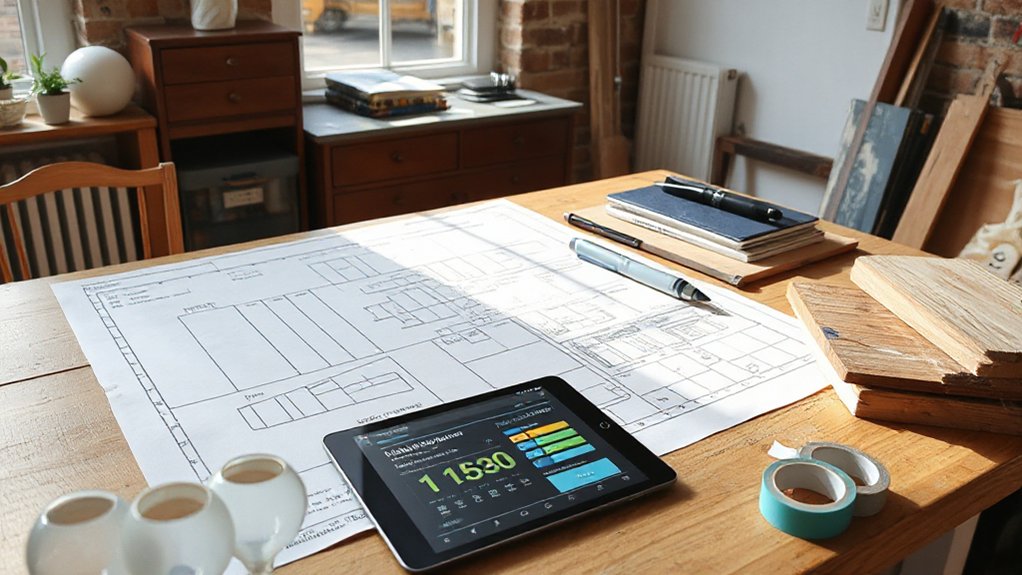
Set realistic limits on what you spend and where, so you don’t chase projects beyond your means.
Build contingency plans that cover unexpected costs, so a budget bump won’t derail the entire renovation.
Use data from quotes and past projects to refine those limits and keep the plan flexible as you progress.
Set Realistic Limits
Creating a realistic, flexible renovation budget starts with outlining what’s essential and what can wait, then building a cushion for unexpected costs. You set practical limits to prevent scope creep, prioritizing essentials over nice-to-haves.
Begin by itemizing tasks, then assign evidence-based costs from reputable sources, adding a 10–15% contingency for price swings. Track monthly spend and revise as prices shift, never pausing progress to chase perfection.
When choosing materials, favor DIY tips that you can handle without specialist labor, and opt for eco-friendly materials that deliver long-term savings. Use market-tested products with clear warranties, avoiding trendy but fragile finishes.
Maintain flexibility by framing decisions as reversible; if a cheaper option arises, you can swap in without derailing the budget. Stay disciplined, data-driven, and pragmatic.
Build Contingency Plans
Contingencies aren’t optional—they’re essential. You build a contingency plan by outlining a realistic budget that accounts for overruns, delays, and scope changes. Start with a baseline project cost, add a prudent buffer (10–20%), and tier relief for critical risks you’ve identified—material shortages, permitting holds, and labour gaps.
Use staged milestones to trigger budget reviews, not excuses to overspend. Tie contingency releases to measurable progress and documented change requests. Prioritise budget-friendly design where possible without sacrificing function or safety, and reserve funds for essential, high-value decisions only.
When choosing materials, consider Sustainable materials with proven reliability and lifecycle costs, not just upfront price. Regular, transparent reporting helps keep trades honest, and prevents small issues from spiralling into costly delays.
Smart Sourcing: Affordable Materials and Where to Find Them
Smart sourcing can dramatically cut renovation costs without sacrificing quality. You’ll search for durable, cost-effective materials by comparing options across suppliers and archives, rather than defaulting to the first quote.
Prioritize products with solid warranties and documented performance in UK conditions. Then, quantify total lifetime costs, not just upfront prices.
Material discounts appear when you bundle orders, commit to larger volumes, or sign longer-term supplier agreements, so plan your bill of materials with batch purchases in mind.
Track unit costs, lead times, and return policies to avoid hidden charges.
Material discounts and supplier negotiations should be your routine checks—request multiple quotes, challenge marked-up transport, and verify compatibility with existing structures.
Document savings opportunities, then reflect on supplier reliability and post-sale support for prudent decisions.
Time the Work With Price Cycles and Supplier Availability

Prices don’t sit still, so you should time renovations around price cycles and real-time supplier availability. By tracking supplier timing, you can forecast lead times and lock in materials when prices dip or stabilize.
Use historical data and current market alerts to spot patterns—often after quarter-ends, holidays, or fiscal changes—so you schedule orders just before a price fluctuation, not after.
Build a calendar that marks typical cycles for key items (lumber, steel, concrete, fixtures) and set purchase windows within those ranges.
Negotiate early deposits tied to firm delivery dates, and request contingency options if a supplier hits a peak.
Staying disciplined with timing minimizes waste, reduces storage costs, and sustains project momentum amid shifting supply.
Finding Value-for-Money Tradespeople and Guarantees
Finding value-for-money tradespeople and guarantees begins with clear criteria and verified track records. You should shortlist tradespeople who publish detailed project scopes, timelines, and defect-free performance metrics. Then verify through independent reference checks and completion statistics.
Prioritize firms with documented Trade warranties that cover workmanship and materials, and ask for third-party accreditation or insurer-backed guarantees. Compare bids not just on price, but on inclusions, exclusions, and response times for fixes.
Use pricing negotiations to anchor expectations: request itemized quotes, note any upcharges for contingencies, and clarify who bears risk for delays. Require written warranties and post-completion support terms before signing.
Track performance post-job, updating your criteria for future projects to tighten value over time.
Design Choices That Save Money Without Compromising Quality
You can trim renovation costs without sacrificing quality by making targeted design choices grounded in data and practical tradeoffs. Start with a lean, functional layout that minimizes structural changes and avoids unused space.
Favor durable, easy-to-maintain finishes over trendy options that quickly date or require replacement. Use sustainable materials where feasible, balancing upfront cost with long-term savings on maintenance and energy.
Embrace minimalist design to reduce complexity, allowing you to reuse existing elements and stock finishes across rooms. Plan fixtures and fittings for standard sizes to cut waste and sourcing delays.
Prioritize daylight, insulation, and air sealing to lower ongoing running costs. Choose modular storage solutions that adapt over time, avoiding bespoke builds that inflate budgets.
This approach keeps quality intact while delivering predictable, data-backed savings.
Planning, Permits, and Common Pitfalls to Avoid
Planning permits and avoiding common pitfalls go hand in hand with smart design choices. You’ll save time and money by front-loading compliance: check local planning restrictions, conservation rules, and party-wall requirements early.
Build in buffer for permit delays by submitting complete, accurate drawings and a clear schedule. If you hit ingenuity challenges—unusual structural needs, energy upgrades, or listed-heritage constraints—document alternatives and present evidence-backed options rather than last-minute changes.
Rely on pre-briefed consultants and a defined decision log to keep decisions traceable. Track progress with a simple milestones chart to spot bottlenecks before they derail your budget.
Frequently Asked Questions
How Can I Leverage Energy-Efficient Upgrades for Long-Term Savings?
Install smart thermostats and solar panels now, and you’ll cut energy waste while locking in long-term savings. You’ll monitor usage, couple with proper insulation, and see payback periods shorten as energy prices rise and efficiency improves.
Which Uk-Friendly Grant or Incentive Programs Apply in 2026?
Government incentives vary by region, but you should expect a mix of tax rebates and grants in 2026. You’ll compare schemes, document savings, and claim any eligible programs, ensuring you maximize tax rebates while staying compliant and financially prudent.
What Short-Cuts Can Reduce Moving or Disruption Costs?
You should pursue cost effective alternatives like modular or off-site components, and minimize changes during peak trades; use cost-conscious subcontractors. For disruption, plan renovation timeline adjustments, stagger sessions, and align deliveries to avoid cancelations and extra mobilization costs.
Are Temporary Fixes Worth It Before a Full Remodel?
Temporary fixes can buy time, but weigh risks against costs, then proceed. You should plan DIY projects safely, compare contractor selection, and budget buffers; you’ll gain time, minimize disruption, and protect outcomes as you shift to a full remodel.
How Do Seasonal Price Trends Affect Material Availability Locally?
Seasonal price trends affect availability locally, and you’ll see material shortages and price fluctuations. You should track supplier calendars, diversify sources, and lock-in orders early to mitigate delays, balancing stock levels with demand and budgeting prudently.
Conclusion
Prioritize high‑value upgrades first, like insulation, energy‑efficient glazing, and smart controls, to lock in long‑term savings. Build a flexible budget with a 10–15% contingency and track costs weekly. Schedule purchases to align with market dips and supplier cycles, and lock in trades with clear guarantees. One surprising stat: energy‑efficient improvements can cut bills by up to 25–40% in the first year. Stay data‑driven, prudent, and phase renovations to avoid waste and delays.