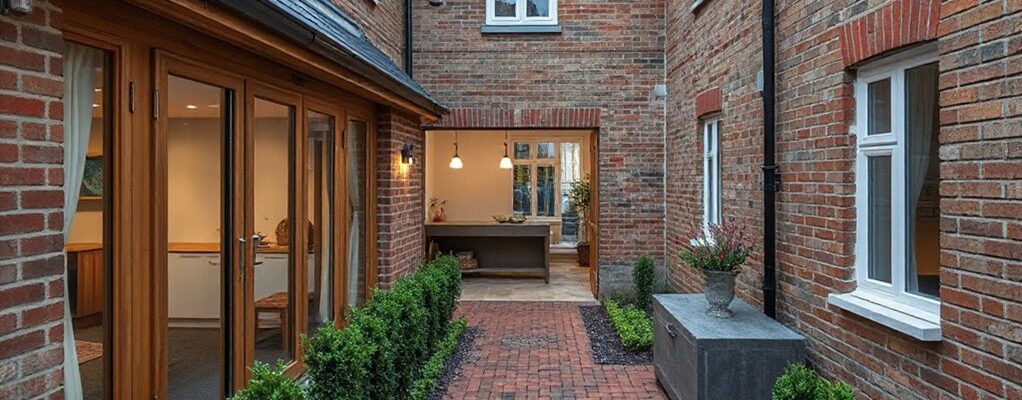
A side return extension can transform a UK terrace by expanding your ground floor without altering the street façade, but success hinges on precise measurements, structural integrity, and compliance with local rules. You’ll need to assess space, light, and access, then align materials and roof form with your terrace’s details while planning for drainage and thermal performance. Start with early planning checks and pre-application advice to avoid costly missteps as you outline the project’s scope and priorities.
What a Side Return Extension Is and Why It Fits UK Terraces
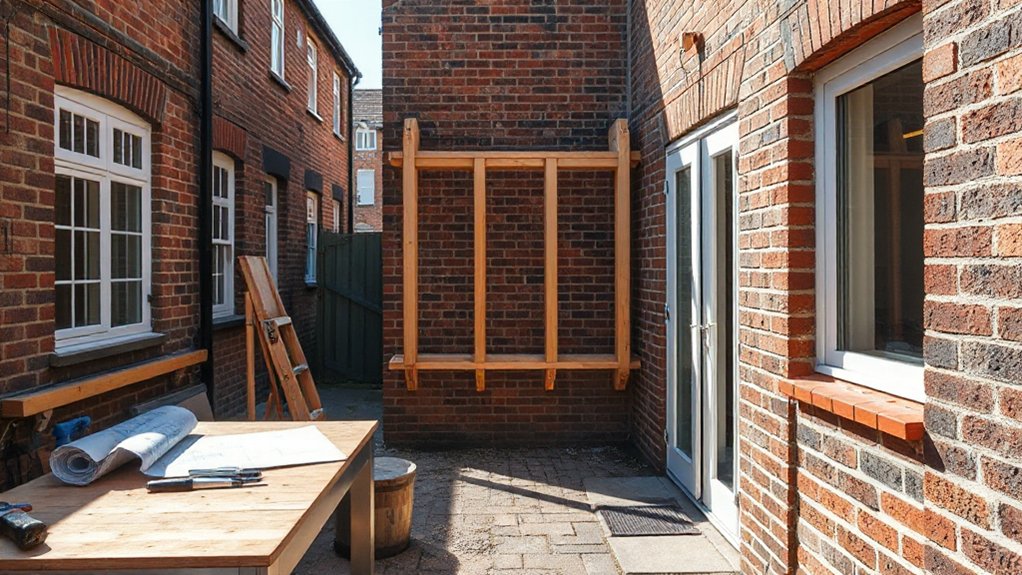
A side return extension is a single-story addition that fills the narrow courtyard between a house and its boundary, extending the ground floor corridor or kitchen along the side of the home. You gain a brighter, more functional footprint without altering the main living rooms. The design leverages existing alignment and rooflines to preserve proportion, while permitting larger openings for light. Historical context informs material choices and detailing to integrate with terrace aesthetics. Neighborhood considerations influence setback, massing, and boundary treatments to minimize impact on adjoining properties. Structure typically relies on a masonry base with a truss or flat roof, ensuring watertight continuity. You’ll want to balance practical access with energy performance, glazing strategy, and maintenance implications for long-term functionality.
Do You Need Planning Permission? A Quick Decision Guide
Determining whether planning permission is required for a side return extension hinges on scope, location, and impact. You’ll assess if features fall under permitted development—width limits, height caps, and eaves heights—against local planning constraints. In many cases, single-storey schemes adjacent to a terrace qualify for LRD (Lawful Retrospective Determination) checks or building regulations compliance without formal planning consent, but exceptions apply for conservation areas or listed buildings. You should consult your local authority’s planning portal and, if needed, an initial pre-application advice. Consider Landscaping ideas within the plot’s footprint and guarantee drainage and party-wall considerations are addressed. Always verify Building regulations compliance, as structural integrity, fire safety, and ventilation requirements remain mandatory regardless of planning status.
Assess Your Side Return: Space, Light, and Access
To assess your side return effectively, map the available width, length, and usable height to identify how much space you gain for circulation, storage, or a light-filled living area. You should quantify margins for doors, core utilities, and future furniture layouts, ensuring existing services won’t be restricted. Assess daylight paths from the main living area and any rear window to optimize light distribution without overheating. Consider access routes for construction and future maintenance, confirming clearance for doors, wheelchairs, or prams where relevant. Integrate architectural styles and garden landscaping concepts to influence proportion and alignment with the terrace. Document constraints and opportunities in a brief plan, then test scenarios using scale drawings to confirm that the design remains practical, compliant, and adaptable.
Match Terrace Details: Materials, Joinery, and Roof Styles

Linking your side return to the terrace involves choosing materials, joinery, and roof styles that harmonize with the existing exterior while delivering durable performance. You should specify cladding that matches your brick or render, using consistent textures and colours to avoid visual discord. Select joinery with discreet profiles and standard, proven sash or casement styles that mirror original openings, ensuring airtight seals and low maintenance. For roof forms, prefer pitched or lean-to configurations that align with roofline and eaves; use compatible tiles or slates and appropriate insulation to meet UK building standards. Consider drainage, flashing, and lintel detailing to prevent leaks. In planning, factor terrace landscaping and historic preservation goals to maintain historical integrity while ensuring modern longevity.
Budgeting Side Returns: Typical UK Costs and Savings by Phase
You’ll start with a clear budget breakdown, mapping costs and potential savings phase by phase. By outlining each stage—planning, procurement, construction, and finishing—you can identify where to optimize without compromising quality. This approach helps you forecast contingencies and benchmark cost-saving opportunities across the project lifecycle.
Budget Breakdown Guide
Budgeting a side return project hinges on understanding costs by phase and planning for contingencies. You’ll first list core trades: architect fees, Building Control, structural adjustments, foundations if needed, roofing, glazing, plumbing, electrical, insulation, and finishes. Next, estimate materials per phase, from groundwork to interior decor, and assign unit costs with local market ranges. Include a contingency of 10–20% for price volatility and unexpected site conditions. Track soft costs, such as planning delays and utility diversions, separately to avoid skewing construction budgets. For landscaping ideas, allocate a modest allowance to create acceptable exterior reach without overspending, and reserve funds for interior decor upgrades post-completion. Finally, maintain a detailed cost log, revising forecasts after each milestone to ensure accurate cash flow.
Phase-by-Phase Savings
Phase-by-phase savings in a UK side return project stem from identifying cost drivers and implementing targeted reductions at each stage. You begin by detailing planning costs, then seek efficiencies in design iterations to avoid unnecessary changes. In construction, prioritize modular components and accurate material takeoffs to minimize waste and delays. Scheduling with critical-path awareness reduces idle periods, while procurement focuses on bulk purchases and supplier rebates without compromising quality. For finishes and fit-out, standardize fixtures where appropriate and negotiate bundled trades to lower labor costs. Garden landscaping and site access are frequent but controllable cost centers; plan for temporary access routes and weather protection to prevent overruns. Consider home automation knits and smart wiring early to avoid retrofit premiums later. Track savings quarterly to verify the impact of each phase.
Choose a Layout That Maximizes Light and Flow
To maximize light and flow, start by choosing a layout that places the primary living space along the brightest wall and uses an open, uninterrupted pathway between zones. Position circulation corridors as minimal as possible to preserve daylight and sightlines from front to rear. Consider an L-shaped plan to separate service functions from living areas while maintaining visual connections. Use glazing strategies like full-height windows, skylights, or glass doors to enhance daylight penetration without compromising privacy. Align the dining and lounge zones with external views, and keep furniture configurations to avoid blocking natural light. In dense urban gardens, flexible layouts support seasonal use and urban gardens integration. Balance these choices with historic preservation constraints and ensure compatibility with surrounding terraces.
How Long Do Approvals Take and What Could Slow You Down?
Approval timelines vary by project scope, authority, and completeness, so you’ll want to assess Approval Timeline Factors up front and plan buffer time accordingly. Incomplete submissions or missing documents trigger Planning Permission Delays, so use the Submission Readiness Checklist to reduce back-and-forth and avoid avoidable holds. Start with a concise overview of required steps and exact deadlines to keep the process transparent and on track.
Approval Timeline Factors
How long do approvals typically take, and what factors can slow the process down? In practice, the timeline depends on project complexity, authority routing, and document completeness. Minor changes to a side return extension may complete within 6–10 weeks, while complex schemes or council referrals can extend beyond 12 weeks. Key delays arise from incomplete applications, missing structural calculations, or insufficient site plans. Early pre-application advice helps, as does aligning your submission with local design guidance and planning policies. Expect reviews by planning, building control, and potential heritage or conservation checks if your terrace has recognition. Prepare clear justification for siting, impact on light, and garden landscape integration, plus straightforward interior decor details to aid assessors. Efficient, precise documentation minimizes back-and-forth.
Planning Permission Delays
Planning permission delays can shape the overall timeline for a side return extension, so understanding what slows approvals helps you set realistic expectations. In practice, you’ll encounter variability between authorities, with typical determinations ranging several weeks to months. Factors such as local planning policies, neighbourly consultation, and the need for additional information can extend the process. To mitigate risk, prepare a concise planning statement that addresses design rationale and building control considerations. Be proactive in supplying clarification requests promptly, and maintain clear correspondence with the planning department. While awaiting consent, refine your design inspiration to align with conservation area or permitted development constraints, if applicable. Finally, prioritise contractor selection early, ensuring your chosen team understands constraints and delivery milestones.
Submission Readiness Checklist
Submitting the required documents on time starts with a clear readiness check: assemble plans, statements, and support materials that demonstrate compliance with local policies and building regulations. You’ll want a coherent package that proves your proposal aligns with permitted development rights or has approved planning. Delays typically stem from missing details, inconsistent drawings, or vague justification. Prepare to show how garden landscaping integrates with the side return and how interior decor remains adaptable to future changes. Maintain precise measurements, referenced standards, and a clear design rationale. Be ready to address potential concerns about party walls, drainage, and fire safety. A complete submission speeds decisions, reduces back-and-forth, and minimizes costly changes.
- Document scope and boundaries clearly for garden landscaping and interior decor implications
- Include accurate, to-scale drawings with referenced materials and finishes
- Provide plumbing, electrical, and drainage details where applicable
- Attach supporting statements on compliance with housing policies and bylaws
Foundations, Structure, and Drainage for a Compact Side Return
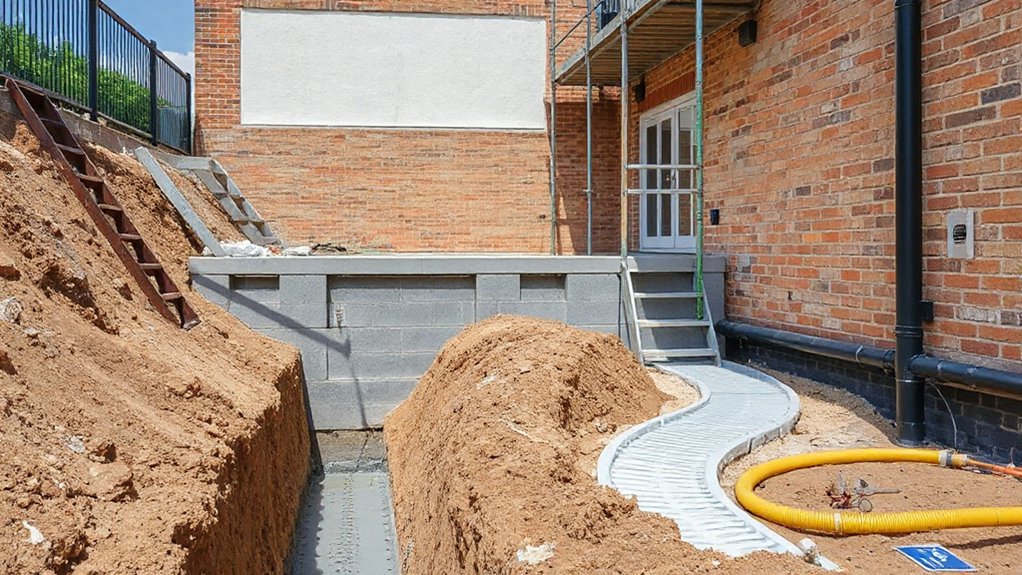
Foundations for a compact side return must support loads, preserve drainage paths, and accommodate a slender footprint. You’ll typically rely on a stripped foundation or trench fill, sized to suit soil conditions, with structural walls aligned to existing party walls where possible. Verify ground bearing and confirm damp-proofing continuity beneath the new slab. Drainage must be continuous and free of blockages; install a perimetric trench and connect to the existing downpipe or private interceptor as appropriate. For structure, use a timber or steel frame that resists thermal bridging, with bridging and noggings to reduce deflection in a narrow span. Plan service runs early, and consider landscaping ideas around the external ground layer to manage water. Tie interior decor considerations to practical, watertight, well-insulated construction.
Finishes for a Bright Side Return Interior
To brighten a side return interior, select materials with high light reflectance and low maintenance to maximize perceived space. Use window and door strategies that flood the area with natural light while maintaining thermal performance and privacy where needed. Integrate light-reflecting finishes and coordinated color palettes to enhance brightness without increasing clutter or cost.
Brighten With Materials
Selecting finishes that brighten a side return interior hinges on reflectivity, light diffusion, and color temperature. You optimize perception by choosing materials with high reflectance, minimal texture, and consistent tone across surfaces. Aim for soft whites or pale neutrals that enhance natural light without washing out details. Prioritize color coordination between walls, floors, and ceilings to reduce contrast hotspots. Material durability matters in a functional area; select wear‑resistant, easy‑clean surfaces for frequent contact zones. Use matte or satin sheens to diffuse glare while preserving depth. Incorporate a cohesive palette that remains timeless as you refinish.
- Reflectivity and diffusion considerations for walls, floors, and ceilings
- Durable, easy‑to‑clean material options
- Color coordination strategies across surfaces
- Practical maintenance and longevity planning
Light-Reflecting Finishes
Light-reflecting finishes on walls, floors, and ceilings can amplify natural light without artificial enhancement. You should select materials with high luminance reflectance and stable color under daylight. Opt for mid-toned or light colors to avoid contrast gaps and to promote even illumination across the space. For walls, consider matte or eggshell finishes in pale neutrals; these minimize glare while preserving depth. Floors benefit from light, durable materials—engineered timber or large-format porcelain tiles with 60–80% light reflectance. Ceilings should be bright but not overpowering; a white or near-white finish with a low-sheen helps distribute light efficiently. Plan your lighting enhancement around color schemes that sustain visual cohesion. Avoid excessively saturated hues that can disrupt perceived brightness and create unintended shadows.
Window and Door Strategies
Windows and doors in a bright side return should maximize natural light while maintaining thermal performance and security. You’ll specify glazing with low U-values and solar control where appropriate, balancing glare reduction with daylight. Consider framed openings that suit the existing fabric, and guarantee airtight seals to prevent drafts. Materials should be durable, low-maintenance, and sympathetic to the terrace’s character. When planning, factor in historical conservation and neighborhood restrictions to avoid conflicts with listed status or covenants. Use strategies like compliant high-performance double or triple glazing, and consider slimline frames to preserve sightlines. Align hardware and finishes with surrounding interiors to enhance continuity.
- Glazing selection and performance targets
- Frame aesthetics and compatibility
- Security, ventilation, and airtight detailing
- Compliance with conservation and local restrictions
Outdoor Integration and Maintenance for Side Returns
Outdoor integration and maintenance for side returns require careful planning of how the new space connects to the garden and how its surfaces withstand the elements. You should detail substrate compatibility, moisture control, and thermal expansion to prevent future cracking or paint failure. Specify durable, low-maintenance materials for walls, floors, and glazing, with weather resistance suited to UK climates. Plan for seamless access between indoor and outdoor areas, using thresholds that minimise drafts and water ingress. Consider garden furniture placement to balance traffic flow and shade, ensuring soft edges and non-slip finishes near seating zones. Integrate outdoor lighting that enhances safety and ambience without causing glare or heat gain. Regular inspections, sealing schedules, and prompt repairs preserve performance and aesthetic value.
Frequently Asked Questions
How Does a Side Return Affect Property Value in the UK?
A side return can raise property valuation modestly, though impact varies by design quality and local demand. You should assess market impact with a professional appraisal, considering increased floor area, energy efficiency, and potential planning constraints on valuation.
Can I Run Utilities Through a Side Return Extension?
Yes, you can run utilities through a side return extension, provided you plan for access and protection. Keep Utility routing clear and maintain Plumbing access; coordinate with a licensed plumber and engineer to meet building regulations and safety standards.
Are There Tax Incentives or Grants for Extensions?
There are tax incentives and grant eligibility options you can explore, depending on your project and location. You may qualify for relevant grants or reliefs; verify eligibility, required documentation, and deadlines with local authorities and the UK government’s guidance.
What Are Typical Noise and Thermal Performance Expectations?
You’ll typically achieve sound insulation around 40–50 dB rating and thermal efficiency improvements with well-sealed detailing. Expect enhanced performance from the extension envelope, considering airtight joints, compliant glazing, and high-performance insulation to sustain stable internal temperatures.
How Do Party Wall and Neighbour Approvals Work?
Around 75% of party wall disputes are settled informally; that’s why you start with notice. You must obtain party wall and neighbour consent, document measurements, and follow formal procedures to avoid costly adjudication or delays.
Conclusion
You’ve mapped the move, measured the margins, and mastered the mechanics of a side return. Solid planning, skilled sourcing, and strict scheduling sustain success. Seek sensible stipulations, secure suitable supportive solutions, and safeguard structural and drainage duties. Smart spec choices and sympathetic silos of style keep spaces spacious and sunshine steady. Finish, fit, and future-proof with flawless finesse, then maintain mindfully. Methodical, meticulous planning makes your marginal extension magnificently meaningful.