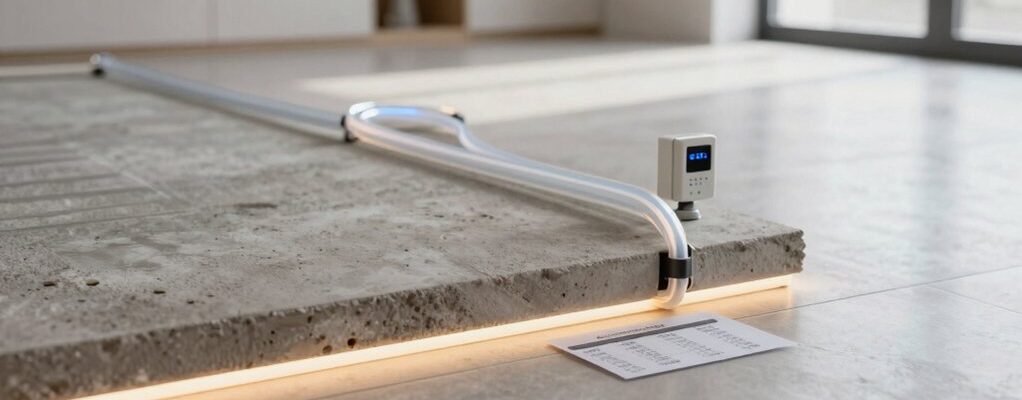
Electric underfloor heating typically has lower install costs and quick deployment, making it appealing for retrofits and small areas, but its running costs can be higher due to electricity prices. Hydronic systems require a bigger upfront outlay for pipes and boilers, yet offer lower operating costs and better long-term compatibility with renewables. The choice hinges on your area, usage, and payback horizon; a clear cost path isn’t obvious until you map your scenarios and energy prices, then compare practical implications.
How Electric Underfloor Heating Works
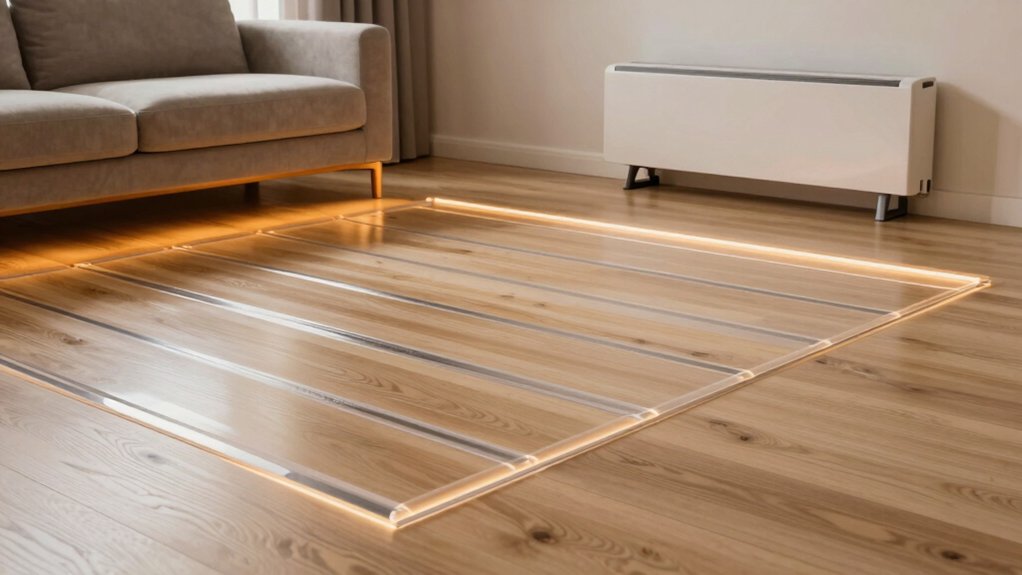
Electric underfloor heating uses electric resistance elements embedded in or beneath the floor to convert electrical energy into heat. You install thin heating cables or mats in a suitable layer, then connect to a thermostat for controlled cycling.
You select a mat or cable pattern based on room size, heat demand, and floor type, ensuring adequate coverage without overheating. You must calculate wattage per square meter to meet target temperatures cost-effectively, typically 100–150 W/m² for bathrooms and 60–100 W/m² for living areas.
You pair the system with proper insulation below the heating layer to minimize heat loss. You install a dedicated circuit, use an appropriate regulator, and follow local electrical codes.
Routine checks, thermostat calibration, and periodic element testing sustain performance and efficiency.
How Hydronic (Water) Underfloor Heating Works
Hydronic underfloor heating uses heated water circulated through a network of embedded pipes to transfer warmth to the floor and space above. You pump heated fluid from a boiler or heat source through concentric loops or serpentine layouts, typically embedded in a concrete slab or underfloor screed.
The circulating pump, manifold, and control valves regulate flow, temperature, and zoning, delivering consistent radiant heat with minimal draft. Efficiency hinges on water temperature, pipe spacing, and insulation; lower supply temperatures reduce heat losses and running costs.
You’ll rely on a latent heat source—gas, oil, or low-carbon options—paired with a weather-compensated or programmable thermostat for setpoints and timing. System response is steady but slower to heat than electric mats; investments justify longer service life and scalable zoning.
Installation Considerations for Electric Systems
Installing electric underfloor systems requires careful planning that directly contrasts with circulating heated water. You’ll map load zones, estimate wattage, and select mats or loose-coil layouts to match room geometry. Precision matters: rider circuits, breaker sizing, and thermostat compatibility determine reliability and running costs.
Choose high-quality cables with adequate insulation, minimizing voltage drop across long runs to avoid hot spots. Subfloor preparation must be flat, clean, and dry, enabling consistent heat transfer and preventing creases that cause hotspots.
Thermal mass considerations are minimal, so surface finish and thickness drive performance more than embedding depth. Install in controlled conditions to prevent moisture exposure and verify floor temperature targets with calibrated sensors.
Budget for installation yield, not just device price, to guarantee predictable, efficient operation.
Installation Considerations for Water-Based Systems
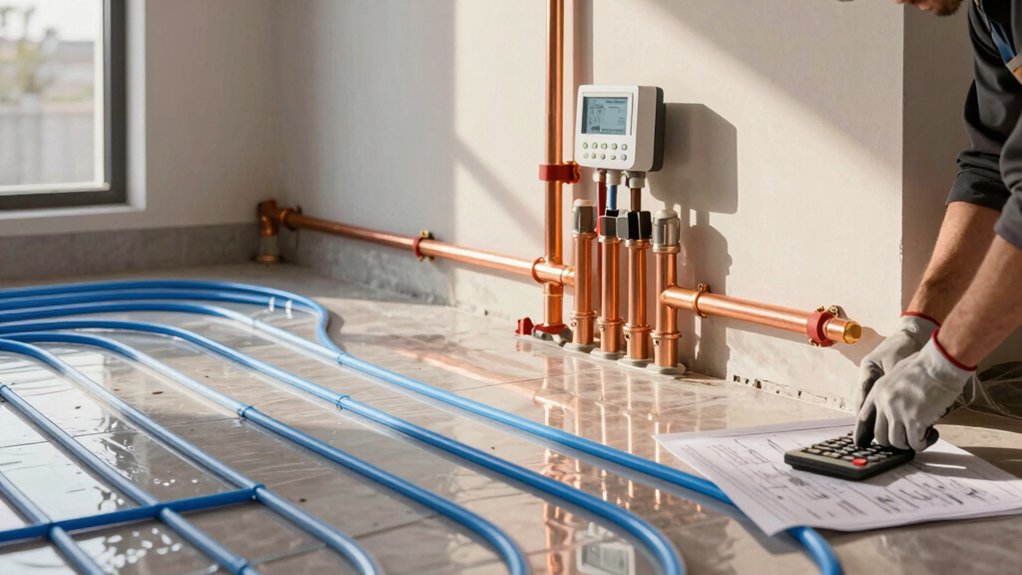
You’ll need to plan pipe routing carefully to minimize insulation disruption and maximize heat transfer efficiency. Flexible zoning helps control temperatures without added loops, so map routes that balance shortest runs with service access and maintenance considerations.
Anticipate constraints on manifold placement and valve sizing to keep installation costs predictable while preserving system responsiveness.
Pipe Routing Challenges
Pipe routing for water-based systems must be planned before placement of any floors or joists, balancing heat delivery with installability and future service access. You design routes to minimize pipe length and insulation losses while preserving structural clarity and access panels.
Keep supply and return manifolds near equipment with direct runs, reducing bends and elevation changes that raise friction losses. Use consistent spacing to avoid overheating or cold spots, and confirm floor voids align with joist bays to simplify layout and reduce cutting.
Embed routing diagrams and mark shutoff points for maintenance. Consider screed thickness, subfloor integrity, and load paths to avoid settlement interactions. Account for future access, replacement, and test pressure tolerance without compromising installation efficiency or material costs.
System Zoning Flexibility
System zoning flexibility allows you to tailor heat delivery to occupancy patterns and floor plan changes without rebuilding the system.
In water-based installations, zoning uses valves, manifolds, and thermostatic controls to separate zones by room groups or usage. You gain targeted heat that aligns with daily routines, reducing unnecessary circulation and energy waste.
Consider pipe lengths, valve sizing, and pump performance when planning zones to avoid pressure losses and uneven temperatures. A well-designed manifold layout minimizes external piping and simplifies maintenance.
Synchronize zone control with a centralized boiler or primary loop to preserve system efficiency. Budget for additional control hardware and potential zoning fees, then compare to potential fuel savings and comfort gains.
A precise zoning strategy lowers running costs without sacrificing comfort.
Upfront Costs: Electric Vs Water-Based
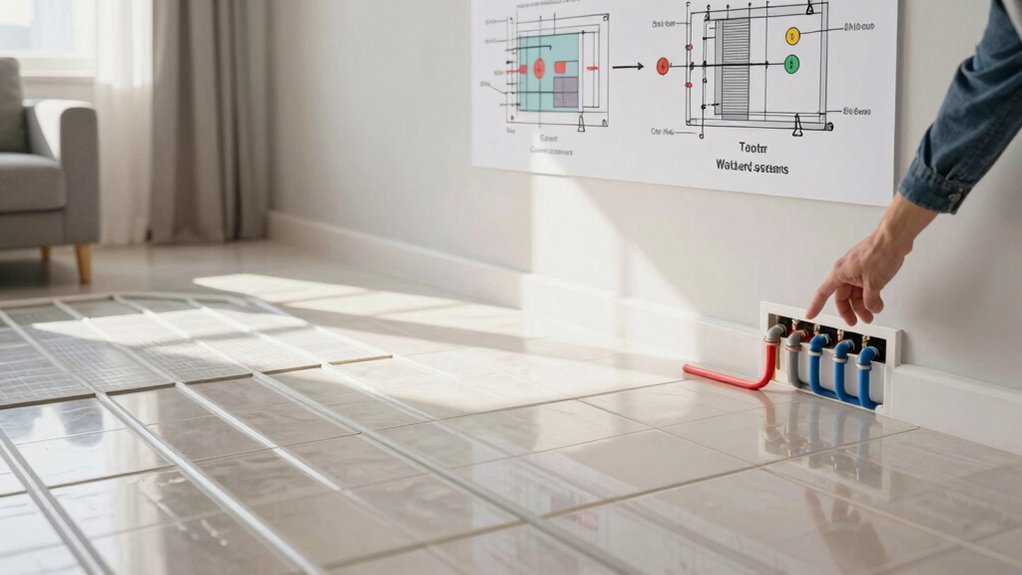
Electric systems typically have lower upfront costs, while water-based setups incur higher initial investments due to equipment and installation complexity.
You’ll want to compare instantaneous electrical run costs against long-term water-based efficiency, and weigh installation considerations such as retrofit feasibility, space requirements, and boiler or heat pump integration.
Consider the long-term financial impact, including energy use, maintenance, and potential incentives, to guide the upfront decision.
Upfront Cost Comparison
When evaluating upfront costs, electric underfloor heating typically requires a lower initial outlay for materials but may incur higher equipment and installation costs in some installations. Water-based systems demand larger up-front investments in manifolds, piping, and boilers or heat pumps.
You’ll compare capex components directly: conductors and mats or cables versus manifold assemblies, pump stations, and installers’ time for piping routes. Electric circuits often require simpler distribution and fewer plumbing trades, yielding quicker commissioning and reduced site disruption.
Water-based networks demand radiant-systems plumbing, insulation strategies, pressure testing, and component corrosion protection, elevating initial spend. Operationally, electrical options may face higher controls and transformer costs, while hydronic setups hinge on boiler or heat-pump sizing and fluid-fillable loops.
Installation Considerations
Installation considerations for upfront costs hinge on the trade-off between quick, low-installation disruption with electric systems and the higher plumbing, manifolds, and labor demands of water-based setups. You weigh material costs, available space, and installation timelines to select a compatible approach.
Electric mats or cables install beneath existing floors, with minimal core drilling and faster commissioning, reducing labor hours and disruption. You’ll encounter lower plumbing complexity and simpler permits, but higher per-watt costs and cable density requirements can influence total outlay.
Water-based systems demand manifold routing, primary piping, and precise zoning, increasing upfront investment but offering scalable heat output for larger areas. System compatibility with your floor buildup, insulation, and installer skill set drives the decision.
Consider permit requirements, warranty implications, and future retrofit practicality to constrain total upfront spend.
Long-Term Financial Impact
To compare long-term financial impact, consider how upfront choices shape operating costs, maintenance, and lifespan. You’ll weigh electric and water-based systems by upfront installation costs, component reliability, and expected service life.
Electric mats incur lower installation complexity and faster deployment, but meltingly higher material costs per square meter and potential inverter wear can elevate long-term expenses.
Water-based systems demand greater initial investment due to circulating pumps, manifolds, and roofed manifolds, yet operating costs often run lower on electricity per watt-hour, with longer heat retention and uniform distribution offsetting boiler integration costs.
Maintenance is mixed: electric systems emphasize electrical safety inspections and controller replacements; hydronic setups stress pump seals and anti-corrosion checks.
Over decades, total cost of ownership depends on energy pricing, system efficiency, and planned retrofit cadence.
Running Costs and Efficiency Comparisons
Even though underfloor heating can be efficient, you’ll want to compare operating costs directly by system type, fuel source, and control strategy. Electric and water systems differ in heat loss, installation cost, and running efficiency, so you should quantify input power versus delivered heat for comparable floors and room uses.
Electric mats typically incur higher standby losses but lower distribution system losses, while hydronic circuits spread heat via boiler efficiency and fuel price, often with lower unit energy rate but higher pump and circulation costs.
Control strategies matter: precision thermostats, zoning, and setback routines save energy by reducing unnecessary heat. Assess annual energy consumption, maintenance intervals, and utility tariffs.
Focus on clear, auditable metrics—kWh, CO2 per year, and total annual cost—to inform a defensible choice.
Maintenance and Longevity
Regular maintenance and planned longevity guarantee consistent performance and prevent costly downtime, making it essential to schedule inspections, component replacements, and fluid checks on a predictable cycle.
You perform periodic coil and conduit assessments, verifying insulation integrity and electrical continuity for electric systems, while water systems receive pressure, leak, and pump head tests.
Use calibrated instrumentation to measure target temperatures, flow rates, and return temperatures, noting any drift or blockages.
Replace worn seals, gaskets, and thermostats before failure risks escalate, and purge air from circulatory loops to sustain pump efficiency.
Document service intervals, identified wear, and component lifespans to inform budgeting and procurement.
Optimize system hydraulics or circuit routing to minimize energy waste; extend beyond minimum specs with manufacturer-recommended maintenance windows.
Ideal Homes and Climates for Each System

Choosing the right system for a home depends on climate, occupancy patterns, and budget, so match underfloor heating or radiant cooling to your local weather and insulation quality.
Electric systems excel in retrofit projects with minimal floor disruption and quick warm-up, making them ideal for small to mid-sized spaces with lower heat losses. They perform well in well-insulated, compact homes, or zones where zoning control is a priority. However, operating costs rise with high ambient temperatures and electricity prices.
Water-based systems suit new builds or major refurbishments, delivering stable temperatures across larger areas with lower running costs when paired with efficient boilers or heat pumps.
Consider floor construction, HOA or local codes, and long-term maintenance when choosing between embedded cables or hydronic circuits.
Prioritize insulation, temperature setpoints, and zoned planning to optimize efficiency.
Practical Tips to Maximize Efficiency
To maximize efficiency, tailor both system selection and operation to your home’s insulation, climate, and occupancy patterns. For electric systems, set thermostats to gradual ramps and use low-temperature targets that align with room mass and heat loss. Pair controls with weather compensation to minimize cycling and reduce standby losses.
For hydronic systems, optimize water temperatures with outdoor reset curves; keep circulating pumps on variable-speed drives to match load and avoid overpumping. Insulation remains foundational—seal gaps, insulate beneath slabs, and maintain reflective barriers where appropriate.
Use zoning to avoid heating unused areas and schedule setbacks that respect draw-off times and occupancy. Regularly inspect manifolds, fittings, and wiring connections; document energy use to verify gains and justify minor upgrades.
Real-World Budgeting and Decision Making
When you budget for underfloor heating, start with total installed cost, ongoing energy use, and potential maintenance.
You’ll compare upfront investments against long-term savings, and weigh options like heating zones, materials, and controls to fit your project scope.
This discussion centers on real-world costs and decision criteria to drive precise, cost-conscious choices.
Real-World Budgeting
Underfloor heating projects demand tight budgeting from the outset, balancing equipment costs, installation labor, and long-term energy use. You assess system choice by total cost of ownership, not raw price alone.
Electric mats usually start cheaper upfront, but running costs can rise with climate, room usage, and thermostat strategies. Water-based manifolds, pumps, and boiler integration demand higher initial capex, yet often yield lower annual energy bills in larger areas.
You model scenarios with utilization hours, insulation quality, and floor finish impact, then compare payback periods. Include contingency allowances for retrofit needs, subfloor preparation, and control upgrades.
Document assumptions, sensitivities, and risk, so stakeholders understand the fiscal trajectory. Conclude with a concise, defendable budget range tied to project scale and performance targets.
Decision-Making Costs
How do total decision-making costs shape underfloor heating investments in real-world budgeting and decision-making? You quantify upfront research time, inspection fees, and consultant input, then weigh them against ongoing data gathering.
Compare procurement, installation, and trial costs for electric versus water systems, including supplier quotes, compatibility checks, and warranty implications. You assess decision risk, opportunity costs, and potential redesign expenses should assumptions prove false.
Document payback sensitivities: energy price volatility, maintenance needs, and system reliability data. Consider decision latency, internal approvals, and potential contractor retendering.
Size your confidence margins and decision window to prevent value erosion from delayed action. Prioritize transparent budgeting, traceable criteria, and auditable outcomes, ensuring the chosen path maximizes return on investment while controlling sunk-cost exposure.