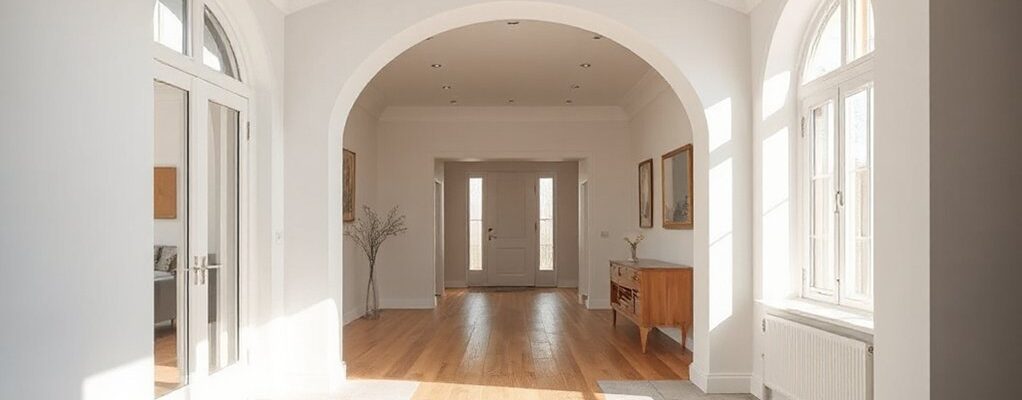
Arched doors promise timeless character, yet they demand modern precision behind the walls you can’t see. You’ll assess structure, choose profiles that echo your home’s line, and pick materials with weather-ready finishes for long-term value. Start with position and scale to suit movement flows, then optimize insulation with glazing and seals. The result hinges on careful detailing and practical installation—and a path forward that keeps you aligned with both performance and style, if you’re prepared to balance these constraints.
Do Arched Doors Suit Your UK Home? Key Criteria and Decision Framework
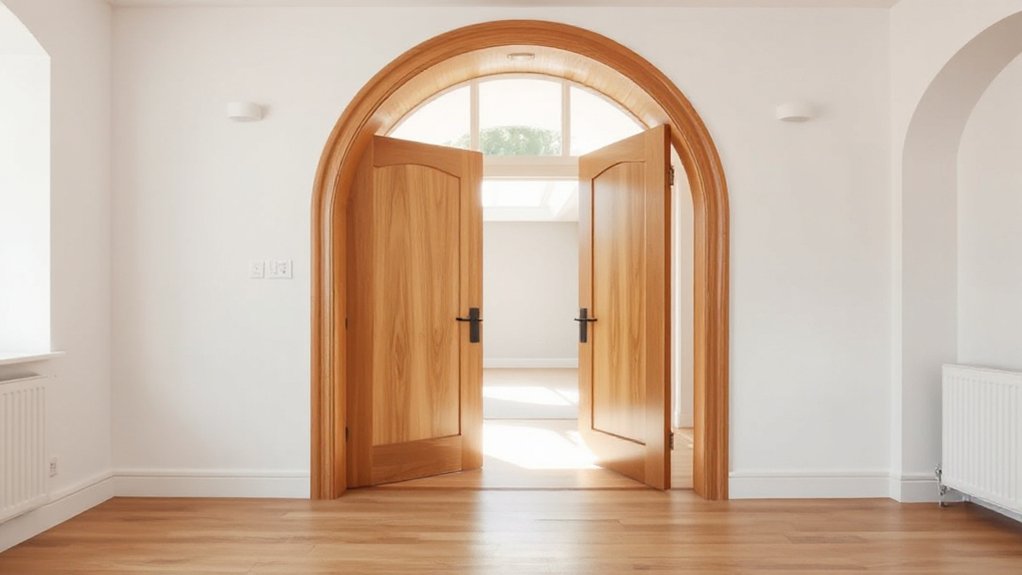
Arched doors can be a strong design statement, but suitability hinges on structural, spatial, and stylistic factors. You assess load paths, lintel capacity, and doorway dimensions to guarantee safe integration within existing frameworks. Consider ceiling height, floor-to-ceiling proportions, and transitional flow between spaces to preserve Architectural harmony. Evaluate room purpose, traffic patterns, and future flexibility; arched openings can constrain furniture layout and accessibility if miscalculated. Historical context matters: align with era-appropriate profiles and finish strategies to avoid visual discord. Structural retrofit may require reinforcement or specialist framing, impacting project scope and cost. Natural light, sightlines, and ventilation should be tested through mockups or digital models. If alignment with the home’s character is clear and the framework supports it, proceed with a well-documented decision plan.
Climate-Ready Arched Doors: Materials, Insulation, and Weather Sealing
You’ll evaluate arched doors for UK climates by comparing materials for durability and weather resistance, focusing on frame and core options that maintain structural integrity over time. Consider insulation and sealing tech that minimize thermal bridges, reduce drafts, and deter moisture ingress through arches. This discussion centers on selecting robust materials and advanced sealing methods to guarantee long-term performance and energy efficiency.
Materials And Durability
Choosing materials for climate-ready arched doors requires balancing thermal performance, mechanical durability, and weather resistance. You select frames and skins with proven dimensional stability, low moisture uptake, and compatible expansion coefficients to prevent warp or bow under UK seasonal swings. For durability, you favor metal or engineered-wood cores with moisture barriers and corrosion protection, complemented by weatherproof seals rated to wind-driven rain. Surface finishes should resist UV degradation and fading while remaining serviceable. Historical influences inform design choices, guiding material aesthetics and joinery habits without compromising performance. Material sustainability matters: opt for certified timber, recycled aluminum, and low-VOC finishes, combining longevity with lower embodied energy. Guarantee component compatibility, standardised maintenance intervals, and modular replacement potential to extend life and reduce whole-life costs.
Insulation And Sealing Tech
Effective insulation and airtight sealing are essential for climate-ready arched doors, reducing heat transfer and preventing drafts in UK conditions. You’ll prioritize high-performance cavity insulations and continuous weather seals around frame perimeters to minimize thermal bridging. Choose low-thermal-conductivity glazing and cavity barriers that suit arched geometry, ensuring consistent edge insulation without compromising sightlines. Modern gaskets, brush piles, and flexible interlocks adapt to door movement, maintaining airtightness across temperature swings. Consider multi-point locking with weatherstripped strike plates to prevent air leakage at hinges and joints. For smart home integration, connect sensors to monitor door airtightness and interior humidity, triggering alerts if seals degrade. Security enhancements include reinforced frames and impact-resistant glazing. Regular commissioning tests verify performance, ensuring durability and comfort in daily UK use.
Arched Door Layouts: How to Place Arches in Living Rooms, Dining Areas, and Hallways
Consider how Arched Door Placement shapes the flow between living rooms, dining areas, and hallways, guiding foot traffic and sightlines. Focus on establishing clear corridors and logical passageways that maintain a cohesive interior rhythm. Use proportional testing to balance door size with room scale, ensuring arches neither overwhelm nor underfit each space.
Arched Door Placement
Arched door placement balances flow and function by locating arches where they guide movement without interrupting sightlines or clutter. You align arches with primary passage routes, framing spaces while preserving openness. In living rooms, position arches to connect seating areas to corridors without narrowing views; in dining areas, use stately spans to delineate dining from valleys of traffic; in hallways, keep openings centered to maintain rhythm and natural light. Consider door width and swing direction to minimize friction. Choose proportionate radii to maintain architectural harmony with room height. Historical influence informs scale and detailing, while modern materials keep installation precise. Your plan should satisfy both aesthetics and usability, reinforcing spatial sequence and comfort.
- Visual rhythm of arches guides traffic
- Proportions match ceiling height
- Radii align with room scale
- Materials reflect Nybble or timber accuracy
- Cultural cues reinforce architectural harmony
Flow Between Spaces
Flow Between Spaces hinges on how arched door layouts guide movement while preserving sightlines. You locate arches to create clear circulation routes between living rooms, dining areas, and hallways without breaking sightlines to key fixtures. Place arches to frame primary views, using consistent radii to reduce friction as you pass through zones. Consider architectural influences and how they inform passage moments—low, wide openings suit open-plan living, while higher, narrower arches emphasize formal connections. In dining areas, align arches with seating layouts to maintain eye contact and traffic flow. In hallways, use aligned arches to elongate perspective and avoid bottlenecks. Historical context informs detailing choices, ensuring coherence with surrounding finishes. Balance openness with defined boundaries to maintain function and rhythm across the space.
Proportions And Scale
Proportions and scale govern how arches perform in living rooms, dining areas, and hallways, balancing visual impact with functional passage. You assess arch height, width, and thickness to guarantee proportional fits with furniture and doorways, preventing crowding or underwhelming gaps. The goal is architectural harmony, where the arch echoes room geometry and glazing lines, while preserving circulation.
- Align arch radius with ceiling height to create seamless continuity
- Match arch width to doorway and furniture footprint for clear sightlines
- Vary thickness to emphasize architectural emphasis without overpowering space
- Consider ceiling cornices and plinths for cohesive detailing
- Reference historical influences to guide proportion without dated feel
Light, Acoustics, and Energy With Arched Openings
Light, acoustics, and energy are distinctly affected by arched openings. You’ll notice higher perceived ceiling height, yet the curved plane redirects light more evenly, reducing harsh glare. Lighting enhancements arise from widened natural light distribution through doorway contours and adjacent glazing; align LED layers to the soffit or crown for uniform spill without hotspots. In acoustics, arched profiles alter boundary reflections, so apply acoustic treatments at parallel planes to control flutter echoes and standing waves, especially in open-plan zones. Thermal performance improves with continuous, well-sealed frames, though arches can introduce minor convex heat loss if glazing is excessive. Use energy-efficient glazing and proper gasketing to minimize transmittance peaks. Prioritize glazing strategies and seal integrity to balance daylight, sound, and thermal loads.
Styling Arches: Finishes, Colors, and Materials for Modern Interiors
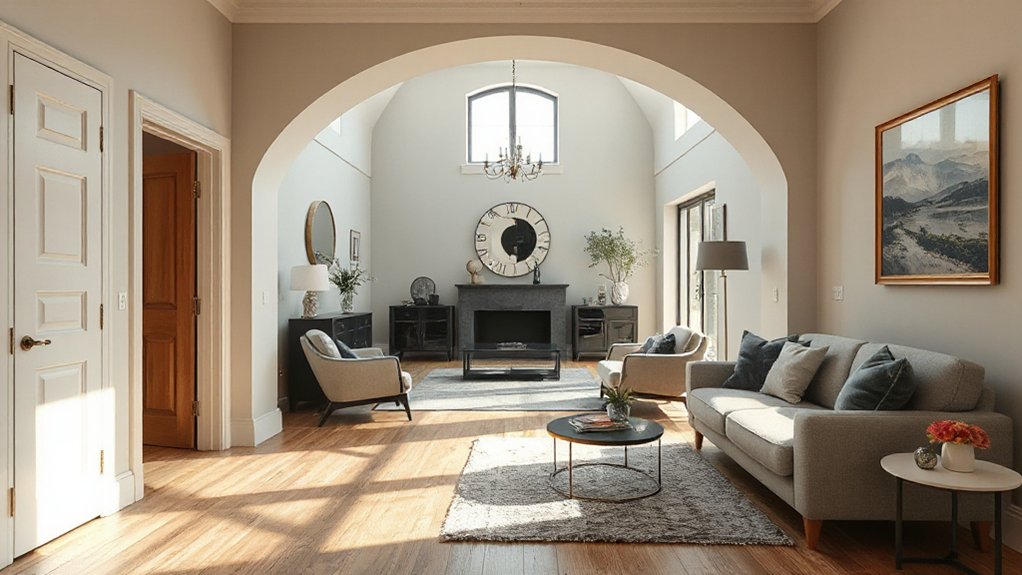
Arches define a room’s character, and the finishes you choose will determine how boldly or subtly they read in modern interiors. You’ll balance durability with aesthetics by selecting materials that resist wear while enhancing form. For finishes, Matte finishes soften edges and reduce glare, creating calm, cohesive spaces. Decorative glass adds lightness without sacrificing privacy or structure, ideal for partitioned zones. Colors should stay restrained: warm neutrals or cool stone tones work with contemporary palettes. Materials range from plaster to timber veneers; align grain or texture with adjoining features for visual coherence. Maintain consistency across openings to avoid fragmentation.
- Matte textured plaster on arches
- Decorative glass panels for partial dividers
- Warm neutral plaster or painted surfaces
- Timber veneer accents aligned with doors
- Subtle contrast trims in coordinating hues
Installing Arched Doors in UK Homes: Practical Steps and Timelines
Installing arched doors in UK homes follows a practical, phased approach to guarantee a precise fit and seamless integration with existing structures. You begin with site assessment: measure doorway clearances, assess plaster, adapt lintels, and verify stud layout. Next, choose profiling that aligns with structural capabilities and internal soffits, preserving architectural symbolism while meeting modern tolerances. Install temporary frames to test swing, clearance, and hinge spacing, then confirm alignment with plumb lines and level planes. Proceed to carpentry with accurate cutlists, ensuring arch-radius accuracy and parapet clearance where required. Fit doors, then recheck movement, weather sealing, and threshold transitions. Include finishing steps that respect historical influences, such as subtle arch profiles and compatible paint schemes. Timelines hinge on wall condition, with typical durations reflecting structural reinforcement and precision machining.
Budget, Sourcing, and Maintenance for Long-Term Value
Budget, sourcing, and maintenance for long-term value require clear cost planning, reliable supplier selection, and a disciplined care routine that preserves structural integrity and aesthetic appeal. You align budget planning with project milestones, securing upfront quotes, delivery windows, and warranty terms to minimize variance. Sourcing strategies focus on certified timber or compliant composites, local inventories, and reputable fabricators to reduce lead times and risk. Maintenance emphasizes seasonal inspections, gasket checks, and finish refreshes to prevent moisture intrusion and warping. You monitor performance metrics, document changes, and adjust plans as needed to sustain value over decades.
- A visible battlement of timing, materials, and finish
- A precise ledger of costs, quotes, and warranties
- A local, trusted supplier network with rapid fulfillment
- A routine, proactive care calendar
- A durable, refreshable surface treatment plan
Frequently Asked Questions
How Do Arched Doors Affect Resale Value in the UK?
Arched doors can boost resale value modestly, especially in markets favoring charm. They can add Architectural style and Historical significance, signaling quality and craftsmanship; guarantee compatibility with overall architecture, insulation, and durability to maximize appeal and appraisal outcomes.
Can Arches Improve Natural Light Without Compromising Privacy?
Yes, arches can boost natural light while preserving privacy. You’ll gain light diffusion through curved openings, and privacy enhancement remains via strategic glazing and placement; use frosted or textured panes to balance brightness with seclusion, minimizing direct sightlines.
Are There Building Regulations for Arched Openings in UK Homes?
Yes, you’ll need to consult current UK Building Regulations for openings, and guarantee historical accuracy and material durability. You must design compliant arched openings, verify fire, preservation, and safety standards, demonstrating adherence through approved documents and suitable structural detailing.
What Maintenance Do Curved Frames Require Over Time?
You’ll keep curved frames pristine with timely checks; these maintenance tasks aren’t heroic, but they’re essential. Frame durability hinges on seal integrity and hinge wear, while paint maintenance prevents corrosion and splits from fading, moisture, and temperature shifts.
How Do Arched Doors Affect Interior Acoustics and Sound Transfer?
Arched doors influence interior acoustics by guiding sound paths and creating reflections; you’ll notice changes in room transfer. Acoustic insulation and soundproofing materials matter; use seals, thresholds, and absorptive linings to minimize sound transfer.
Conclusion
You’ve got the blueprint: arches that listen to weather, not whimsy. Now, don’t pretend they’ll glow like fairy-tale portals without a gulp of realism—check structural loads, seal joints, and pick materials that survive drizzle and, yes, your toddler’s art projects. Align with your layout, not your ego, and finish with manners—subtle colors, weather seals, tidy trims. When done right, these openings become quiet, enduring commas in your home’s syntax, not dramatic ellipses. Relax, Arch-itects, the arch is aligned.