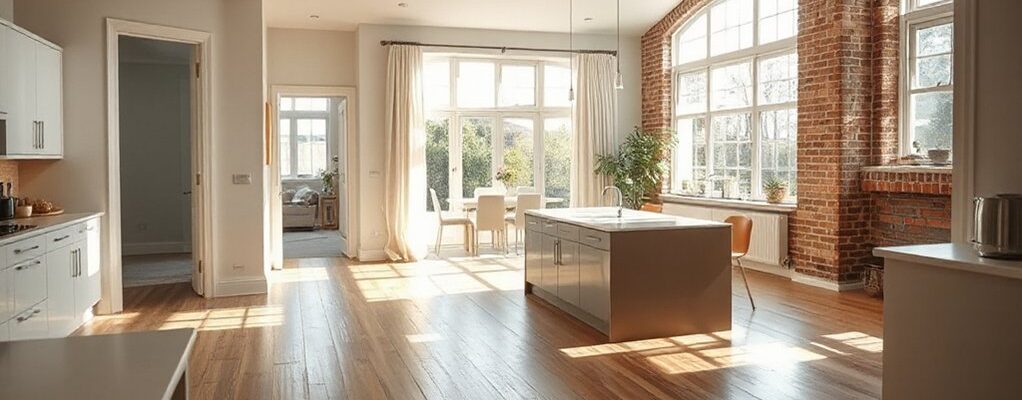
Open-plan living promises a sense of space and sociability, yet you’ll trade defined zones for shared noise and aroma leaks between kitchen and lounge. If privacy and control matter, you might prefer discrete rooms with clear boundaries. The decision hinges on how you live day to day, the house you have, and what you value most when guests arrive or family routines unfold. There’s more to weigh as layouts evolve and needs shift—and that balance could shape your next move.
Is Open-Plan Right for Your UK Home?
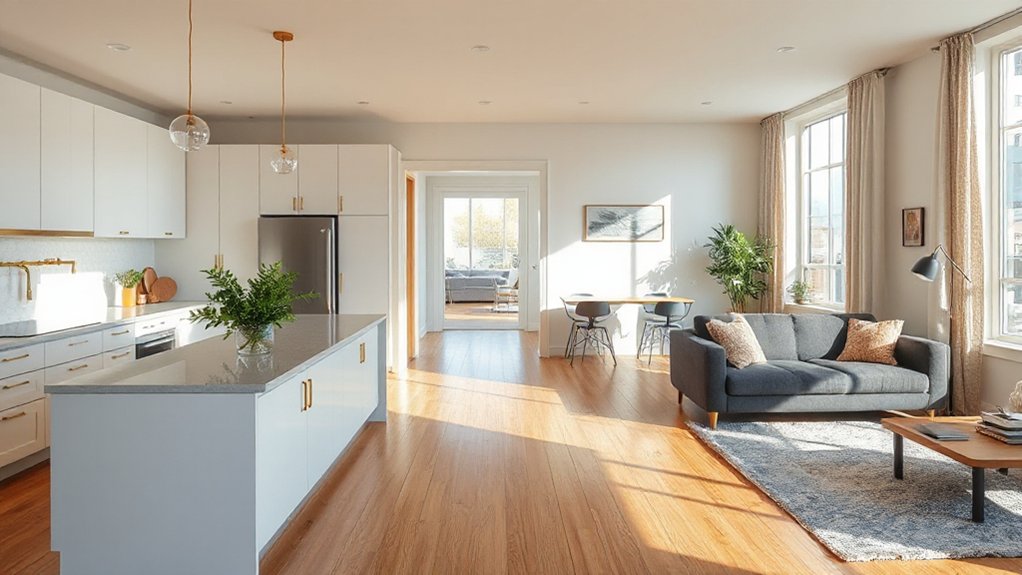
Open-plan layouts can feel liberating, but they aren’t universally right for every UK home. You evaluate the space by function, traffic flow, and how you live daily. You’ll weigh how you use zones for cooking, dining, and lounging, ensuring sightlines don’t overwhelm you. Consider heat, noise, and light—open plans can amplify these factors, so you plan for acoustics and ventilation. Privacy concerns arise when social areas spill into private rooms, so think about visual dividers, shelving, or soft boundaries that preserve openness without sacrificing seclusion. Aesthetic considerations matter too: furniture scale, color, and textures anchor the room while maintaining calm. If your routines demand defined quiet moments, open-plan might require strategic zoning or partial separation to feel right.
A Simple Decision Framework: Openness or Privacy First
Deciding between openness and privacy isn’t merely a design preference; it’s a functional choice about daily flow. You map priorities by how you use spaces, not just how they look. Begin with zones: annotate your must-know activities, then assign intensity of openness accordingly. If conversation and shared meals drive the heart of the home, open sightlines can stay but with defined boundaries. If quiet work or baths matter, carve private pockets without isolating the kitchen from social touchpoints. Implement a simple hierarchy: primary living areas, secondary work zones, tertiary retreat corners. Consider soundproofing strategies for rooms that need focus, and use privacy screens where flexible visibility is key. Choose modular partitions that remain adaptable as routines shift, preserving cohesion while honoring individual need.
How Open Plans Change Daily Routines
Open plans reshape daily rhythms by weaving kitchen, living, and work zones into one continuous flow. You’ll notice routines blend, as tasks overlap and passages shorten, yet you still preserve focus with clear zones and boundaries.
- Furniture arrangement guides action: counter height for prep, sofa depth for lounging, and desk placement for sightlines.
- Privacy solutions maintain focus: screens, movable screens, or shelving define corners without closing the space.
- Multiuse moments thrive: quick meals, informal meetings, and study sessions share the same area without friction.
- Visual cues pace activity: color, texture, and lighting designate purposes and support calm, efficient progress.
Acoustic and Lighting Impacts You’ll Feel
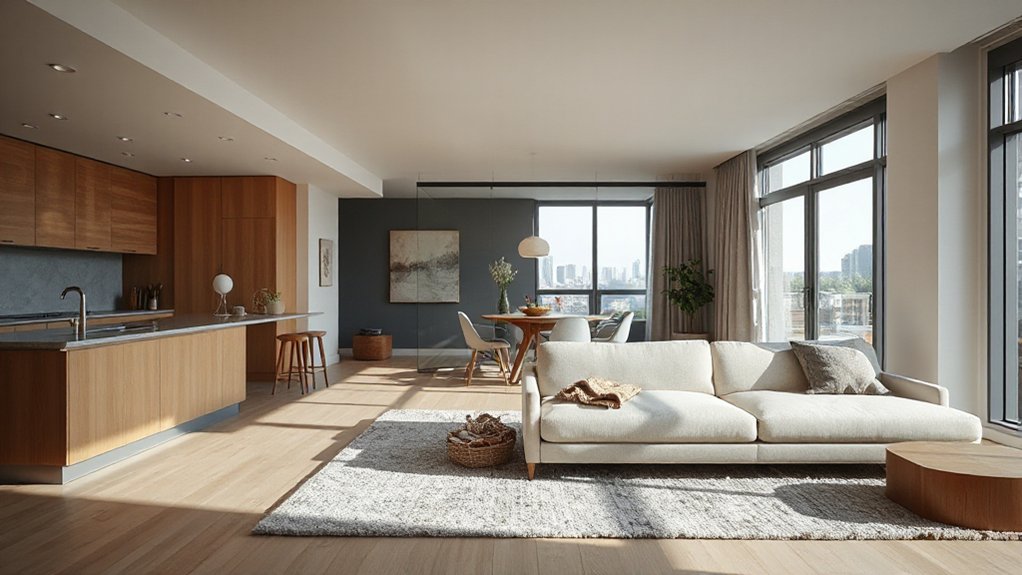
You’ll notice how acoustic flow changes with open spaces, where sound carries and echoes differently than in closed rooms. Lighting comfort varies with layout, as brightness and glare shift when rooms connect or separate. This interplay shapes your daily feel of comfort, privacy, and focus, inviting you to weigh practical trade-offs.
Acoustic Flow Impacts
Acoustic flow shapes how a home feels as much as how it sounds: in open-plan spaces, sounds travel freely, creating a sense of airiness but sometimes causing distractions, while in separated rooms, conversations stay contained and private.
- Evaluate how sound moves between zones, prioritizing purposeful layout.
- Use sound insulation where you want separation without closing off spaces.
- Implement privacy barriers, like partial walls or soft furnishings, to dampen conversations.
- Balance acoustic flow with practical light and function, avoiding dead zones.
In practice, you tune echoes, footfall, and appliance noise to align with everyday life. You’ll notice better focus when noise stays where it belongs and laughter doesn’t travel unchecked. This approach preserves airiness while preserving calm.
Lighting Comfort Variations
Lighting comfort varies with room function and layout: when you combine spaces, ambient light travels further, creating a cohesive mood, while layered lighting lets you tailor brightness for tasks, mood, and privacy. In open plans, you’ll notice glare reduction with proper placement of task lights and wall washers, maintaining contrast without harsh shadows. Natural light shapes daytime comfort; large windows and reflective surfaces amplify it, but you must guard against heat gain and uneven illumination. Visual openness supports daylight diffusion, yet you should still define zones with dimmable fixtures to preserve intimation of separate areas when needed. Consider ceiling height, window orientation, and material finishes to minimize light loss. Efficient layouts balance functionality, aesthetic, and energy use for consistent lighting comfort throughout the home.
Open-Plan Hybrids: Social Hubs or Noise Traps?
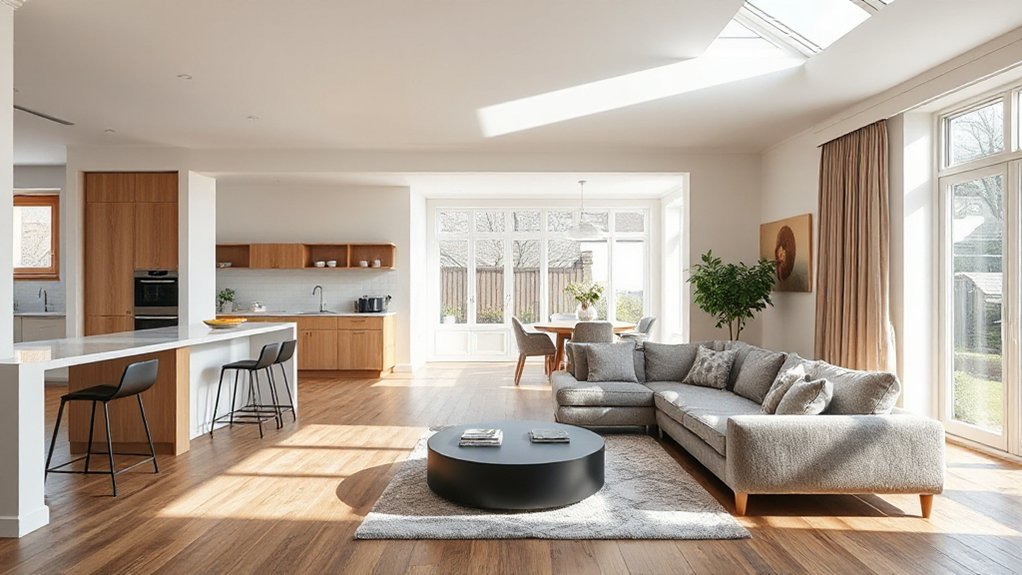
Open-plan hybrids blend social energy with practical challenges, turning shared spaces into flexible hubs for cooking, dining, and lounging. You’ll enjoy openness, but noise can ripple; awareness and design reduce friction, keeping activity distinct when needed.
- soundproofing techniques that dampen noise without sacrificing flow
- deliberate furniture arrangements to create zones within the open plan
- acoustic materials and soft furnishings to absorb echo
- clear sightlines paired with subtle dividers for functional boundaries
You balance sociability with calm, enabling conversations and tasks to coexist. You’ll schedule multitasking zones, place dining near the kitchen for convenience, and use rugs, curtains, or screens to soften sound. The result is a flexible hub that feels cohesive, not chaotic, and stays visually tidy. With mindful choices, open-plan life remains energetic yet controllable.
How to Preserve Privacy With Traditional Rooms
Traditional rooms offer a quiet, defined space that protects privacy by design. You can maximize this with practical layouts that place private zones away from high-traffic areas, reducing line-of-sight and sound bleed. Use solid core doors, door seals, and heavy curtains to blunt noise without sacrificing light. Consider a logical traffic flow: entry points lead to utility or study areas, not living spaces. Soundproof barriers, such as mass-loaded vinyl under floors or insulated panels in walls, dampen activity from neighboring rooms. Privacy screens offer flexible boundaries within open-adjacent plans or compact flats, creating visual separation while preserving air circulation. Choose furniture placement that buffers sightlines—sofas, bookcases, and cabinets act as transparent dividers, maintaining openness without compromising seclusion.
Regional Tastes and Generational Preferences in Layouts
Regional tastes and generational preferences shape how spaces are laid out, reflecting local habits, climate, and daily rhythms. You’ll notice patterns that connect culture to room design, with clear ties to Cultural influences and Regional preferences. You shape spaces to suit family routines, energy use, and social norms, not just aesthetics.
- Open plans adapt where climates encourage shared living, while quieter zones honour privacy needs
- Generational shifts push flexible layouts that evolve with aging, work, and schooling
- Material choices mirror regional tastes, from warm woods to cool textures
- Sensory cues align with local food, music, and daylight hours for functional harmony
Practical Moves: Blending Openness With Coziness
As regional tastes and generational preferences shape layouts, you can now blend openness with coziness by pairing airy sightlines and flexible spaces with intimate nooks and warm textures. In practice, focus on deliberate furniture arrangement to maintain flow without sacrificing comfort. Position larger sofas and minimal clutter to preserve sightlines, then layer textures—soft rugs, wool throws, and tactile cushions—for tactile warmth. Use color schemes that unite zones: midtones with accent pops anchored by natural wood tones. Define seasonal lighting to switch moods without breaking cohesion, combining ceiling fixtures with table lamps for depth. Incorporate built‑ins or hidden storage to keep surfaces clear, enabling flexible gatherings. Finally, test scales in real rooms, adjusting to human movement, so openness feels inviting, not impersonal.
What Openness Does to Resale Value (Asset or Risk)
Open-plan layouts can boost or constrain resale value, depending on buyer priorities and the home’s context. You’ll see openness affecting the resale market and property valuation differently across buyers and neighborhoods. If you frame spaces well, openness can read as modern, bright, and flexible, supporting higher perceived value. Conversely, excessive openness may raise concerns about noise, privacy, and ecological fit for families or remote workers. Your task is to anticipate preferences and price accordingly. Consider whether built-ins, adaptable zones, and acoustic considerations alleviate risk. The right balance can position your home as a contemporary asset rather than a speculative risk.
- Buyer priorities and neighborhood norms shape demand
- Layouts should support both sociability and quiet zones
- Acoustic and privacy features influence valuations
- Clarity in space function guides resale market perception
Designing Flexible Partitions and Zones for the Future
Flexible partitions and adaptable zones are the building blocks of a future-ready home. You design spaces that morph with your routines, not against them. Prioritize simple, repeatable systems that can scale: sliding panels, retractable screens, and lightweight walls that can reposition without full remodeling. Your goal is clarity: keep sightlines open where needed, then constrain activity with subtle divisions. Dividing techniques matter, but they must be unobtrusive and reversible. Use modular elements that can be stored or reconfigured, preserving acoustic privacy when required. Zoning strategies balance flow with function—kitchens near dining, work areas tucked away yet accessible. Invest in durable finishes and smooth hardware to encourage frequent reconfiguration. Plan for mechanical access, lighting control, and ventilation to support flexible use without compromising comfort.
Frequently Asked Questions
How to Budget for Open-Plan Renovations in the UK?
Budget for open-plan renovations by doing a cost estimation early, then set a flexible contingency. Compare quotes, factor labour and finishes, and explore renovation grants to offset costs while you plan layout, lighting, and acoustics thoughtfully.
Do Open Plans Suit Small UK Homes and Apartments?
Open plans can work in small UK homes if you optimize interior lighting and thoughtful furniture placement. Prioritize zones, keep circulation clear, choose scalable pieces, and brighten corners with layered lighting to maintain a sense of spaciousness and flow.
What Are the Best Uk-Approved Acoustic Solutions?
You should prioritize UK-approved soundproofing techniques and acoustic insulation, choosing products with reputable tests. Install dense partitions, acoustic boards, and floor underlay, seal gaps, and space doors. These measures deliver effective, compliant sound control for homes.
Can Open Plans Improve Energy Efficiency in UK Homes?
Open plans can improve energy efficiency by maximizing natural light and aiding airflow circulation, so you use fewer lights and reduce heating losses; optimize with well-placed glazing and vents, keeping spaces visually cohesive and functionally comfortable.
How Do Tenants Navigate Openness in Rental Properties?
You balance openness with privacy concerns by choosing zones, not walls. You manage noise through ceilings and carpets, while advocating quiet hours. You create flexible spaces that respect boundaries, so you can work, rest, and entertain without friction.
Conclusion
So, you’re weighing openness against privacy, watching comfort flicker between social buzz and quiet corners. The right choice isn’t fixed—it hinges on your routines, your family, your space. Picture the day: the kitchen hums, the living area breathes, or a quiet niche appears when you need it. Patterns shift, partitions flex, moods change. In the end, your home should surprise you—welcoming, adaptable, and quietly resilient, no matter what you decide tonight.