
If your UK bedroom feels dim, you can turn it around with practical tweaks that maximize light and mood. Think strategic window treatments, mirrors opposite windows, and reflective surfaces, plus light walls and fabrics. Layer your lighting—ambient, task, and accents—to keep spaces flexible. Tidy sightlines, add a few plants, and use budget-friendly updates to squeeze brightness from what you already have. Start with a simple plan and watch the room transform, step by step.
Identify the Problem: Why a Dim UK Bedroom Feels Gloomy and How Light Helps
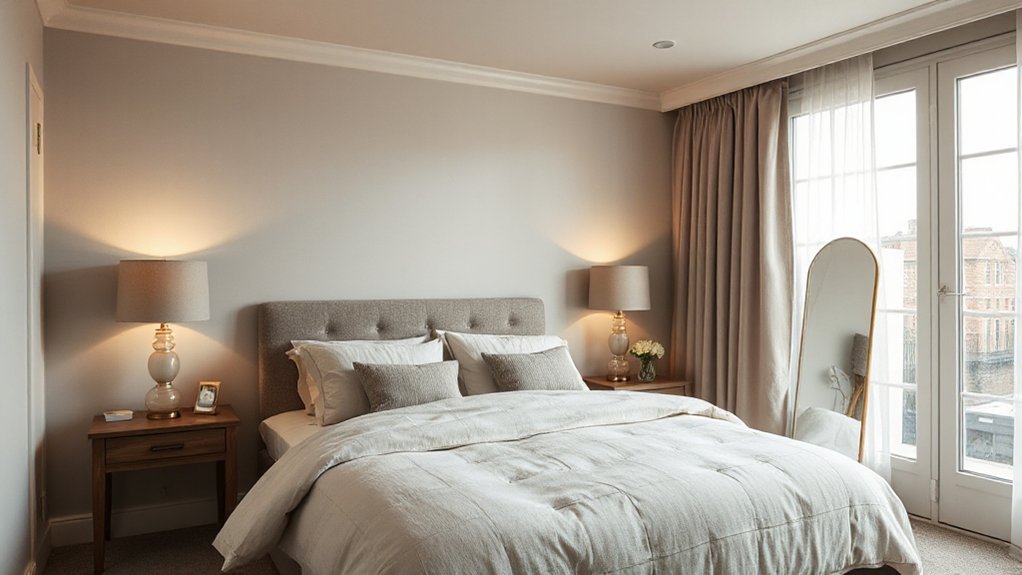
A dim UK bedroom can feel gloomy because limited natural light and cool, filtered daylight wash over the space unevenly, making walls recede and shadows linger. You’ll identify how light behaves: it clarifies shapes, softens textures, and defines color. The problem isn’t just brightness; it’s balance. Low light can dull contrast, warp perception, and dampen mood, while bright, well-distributed light restores focus and energy. Color psychology matters because hues reflect and absorb different intensities, altering how you feel in the room. Window treatments become strategic tools, controlling glare, conserving warmth, and shaping daylight flow without overhauling the core layout. By evaluating exposure patterns and selecting light-enhancing treatments, you create a livable, elegant space that supports daily routines and improves perceived size.
Add Reflective Surfaces and Warm Whites for Instant Brightness
To brighten your room instantly, incorporate reflective surfaces and warm whites that bounce light without glare. You’ll optimize a small space by choosing finishes that reflect rather than absorb. Place a large, polished mirror opposite a light source to multiply daylight without creating harsh reflections. Install glossy or satin fixtures, and opt for chrome or brass hardware to catch and redirect ambient glow. Choose warm whites for walls, ceilings, and textiles to avoid clinical coldness while maintaining clarity. Layer reflections with light-toned furniture and minimal, purposeful decor to prevent clutter. Use glass-tinish surfaces sparingly to keep the eye moving and the room feeling spacious. Reflective surfaces and warm whites work together to illuminate without overpowering.
Maximize Window Light: Curtains, Blinds, and Skylight Placement
Use light-enhancing curtains and blinds that meet your room’s orientation, swapping heavy fabrics for lighter textures and sheer layers to diffuse morning sun without glare. Align blind placement with your ceiling height and window sill, optimizing control over brightness and privacy throughout the day. Consider skylight positioning and sizing to channel natural light deeper into the space while preventing overheating.
Light-Enhancing Curtains
When you’re aiming to brighten a dark UK bedroom, choose curtains that maximize light without sacrificing privacy. Light-enhancing curtains should be voile or sheer-backed fabrics layered with a light, opaque lining to bounce daylight deeper into the room. Opt for pale, cool hues or white to reflect rather than absorb. Consider curtain fabrics that drape well yet stay airy, avoiding heavy velvets in small spaces. For practical flexibility, pick extra-long panels that skim the floor, widening the visible window area. Curtain installation matters: mount rods high and wide to expose more glass and prevent wall shadows. Use pinch-pleat or grommet styles for a modern finish. Keep hardware understated to preserve luminosity and clean lines.
Blind Placement Tactics
Even better daylight starts with smart blind placement: mount slim, light-friendly blinds high above the window line and stack them to the sides when open so glass stays fully exposed, letting in maximum glow. You maximize light by choosing near-zero-profile slats, angled for glare control without sacrificing brightness. Position blinds flush to the frame to avoid shadow pockets and pair with sheer curtains if you want diffusion without dimming. Consider wall colors that reflect rather than absorb: pale neutrals or cool whites boost luminance. When you open, align blinds to frame edges for an uninterrupted glass view. Use contrasting hardware sparingly to keep lines clean and elegant, ensuring window treatments enhance, not clutter, the room’s brightness.
Skylight Positioning Tips
Skylights can flood a room with daylight, but smart positioning makes the most of that glow. You’ll maximize brightness by aligning skylight placement with seating and work zones, not just ceiling sightlines. Consider staggered glazing to spread light across walls, reducing hot spots near the source. Use transparent or lightly tinted glazing to keep color accuracy intact while avoiding glare. For usability, choose nearby curtains or blinds that can be adjusted without obstructing the light path, enabling you to dim when needed. Practice skylight maintenance by cleaning panels and checking seals quarterly, preventing moisture and mold. When shading is necessary, select sleek skylight shading that complements the room’s aesthetic and switches quickly. This balance guarantees a brighter, calmer space with disciplined control.
Build a Layered Lighting Plan: Ambient, Task, and Accent for a Bright Mood
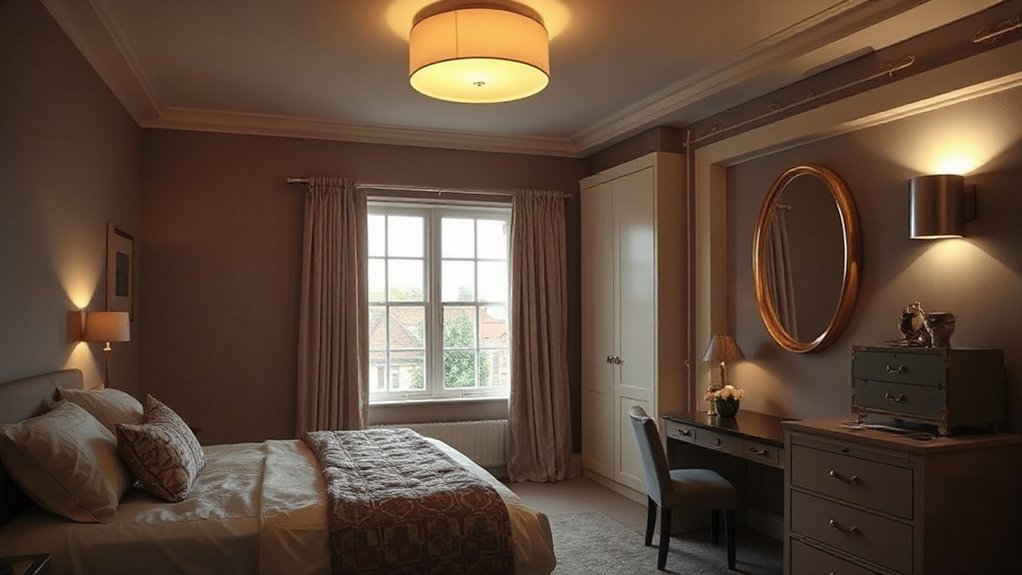
To brighten a dark UK bedroom, start with a layered lighting plan that blends ambient, task, and accent lighting. You’ll create a flexible foundation: ambient provides overall glow, task focuses where you read or work, and accent highlights architectural features or artwork. Choose warm, dimmable fixtures to preserve atmosphere while enabling brightness when needed. Position ceiling or wall washes for even coverage, place task lamps at desk height or bedside, and tuck uplights or shelves behind plants to sculpt shadows. Build consistency by matching finishes and color temperatures, then layer controls into one grid for ease. This layered lighting supports mood enhancement, letting you raise or lower intensity with intention. Practical, elegant, strategic, it makes every activity feel deliberate.
Color and Texture: Walls, Fabrics, and Accessories to Spark Brightness
Color and texture play a pivotal role in brightening a dark UK bedroom. You choose wall colors and fabrics that reflect light, not absorb it, then layer textures to keep the room lively. Use light, neutral walls to maximize daylight from windows, while introducing subtle color psychology cues—cool tones feel airy, warm tones feel cozy without shouting. Opt for smooth, matte finishes on walls and glossy accents to bounce highlights around. Implement texture contrast: a crisp linen duvet against a tactile wool throw, or silky curtains with a cotton rug. Accessories should be sparse but purposeful—mirror-backed frames, light-reflective surfaces, and glass vases. Keep patterns restrained to prevent visual heaviness; let brightness come from deliberate contrasts and cohesive palette.
Layout Tweaks to Boost Perceived Light
If you want the room to feel brighter, rearrange so light travels freely and eyes skim across open, reflective surfaces. Layout tweaks shape perception, not just fixtures, so you feel more daylight with less effort.
- Place mirrors opposite windows to bounce natural light without doubling glare.
- Arrange furniture to keep sightlines open, avoiding bulky blocks near corners.
- Elevate lighting layers—overhead, task, and ambient—for even wash without hotspots.
- Choose window treatments that maximize light transfer when opened and frame views without heavy drapes.
Lighting technology comes into play with dimmers and cool-white LEDs for clarity. Window treatments should be lightweight, top-down, or inside-mounted to minimize shadowed edges. Practically, test different configurations during daytime and adjust until the eye travels smoothly across the room.
Quick Budget Fixes: Plants, Mirrors, and DIY Light Boosts
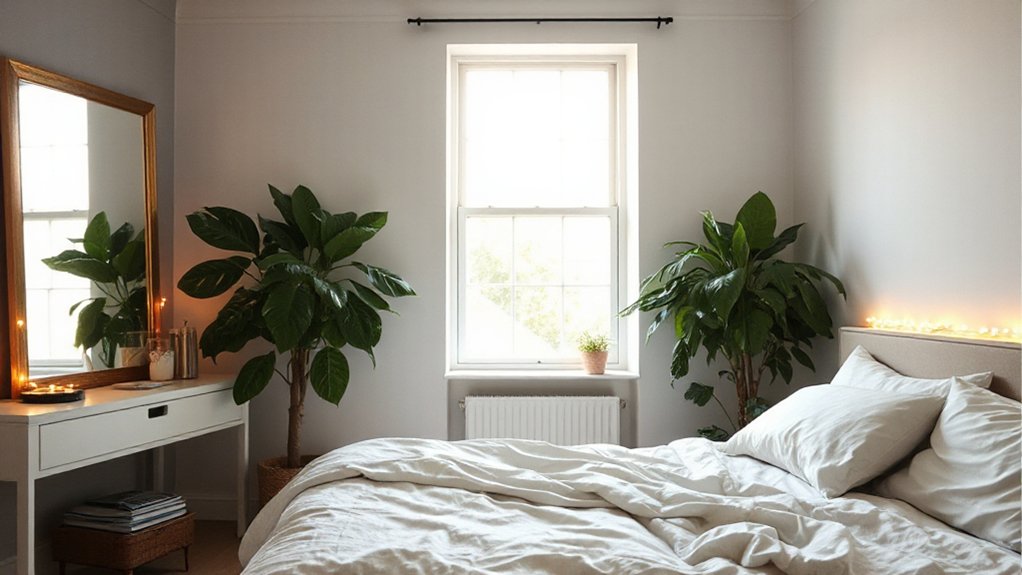
You can brighten a room on a budget with smart plant picks, well-placed mirrors, and simple DIY light boosts. Start by choosing compact, light-loving greens and positioning them to reflect natural light from any window. Pair mirrors to double the glow and add inexpensive fixtures or DIY lanterns to amplify brightness without clutter.
Plants for Brightness
Brighten a dark UK bedroom quickly with the right plants that thrive in low light and cooler climates. With careful choices, you’ll boost indoor greenery and natural illumination without breaking the bank. Here’s a practical starter list:
- Sansevieria (snake plant) — tolerates shade, little water, bold vertical presence.
- ZZ plant — glossy foliage, thrives in dim corners, drought-tolerant.
- Pothos — climbs or trails, forgiving of low light, air-cleaning.
- Cast iron plant — robust, steady year-round greenery, minimal fuss.
Place these near windows or in bright indirect light, rotate monthly, and avoid overwatering. Pair with light-colored pots to reflect any soft daylight. This approach delivers subtle brightness, emphasizing calm, elegant lines while maintaining low maintenance. Focus on indoor greenery for ongoing mood lift and natural illumination.
Mirrors and Light Boosts
Mirrors and light boosts are quick, budget-friendly ways to open up a dark UK bedroom. You’ll gain brightness without major remodeling by smart mirror placement, which expands perceived space and scatters existing light. Position mirrors opposite windows to maximize light reflection, or flanknarrow windows with vertical panels to draw the eye upward and brighten ceiling areas. Opt for slim, frameless designs to avoid crowding walls. Choose mirrored furniture or a tall dresser to multiply daylight, but don’t overdo it; balance matters. Use reflective surfaces like glass or metallic finishes for light reflection across corners and under furniture. Pair with lightweight fabrics and pale tones to amplify the effect, ensuring the room feels open, welcoming, and refined.
Frequently Asked Questions
How Can I Reduce Natural Light Glare Without Losing Brightness?
Switch to window coverings that diffuse glare, not block light, and apply light reflective paint on walls; you’ll preserve brightness while softening reflections, reducing harshness, and maintaining a practical, elegant, strategic glow throughout the room.
Do Darker Floors Make a Dark Room Feel Brighter?
Darker floors can help a dark room feel more cohesive, but they don’t inherently brighten it. Improve floor contrast with lighter walls and reflectors; use color reflection from furniture and cabinetry to bounce light and expand perceived space.
Can Ceiling Height Affect Perceived Brightness in Small Rooms?
Bright bursts boost brightness; yes, ceiling height can affect perception in small rooms. You’ll optimize ceiling design and room proportions, shaping spaciousness. You’ll choose proportional lines, strategic lighting, and practical details to feel brighter and balanced.
Are LED Colors Beyond Warm White Better for Mood in Bedrooms?
Yes, LED color beyond warm white can boost mood. Choose cool-white or amber tones, balancing brightness with comfort. For Bedroom ambiance, layer lighting: task, ambient, and accent, to feel practical, elegant, and strategically soothing in your space.
How Does Furniture Arrangement Affect Light Distribution at Night?
Start by prioritizing open sightlines: furniture placement affects night light diffusion, guiding glow where you need it most. Juxtapose dark silhouettes with bright lamps; strategic spacing guarantees you get softer light diffusion rather than harsh shadows.
Conclusion
You can transform a dim UK bedroom into a bright, inviting retreat with practical, strategic moves. Use reflective surfaces and warm whites, maximize window light with smart curtains or blinds, and layer lighting for comfort and focus. Add light textures and simple decor, arrange for open sightlines, and bring in plants to lift the mood. Think of it as weaving daylight into your space—like threading a silver key through a sunlit latch, releasing a brighter mood.