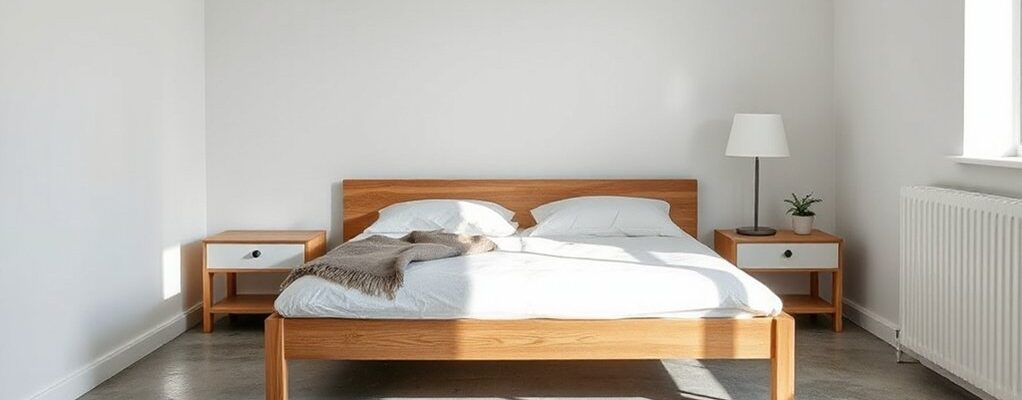
Did you know that cluttered bedrooms can increase stress levels by up to 20%? In a UK home, a calm, minimalist feel isn’t just about aesthetics—it’s about function, light, and texture working together. You’ll want a practical layout, muted tones, and hidden storage to reduce visual noise. But the key moves aren’t obvious at first glance, and choosing the right balance between simplicity and warmth will shape how you unwind each night. Ready to start shaping that retreat?
Create a Calm Minimalist Bedroom for UK Homes
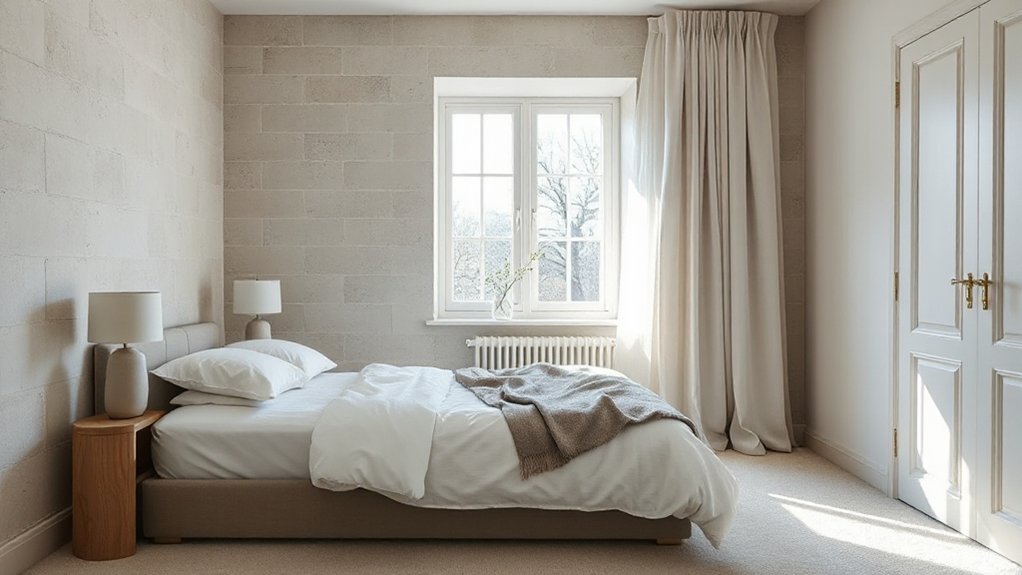
In UK homes, a calm minimalist bedroom starts with a clear, well-organized layout that prioritizes function over ornament. You optimise space by aligning essentials along walls, keeping surfaces clear and traffic flowing freely. Choose a restrained colour base and low-profile furniture to reduce visual clutter while preserving comfort. Decorative accents should be deliberate, not decorative overload; select a single sculptural piece or a quiet textile to ground the room without competing with calm. Personalised accessories can add warmth, but keep them sparse and purposeful—think a preferred lamp, a favorite photo in a simple frame, or a minimal plant. Maintain consistency in materials and finishes to sustain cohesion, ensuring lighting remains soft and even for a tranquil, sleep-friendly atmosphere.
Build a Warm Neutral Palette for Small UK Rooms
A warm neutral palette makes small UK rooms feel inviting without feeling crowded. You’ll want a base of soft off-whites or warm taupe walls, then layer with lighter, breathable textiles to reflect light. Use color psychology to guide accents: gentle earth tones promote calm, while subtle blues or greens can add depth without overpowering the space. Choose furniture in matte neutrals to keep lines smooth and prevent clutter visually. Prioritize a cohesive material palette—wood, linen, and cotton with minimal sheen—to reinforce unity. Consider furniture arrangement that enlarges perception: float essential pieces away from walls, use long, low profiles, and keep sightlines clear. Balance warm neutrals with small, strategic pops of color to maintain harmony.
Choose Low-Profile, High-Impact Essentials
Choose low-profile pieces that don’t crowd your space, yet carry high visual weight through form, material, and finish. Prioritize essentials that serve multiple functions and feel calm to the eye, so every item earns its keep. This approach keeps the room uncluttered while delivering a strong, intentional design statement.
Low-Profile Essentials
Low-profile, high-impact essentials focus on shaping a calm bedroom with minimal clutter and purposeful form. You streamline your space by choosing pieces that serve multiple functions and stay visually quiet, so the room breathes. Prioritize cohesion over novelty, letting subtle texture and muted tones guide the mood. Use decorative accents sparingly to avoid distraction, and let statement art act as a single, intentional anchor.
- Select low-profile furniture with clean lines and hidden storage
- Choose a restrained color palette to maintain calm
- Integrate decorative accents thoughtfully, not abundantly
- Feature one statement art piece as a focal point
These choices create cohesion, clarity, and a serene atmosphere, guiding your eye without overwhelm.
High-Impact Elements
From the calm of your minimalist base, you’ll escalate impact by selecting low-profile pieces that deliver function without visual noise. High-impact elements trades subtlety for purposeful contrast, so choose essentials that punch without bulk. Begin with a restrained palette and allow bold accentuation to do the talking—think a single, vivid throw, or a door-softening rug in a dark, saturated hue. Integrate statement art sparingly, placing one piece where the eye would otherwise wander, ensuring it anchors the room while remaining understated. Lighting should be purposeful, combining a slim floor lamp and hidden LEDs to sculpt shadows without clutter. Surfaces stay clean; storage is hidden. The result is a calm room that feels decisive, balanced, and refined.
Maximise Natural Light in UK Bedrooms
Maximise natural light by prioritising soft, diffuse illumination and keeping window areas unobstructed. You’ll improve brightness and mood by harnessing the window’s access—curtains open, blinds aligned, and furniture kept clear of glare-prone zones. This approach balances practicality with a calm, minimalist aesthetic, guiding you to make the most of every available ray.
Letting in Soft Light
How can you flood a UK bedroom with soft, natural light without sacrificing privacy or glare? You can balance brightness with thoughtful choices that smooth the incoming light, not overpower it. Prioritize diffuse sources and controlled exposure to avoid harsh shadows while preserving a calm atmosphere.
1) Use light, sheer window treatments that blur direct sun yet preserve exterior visibility.
2) Choose pale, matte finishes for walls and ceilings to reflect daylight without glare.
3) Position mirrors opposite windows to bounce soft light subtly deeper into the room.
4) Layer daylight maximization strategies with strategic shading for different times of day and seasons.
Maximising Window Access
Maximising window access means prioritizing design choices that bring in daylight without compromising privacy or heat. In a UK bedroom, you’ll want windows that frame views while offering control over glare and warmth. Choose wide, unobstructed glazing where possible, and avoid heavy mullions that break line of sight. Position seating to face daylight without forcing your bed into direct sun. Use light, reflective surfaces to amplify natural brightness without increasing heat gain. For window treatments, opt for sheer layers paired with solid, breathable curtains that can be drawn for privacy yet opened to invite morning light. Curtain styles should be simple and streamlined, aligning with a minimalist aesthetic. Remember, the goal is balanced luminance, not overpowering brightness.
Smart Storage Ideas for a Clutter-Free UK Bedroom
Smart storage is your first line of defense against a cluttered UK bedroom. You’ll streamline daily tasks by choosing furniture with integrated storage and choosing accessible spots for frequently used items, reducing visual clutter and decision fatigue. Prioritize a cohesive system that supports a calm mood while maintaining practicality.
1) Invest in under-bed drawers or trunks to hide seasonal items and spare linens.
2) Use multi-compartment wardrobes or modular units to keep clothing organized by type and color.
3) Opt for bed frames with built-in shelves or study nooks to minimize dresser clutter.
4) Select storage ottomans and benches that double as seating, surfaces, and hidden bins.
Practical, Energy-Efficient Lighting for Calm Atmosphere
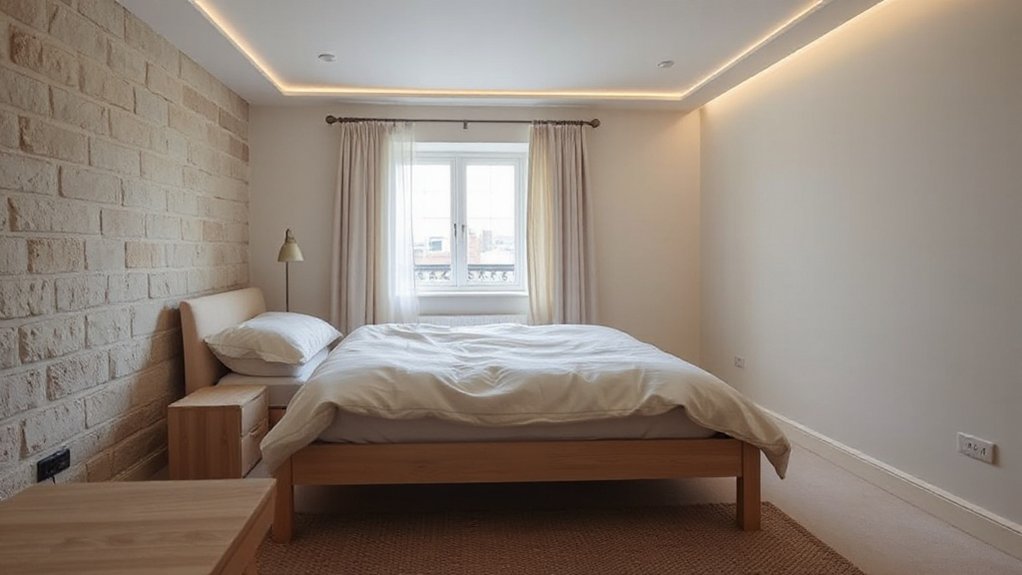
Practical, energy-efficient lighting is essential for a calm UK bedroom, delivering warmth and visibility without glare or high electricity use. You prioritize controllable layers that support winding down and focus, not overload. Begin with diffuse ceiling lamps or recessed options to fill the room evenly, then add task lighting for reading without eye strain. Choose warm white LEDs to mimic natural dusk and reduce contrast that disrupts relaxation. Solar powered lamps can power bedside or outdoor progressions, reducing mains draw during daylight charging cycles. Integrate LED strip lighting under shelves or behind digital clocks for soft bias lighting that guides nocturnal movement. Use smart controls or dimmers to shift brightness across evening routines, ensuring energy efficiency while preserving a tranquil, uncluttered ambience.
Add Texture and Comfort With Uk-Friendly Materials
Soft textures and honest materials reinforce the calming aesthetic without adding clutter. You’ll balance tactile interest with pared-back form by choosing UK-friendly options that feel natural yet contemporary. Prioritize materials that wear well, insulate lightly, and read as calm rather than flashy.
- textured textiles provide subtle contrast without visual noise
- cozy layers combine woven blends and lightweight throws for versatility
- natural fibers keep air quality steady while adding warmth
- understated finishes (linen, cotton, wool) sustain the minimalist mood
In practice, mix patterns sparingly, keeping color restrained, and layer textiles in a balanced way. This approach emphasizes comfort, reduces noise, and supports a serene, cohesive bedroom that remains uncluttered.
Step-by-Step Minimal Makeover Plan for a Relaxing Retreat
Start with a clear, practical plan: outline the room’s purpose, pick a calming color palette, and map essential elements—bed, storage, seating—before touching decor. You’ll begin by defining function over fashion: sleep efficiency, quiet work space, and easy circulation. Next, choose a restrained palette—soft neutrals with a muted accent—then assign storage strategies that minimize clutter. Prioritize a low-profile bed, integrated units, and discreet seating for reading. Create zones within the room to support flow, not competition. Introduce vintage accents sparingly to add character without crowding surfaces. Use bold patterns only as focal points—one rug or one throw—so texture remains calm. Finally, implement a seasonal refresh plan, updating textiles and lighting to sustain a tranquil retreat.
Frequently Asked Questions
How Can I Avoid Humidity in a Small UK Bedroom?
Yes—to avoid humidity, you’ll implement moisture control and optimize ventilation techniques. Use a dehumidifier as needed, run exhaust fans during showers, open a window briefly after cooking, and maintain consistent heating to reduce condensation in a small UK bedroom.
Which Uk-Approved Blackout Options Save Energy at Night?
You’ll want energy efficient curtains or blackout roller blinds, which save energy at night by reducing heat transfer. Energy efficient curtains trap warmth, while blackout roller blinds minimize drafts; both options offer effective, affordable night-time energy savings for UK homes.
What Paint Finishes Reduce Glare in Brit Homes?
Eco friendly paints reduce glare with matte finishes. Think of a painted city skyline at dusk: softer edges, clearer details. You’ll enjoy calmer light, less contrast, and a more soothing room, using matte finishes for eco-friendly, glare-free walls.
How Do I Localize Minimalism to Small UK Rooms?
Localized minimalism in small UK rooms means prioritizing space saving furniture and restrained color palette choices, you’ll maximize floor area, reduce visual clutter, and keep proportions balanced while using multifunctional pieces and hidden storage for cohesive, functional elegance.
Can I Use Wool or Tweed Accents Without Clutter?
Yes, you can, if you keep it restrained and purposeful. You’ll pair wool accents with clean lines, avoiding overfilling. Use Tweed accessories as focal points, rotate seasons, and maintain negative space to preserve calm, minimalist balance.
Conclusion
Creating a calm, minimalist bedroom in a UK home hinges on smart choices and restraint. You’ve aligned neutrals, low-profile essentials, and ample light, while clever storage keeps clutter at bay. Each detail, from textures to energy-efficient lighting, supports a tranquil, cohesive space you’ll actually enjoy. Think of your room as a quiet harbor in a busy sea—simple, steady, and naturally soothing. With deliberate steps, you’ll sustain calm without sacrificing function or warmth.