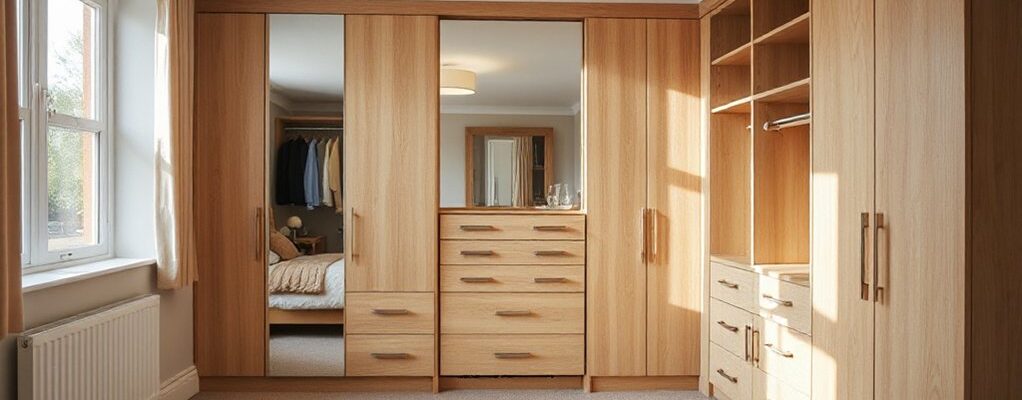
Take a real room you know well—tight corners, a low ceiling, and a door that swings into the space—and plan your built-ins around that. You’ll measure, choose door styles and finishes that suit a British interior, and map zones for clothes, shoes, and accessories so every inch earns its keep. Then you’ll test lighting and ventilation and weigh budget options, before committing to a layout that balances style, safety, and real-world use. There’s more to contemplate as you refine the plan.
Define Space, Style, and Practical Constraints
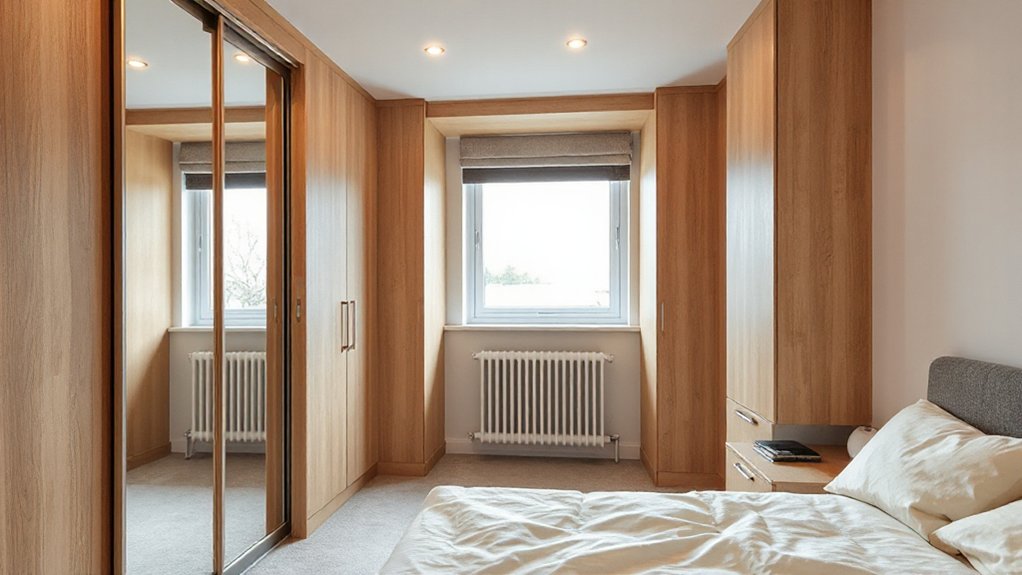
To plan built‑in wardrobes effectively, start by defining your space, style, and practical constraints. You assess dimensions, ceiling height, door openings, and alcoves, noting where natural light lands and where obstructions hide. Decide your aesthetic: sleek minimalism, warm traditional, or craft‑room eclectic, ensuring material durability aligns with daily wear. Consider hinges, sliding or hinged doors, and internal organization needs—pull‑outs, drawers, or shelving zones. Map traffic flow to avoid pinch points; ensure doors don’t collide with床 or bed, and that access remains convenient from both sides. Prioritize storage density without crowding the room, preserving breathing space. Choose finishes and hardware that create aesthetic harmony while withstanding use. Your plan becomes a durable, cohesive module, integrating form, function, and longevity.
Measure Accurately for UK Bedrooms
Measure accurately by walking the room with a tape in hand, twice if needed, and capture every datum that matters: wall lengths, ceiling height, door widths, skirting positions, and any alcoves or radiators. You’ll translate this map into practical wardrobe layout without guesswork. Note awkward eaves or offsets that affect shelf heights and hanging rails. Record window clearances for light and access, and identify power points that could limit built-ins. Use a consistent measurement method—outer wall to outer wall, then internal dimensions for carcass fit. Plan around custom shelving opportunities to maximize odd spaces, not just standard bays. Color coordination starts with measurements: align wardrobe interiors with your chosen palette, ensuring shelves, rails, and drawers reflect the room’s tone and balance. Precision today saves rework tomorrow.
Door Styles and Finishes for British Interiors
When you choose door styles and finishes, you balance panel details with the room’s character to keep the built-in wardrobe cohesive. Consider how panel textures and edge profiles read from a distance, and how finishes age with wear in a British climate. By evaluating style compatibility with the surrounding rooms, you set a practical foundation for consistent, lasting interiors.
Panel Details and Finishes
Panel details and finishes set the tone for British wardrobes: choose door styles that complement your room’s architecture, then pick finishes that tolerate daily use while aging gracefully. You’ll balance panel textures with light reflection to control perceived space and warmth. Consider flush doors for a minimalist look or shaker profiles for a timeless feel, each pairing well with built-in rails and shelves. When selecting finish options, weigh maintenance, stain resistance, and moisture tolerance; matte or satin sheens hide fingerprints while easy wipedowns keep them fresh. For durability, apply UV-safe finishes that resist yellowing in bright rooms. Plan a coherent palette across interior panels and external faces, ensuring consistent grain flow and edge detailing. The result: practical, cohesive storage that feels tailored yet effortless.
Style Compatibility With Rooms
Door styles and finishes should mirror your room’s architecture, creating harmony between built-in wardrobes and the rest of the space. When choosing, consider door profiles that reflect your walls, floors, and ceiling lines for a cohesive look. You’ll maximize light and space by pairing finishes with existing decor, avoiding clashes and busy patterns. Prioritise color coordination across furniture, trims, and textiles to maintain a calm, unified vibe. A simple, timeless finish often wins in British interiors, while occasional contrast can highlight architectural features without shouting. Remember: your wardrobe should support furniture placement, not obstruct it, and door hardware should match other metal accents for polish.
- Align finishes with existing hues for seamless integration
- Balance bold accents with restrained doors to sustain visual calm
- Plan around furniture placement to optimise flow and function
Plan Zones: Clothes, Shoes, and Accessories
Design zones for clothes, shoes, and accessories by dedicating clear, accessible pockets: a hanging area for longer garments, a folded-then-stowed section for knitwear, and a low shelf or tray for footwear. You’ll map each zone to how you dress, keeping daily picks within arm’s reach. Use custom shelving to tailor widths and depths, so slim tops don’t slip behind bulkier items. Allocate a dedicated shoes shelf lower than jackets to prevent crowding. For accessories, add a shallow drawer with dividers for belts, scarves, and hats. Color coordination helps you see outfits at a glance, so group by palette and pairing logic rather than item type alone. Keep zones modular to adapt as your wardrobe shifts seasonally or stylistically.
Lighting, Ventilation, and Accessibility in Tight Spaces
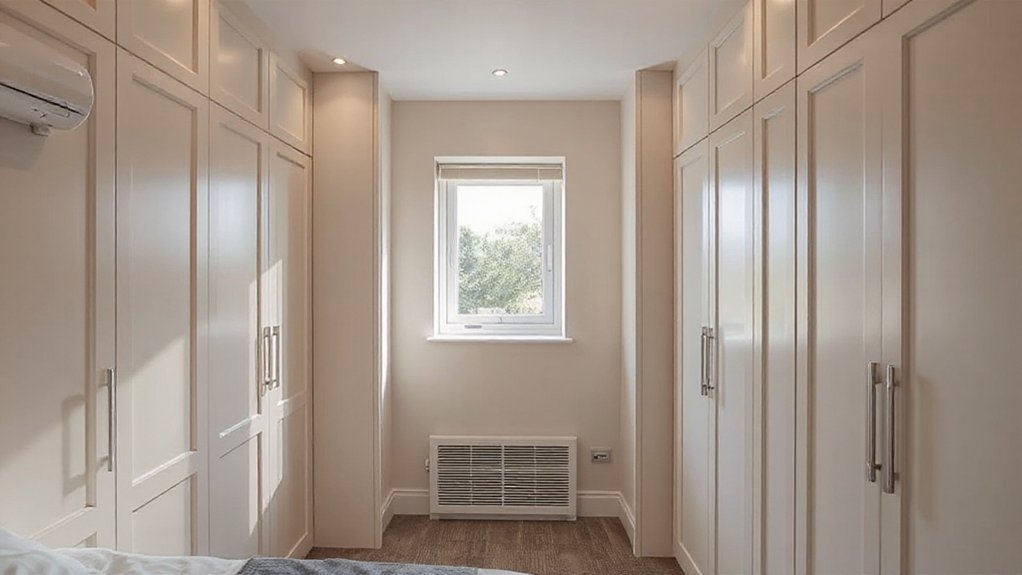
You’ll map lighting to daily use, choosing warm, even illumination and smart controls that stay tidy in tight gaps. Think about ventilation through design—slim vents, natural airflow, and moisture awareness to keep clothes fresh. As for accessibility in narrow spaces, plan reachable shelves, minimal hinges, and clear floor space so you can move freely and grab what you need.
Lighting Layout Considerations
Lighting in a built-in wardrobe isn’t an afterthought: it should be integrated from the start to make every shelf and rail instantly usable. You’ll balance ambient lighting with targeted task illumination so you can see colours and textures clearly without glare. Plan your layout to minimize shadows in corners and along hanging rails, using diffused fixtures that spread light evenly. Consider dimmable options to adapt for morning routines or evening dressing. Opt for warm white tones for a natural feel and easy coordination with mirrors. Guarantee switches are reachable from the door and mirrors are properly positioned.
- Use ambient lighting to illuminate the space evenly without hotspots
- Pair task illumination with mirrors for accurate color and detail
- Install dimmers to adjust mood and practicality
Ventilation Through Design
Ventilation isn’t an afterthought in a tight wardrobe; it’s built in from the start to prevent damp, odors, and stale air. You engineer airflow by choosing strategically placed vents and breathable panels, not by hoping for luck. Natural airflow should move from high to low points, so set up intake at lower shelves and exhaust near ceiling rails. Cross ventilation works best when wardrobe openings align with adjacent room air paths, avoiding airtight seals that trap moisture. Use vented doors or slatted panels to maintain circulation without compromising privacy. Consider damp-prone UK climates and install unobtrusive condensation drains or a tiny dehumidifier behind doors. Finally, design hidden grommets for cable-free, breathable LED lighting to preserve airflow while brightening the space.
Accessibility in Narrow Spaces
Ever wondered how to make a narrow wardrobe truly user-friendly, without sacrificing form or airflow? In tight spaces, accessibility means clear paths, reachable shelves, and thoughtful hardware. You’ll balance lighting, ventilation, and ease of use so every item is within arm’s reach. Prioritize motion-friendly access and ergonomic handles that invite a confident grip. Consider adjustable shelves that slide on smooth runners and shallow-depth railings to reduce reach. Integrate discreet lighting strips to illuminate edges and prevent collisions. Allow for space for mobility aids and guarantee doors don’t swing into the room. Ventilation should remain unobstructed, with vents that don’t crowd the doorway. The result: a compact system that’s safe, comfortable, and stylish.
- Ergonomic handles improve effect-and-efficiency
- Adjustable shelves maximize reach without crowding
- Lighting and vents maintain safety and airflow
Budget, Sourcing, and Cost-Saving Tactics for UK Homes
To keep built-in wardrobes affordable without sacrificing quality, start with a clear budget and a realistic timeline, then source materials and components that offer the best value over the long term. You’ll compare options using a cost comparison approach, weighing upfront prices against longevity and maintenance needs. Prioritize material durability, choosing substrates that resist wear in UK climates and frequent use. Consider modular hardware and adjustable fittings to adapt as needs change, reducing future refurbishments. Seek reputable suppliers offering bulk discounts, warranties, and clear lead times, then factor in delivery and installation costs. Don’t overlook secondhand or factory-reconditioned components when appropriate, provided they meet safety and performance standards. Finally, balance aesthetic aims with budget realities, selecting finishes that endure, clean easily, and retain resale appeal.
Frequently Asked Questions
How to Maximize Ceiling Height for Tall Wardrobes in UK Rooms?
Ceiling integration lets your tall wardrobes breathe height, maximizing space you have. You’ll use custom shelving to adapt every inch, store awkward items, and keep airflow clear. You’ll measure precisely, install snugly, and enjoy effortless, organized reach.
What Are Legal Clearance Requirements for Built-In Wardrobes in Listed Homes?
You scan the doorway like a doorway into a quiet attic; legally, you must check Building regulations and Planning permissions for built-ins in listed homes. You comply, ensuring every measurement respects constraints and preserves historic character.
Can You Retrofit Built-Ins Around Existing Radiators or Pipes?
Yes, you can retrofit built-ins around radiators or pipes. Aim for radiator concealment with slim panels and vented fronts, while pipe integration hides plumbing in shallow cabinetry. Guarantee heat flow isn’t blocked and access remains for maintenance.
How to Handle Awkward Alcoves and Bay Windows in Wardrobes?
88% of homeowners regret wasted alcove space; you can fix it. You handle awkward alcoves and bay windows by using custom shelving and varied door configurations, maximizing depth, height, and accessibility for a practical, creative wardrobe solution.
What Maintenance Schedule Extends Timber Wardrobe Longevity in Damp UK Climates?
You should implement a timber treatment schedule annually, inspecting joints quarterly, and addressing damp promptly to extend longevity; combine dehumidifiers and good ventilation, practice mold prevention, reseal surfaces after cleaning, and store textiles away from moisture.
Conclusion
If you’re thinking wardrobes are boring, think again. You’ll squeeze more fashion-forward functionality into a snug UK room than a magician into a hat. Measure like a forensic scientist, pick door styles that don’t clang when you reach for your jumper, and zone-clump clothes, shoes, and accessories so nothing hides in the gloom. Light it, vent it, budget it, source it wisely, and you’ll have a built-in that’s stylish, sturdy, and somehow still tidier than your mum’s spinning room. You’re welcome.