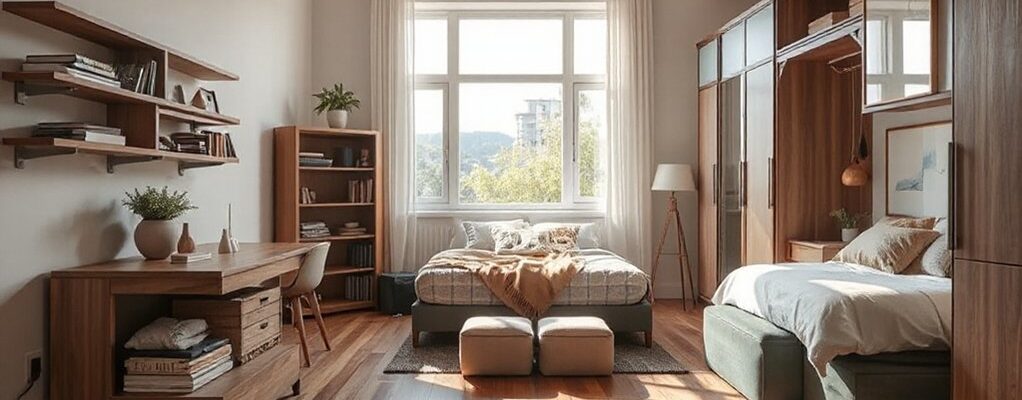
Your space is a tight ship, and every inch should serve twice. Start by choosing smart, multifunctional pieces that hide storage in plain sight—beds with drawers, fold-out desks, and chairs that stash things out of view. Elevate storage with tall, wall-mounted units and labeled bins that stay tidy at a glance. Want to learn the exact placements and setups that keep flow open while packing in essentials?
Key Takeaways
- Assess layout to identify waste spaces, prioritizing hidden, functional storage that doesn’t block pathways or vents.
- Choose multifunctional, modular furniture with slim profiles to maximize seating, storage, and work surfaces.
- Optimize closets with zones, adjustable shelves, labeled bins, and seasonal decluttering twice a year.
- Exploit vertical space: tall cabinets, wall-mounted desks, pegboards, and headboard or under-bed storage.
- Use cohesive color/material schemes and durable hardware for a calm, organized look that lasts.
Assess Your Tiny Space for Storage and Constraints
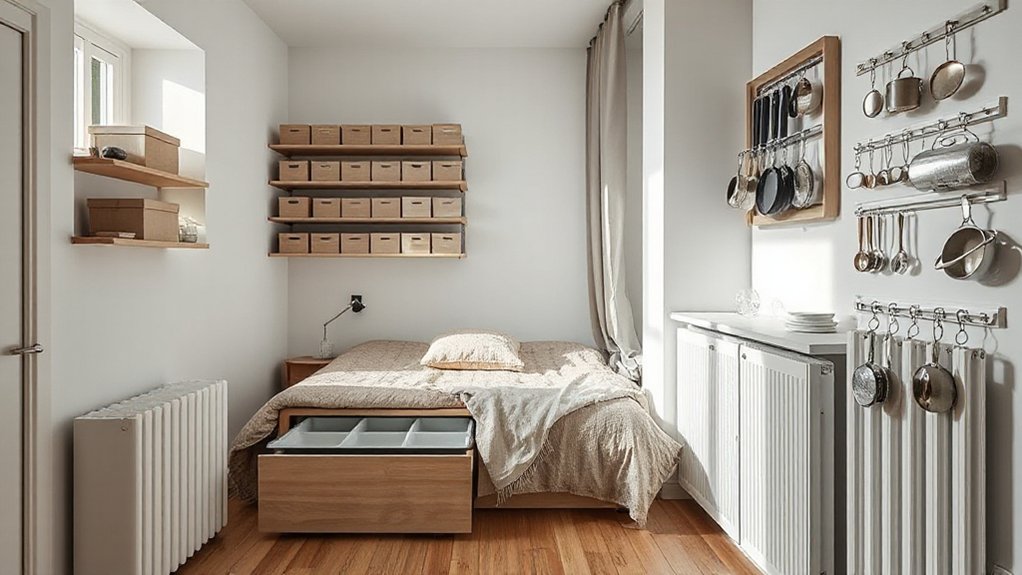
Begin by taking stock of every centimeter: measure windows, doors, and alcoves, then map where you actually live versus where you could store. You’ll spot awkward gaps, tight corners, and underutilized recesses that shape how you decorate and function.
Assess traffic flow, entry points, and habitual habits to reveal constraints, not just flaws. Prioritize decorative storage that disappears from sight yet functions daily, like pull-out bins, slim shelves, and dual-purpose furniture.
Note ceiling height, sill placements, and radiators to avoid blocked vents or awkward access. Create zones for clothes, kitchenware, and office essentials, aligning them with your routines.
This proactive survey guides space optimization, keeping aesthetics clean and storage integrated. You’ll design with intent, maximizing usable area without sacrificing style.
Choose Smart Furniture That Maximizes Small Spaces
Smart, space-saving furniture is the backbone of a functional tiny apartment. You choose pieces that serve multiple roles and fit your layout without crowding it. Prioritize multifunctional furniture that combines seating, storage, and work surfaces in a single unit, like ottomans with hidden compartments or coffee tables with drawers.
Opt for modular storage options you can rearrange as your needs shift, so walls stay clean and flow remains open. Build a cohesive system using neutral bases and accent highlights to keep rooms legible at a glance.
Consider vertical solutions: tall shelves, wall-mounted desks, and bed frames with under-bed drawers. Avoid bulky silhouettes; aim for slim profiles, concealed hardware, and finishes that reflect light.
Your rooms gain flexibility, organization, and a calmer, more navigable footprint.
Closet and Cabinet Tricks to Keep Visible Clutter Down
Closets and cabinets are the frontline of keeping your small space orderly, so optimize them to conceal daily clutter without sacrificing accessibility. You’ll gain instant calm by targeted organization that’s visible yet discreet, with clear zones for daily wear, off-season gear, and bulk items.
Use color coordination to group pieces by shade, creating a streamlined, legible outfit or supply list that’s easy to scan. Implement seasonal decluttering twice a year to prune duplicates and unused items, keeping only what you truly reach for.
Incorporate smart hardware and adjustable shelves to tailor height and reach, maximizing potential. Finish with labeled bins and doors that hide mess while remaining accessible when you need it.
- Clear zones for quick access
- Color-coordinated grouping
- Labeled bins and adjustable shelves
Vertical, Under-Bed, and Hidden Storage That Truly Works
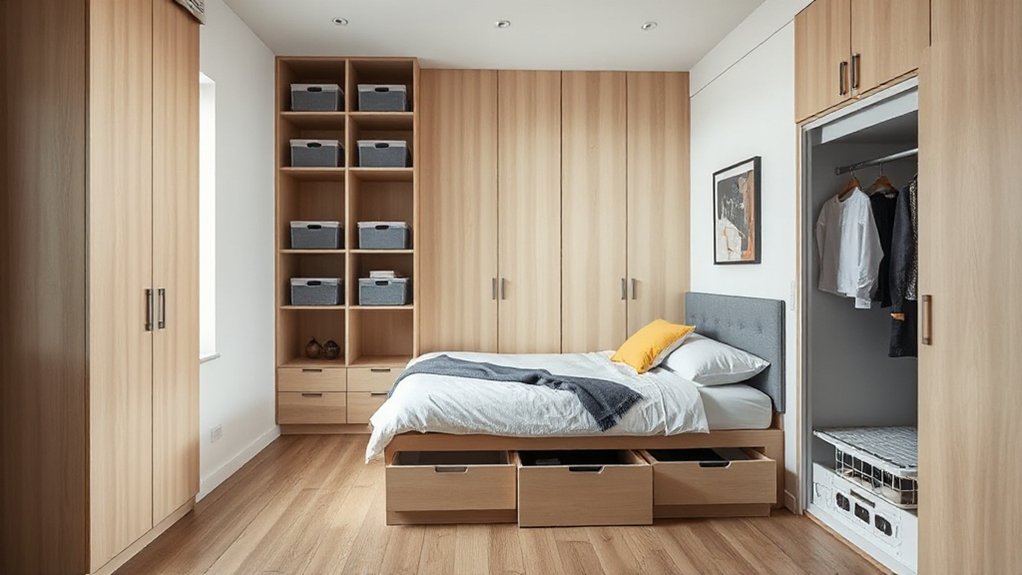
Vertical, under-bed, and hidden storage can transform a small apartment by turning unused space into rapid-access, clutter-free zones. You’ll prioritize multi functional furniture that serves more than one task, reducing footprint without sacrificing ease.
Choose bed platforms with integrated drawers or a headboard shelf to keep essentials within reach. Under-bed crates or modular totes maximize low-clearance areas, while labeled containers maintain order.
For vertical gains, install tall, slim cabinets or stackable units that reach the ceiling, freeing floor space and creating visual cohesion.
Creative wall mounted solutions, like pegboards, slim shelves, and mounted bins, keep rarely used items accessible yet out of sight.
Finish with a consistent color or material to reinforce a calm, organized room impression.
Budget-Friendly Organizing Systems That Actually Last
You don’t need pricey systems to keep a small space organized for the long haul; you just need durable, well-planned basics. In budget-friendly organizing, durability comes from simple, modular pieces you can reuse, stack, and reconfigure.
Focus on high-quality hinges, sturdy bins, and smooth-sliding drawers that handle daily use without wobble. Design-minded efficiency means selecting sizes that match your space so you avoid overbuying.
Creative labeling speeds daily tasks, while multipurpose containers reduce clutter by doubling as dividers, storage, and display. Plan for future needs by choosing adaptable components, not single-purpose gimmicks.
The result is a cohesive system you’ll trust month after month, baring only minor tweaks as you live and evolve.
- Creative labeling
- multipurpose containers
- modular, durable components
Frequently Asked Questions
How Can I Measure for the Best Storage Dimensions in a Tiny Apartment?
To measure for the best storage dimensions in a tiny apartment, start with a precise two-step plan: floor-to-ceiling height and usable depths.
Use a laser measure for wall heights and carbon-copy the room’s outline on graph paper.
Plan around space-saving furniture and vertical storage solutions, stacking, and recessed niches.
Check door clearances and hinge swings, then map out modular components.
Prioritize adjustable shelving, pull-out organizers, and pony-wall alignments to maximize every centimeter.
What Materials Resist Wear in Compact Furniture Over Time?
You want materials that resist wear in compact furniture, so prioritize solid hardwoods, engineered composites, and steel hardware.
Durability testing should guide choices, focusing on load, joints, and edge wear.
For long-term use, pursue laminated plywoods or high-density particleboard with durable coatings.
Material selection matters most: choose UV-resistant finishes, scratch-resistant veneers, and corrosion-proof fittings.
Design with reinforced joints, preload screws, and hidden supports to sustain daily use in tight spaces.
Do Renters’ Rights Affect Installing Permanent Storage Solutions?
Yes, renters’ rights affect installing permanent storage. You generally need landlord approval for fixtures that alter the space, so aim for removable, semi-permanent solutions that still feel integrated into design.
Prioritize built-in, reversible options like modular cabinetry, wall-mounted shelves, or freestanding systems with anchors.
When you propose permanent storage, document approvals in writing and guarantee compliance with local codes. This keeps your space practical, design-focused, and ready for future tenancy changes.
Which Scents or Materials Affect Perceived Space in Small Rooms?
“Less is more,” you might say, and scents or materials do shape perceived space. You’ll notice aromatherapy effects: lighter, citrus scents expand the feel; denser, woody notes compress.
Material influences matter too: matte finishes read as calmer and larger; glossy surfaces reflect light and seem bigger.
Choose neutral palettes and sparse, purposeful textures. You optimize perception by pairing scent with surface choices, keeping routes clear, and using vertical storage to maintain a breathable, design-forward room.
Are There Typical Hidden Costs When Buying Modular Systems?
Yes, there can be hidden costs when buying modular systems. Expect hidden fees for delivery, assembly, or customization, plus potential surcharges for non-standard components.
Always verify warranties, and check purchase warranties specifics: what they cover, duration, and required maintenance.
You’ll save by comparing inclusive packages, reading fine print, and budgeting for installation.
Prioritize modulars with transparent pricing, durable finishes, and clever, design-focused hardware that minimizes future upgrades or replacements.
Conclusion
You’ve mapped a smarter footprint for your tiny space, turning limits into launchpads. Think of storage as a design variable, not an afterthought—seek furniture that hides, lifts, and multiplies. Lean into vertical real estate, snug under-bed drawers, and doors that ghost more shelves than they seem. Label, bin, and breathe—visibility keeps clutter at bay. With disciplined decluttering and durable systems, your compact apartment won’t just feel bigger; it will perform like a well-curated studio, living, working, and thriving in harmony.