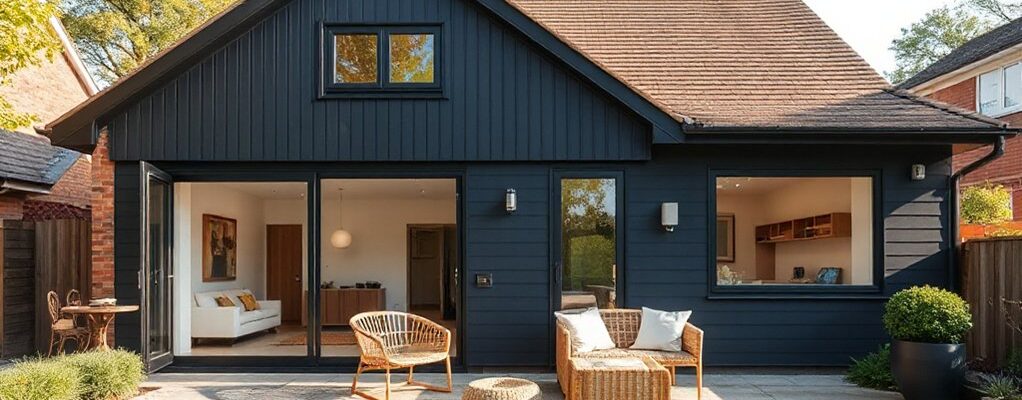
Your bungalow could feel like a brand-new home overnight—if you ignore the structural quirks, you’ll miss the biggest payoff. Start by maximizing light and flow with smart window choices and flexible zones, then layer in insulation and efficient heating to cut bills without sacrificing comfort. Exterior longevity matters just as much as curb appeal, so pair durable finishes with low-maintenance landscaping. Curious how to balance cosy charm with modern tech and energy efficiency to create a lasting upgrade?
Assess Your UK Bungalow: Layout, Light, and Structure
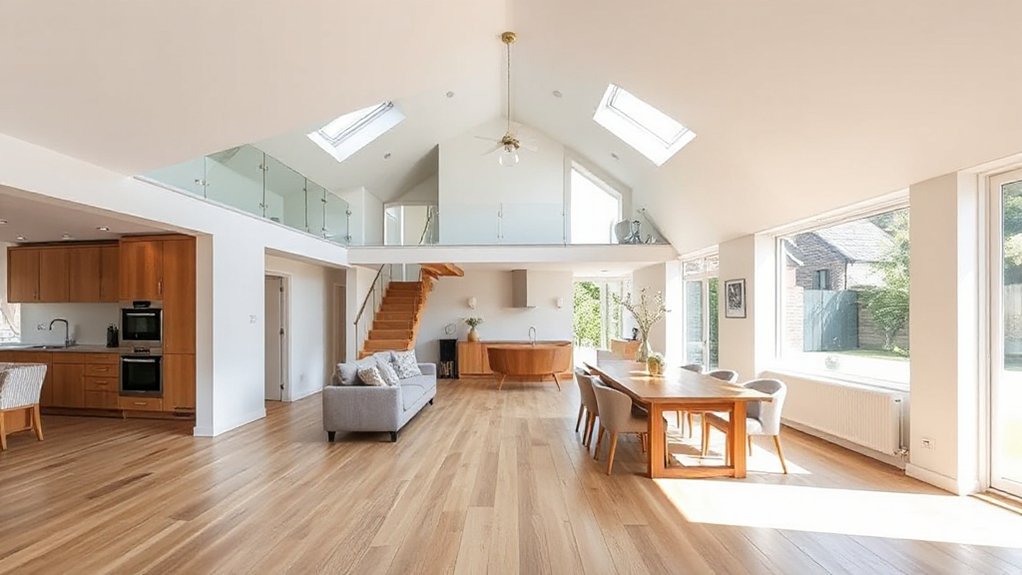
Before you start modernising, take a measured look at your bungalow’s layout, light, and structure. You’ll map flow, sightlines, and zones, noting how rooms connect and how doors, corridors, and alcoves shape movement.
Assess natural light by tracking sun paths across rooms throughout the day, identifying dark corners to address with layout tweaks or lighting.
Structural elements—load-bearing walls, rooflines, and chimney placements—define potential alterations and confirm stability before any change.
Consider how garden landscaping interacts with interior decor: external sightlines, frame views, and microclimates influence indoor palette and focal points.
Document impediments, opportunities, and risks, then prioritise adjustments that enhance usability and efficiency.
Precision planning here prevents costly missteps later and clarifies where to invest next.
Improve Insulation and Heating for Comfort and Savings
Improved insulation and smarter heating are your first lines of defence against wasted energy and chilly rooms. Start by tightening gaps, upgrading key insulation, and selecting efficient heating controls that fit your living patterns.
Together, these moves boost comfort while trimming annual bills and carbon impact.
Improve Insulation, Heating
Improving insulation and heating is essential for comfort and long-term savings in a UK bungalow. You’ll gain clarity by treating the envelope as a system: heat gains and losses from roofs, walls, floors, and air leakage, balanced against efficient, controllable heating.
Roof insulation is a primary fix; verify depths meet current guidelines and consider breathable underlays to prevent condensation. Pair this with airtight sealing around junctions and service penetrations to cut drafts.
Window upgrades matter too, prioritising high-performance, low-emissivity glazing and well-sealed frames to reduce heat loss without sacrificing light.
Choose a heating source that matches occupancy patterns—condensing boilers, heat pumps, or hybrids—then retrofit zoning and smart controls for responsive comfort.
Prioritise measurable gains: reduced heat demand, consistent temperatures, and predictable bills.
Comfort and Energy Savings
Ever wondered how small tweaks to insulation and heating pay off in daily comfort and long-term bills? You’ll notice steadier temperatures once you seal gaps and upgrade loft insulation, reducing heat loss without cranking the boiler.
Pair this with a modern boiler or efficient heat pump, and you’ll see a clearer correlation between comfort and lower energy use. Focus on zoning rooms to avoid overheating unused spaces, then fine-tune thermostats for consistent delivery.
The savings compound with reflective surfaces, draught-proofing, and insulated pipes, keeping warmth where you need it. Consider interior decor choices that boost perceived warmth without extra heat, like warm-toned textiles.
Meanwhile, garden maintenance can influence heat gain through glazing strategies and outdoor shading, supporting a balanced, energy-efficient home.
Refresh the Roof and Exterior for Longevity and Curb Appeal
Renovating your roof and exterior isn’t just about looks; it’s a strategic move to safeguard your bungalow’s structure and value. You’ll assess material life cycles, drainage, and insulation to prevent hidden damage from weathering.
Prioritize roof maintenance, checking for cracked shingles, flashing weaknesses, and moss buildup that signals leaks. For exterior upgrades, select durable finishes with UV resistance and breathable membranes to manage moisture without trapping damp.
Consistency in detailing—trim, gutters, and downspouts—reduces water ingress and preserves paint longevity. Consider colour and texture to boost curb appeal while reflecting local character.
Evaluate costs against lifespan, maintenance needs, and energy performance. Implement phased improvements, starting with the most vulnerable areas, then update cladding or render where necessary to sustain value and exterior durability.
Create Open-Plan Zones Without Losing Cosy Bungalow Charm
You can create open-plan zones that improve light, air, and flow without sacrificing the cozy, passage feel that defines a bungalow.
Consider how defined, smaller buffers—like low partitions, differing ceiling heights, or warm materials—guide movement while preserving intimacy.
The challenge is balancing openness with soft boundaries that keep the space inviting and humane.
Open Plan Zoning
Start with furniture arrangement that anchors each area while preserving conversation flow; choose pieces that don’t obstruct paths and create natural thirds for seating, dining, and work. Use rug placement, lighting levels, and console or bookcase depth to imply boundaries without confinements.
Consider colour schemes that unify spaces—soft neutrals with intentional accent tones can visually separate zones while preserving harmony. Keep ceiling heights and window views uninterrupted to maintain air and light.
Finally, test ergonomics: seating should invite, tables be reachable, and storage be accessible across the open plan.
Cozy Transitional Spaces
Cozy passageways balance openness with warmth by using thoughtful zoning cues rather than walls. You combine softly framed partitions, color transitions, and scale shifts to define zones without severing sightlines.
Prioritize transitional furniture that visually bridges spaces—low credenzas, armless sofas, and open-back shelving—so movement feels continuous rather than segmented. Use rug boundaries and ceiling-height treatments to cue different functions while preserving flow.
Cozy corners tucked into nooks invite intimate moments without isolating nearby activity, reinforcing a lived-in, bungalow charm.
Material consistency matters: unify timber tones, brass accents, and natural textures across zones to prevent disjointed vibes.
Finally, light layering—task, ambient, and accent—preserves warmth as you expand open-plan zones.
Light, Air, Flow
How can you preserve cosy bungalow charm while sculpting open-plan zones that feel airy and connected? You design deliberately, zoning with partial partitions and consistent materials to maintain sightlines and warmth. Prioritise natural ventilation and air circulation by locating windows to cross-ventilate, not just illuminate. Use large, operable casement or French windows that open onto sheltered zones, reducing reliance on mechanical systems.
Choose a light, neutral palette with warm textures—wood, wicker, wool—to keep coziness intact as spaces expand. Implement ceiling treatments or shallow beams to visually define areas without interrupting flow. Place quiet, high-efficiency fans where needed, and consider an underfloor or wall duct approach for discrete airflow.
Align storage and furniture to guide movement, preserving intimate nooks within open plans.
Maximise Daylight With Smart Window and Shade Choices
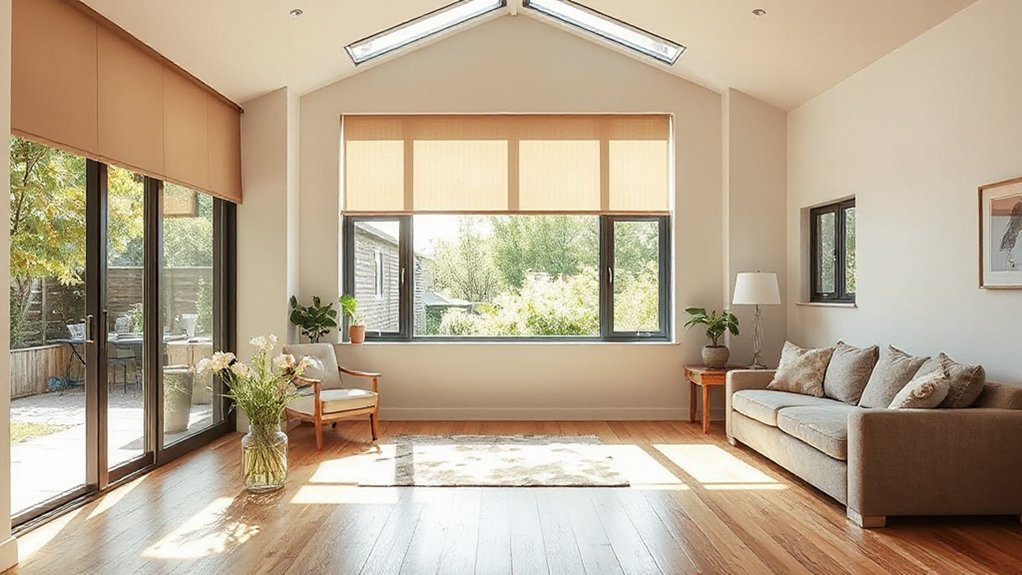
Smart window and shade choices can dramatically increase daylight without sacrificing privacy or comfort. You’ll want a measured strategy: match light needs to room function, orientation, and existing glazing.
Smart blinds offer automation that responds to sun angle, reducing glare while maintaining view and energy efficiency. Consider tinted windows for high-contrast rooms, balancing UV protection with perceived brightness.
Assess fabric weights, translucence, and color to control diffusion rather than block it, avoiding dim, cave-like spaces. If you use motorised shading, guarantee reliable integration with a central control system for scenes that shift throughout the day.
Prioritise materials with low emissivity coatings and durable seals. In kitchens and living areas, combine sheer layers with solar-control films to maximise daylight without overheating.
Space-Saving Layouts for Narrow or Awkward Rooms
To make the most of narrow or awkward rooms, start with a disciplined layout audit that prioritises circulation, scale, and purposeful focal points. You’ll define clear pathways, avoid clutter, and map how you move through the space.
Space-saving layouts hinge on modular furniture arrangements that can flex with daily use, transforming tight corners into usable nooks. Opt for low-profile pieces and wall-mounted storage to free floor space without sacrificing function.
Consider diagonal sightlines to expand perceived depth, and place storage solutions where they reduce friction in routes rather than impede them. Use zones rather than rigid, full-room fills to create distinct, efficient functions.
Finish with a compact, repeatable rhythm: anchored anchor points, balanced mass, and a consistent design language.
Budget-Friendly Bathroom and Kitchen Refreshes
Upgrading on a budget starts with choosing impactful tile refreshes, since a small investment in surface updates can transform perceived space and cleanliness.
Simple cabinet makeovers paired with lightweight hardware can yield a refreshed look without full replacements, while retrofit fittings upgrades optimize efficiency without disrupting layouts.
Consider how these moves align with your daily routines and long-term maintenance to maximize value without overspending.
Budget-Friendly Tile Refreshes
Often, the simplest way to refresh a bathroom or kitchen is to refresh the tiles themselves, without a full remodel. You’ll gain impact by targeting grout and glaze, not full replacement.
Start with regrouting to neutralise discoloration; then seal to reduce staining and maintenance. Consider paint-safe tile primers and specialty coatings to refresh glossy or matte finishes without demolition.
If tiles are structurally sound but dated, swap exposed hardware, fittings, and decorative accents around the tile field to create a cohesive update. Use vintage fixtures sparingly to evoke character without clutter, and select decorative accents that coordinate with your grout shade and tile style.
For durability, opt for epoxy or urethane grout and choose low-VOC, easy-to-clean coatings to sustain the refresh longer.
Simple Cabinet Makeovers
Renovating cabinets doesn’t have to break the bank. You can achieve a fresh look with simple, targeted moves. Start by evaluating existing frames and hardware; avoid full replacements when possible.
Sand lightly, prime, and apply a durable, moisture-resistant finish suited to kitchens and bathrooms. Choose a mid-tone or muted hue to brighten space while preserving contrast with countertops.
Replace or refresh hardware with clean lines that echo the room’s overall aesthetic, ensuring scale matches cabinet doors. Add interior organization features to maximize perceived value—pull-out shelves or slim organizers cost little but deliver big usability gains.
Introduce decorative accents, such as under-cabinet lighting or vintage fixtures, to create focal points without redesign. Maintain clean lines, ensuring practical, long-lasting results.
Retrofit Fittings Upgrades
After revitalizing cabinetry with quick cosmetic tweaks, you can push further value by upgrading fittings that impact daily use without a full remodel. Retrofit fittings upgrades focus on functionality, durability, and futureproofing at a modest cost.
In bathrooms, replace aerators, valves, and showerheads with water-efficient, corrosion-resistant models to reduce bills and maintenance.
In kitchens, swap mismatched hardware for uniform, easy-clean handles and hinges that glide; avoid thin metals that warp over time. Consider compact, high-visibility options for small spaces, like integrated soap dispensers or pull-out organizers that streamline tasks.
Vintage fixtures can add character while meeting modern standards when paired with low-flow taps and smart controls. Embrace retro lighting thoughtfully—LED equivalents with warm hues preserve ambience without sacrificing efficiency.
Prioritize tested brands and warranty coverage for long-term reliability.
Smart Home Tech for Everyday Comfort, Simple Setup
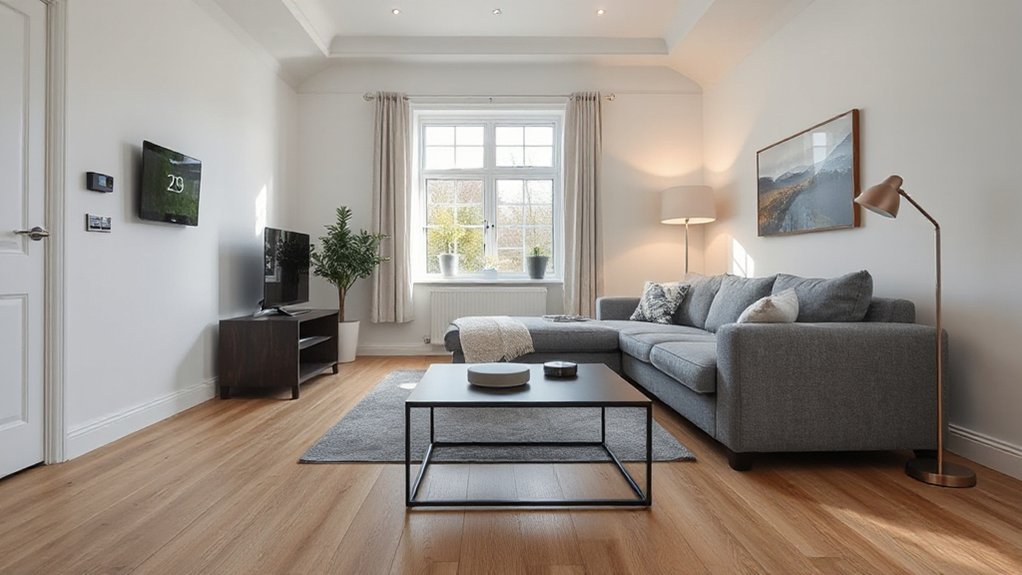
Smart home tech makes daily living in a UK bungalow more comfortable and efficient by linking devices into a single, easy-to-control system. You optimize routines by choosing compatible hubs and sensors, ensuring seamless communication across lighting, climate, and entertainment.
The setup prioritizes reliability: avoid overloading networks, segment critical devices, and test automations during off-peak hours. Voice control offers immediacy without manual taps, but you should vet privacy settings and firmware updates to prevent lag or unintended actions.
Automated security remains essential yet unobtrusive: configure smart locks, door sensors, and cameras to balance convenience with clear local access and data protection.
Evaluate energy-flow metrics, monitor usage shifts, and document fail-safes so everyday comfort persists even if a single component falters.
Durable, Low-Maintenance Finishes for UK Weather
Durable, low-maintenance finishes matter more in UK weather than glossy trends, because insulation and climate exposure dictate long-term performance. You’ll prioritise coatings and materials that tolerate damp, temperature swings, and wind-driven moisture without frequent upkeep.
Weather resistant finishes reduce repaint cycles, limit staining, and preserve structure, so you’re not chasing cosmetic damage. Choose breathable, yet water-repellent systems that deter ingress while allowing moisture to escape, preventing rot and mould.
For exterior walls, select sealed renders, fibre cement boards, or mineral coats with UV stability and abrasion resistance.
On joinery, favour paint systems designed for edge protection and crack resistance, paired with corrosion-resistant fixtures.
In interiors, opt for washable, matte or satin surfaces that resist scuffs while maintaining a clean, professional appearance—minimize maintenance, maximize longevity.
Maintenance free surfaces support predictable upkeep and consistent performance.
Sustainable Materials and UK Sourcing Tips
You can reduce embodied carbon by prioritizing Local Material Sourcing, so look for UK-made timber, brick, and aggregates with transparent provenance.
Pair this with Low-Impact Structural Choices, selecting modular or timber-framed options that minimize waste and energy use.
Embrace Circular Design Principles by designing for repair, reuse, and eventual repurposing, ensuring materials stay in circulation rather than ending as waste.
Local Material Sourcing
Begin with local materials that meet performance needs, then align with clear sourcing strategies to minimize transport and waste. Prioritise timber from certified UK forests, reclaimed bricks, and locally produced insulation where feasible, verifying supplier transparency and material provenance.
Consider circular options, like components designed for disassembly and reuse. Document embodied carbon data, supplier certifications, and batch consistency to inform decisions and enable traceability.
Balance constraints of lead times, regulatory compliance, and quality control, ensuring you don’t compromise safety or compliance for short‑term gains. This disciplined approach stabilises costs and enhances local resilience.
Low-Impact Structural Choices
Even with a tight budget, choosing low-impact structural materials can dramatically reduce both embodied carbon and long‑term maintenance. You’ll prioritise materials with proven durability and compatibility with UK climate, such as recycled steel, engineered timber, and low‑energy concrete mixes.
Consider sourcing locally to minimise transport emissions, while verifying supply chain transparency for embodied carbon data. Structural integrity remains paramount: choose products with established performance certifications, and design details that reduce waste and avoid over‑specification.
For foundations, assess soil conditions early and favour modular or hybrid systems that adapt to existing footings without excessive excavation. Foundation stability hinges on accurate load paths and moisture management; incorporate proper detailing, breathable vapour barriers, and drainage.
Align materials with lifecycle goals to ensure resilient, low‑maintenance performance over decades.
Circular Design Principles
Circular design basics start by treating materials as trackable assets rather than disposable inputs. You pursue a circular economy by mapping material flows, choosing suppliers who prioritise reuse, repair, and end‑of‑life regeneration.
Prioritise design harmony: modular components, standardised connections, and easy disassembly unlocks value across renovations and later adaptations.
Source locally where possible to minimise embodied carbon and support regional markets for salvaged materials.
Assess durability, compatibility, and end‑of‑life options during early planning, then document material provenance for future refurbishments.
Use lifecycle thinking to compare alternatives, weighing space efficiency against long‑term resilience.
Implement on‑site strategies like temporary protectives and on‑site sorting to maximise salvage.
Informed material choices enable clearer budgeting, fewer waste streams, and a genuinely sustainable, adaptable bungalow profile.
Quiet, Efficient Heating Options for Single-Storey Homes
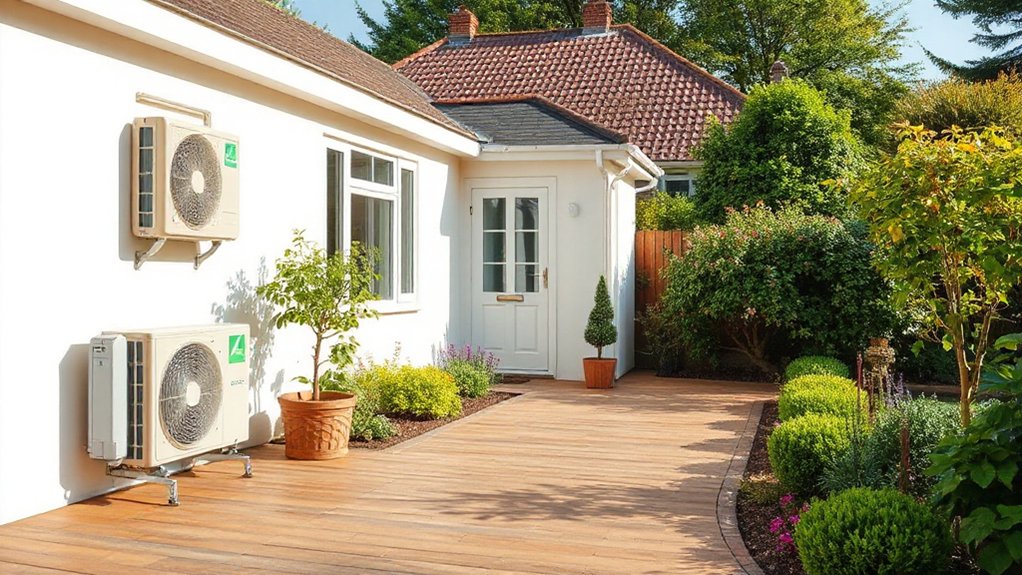
For single-storey homes, quiet, efficient heating starts with selecting a system that minimizes noise and maximizes comfort without wasting energy. You’ll compare heat sources by steady, low-noise operation, controllability, and long-term running costs, then match capacity to your envelope.
Consider ductless minisplits for zone control, reduced air leakage, and absence of loud furnaces; they excel in single-storey layouts with open-plan living. If you favour centralized systems, look for inverter-driven boilers or heat pumps that maintain stable temperatures with minimal fan noise.
Integrate solar panels to offset daytime electricity use and improve seasonal performance, especially in milder winters. Pair any setup with smart thermostats to tune timings, occupancy, and setback thresholds, ensuring you neither overheat nor overcool rooms.
Prioritise maintenance access and refrigerant efficiency for enduring quiet operation.
Lighting Tricks to Enlarge Spaces and Cut Energy Use
Lighting can make a bungalow feel larger and more energy-efficient by maximizing daylight use and outlining space with strategic contrast. You should place mirrors opposite windows to double daylight without adding fixtures, and choose light finishes that reflect rather than absorb.
Use layered lighting: ambient, task, and accent, with dimmable LEDs to adjust mood and energy use. Color psychology matters—cool whites for perceived openness, warmer tones near seating to reduce glare and fatigue.
Prioritize wall-washing and under-cabinet lighting to carve zones without bulky partitions. Decorative accents, like slim track lighting or hidden cove lighting, can define areas without clutter.
Keep window treatments minimal and choose sheer fabrics to maintain daylight flow, then pair with energy-efficient bulbs to sustain brightness with lower consumption.
Exterior Relaxation Zones: Patios, Doors, and Simple Landscaping
Outdoor spaces should extend the bungalow’s comfort zone, creating quiet, low-maintenance zones that invite frequent use rather than mere viewing. You design exterior relaxation zones by prioritising durable, weather-ready materials and a coherent flow from door to garden.
Patio layouts should favour flexible seating, shade, and clear sightlines to access points, so circulation remains effortless. Choose garden furniture that withstands UK conditions and coordinates with house tones, avoiding visual clutter.
Simple landscaping should emphasize structure over complexity: a restrained plant palette, gravel beds, and defined edges reduce maintenance while sustaining appeal. Incorporate water features sparingly to add sound and focal interest without demanding ongoing care.
Position doors to foster indoor–outdoor living, with step-free access and consistent threshold heights for seamless progression.
Plan Your Budget and a Practical Renovation Timeline
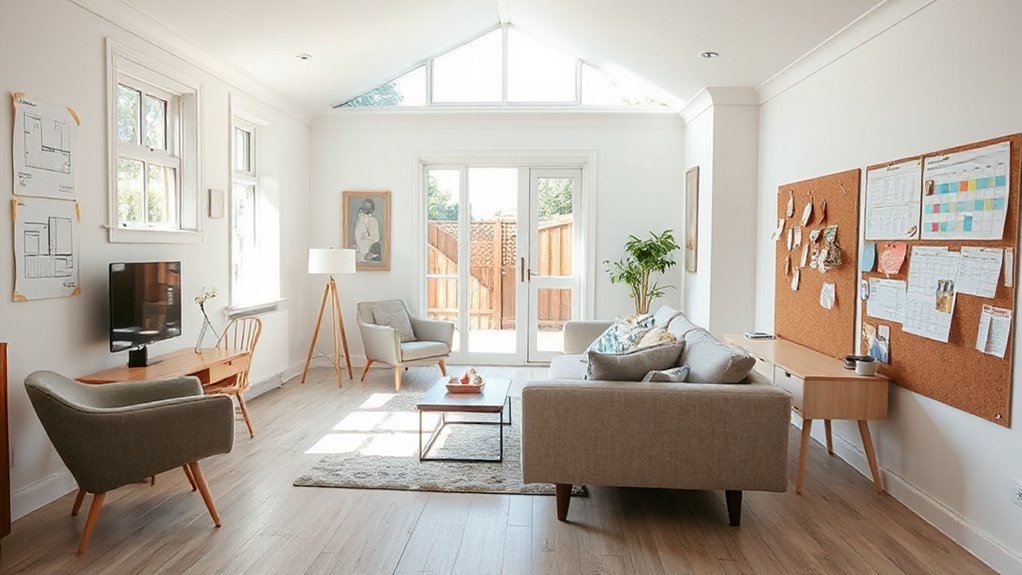
A clear budget and realistic timeline are the backbone of a successful bungalow renovation, so start by defining your absolute must-haves and identifying any non-negotiable constraints.
You’ll begin with budget planning by itemizing essentials, then distinguishing between nice-to-haves and deliverables you can defer. Next, quantify costs with current quotes, contingency, and VAT considerations for materials, trades, and permissions.
Map interdependencies: plumbing or electrical rewrites may force sequencing changes and affect external works.
Craft a phased renovation timeline that aligns with cashflow, seasonal access, and contractor availability, including buffers for overruns.
Regularly review against milestones, adjusting scope rather than timeline whenever possible.
Prioritise clarity in contracts and change orders, keeping a transparent record to protect both budget and schedule while preserving quality.
Budget planning and a well-planned renovation timeline prevent costly, last-minute compromises.
Frequently Asked Questions
How Long Does a Typical Bungalow Renovation Project Take?
A typical bungalow renovation takes several weeks to a few months, depending on scope. You’ll review interior layout changes and energy efficiency upgrades, schedule permits, and coordinate trades, aiming to minimize disruption while maintaining quality and budget control.
What Hidden Costs Should I Expect in a Bungalow Upgrade?
Hidden costs creep in, so you’ll budget for energy efficiency upgrades and design aesthetics, plus allowances for surprises, like wiring or damp fixes. Expect professional fees, permits, materials fluctuations, and contingency cushions to keep your bungalow upgrade on track.
Can I Live in a Bungalow During Major Renovations?
Yes, you can live in a bungalow during major renovations, but plan phased work and dust control. Prioritize interior lighting upgrades and garden landscaping to maintain livability, using temporary bedrooms and sealed, well-ventilated zones throughout the process.
Which Permissions or Approvals Are Needed for Changes?
Yes, you’ll need planning permissions for structural or aesthetic changes and guarantee building regulations compliance for safety, insulation, and services. You must verify with your local authority, and secure approvals before work begins, avoiding costly delays. Plan carefully.
How Do I Prioritise Tasks Under a Tight Budget?
Prioritize tasks by impact and cost, then schedule high-value, low-risk items first. Use Budget planning to allocate contingencies, and Task scheduling to coordinate trades efficiently, trimming scope if needed. Reassess weekly as costs drift or savings appear.
Conclusion
You’ve mapped a clear path: lighter interiors, smarter shells, and calm, energy-efficient living. By aligning flexible layouts with smart tech and durable exteriors, you’ll gain glow-worthy daylight, low-maintenance practicality, and cozy, modern comfort. Think of it as a hinge—opening open-plan spaces without losing bungalow charm. The payoff isn’t just style; it’s measurable savings and daily ease. So, seize the momentum now and let the sun and smart tech do the heavy lifting for you.