
You’re evaluating Blackpool’s property market where steady tourism demand and ongoing regeneration shape steadier cash flows and long‑term value. Indicators like occupancy, rental yields, and neighborhood upgrades matter, but so do financing options and timing cycles. Prospects look reasonable with prudent asset selection and data-driven strategy, yet risks persist in market cycles and policy shifts. Start with clear due diligence and a structured plan, then weigh signals against your risk tolerance as you move forward.
Assess Blackpool as an Investment: Market Value, Demand, and Risks

Blackpool’s investment case hinges on tangible metrics: population and visitor demand, price-to-rent ratios, and projected growth drivers. You assess market value by aligning rental yields with cap rates across sectors, prioritizing stable occupancy and short- to mid-term demand cycles.
Demand signals show steady Blackpool tourism activity, supported by seasonality and multi-year visitor patterns, but you weigh this against supply dynamics and price normalization risks.
Local infrastructure upgrades, transport links, and utilities must translate into higher net operating income without inflating capex beyond reasonable recoveries.
You quantify risk via occupancy sensitivity, regeneration pace, and policy continuity, avoiding speculative bets on glamour projects.
Track Blackpool Property Price Trends and Signals
To assess price momentum, track how indicators like weekly asking rents, transaction volumes, and days-on-market move in Blackpool. You’ll want a tight read on price signals: short-term fluctuations can mirror macro shifts, while long-run trends reflect fundamental demand.
Monitor consecutive weekly changes in listing prices and sale velocities to gauge momentum, not noise. Consider how property tax announcements and zoning regulations influence buyer confidence and cap gains expectations, shaping price ceilings and resistances.
When signals align—rising rents, steady or increasing volumes, and shrinking days-on-market—price trajectories may strengthen. Conversely, diverging signals warrant caution.
Use this framework to filter out speculative spikes and focus on persistent patterns. Integrate local policy context, ensuring your assessments remain grounded in regulatory stability and tax implications.
Evaluate Rental Demand and Yield Benchmarks in Blackpool
If demand holds steady, rental yields in Blackpool should align with regional benchmarks, underpinned by steady occupancy and modest rent growth. You’ll evaluate rental demand by tracking occupancy rates, turnover, and seasonality, then compare with nearby markets to gauge stability.
Rental trends indicate consistent demand from both short- and longer-term tenants, supported by supply modestly lagging absorption in core areas.
Yield benchmarks reveal a narrowly spread band across property types, with residential assets expected to produce stable income versus capital discipline elsewhere.
In practice, you should model net yields after management costs and taxes, testing sensitivity to rent pauses or minor vacancy spikes.
Identify Value and Growth Hotspots in Blackpool Neighbourhoods

Neighborhood-level value and growth hotspots in Blackpool show stronger signals in sites with improving transport links, planned amenities, and recent capex that lifts attractor factors without overpaying. You’ll identify micro-climates where demand outpaces supply, with clear density and yield patterns.
Focus on neighbourhood revitalization indicators—new housing stock, refreshed retail cores, and walkable transit corridors—that correlate with price resilience and rental growth. Track planning pipelines and capex budgets to discern durable upside, not speculative spikes.
Diversify exposure across distinct hubs to balance risk and return, recognizing that some districts may deliver steady cash flow while others compound via higher long-term value.
Use data overlays—demographics, occupancy rates, and unit mix—to validate opportunities before committing capital, avoiding reliance on single-asset bets.
Investment diversification. Neighborhood revitalization.
Explore Financing Options for Blackpool Investments
You’ll want to compare financing options by balancing loan-to-value ratios with your target cash flows to gauge risk.
Consider LTVs, repayment terms, and total cost of capital against projected rental income and vacancy rates to assess viability.
We’ll focus on data-driven assumptions for cash flow to avoid speculative projections.
Financing Options Overview
To fund Blackpool investments efficiently, you’ll want a clear view of options that balance cost, speed, and risk. Financing options present a spectrum from standard mortgages to flexible capital facilities.
Mortgage options vary by rate type, term, and qualification requirements; fixed-rate products reduce payment risk, while variable rates can adjust costs over time. Consider government-backed loans for lower down payments, though qualification barriers differ by investor profile.
For speed, short approval timelines exist with private lenders or portfolio lenders, but these often carry higher fees and tighter terms. Asset-backed facilities and bridging loans can cover interim needs, yet they demand robust exit plans.
Always factor property tax implications alongside leverage to maintain cash flow discipline and preserve downside resilience in fluctuating markets.
Loan-to-Value Considerations
Loan-to-value (LTV) is a core limit on how much you can borrow against a property’s value, and it directly shapes risk and return for Blackpool investments.
In practice, tighter LTVs reduce default risk but cap leverage, affecting upgrade potential and ROI sensitivity to price shifts. Lenders typically tier LTV by property type, borrower experience, and location metrics, with Blackpool’s stable rental demand offering modest premium for lower LTV structures.
When evaluating financing, you should compare mortgage options across terms, fees, and prepayment flexibility, then stress-test outcomes under modest rent declines and vacancies.
Equity release may enable cash-out while preserving control, though it raises overall borrowing costs.
Use disciplined scenarios to gauge required yields before committing to any mortgage options.
Cash Flow For Investors
What cash flow can you realistically expect from Blackpool investments, and how should financing shape those numbers? You’ll compare net rents against debt service, maintenance, and vacancy.
Use fixed-rate financing to lock payments, then stress-test under conservative occupancy and rent growth scenarios. Expect tighter early yields from newer builds and longer-term strategies from existing stock, with property management costs and utilities eating into margins.
Consider leverage carefully: marginal increases in loan-to-value raise interest costs and risk, while prudent down payments preserve cash flow resilience.
Incorporate market segmentation: short-term lets may boost income but raise management complexity and regulatory risk, whereas long-term rentals offer steadier, tax-efficient cash flow.
Align financing with risk tolerance, liquidity needs, and operational efficiency to protect predictable returns.
Regeneration in Blackpool: Projects, Timelines, and Demand Impact
Regeneration in Blackpool is driving visible shifts in demand as multiple projects advance on schedule, with housing, leisure, and transport components aligning to release longer-term investment potential.
You’ll see early-stage occupancy signals and pricing stabilization as urban renewal efforts accelerate, supported by targeted infrastructure improvements and mixed-use schemes.
Data suggests project timelines are tightening risk of delays is declining, though execution remains contingent on funding cycles and procurement.
Cultural initiatives are pairing with regeneration to attract visitors and residents, boosting short-to-medium rental demand and occupancy rates in core districts.
You should monitor planning approvals, contractor performance, and local employment effects, as these factors shape return profiles.
Overall sentiment is cautiously positive, with demand supported by visible, measurable project milestones.
Manage Risks in Blackpool Deals: Cycles, Rent Control, Defaults
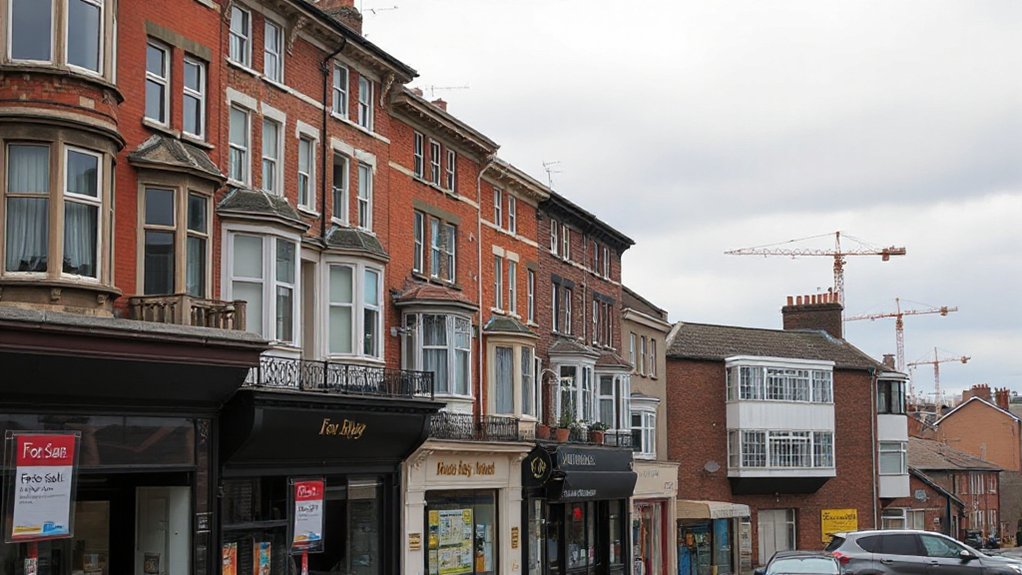
Managing risks in Blackpool deals hinges on understanding deal cycles, rent controls, and default dynamics. You’ll track cycle timing, noting peak onboarding windows and price sensitivity during downturns, to align cash flow with reserve buffers.
Rent-control considerations matter: monitor policy shifts, vacancy penalties, and rent review mechanisms so you can model sensitivity without overreacting.
Defaults require stress testing with vacancy rates, interest rate moves, and tenant turnover patterns, preserving solvency buffers.
Incorporate tenant screening as a core control to reduce credit risk, verifying income, history, and tenancy behavior before committing.
In parallel, refine property management practices to sustain occupancy, ensure timely maintenance, and enforce lease terms.
Data-driven decision-making minimizes surprises, enabling you to adjust exposure before cycles erode returns.
Build Your Blackpool Due Diligence Checklist
A solid Blackpool due diligence checklist starts with a focused, data-driven framework that aligns every item to cash flow, risk, and exit viability. You’ll build it by anchoring metrics to observed performance, not promises, then testing scenarios against real data.
Begin with historical market analysis to gauge price trends, occupancy, and seasonality, filtering out noise with multiple data sources.
Next, map your target rent, cap rate, and debt service to a clear cash-flow model, calibrating assumptions on occupancy and renewal rates.
Add demographic insights to anticipate demand shifts, school catchments, and employer activity.
Validate license, planning, and environmental records to minimize compliance risk.
Finally, document exit pathways, sensitivity ranges, and decision thresholds so you stay disciplined during negotiations.
This disciplined approach reduces guesswork and enhances investability.
Kickoff Plan: 90 Days to Start Blackpool Investment
You’ll start with a tight 90-day plan built on a Market Pulse Overview and a Financing Strategies Snapshot to locate fast-win opportunities.
Your kickoff will map concrete milestones against data, avoiding speculation, and align actions with a precise 90-day action blueprint.
You’ll use real-time indicators to validate moves, ensuring each step stays grounded in measurable signals.
Market Pulse Overview
What’s the current pulse of Blackpool’s market as you map a 90-day kickoff? You’ll track core indicators: occupancy rates, rent per unit, and recent transaction velocity.
Current data show steady demand in core neighborhoods, with modest variance by property type. Market saturation remains a risk, yet pockets of fresh supply align with demonstrated rental gaps, suggesting selective opportunities rather than broad overhangs.
Demographic shifts indicate aging cohorts and steady in-migration from surrounding towns, shaping tenant profiles and preferred features.
Price momentum appears constrained, with returns tethered to management efficiency and amenity updates rather than aggressive value plays.
Your 90-day plan should prioritize high-liability, low-maintenance assets in well-connected areas, paired with tight underwriting and variable-rate resilience.
Continuous, data-backed monitoring will inform whether to scale, pivot, or pause.
Financing Strategies Snapshot
Financing for Blackpool investments should lean on disciplined, data-driven options that preserve cash flow and mitigate interest-rate risk. In the first 90 days, focus on secured debt with transparent covenants and favorable amortization, complemented by short-term bridge facilities only where income certainty exists.
You assess loan-to-value thresholds, debt-service coverage ratios, and monthly cash flow projections to avoid overextension. Prioritize lenders with clear covenant structures and predictable payout schedules to limit refinancing risk.
Property management alignment matters: guarantee asset-level budgeting aligns with debt terms and contingency buffers. Legal considerations guide contract terms, disclosure requirements, and lien prioritization, reducing future dispute exposure.
Maintain disciplined monitoring of market data, covenant compliance, and refinancing windows to sustain stability and minimize impairment risk.
90-Day Action Blueprint
What’re the immediate steps you’ll take in the kickoff window to start Blackpool investment? You’ll map market signals, confirm budget, and set a 90‑day cadence with measurable milestones.
Begin by analyzing occupancy trends, rent per square foot, and cap rates for Luxury apartments and commercial spaces to establish baseline benchmarks.
Next, verify property zoning, development restrictions, and funding timelines to prevent delays.
Build a risk-adjusted acquisition plan using conservative cash flow projections, sensitivity tests, and exit scenarios.
Establish a vendor and inspector shortlist, plus a due-diligence checklist covering title, leases, and maintenance corridors.
Schedule weekly reviews to compare actuals against projections, adjust allocations, and lock in target submarkets.
Maintain data notes, guarantee compliance, and pursue only investments with documented, repeatable value signals in Luxury apartments and commercial spaces.
Frequently Asked Questions
What Are the Hidden Risks Not Covered in Standard Forecasts?
Hidden risks include market saturation and high tenant turnover unseen in forecasts; you should scrutinize supply pipelines, lease structures, and local demand shifts, because investor projections may gloss over cyclic dips and hidden vacancy durations.
How Do Macro Shocks Specifically Affect Blackpool Rents?
You’ll notice a 12% rent dip during a sharp macro shock, and you’ll feel liquidity thinning as Market liquidity tightens. You anticipate Rental demand falling slightly, but you brace for varied impacts across properties and timelines.
Which Micro-Neighborhoods Underperform Despite Overall Growth?
You’ll notice certain micro-neighborhoods underperform despite growth, often lacking neighborhood diversity and limited local amenities, suggesting weaker rent resilience. Data show pockets with skewed supply-demand dynamics, where diversification and improving local amenities could bolster performance.
What Unseen Regulatory Hurdles Could Delay Deals in Blackpool?
Unseen regulatory hurdles could delay deals in Blackpool, especially local zoning and licensing restrictions. You should audit approval timelines, align with current zoning maps, verify licensing caps, and model potential regulatory delays to avoid optimistic projections.
How Can Investors Exit Quickly During Downturns in Blackpool?
In markets whispering of a “flight risk,” you exit quickly by prioritizing Market liquidity and using robust Investor strategies; you diversify, set stop‑losses, and time disbursements to minimize downturn exposure, staying data-driven and speculative-averse.
Conclusion
You can invest in Blackpool with measured confidence, using data to drive decisions and avoid speculative bets. Prioritize neighborhoods with steady occupancy, transparent yields, and clear regeneration timelines. For example, a hypothetical block near the town’s rail links shows 6–7% gross yields and improving occupancy as visitor demand rises, supported by phased redevelopment. Anchor deals with solid tenant profiles, and stress-test financing against interest-rate shifts. Stay vigilant on rents, cycles, and regulatory changes to safeguard returns.