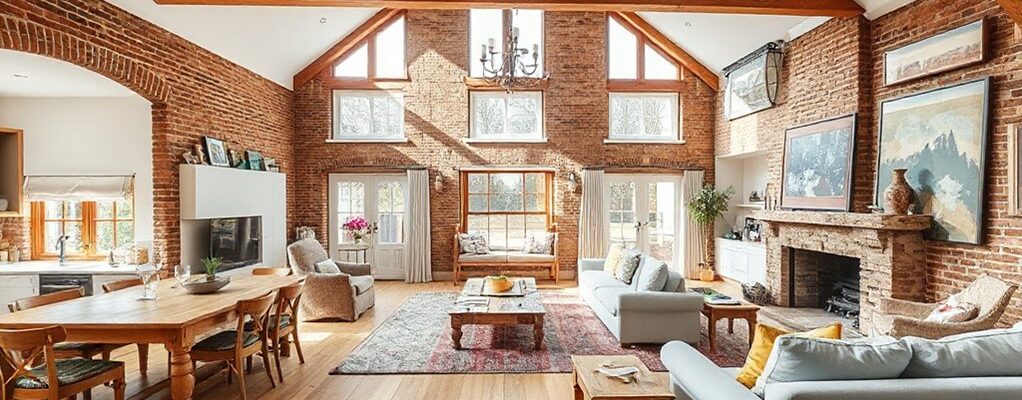
You can redefine open plan living in a traditional UK home with careful zoning, so heritage features stay visible while the space serves modern needs. Use discreet partitions, color cues, and aligned sightlines to preserve cornices and plasterwork, then layer lighting to sculpt mood and function. Thoughtful furniture and modular layouts let you reconfigure without compromising acoustics or warmth, keeping timeless character intact as seasonal comfort and durability reinforce your design choices. Start somewhere precise to keep momentum and balance.
Define Open Plan Living for Traditional UK Homes
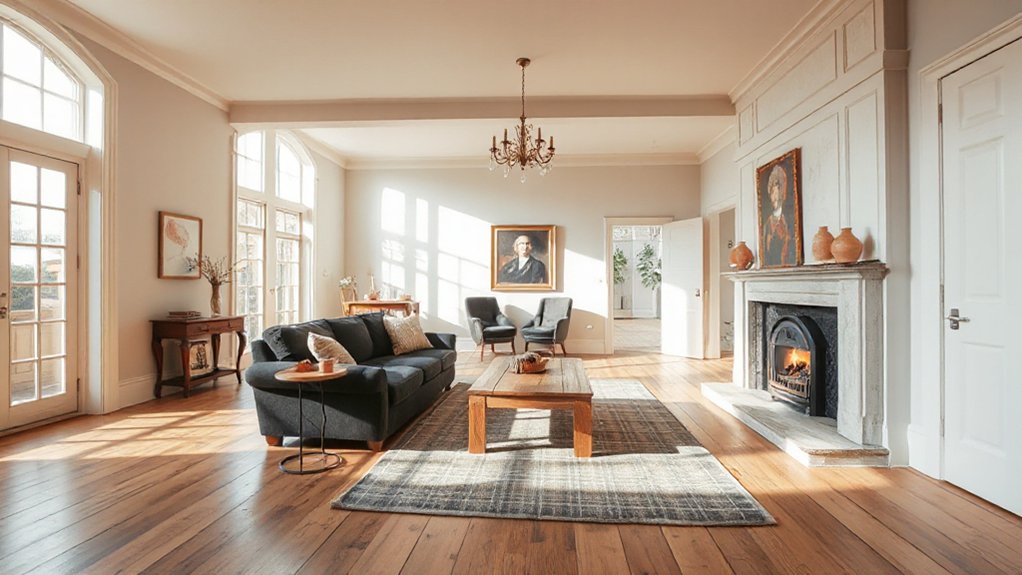
Open plan living in traditional UK homes blends flow, daylight, and social interaction by removing walls to create a continuous, adaptable space that still respects period detailing.
You define open plan living as a design principle that prioritizes functional zoning without rigid enclosures, maintaining sightlines and natural light throughout.
You assess structural implications, ensuring load paths remain intact and ceiling heights cater to proportionate scales.
You balance contemporary furniture with heritage features, preserving key elements like cornices, plasterwork, and in situ timber.
You integrate modern systems discreetly, so upgrades support comfort and efficiency without erasing character.
You consider Historical preservation constraints while maximizing usable space, and you plan for Modern integration of smart controls, heating, and lighting to elevate usability while honoring tradition.
Create Subtle Zones That Preserve Heritage Features
Subtle zoning in open-plan layouts preserves heritage features by using discerning thresholds, screening, and material cues to define function without erasing character. You craft distinct zones through tactful shifts in furniture, textures, and built elements that read as deliberate, not decorative.
Prioritize non-invasive boundaries—slatted screens, low bookcases, or vary floor materials—to signal purpose while letting original ceilings, cornices, and plasterwork remain visible. Choose palettes that respect era-specific finishes, pairing muted tones with tactile surfaces to enhance legibility without visual clutter.
Incorporate heritage preservation as a design constraint: document features, avoid concealing detailing, and align zoning with structural flows. Subtle zoning supports daily rhythms, preserves authenticity, and strengthens the home’s narrative through precise, purpose-driven separation.
Layered Lighting for Atmosphere and Function
Layered lighting marries atmosphere with function, enriching open-plan layouts without erasing heritage cues. You’ll blend ambient glow with precise task illumination, creating zones that read as cohesive yet responsive.
Begin with a dimmable base layer—soft, even illumination that reduces glare while preserving architectural details. Add directional fixtures to highlight focal features, such as timber beams or a brick fireplace, without overpowering the room’s character.
Integrate layered controls: separate circuits for living, dining, and work areas, linked to smart timers or occupancy sensors for efficiency. Choose color temperatures that harmonize: warmer tones near seating for comfort, cooler accents for reading or kitchen tasks.
Guarantee glare-free surfaces and shallow beam angles to maintain visual calm while supporting daily activities.
Furniture Layouts That Honor Historic Details
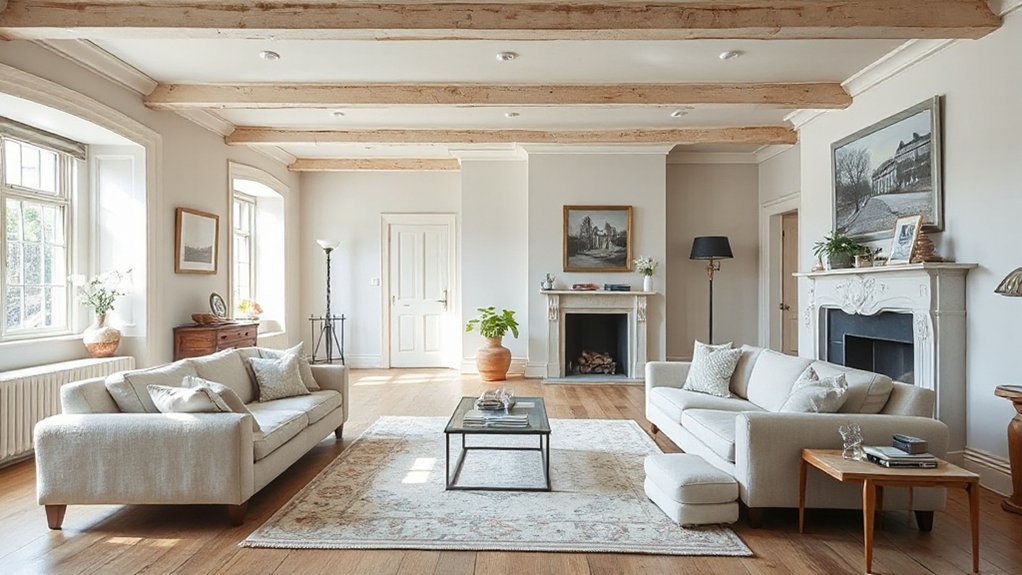
You align furniture to respect historic proportions, preserving the scale of doorways, cornices, and plasterwork as you lay out open zones.
Flow with heritage elements means matching sightlines and rhythms so each piece echoes original details without crowding them.
You prioritize precise spacing and clear focal points that celebrate traditional character while maintaining modern function.
Respect Historic Proportions
Respecting historic proportions starts with deliberate furniture placement that honors architectural details like cornices, fireplace surrounds, and door jambs. You balance scale by mapping zones that respect original room ratios, avoiding oversized pieces that overpower delicate molding.
Start with a clear focal point, often the fireplace, then align seating to create intimate sightlines that still read as a single plan. Use low-profile, furniture with clean lines to preserve airiness without cluttering historic features.
Integrate storage that tucks into alcoves or beneath oriel windows, so surfaces stay respectful and legible. Consider material consistency—woods and textiles should echo the era’s warmth while delivering modern comfort.
You’ll achieve functional elegance by weaving modern amenities and minimalist design into a disciplined, proportion-aware layout.
Flow With Heritage Elements
To flow with heritage elements, start by aligning seating, circulation, and focal points to honor original sightlines and architectural cues. You’ll prioritize furniture placement that respects historic proportions, enabling graceful progressions between public and intimate zones.
Anchor layouts with a central seating cluster that faces meaningful architectural features—chimneys, cornices, or original fireplaces—while avoiding visual clutter. Use furniture with restrained profiles, period-inspired fabrics, and subtle detailing to maintain interior authenticity.
Allow adequate clearance around doors and passageways to preserve original movement patterns and sightlines. Integrate heritage conservation considerations by selecting finishes and materials that age gracefully and support replicable repair.
Document decisions for future refurbishments, ensuring the plan remains adaptable without compromising character. This approach blends technical precision with inspirational restraint, delivering a coherent, durable expression of historic design.
Acoustic and Thermal Comfort in Open Plans
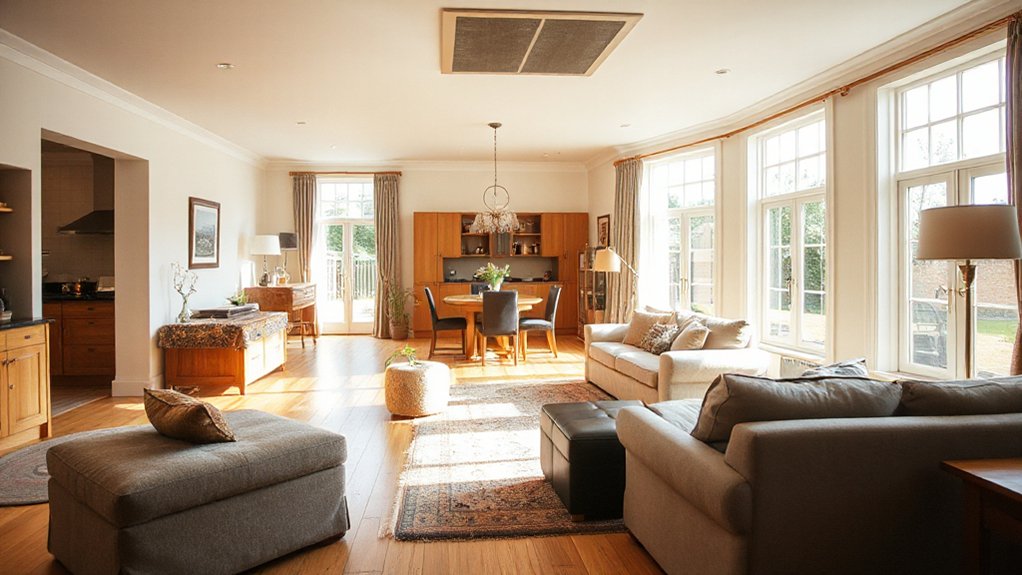
Open-plan layouts in traditional UK homes must balance openness with acoustic and thermal performance to avoid noise spill and uneven temperatures. In this scenario, you assess room boundaries, material density, and air quality holistically, not in isolation.
You’ll implement targeted sound paths control, using robust partitions and decoupled ceilings to curb reverberation without stifling light. Prioritize soundproofing innovations that preserve the aesthetic, such as concealed hardware, breathable yet dense cores, and engineered glazing strategies that minimize transmission.
For thermal comfort, align insulation techniques with zoning logic, ensuring continuous but breathable envelopes and low-thermal-mass changeover between spaces. Combine high-performance doors, seals, and floor inserts with balanced ventilation to sustain consistent temperatures, while maintaining openness, clarity, and energy efficiency across the plan.
Timeless Details and Practical Tweaks for Longevity
You configure spaces with timeless materials and finishes that age gracefully, balancing durability with quiet elegance. You’ll value durable layout flexibility that adapts to changing needs without structural changes.
And you’ll plan seasonal comfort tweaks that minimize energy use while preserving ambience. You’ll start by mapping those enduring details to everyday routines, ensuring longevity through precise, purposeful decisions.
Timeless Materials and Finishes
Natural materials and classic finishes endure because they age gracefully and are easy to repair. When chosen with thoughtful detailing, they stay relevant across decades of UK living.
You’ll value timber floors, limestone, and brick as accurate, durable foundations for open plan spaces, where grain, texture, and patina tell a room’s story.
Select finishes that wear well: low-sheen oils, breathable sealants, and resilient varnishes, applied in controlled layers for repairability.
Pair with robust hardware and trim to resist scuffing while maintaining elegance.
Incorporate contemporary accents and modern color schemes through textiles, cabinetry, and focal walls, not structural changes, to keep a timeless core.
Prioritize junctions, progressions, and moisture management to extend life, reduce maintenance, and sustain visual coherence.
Durable Layout Flexibility
A durable layout blends flexibility with a disciplined toolkit of timeless details and practical tweaks, ensuring spaces adapt without sacrificing cohesion. You design for longevity by prioritising robust geometry and clear sightlines, enabling change without rework.
Start with flexible furniture that can reconfigure to suit daily needs or guest arrivals, maintaining a calm visual rhythm. Use adaptable partitions to redefine zones without full construction, choosing low-profile systems with integrated storage to minimize clutter.
Anchor layouts to modular grids, allowing shifting furniture footprints while preserving essential circulation paths. Integrate concealed mechanicals and durable finishes that resist wear yet polish easily.
Document standard-tolerances and assembly details so future alterations remain straightforward. Train occupants to exploit shared surfaces and multiuse zones, sustaining a coherent, breathable, and resilient open plan.
Seasonal Comfort Tweaks
Start with seasonal insulation strategies that minimize heat loss in winter and curb heat gain in summer, using continuous edge sealing, chimney dampers, and floor-level insulation where feasible.
Next, optimize window treatments to balance light and thermal performance; select adjustable blinds, lined curtains, or external shading that complements the plan without cluttering sightlines.
Integrate passive ventilation or controlled extract systems to sustain air quality during seasonal shifts.
Prioritize durable finishes and mechanical reliability over quick fixes, so adjustments remain simple and lasting.
Document maintenance schedules, ensuring longevity through predictable, repeatable tweaks you can perform before each season.
Frequently Asked Questions
How Can I Maintain Period Aesthetics With Open-Plan Design?
Yes, you maintain period aesthetics by carefully balancing modern openness with period preservation and aesthetic harmony; use concealed tech, timber screens, and warm palettes, ensuring sightlines respect historic features while embracing functional, technical detailing for seamless integration.
What Budget Ranges Are Typical for Open-Plan Renovations?
Budget ranges for open-plan renovations vary widely, you’ll typically allocate: mid-range £40k–£100k, premium £100k–£250k, depending on scope. Start with thoughtful furniture placement, then invest in acoustic solutions to preserve comfort and flow.
Can Open Plans Affect Listed-Building Permissions or Covenants?
Yes, open plans can impact listed-building permissions and covenants. You must navigate listed building regulations and Heritage preservation requirements, ensuring alterations respect significance, preserve character, and align with approval conditions before proceeding with any structural changes.
How Do I Balance Natural Light With Privacy in Open Plans?
You balance natural light and privacy by layering window treatments with adjustable opacity, then pair them with acoustic solutions to reduce sound leakage; this approach proves you can brighten spaces while maintaining discretion and acoustic comfort.
What Maintenance Tasks Are Essential After Creating Open Spaces?
You must schedule regular inspections, sealing joints and checking humidity after creating open spaces. Maintain furniture placement to prevent strain, and install acoustic treatments where needed; clean filters, test airflow, and adjust lighting controls for ongoing comfort and performance.
Conclusion
Open plan living isn’t chaos; it’s a living blueprint that respects heritage while embracing today. You thread light through discreet zones, letting plasterwork breathe and cornices glow. With layered lighting and modular furniture, you sculpt atmosphere without erasing history. Think acoustics and insulation as harmony notes, not afterthoughts. Your spaces become a timeline you can reconfigure without losing character—a timeless dance of form and function, where modern comfort meets traditional charm in crisp, enduring clarity.