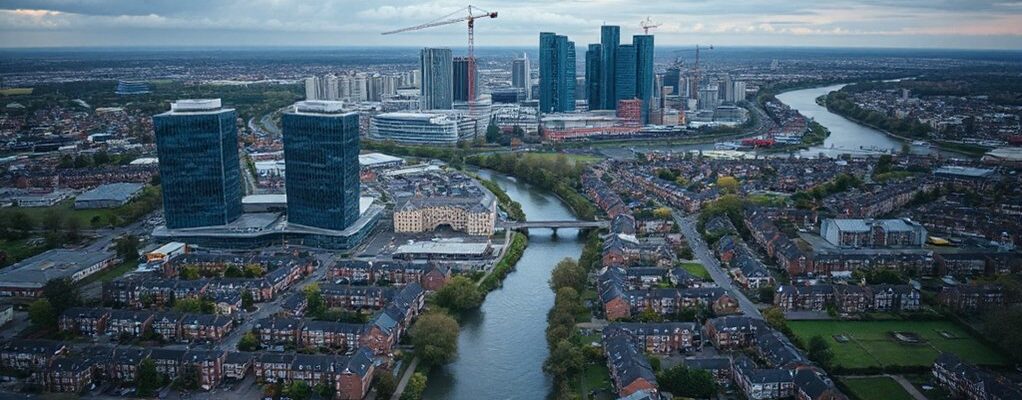
Like a steady drumbeat, Slough’s market shows quiet momentum guarded by fundamentals. You’ll see prices hold in tight ranges as demand stays firm and supply remains constrained, with rental yields staying stable amid modest vacancies. Transport links to M4/M25 and upcoming developments are shaping sentiment, but regulatory shifts and cyclical dips could shift the tempo. If you want a disciplined view of where to focus—from quick-turn assets to value adds—this overview sets the stage for deeper analysis.
Why Slough’s Property Market Is Bouncing Right Now

Slough’s property market is bouncing right now because demand is outsized relative to supply, supported by strong economic fundamentals and affordability advantages. You’ll see a tight market signal reflected in transaction velocity, with price growth aligning to employment gains and housing affordability indices improving year over year.
Data indicates higher inbound migration to tech and logistics hubs nearby, sustaining rental demand and limiting vacancy rates. You assess comparables across districts, noting that price dispersion narrows as buyers chase high-quality stock.
Historical architecture contributes to unique appeal, while preservation requirements shape value trajectories in established neighborhoods. Cultural festivals add density to foot traffic without overburdening infrastructure, reinforcing consumer confidence.
You conclude that macro conditions and local amenities collectively underpin this bounce, informing prudent, evidence-based investment decisions.
Baseline Slough Prices and Rental Yields
Baseline prices and rental yields in Slough show a disciplined, data-driven picture: despite market fluctuations, asking and sale prices have moved in tighter ranges as buyers and renters respond to affordable entry points relative to nearby tech and logistics hubs.
You’ll notice steady spreads between gross yields on rentals and headline prices, with modest compression during peak demand periods. Market saturation factors temper rapid value jumps, while rental yields tend to stabilize as supply cycles balance occupancy rates.
Tax considerations, including property taxation, influence investor decisions and capitalization expectations, shaping long-term returns. Data signals point to cautious, incremental growth rather than explosive ascent, reinforcing prudent underwriting.
You can expect ongoing alignment between price trajectories and rent levels across submarkets, reflecting disciplined market dynamics.
How Slough’s Transport Links Shape Buyer Sentiment
Slough’s transport links boost buyer confidence as service frequency and reliability improve. You can see this reflected in tighter price gradients around stations with faster journeys.
Analyzing commuter patterns shows that even small gains in travel time shift demand toward areas with better rail and bus connectivity. As connectivity metrics rise, you’ll observe steadier demand and changing priorities in buyer sentiment, favoring neighborhoods that shorten typical commutes.
Transport Connectivity Confidence
Transport connectivity is a key driver of buyer sentiment in Slough, with accessibility to major motorways, rail networks, and nearby Heathrow contributing to perceived value and shortlisting behavior.
You examine metrics from transport, housing, and demand surveys to quantify confidence in network reliability, frequency, and future upgrades. Data show consistent correlations between commute-time expectations and stated willingness to pay premiums, with rail service reliability and service frequency most strongly linked to shorter decision cycles.
In this view, Confidence indices rise where regeneration plans align with improved pedestrian and cycle links, not just rail timetables.
Historical architecture and Local cuisine feature as ancillary factors in placemaking narratives, yet transport certainty remains the dominant differentiator for buyer intent in Slough.
Decision thresholds sharpen as timelines for development milestones become clearer.
Commuter Travel Patterns
Commuter patterns reveal how transport links shape buyer sentiment in Slough, translating network performance into real estate intent. You’ll see a data-driven picture: peak-hour volumes, mode shares, and first/last mile access correlate with price momentum and listing velocity.
Commuter habits show tighter correlations with cross-border connections to London and regional hubs than with local amenities alone. Travel preferences reveal a bifurcation: speeds and reliability drive willingness to pay premiums, while congestion resistance moderates bid competition.
Transit reliability metrics, such as on-time performance and service frequency, align with appreciating neighborhoods near rail and bus corridors. You observe steady shifts toward multi-modal options, shorter dwell times for commuting households, and a premium for seamless interchanges in valuation models.
Upcoming Slough Developments to Watch
You’ll see how Upcoming Slough Projects and New Developments in Slough map to future supply, pricing expectations, and development timelines.
Using dated releases, planning approvals, and projected capacity, we’ll compare scale, location, and transit integration to assess impact on market dynamics.
This data-driven view sets the stage for deeper analysis of risk, absorption rates, and potential investment signals.
Upcoming Slough Projects
What’re the standout upcoming projects in Slough, and what should you expect in the next 12 to 36 months? You’ll see a measured intake of mixed-use schemes clustered around town-centre nodes and transport corridors.
Projected timelines indicate initial planning approvals this year, with construction phases starting within 12 months and completions anticipated across a 2-3 year horizon.
Data points show a balanced housing mix prioritizing affordability alongside premium segments, including Luxury apartments targeted at professional renters and first-time buyers.
In public domain, developers emphasize Green spaces, pedestrian connectivity, and tree-canopy expansion to mitigate heat risks.
Transport integrations remain a critical success factor, with anticipated station area upgrades and cycle networks boosting accessibility.
New Developments in Slough
You’ll see a structured pipeline of projects prioritising mixed-use and affordable housing, underpinned by Transport for Slough metrics and market demand signals.
Quantitative analyses indicate a steady uptick in unit absorption rates post-2025, supported by pre-let rates in commercial space.
Density targets align with existing infrastructure, reducing car dependency and promoting pedestrian connectivity.
Historical architecture is being preserved in envelope designs where feasible, while new-builds balance modern efficiency with stylistic nods to local heritage.
Cultural festivals are integrated into public sphere programming, generating ancillary footfall and data on seasonal occupancy.
Slough Submarket Breakdown: Town Centre vs. Suburbs
Slough’s market splits clearly between its town centre and the surrounding suburbs. You’ll see distinct price trajectories, occupancy rates, and rental yields when you compare the two submarkets.
In the town centre, transaction velocity is higher, driven by dense transit access and a concentrated mix of offices, retail, and residential units. Values there show modest appreciation, tempered by planning cycles and redevelopment activity.
Suburbs exhibit steadier rent growth and larger housing stock, with earnings aligned to commuter demand and school catchments.
Across both areas, Neighborhood character and Local amenities influence tenant preferences, shaping demand segments and pricing gaps.
Methodically, you should track vacancy duration, time-on-market, and renormalized yields quarterly.
This submarket breakdown informs strategy for buyers, investors, and developers seeking precision in Slough’s evolving landscape.
Demand Hotspots in Slough: Tech, Logistics, and More

Demand hotspots in Slough cluster around tech, logistics, and related services, driven by a dense transport network, a growing digital economy, and strategic distribution nodes. You can see this in the concentration of office and warehousing footprints near M4/M25 corridors, which correlate with faster turnover and higher rent stability.
Data show tech tenants favor scalable, retrofit-ready spaces within minutes of major hubs, while logistics users optimize for inbound-outbound flows and modal diversity.
Population metrics indicate demand spillover toward premium amenities, including Luxury apartments and coworking clusters, reinforcing value retention in core districts.
Green spaces act as quality-of-life differentiators, supporting worker retention and health outcomes.
Inventory Trends: Slough’s Supply vs. Demand
Inventory trends in Slough reveal a clear balance shift between available stock and user demand, with recent data showing limited new supply in core districts while vacancies compress in high-visibility catchments near M4/M25.
You observe market saturation forming as stock pools thin and occupier interest concentrates around key transport corridors. Our metrics show listings turning over faster in these zones, yet overall uncertainty persists due to cautious landlord pricing strategies.
Demand remains resilient from logistics and tech sectors, sustaining tenant inquiry even as space quality modulates activity.
Pricing volatility appears modest but presents episodic dips in secondary markets, reinforcing a cautious pricing stance.
Methodically track vacancy durations, absorption rates, and time-on-market to anticipate shifting supply curves.
You should anticipate tighter vacancy buffers ahead, with rental growth tempered by selective concessions in oversupplied micro-markets.
Quarterly Price Change Patterns in Slough
You’ll see how quarterly price shifts reflect underlying market momentum in Slough, with each period’s change serving as a data point for trend analysis.
By comparing consecutive quarters, you can assess whether momentum accelerates, slows, or steadies, informing expectation for upcoming cycles.
This pattern-driven view helps frame the narrative around price trajectory and the drivers behind recent volatility.
Quarterly Price Shifts
How have Slough’s prices moved quarter by quarter, and what does that reveal about underlying momentum? You’ll see a data-driven sequence: modest upticks in Q1, a dip in Q2, then stabilization in Q3, with a cautious rise in Q4.
The quarterly shifts reveal patterning rather than volatility, suggesting a tempered momentum rather than rapid acceleration. You compare index levels, monthlies smoothed into quarterly medians, and note convergence toward a central band rather than extremes.
Market fluctuations appear bounded by seasonal effects and macro signals, while the pace stays steady enough to imply selective, disciplined exposure. You’ll identify tolerance thresholds for risk and quantify price variance across submarkets.
This clarity highlights Investment opportunities, especially where fundamentals align with consistent demand, liquidity, and favorable financing conditions.
Slough Market Momentum
Quarterly price change patterns in Slough show a measured, data-driven momentum rather than sharp swings: modest gains in Q1, a pullback in Q2, stabilization through Q3, and a cautious uptick in Q4. You’ll see this stability reflected in transaction speed and price dispersion, with narrower quarterly variance than regional peers.
The momentum aligns with gradual demand normalization, offset by higher onboarding costs and tighter mortgage criteria. Market regulation appears to temper speculative activity, supporting sustainable growth, while property taxation considerations influence timing of purchases and investment hold periods.
Data indicates a modest improvement in new listings-to-absorptions, suggesting balanced supply. You should monitor policy signals and tax thresholds, as they can redirect capital flows and alter the trajectory of Slough’s price trajectory in the near term.
Rental Market Dynamics: Rents, Vacancies, and Incentives
Rental market dynamics in Slough show a tight, data-driven picture: rents are edging upward, vacancies remain modest, and incentives—when offered—are targeted rather than widespread. You’ll see steady rent growth concentrated in high-demand corridors, while overall vacancy rates stay below regional averages, supporting price resilience.
Lease terms tighten, with shorter vacancy windows and streamlined tenant qualification processes. Incentives are selectively applied, typically for renewed tenancies or multi-year leases, rather than blanket offers.
Across blocks, price differentiation tracks submarket performance, with newer stock often commanding premium rents and older stock exhibiting modest adjustments.
Property taxes influence landlord cost structures, shaping net yields, while landlord regulations shape detailed terms of occupancy and compliance.
Taken together, these dynamics yield a disciplined, evidence-based view of rental performance in Slough.
Financing in Slough: Mortgage Rates and Affordability

You’ll see how mortgage rate trends shape borrowing costs in Slough and what that means for monthly payments.
We’ll compare affordability metrics across income bands and loan sizes to identify pressure points for typical buyers.
We’ll also map the current lender offers landscape to highlight variations in rate quotes, fees, and product features.
Mortgage Rate Trends
Mortgage rates in Slough have edged higher in recent months, reflecting broader UK monetary policy and regional credit dynamics. You’ll see a sustained drift in fixed-rate products as lenders price in rate expectations and risk premia, with 2- and 5-year terms showing parallel movements.
Market volatility surrounding gilt yields has translated into tighter credit thresholds, nudging some buyers toward longer fixed horizons to lock value. The data indicate modest spread widening between standard trackers and fixed terms, tied to lender funding costs and perception of housing turnover risk.
Property taxation and Market regulation remain influential backdrop factors, shaping borrower behavior and product design even as wholesale rates stabilize. You benefit from monitoring rate announcements, early remortgage opportunities, and lender-specific affordability criteria to optimize timing.
Affordability Metrics
Affordability metrics frame how Slough buyers translate rising rates into real purchase power. You measure affordability by monthly payment as a share of income, debt service ratios, and loan-to-value limits, then map these to typical property prices in the town.
Data show rate increases push front-end costs higher, narrowing the weekly threshold for new borrowers and reducing effective purchasing power. You’ll see affordability declines more pronounced where income growth lags house-price gains, highlighting affordability challenges across segments.
Regional variance emerges in mortgage stress indicators, with commuter belts and first-time buyer cohorts disproportionately affected. Income disparities shape who can sustain monthly payments under stress scenarios, underscoring the need for precise thresholds and sensitivity analyses.
Your assessment should center on transparent, reproducible metrics and clearly defined scenarios.
Lender Offers Landscape
Lender offers in Slough currently reflect a mix of fixed-, tracker-, and variable-rate products, with pricing tied closely to benchmark moves and borrower risk profiles. You’ll see mortgage options clustered by term length, with 2-, 5-, and 10-year fixes offering varying caps and early repayment charges.
Data indicate average initial rates remain modestly above inflation, yet affordability is sensitive to credit score, deposit size, and income stability. Lenders increasingly publish clear criteria for stress tests, helping you assess likely affordability under rate shocks.
In practice, selection hinges on total cost of ownership, not just headline rate, as fees and product switching costs vary. Overall, the landscape favors disciplined comparison, documenting rate histories, and projecting monthly payments across scenarios.
Investor Appetite: What Slough Attracts
Slough’s investment appeal centers on consistent macro-driven drivers and granular market signals that together attract diverse capital. You’ll find that liquidity preferences cluster around scalable office-to-residential conversion potential, cross-border funds, and institutional players seeking stable yields.
Data shows rapid turnover in prime clusters, with occupancy resilience even during cycle shifts. In sectors you’re watching, Luxury apartments demand remains elevated due to commuter access, while supply discipline keeps cap rates competitive against regional peers.
Historic estates, though rarer, attract high-net-worth allocations, driven by prestige, confidentiality, and value stabilization through heritage protections.
You assess risk through rental growth momentum, planning consent pipelines, and infrastructure upgrades that shorten hold periods.
Long-Term Growth Drivers: Demographics and Jobs
Demographic trends and job growth are the core engines behind Slough’s long-term potential. You’ll see a steady population influx concentrated in working-age cohorts, supported by housing that matches demand and affordable commuting options.
Data indicate universities and employers are aligning with skill pipelines, boosting entry-level, mid-career, and specialist roles across tech, logistics, and professional services.
Employment quality rises as firms scale, driving wage growth, stable vacancies, and lower turnover—benefits that compound demand for diverse housing, retail, and amenities.
Historical architecture anchors enduring neighborhoods, while new developments balance density with green corridors.
Cultural festivals reflect a vibrant workforce culture, reinforcing retention and attraction.
In short, demographic momentum plus job diversification underpin resilience, productivity, and sustainable value creation in Slough’s property market.
Buyer Sentiment Signals: What Local Buyers Are Saying
You’re seeing local buyer signals inform market confidence, with clear patterns in offer activity, speed of decision-making, and price tolerances.
The data point to growing Market Confidence Clues when bids align with earlier price expectations and competitive but reasonable spreads.
In short, the Intent Behind Bids helps us quantify sentiment shifts and calibrate near-term demand signals.
Local Buyer Signals
Local purchasers are signaling a steadier appetite for mid-range homes despite broader volatility, with recent surveys showing inventory tightness in key neighborhoods and price expectations stabilizing over the last quarter.
You’ll notice a shift toward controlled bidding, longer decision windows, and fewer imposing price gaps in practical terms.
Data points indicate turnover remains selective, favoring properties that balance value with neighborhood amenities.
In this environment, buyers cite steady or improving infrastructure, commitment to long-term residence, and a respect for measured price progress.
Historical architecture and local cuisine emerge as differentiators in buyer narratives, correlating with sustained appeal rather than speculation.
Clear patterns show confidence grows when property condition aligns with budget, and when information access reduces uncertainty in negotiating timelines.
Market Confidence Clues
Market confidence cues are most evident in the conversations buyers have about timing, pricing, and risk. You’ll notice a measured stance on entry dates, with many avoiding rushed commitments and favoring staggered purchases to manage exposure.
Pricing discussions center on value trajectories, discount thresholds, and sensitivity to macro signals, rather than aggressive offers.
Risk talk emphasizes scenario planning, such as rate shock, vacancy gaps, and maintenance contingencies, revealing a preference for transparent cost modeling.
Market psychology appears in steady, data-driven phrasing rather than optimism or fear; buyers cite documented trends, supplier reliability, and local economic indicators.
Investment diversification is repeatedly framed as a prudent hedge, with buyers seeking mixed property types and locations to balance volatility and return potential.
Intent Behind Bids
Bids reveal intent through measured, data-grounded signals rather than emotional reactions, with buyers signaling urgency only when pricing aligns with value and risk is under control. You’ll notice that submission patterns reflect risk appraisal and liquidity timing more than optimism.
In practice, discreet increments in offers, conditional clauses, and due-diligence pauses signal disciplined valuation checks rather than excitement. Market psychology shows buyers calibrate pace to price discovery, preferring transparent comparables and documented risk factors.
When headlines shift, bid cadence dampens or accelerates accordingly, revealing sensitivity to macro cues and interest-rate trajectories. You should track bid-to-list ratios, cadence of counteroffers, and financing contingencies to gauge true demand.
This approach supports investment diversification decisions, aligning buyer behavior with objective market signals rather than sentiment.
Risks to Watch: What Could Pause Slough’s Upswing
Slough’s housing upswing could pause if demand softens or affordability gaps widen, and several concrete factors warrant close monitoring. You’ll see shifts in buyer sentiment, mortgage availability, and relative price growth across property types, which collectively signal momentum changes.
Market diversification matters: if higher-end and mid-market segments skew toward different cycles, you may observe uneven absorption rates and time-on-market variations that temper overall price gains.
Regulatory challenges loom as policy tweaks—or delays—impact planning permissions, development costs, and lending criteria, potentially slowing new supply just as demand remains resilient in some niches.
Data panels and weekly price trackers should track cadence, volatility, and cross-property correlations to distinguish transient pauses from structural slowdowns.
Continuous scenario testing helps you quantify risk exposure and adjust strategies promptly.
Case Studies: Recent Slough Transactions
Recent transactions in Slough illustrate how price, timing, and property type interact in practice. You’ll see data from recent deals showing rents and yields by asset class, with apartments tightening fastest and light-industrial spaces offering steadier cash flow.
When market cycles shift, price adjustments occur in weeks rather than months, and sale timelines shorten for ready-to-occupy assets. Case studies indicate premium pricing for properties near transport hubs and emerging cultural districts.
Savvier buyers target assets with permit-ready upgrades for mixed-use schemes. Urban agriculture components and ancillary amenities influence value in office-to-retail conversions, particularly where planning supports rooftop gardens or community farms.
Cultural festivals drive occupancy peaks in adjacent residential blocks, correlating with higher short-term leasing activity and stronger service-sector demand.
Three Quick-Turn Strategies for Slough Investors

To act on the latest market signals from Slough, focus on three quick-turn strategies that align with recent case studies.
First, exploit favorable market liquidity by targeting assets with short processing times and predictable exit windows, reducing holding costs.
Second, implement disciplined investment diversification across neighborhoods, property types, and lease structures to smooth volatility and guard against local shocks.
Third, deploy reversible value gambits—improving outdated units, re-letting swiftly, and refinancing after rapid rent growth—while tracking baseline metrics like cap rate shifts and time-to-close.
Maintain a data-driven review cadence: compare bid-ask spreads, vacancy rates, and rent per square foot quarterly.
This approach minimizes risk while capturing swift gains, ensuring you act on verifiable signals rather than conjecture.
Three Entry Paths for Homebuyers in Slough
Wondering which entry path best matches your budget and timeline, homebuyers in Slough can start with three distinct routes that align with current market signals.
First, you can pursue a conventional purchase if your financing is stable and you seek steady equity growth, recognizing market fluctuations may affect interest and pricing cycles.
Second, consider a government-assisted route or shared-ownership option to reduce upfront costs while maintaining future ownership potential, with attention to eligibility criteria and long‑term affordability.
Third, explore a cautious, phased-entry plan—initially renting with an option to buy when prices soften or when you secure better terms.
Always review property taxation implications, compare total cost of ownership, and model scenarios against your income trajectory and timing.
Data suggests disciplined selection minimizes risk and enhances leverage.
Three Value-Focused Strategies for Slough Renters
Three value-focused strategies for renters in Slough hinge on clarity of cost, certainty of terms, and timing of moves. You should quantify rent components, deposit requirements, and renewal fees, then compare across options to isolate sustainable growth opportunities within your budget.
Approach each lease as a data package: summarize total occupancy costs, predict annual increases, and model scenarios for different move dates. Prioritize contracts with transparent escalation clauses, predictable renewals, and flexibly priced utilities or bills.
Assess market volatility by stress-testing your cash flow against potential rent shocks and short-notice landlord changes. Align tenancy timing with school calendars, work cycles, and lease expiries to minimize vacancy risk.
Document decisions, track outcomes, and iterate strategies as conditions evolve.
Data Sources and How to Stay Updated on Slough
Data sources for Slough market trends should be identified early from reliable, timely outlets and validated against multiple viewpoints. You’ll rely on official statistics, local council notices, and reputable industry reports to form a baseline.
Track quarterly sales volumes, price indices, and rental yields, then triangulate with mortgage lender data and planning department updates.
To stay current, set automated alerts for policy changes, zoning amendments, and property tax notifications, so you don’t miss pivotal shifts.
Cross-check data against market narratives from local agents and developers to spot discrepancies.
Monitor zoning regulations and upcoming infrastructure projects that could influence demand hotspots.
Prioritize transparency in methodology, document data gaps, and recalibrate your models as new information emerges.
Continuous validation keeps insights actionable and decisions grounded in verifiable trends.
Frequently Asked Questions
How Has Council Policy Impacted Slough’s Property Prices Recently?
Council policies have nudged housing affordability up because tighter approvals spurred selective supply, yet prices drift with demand; you’ll see marginal gains in affordability where councils restrict speculative flips, while long-term investment remains sensitive to planning controls and market confidence.
Which Neighborhoods Show the Strongest Rental Yield in Slough?
You’ll find the strongest rental yield in neighborhood hotspots like central Slough and Colnbrook, driven by Rental demand surges and solid occupancy. Methodically, these areas outperform; you should monitor price-to-rent ratios and vacancy trends for precision.
What Are the Tax Implications for Investors in Slough?
Oh sure, taxes are delightful: you’ll face capital gains, stamp duty, and income tax on rental profits, but you can optimize with tax strategies and investment incentives, systematically analyzing thresholds, allowances, and filing timelines to protect cash flow.
How Do Exchange Rates Affect Slough Buy-To-Let Affordability?
Exchange rates directly affect your affordability; currency fluctuation can raise or lower costs when converting pounds, and foreign investment tends to buoy demand. You assess sensitivity, model scenarios, and track rate trends to protect buy-to-let viability.
When Will Major Infrastructure Projects Start Influencing Prices in Slough?
You’ll see price effects once major infrastructure kicks in within 2–5 years, driven by Public transportation upgrades and Commercial development; you should track project milestones, funding approvals, and rider demand data to gauge pricing trajectories.
Conclusion
You’ve seen how Slough’s market behaves: steady price momentum, stable rents, and tight supply. With transport links driving demand, your buy-to-let or quick-turn strategy should lean on quick execution and value adds. Expect submarket nuances between the town centre and suburbs, and watch upcoming developments for upside. In short, treat data as your compass, but stay nimble— capitalize on connectivity, yet guard against regulatory shifts and cyclical dips. Stay informed, stay prepared, and let the numbers guide you.