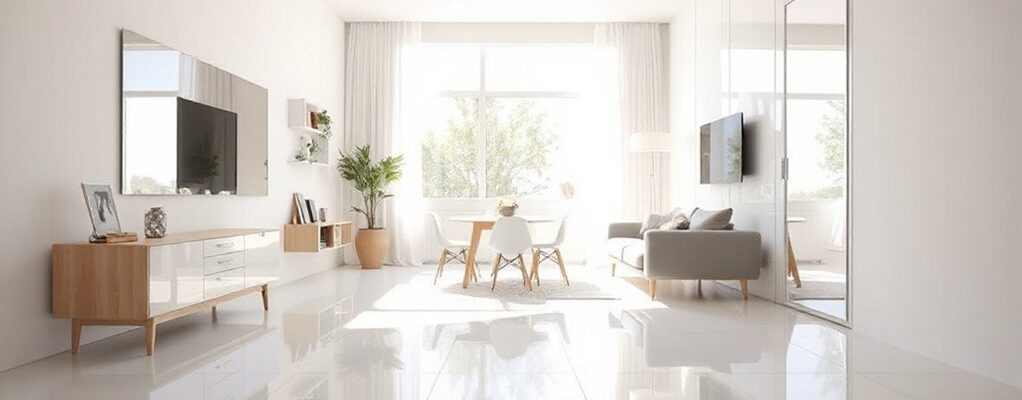
Imagine you’re renting a 28-square-meter flat and you want it to feel bigger without knocking walls. You’ll use sheer curtains, reflectors, and light colors to open the space, then layer in multi-functional furniture to save steps. Keep clutter at bay with a quick daily tidy, map a simple 1-page layout, and carve zones with rugs and lamps. The payoff isn’t just more space—it’s a calmer flow you can keep up with, step by step. Want to see how it fits your place?
Plan Your Small-Space Strategy: Goals, Limits, and a 1-Page Layout
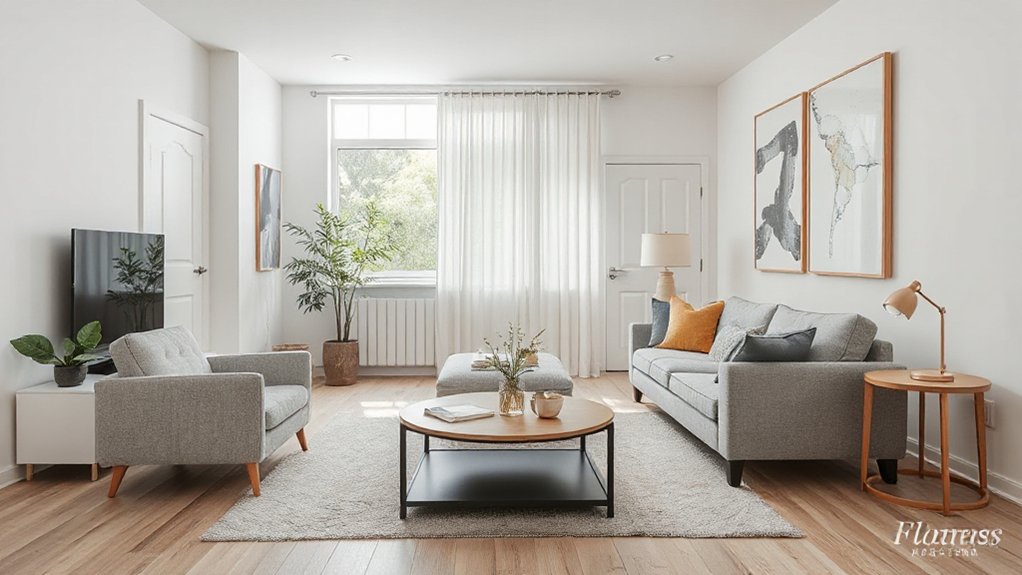
Start by clarifying your goals and limits: what must stay, what can go, and how big you want the space to feel. You outline a clear brief, then translate it into a 1-page layout that guides every choice.
Identify non-negotiables—essential pieces, safe zones, and daily routes—and mark what can be swapped for efficiency. Sketch a simple grid: zones for living, dining, and work, with sightlines preserved.
Prioritize vertical storage to maximize floor space, noting where space-saving storage fits best. Use color psychology to set mood cues: light neutrals expand shadows, brighter accents create focal points without crowding walls.
Keep lines clean, avoid clutter, and make certain each element serves a purpose. This plan keeps you nimble, intentional, and visually calm.
Design a Flexible Floorplan With Multi-Functional Furniture
A flexible floorplan hinges on multi-functional furniture that adapts to your needs without crowding the space. You choose pieces that serve more than one purpose, so every square foot earns its keep.
Look for convertible furniture that folds, stacks, or slides into a compact form, transforming a living area into a dining nook or guest space in seconds.
Opt for modular layouts that you can rearrange without tools, creating distinct zones for work, relaxation, and storage when you need them.
Keep lines clean and surfaces uncluttered, so the room feels airy even with transformation.
Prioritize durability and ease of use, so daily shifts stay quick and quiet.
This approach yields a flexible, liveable footprint updated to fit your routines.
Maximize Light and Color to Make Rooms Feel Airier
Let light flood the space and color do the heavy lifting: open, bright rooms feel instantly bigger. You’ll lean into Natural light and bold colors to carve perception, not walls.
Choose sheer curtains and window placements that invite sun without glare, then keep surfaces light—stone, white, or pale neutrals—as a calm canvas.
Bring in bold colors as accents: a chair, a throw, a rug, or artwork that your eye travels to, not across. Limit busy patterns; the goal is breath, not clutter.
Reflective finishes and glass help bounce light, while clean lines in furniture reduce visual weight.
If you can, paint a ceiling pale; it visually raises the room.
Plan color in small, repeatable bursts for cohesion and airiness.
Place Mirrors Strategically to Double Space and Light
If you want to double light and space, place mirrors where they catch the sun and reflect activity. Position tall or vertical mirrors opposite windows to bend daylight deeper into rooms.
Use horizontal mirrors above sofas or consoles to visually extend walls without crowding space. Leaning mirrors can create a casual focal point, but secure them for safety.
Choose frames and glass that minimize glare while maximizing reflection. Place mirrors opposite lamps or lighting fixtures to amplify evening illumination, a simple lighting enhancement that makes walls recede.
Avoid clutter in reflected areas; keep surfaces clean and free of busy patterns. For cohesive mirror placement, align edges with architectural lines and maintain consistent scale across rooms for a calm, expansive feel.
Declutter Daily to Reveal More Room
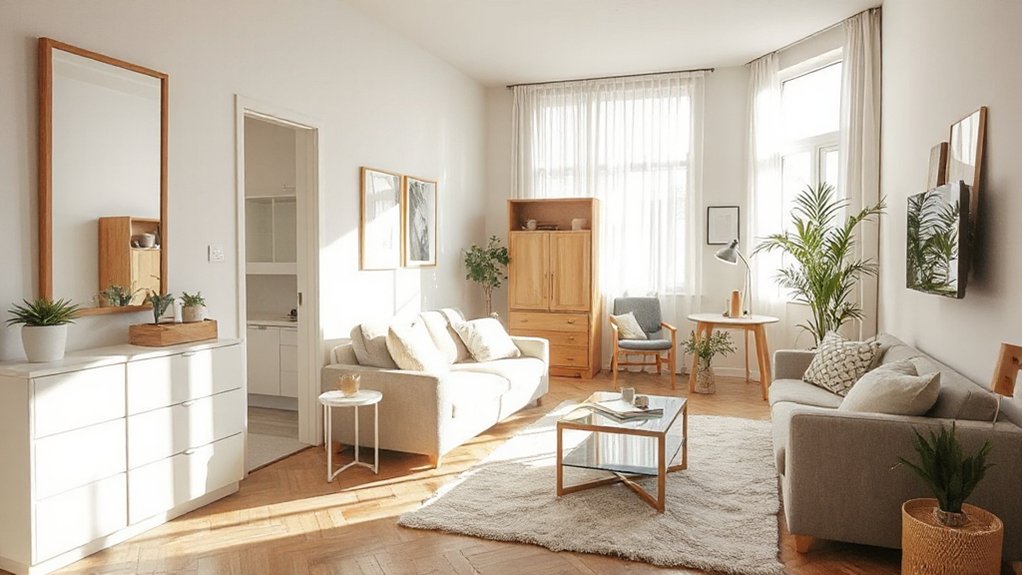
Clear surfaces make the room feel larger, calmer, and easier to navigate.
A daily declutter ritual turns hidden clutter into revealed size, letting you notice the space you actually have.
Keep it visual and practical: tidy the essentials, and let calm spaces and revealed size guide your next steps.
Clear Surfaces, Calm Spaces
Decluttering daily reveals more room by turning surfaces into clean, calm canvases. You keep only what you use, then wipe away the rest so desks, countertops, and shelves breathe.
Apply a simple rule: one in, one out. When you add something, remove another item that serves less purpose. Choose surfaces with intention, not impulse.
Minimalist decor guides your choices, favoring form and function over clutter. Keep clutter-free zones visibly clear with gentle, calming color schemes—soft beiges, pale blues, and muted greens that reflect light and reduce visual noise.
Store frequently used items in handy, accessible places, and let vertical space do the heavy lifting. A tidy surface becomes a stage for everyday tasks, enhancing focus and perceived space.
Daily Declutter Rituals
A simple daily ritual can open space: spend 5 minutes at the end of each day to decide what stays and what goes. You’ll train your eye to spot clutter fast, turning routine into momentum.
Each minute targets a zone: empty surfaces, a drawer, a bag you carried in. Toss items you didn’t touch, relocate what belongs elsewhere, and reset the rest to minimalism.
This habit builds Organizational habits that scale beyond one room, shaping a calm, intentional home. With a Minimalist mindset, you measure value by utility, not volume, so you keep what serves you.
Keep a small box for donations and a trash bag nearby. Finish with a quick checklist: surface clear, item count low, nothing unneeded visible.
Tomorrow, repeat, refine, reveal more room.
Hidden Clutter, Revealed Size
Hidden clutter isn’t just visible dust; it’s the quiet bulk behind doors, under sinks, and in deep shelves. Each item you leave there chips away at perceived space, so you feel cramped even when the room isn’t full.
Declutter daily to reveal more room, quickly. Start with one area you use every day, like the medicine cabinet or the entryway closet. Remove what you don’t need, decide what truly serves you, and relocate the rest to a designated bin for reuse or donation.
As you clear, you’ll see a cleaner silhouette and a more breathable floor line. The result is a clearer sense of size, a revealed size that changes how you move, stack, and place furniture.
Small tweaks, steady habit, bigger feeling of space.
Zone Without Walls: Safe Visual Boundaries and Flow
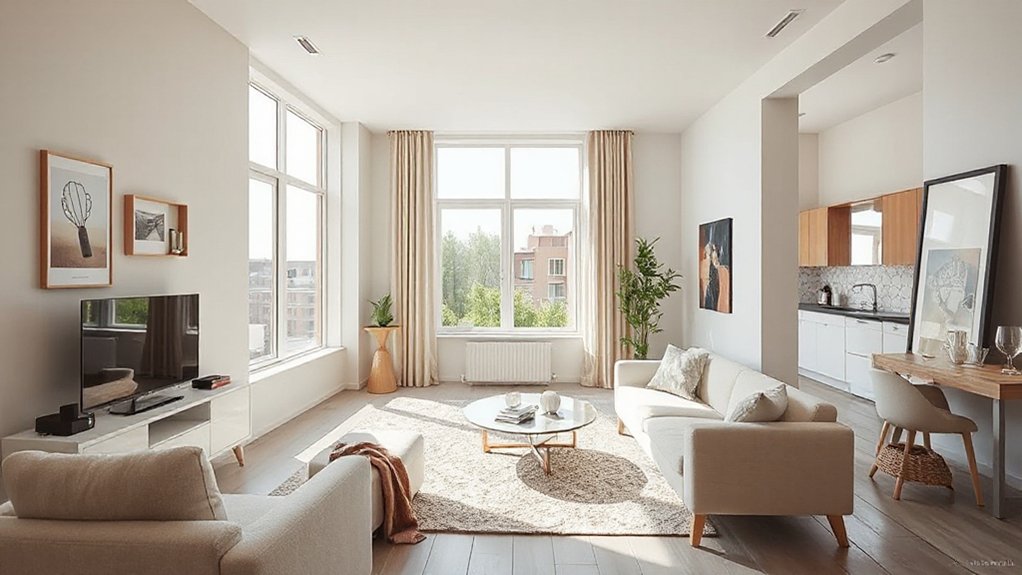
With no walls to delimit spaces, you create safe, visual boundaries that guide flow without closing in the room. Visual boundaries, when done right, signal zones for cooking, lounging, and working without erecting barriers. You define these edges with rugs, lighting, furniture placement, and color shifts—not fences.
Aim for clear sightlines, so movement remains effortless from one area to the next. Flow optimization hinges on keeping routes direct and avoiding clutter in high-traffic arcs. Mirror or artwork alignment at eye level can reinforce boundaries while preserving openness.
Use soft passages between zones—low consoles, semi-backed seating, and translucent shelving—to maintain a cohesive feel. The result is a calm, organized space that reads as larger because it breathes with intention.
Budget Upgrades That Make Rooms Look Bigger Under $100
If you want rooms to feel bigger on a tight budget, small upgrades can add instant space perception. Pick up budget-friendly decluttering strategies: clear surfaces first, then store items in uniform boxes to reduce visual noise.
Color psychology guides wall and accessory choices; opt for soft, light hues near ceilings to lift the feel, and save bold accents for focal points.
For under $100, swap heavy drapes for lighter curtains or blinds, and hang mirrors opposite windows to reflect light.
Choose furniture with clean lines and compact footprints to maximize floor space, focusing on furniture ergonomics: stackable, multi-use pieces, and seating that fits your body without crowding.
Finish with slim, cohesive lighting and minimal hardware to preserve openness.
Frequently Asked Questions
Can Small Spaces Feel Bigger Without Removing Any Furniture?
Yes, small spaces can feel bigger without removing any furniture. You’ll prioritize multi functional furniture and strategic lighting, creating clean, visual appeal; you’ll mirror light, clear flows, and subtly elevate depth with contrast, texture, and purposeful, uncluttered layouts.
Which Colors Visually Widen a Room on a Budget?
Yes—light, cool colors visually widen a space on a Budget decorating plan. Use color psychology to pick airy neutrals and soft blues or greens, minimize contrast, and keep accents restrained for maximum visual breath.
How to Measure Space for Flexible Furniture Fit?
To measure space for flexible furniture fit, you’ll track space utilization using simple measurement techniques like length, width, and height with a tape measure, noting doorways and clearances. Visualize flow, then adjust layouts to maximize usable area.
Do Rugs Affect Perceived Room Size and Flow?
Yes, rugs affect perceived size and flow: lighter, larger rugs create openness, while borders define zones. Use decorative accents and strategic light reflection to guide sightlines, making spaces feel bigger and calmer without crowding the floor.
Can Plants Impact Perceived Openness in Tiny Flats?
You notice openness blooming as you place vertical gardening and air purifying plants near windows. You feel air and sightlines expand, clutter fades. You breathe easier, see space grow; practical, minimalist greenery enhances visual appeal and perceived depth.
Conclusion
You can transform a small flat without big renos—think light, mirrors, and smart layout. Start with a 1-page plan, then pick multi-functional pieces and light colors. Place mirrors to bounce light, and zone with rugs and placement rather than walls. Declutter daily to reveal space. As an eye-catching stat: homes with natural light feel 20% larger than their square footage. Tiny changes add up—keep visuals clean, feel flexible, and enjoy rooms that breathe.