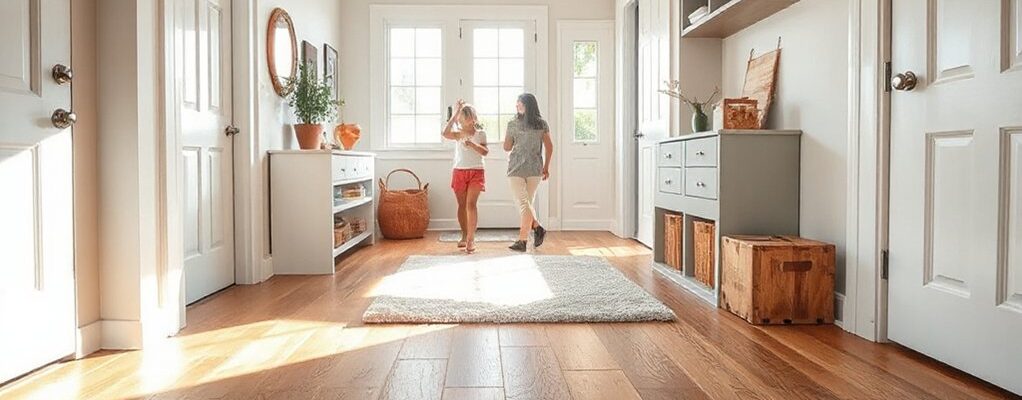
You might not realize that the right high-traffic floors balance durability with comfort and speed of updates, not just look great. You’ll want surfaces that resist scratches, stains, and moisture, yet stay warm underfoot and easy to clean. Think durable options like luxury vinyl or sealed concrete, plus quick-install styles and cohesive trim to shorten updates. Stay with me for practical choices, care routines, and cost planning that keep your family’s spaces stylish and resilient.
Key Takeaways
- Prioritize durable, hard-surface options like luxury vinyl and sealed concrete for water resistance, stain longevity, and easy cleaning in high-traffic areas.
- Plan for comfort and impact absorption with textured, resilient floors and proper perimeter sealing in entryways and kitchens.
- Use quick-install styles in neutral tones (gray/taupe/beige) with matte finishes and subtle textures to hide wear and speed up updates.
- Map wear hotspots and pair surfaces with area rugs only where needed to balance safety, durability, and design.
- Establish maintenance routines: regular cleaning, periodic sealing/resealing, and a budgeted refinish/maintenance plan to spread costs.
How to Choose Floors for High-Traffic Homes: Criteria That Matter
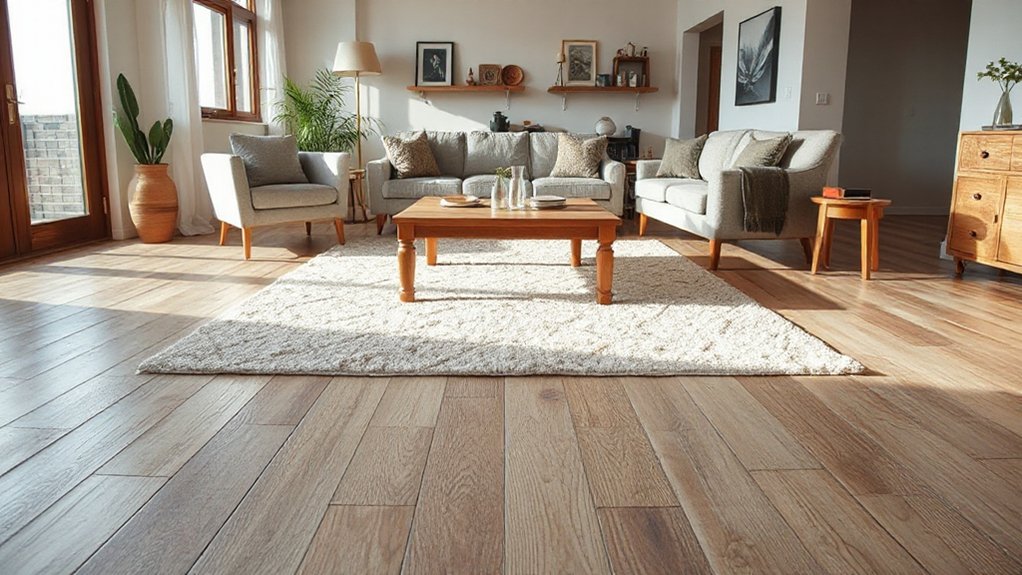
When choosing floors for high-traffic homes, prioritize durability, maintenance needs, and how the room’s use will influence wear patterns. You’ll compare material hardness, scratch resistance, and stain longevity, matching them to traffic levels and subfloor conditions.
Assess maintenance cycles: how easy is cleaning, sealing, or refinishing, and how often will you invest time or money? Plan for wet areas, pet zones, and kids’ activities, then map potential wear hotspots to guide color and texture choices.
Consider integrated design details: area rugs to protect traffic paths and decorative moldings to frame progressions without creating tripping hazards. Budget for underlayment, acoustics, and resale value, ensuring you don’t over- or under-spec.
Conclude with a durable, low-maintenance combination tailored to each room’s rhythm.
Durable Hard Surfaces for High-Traffic Areas: Options and Care
Durable hard surfaces stand up better to daily wear in high-traffic homes, offering reliable grip on busy days and under kids, pets, and spills. You’ll value traction, resistance to scratches, and easy maintenance when choosing between options like luxury vinyl and concrete flooring.
Luxury vinyl delivers water resistance, cushioned feel, and detailed patterns that mimic natural stone or wood, helping hide wear in hallways and mudrooms.
Concrete flooring, when properly sealed, provides exceptional durability and seamless cleaning, plus the option for integral color or decorative patterns.
Care is straightforward: wipe spills promptly, use vetted cleaners, and re-seal periodically to preserve gloss and stain resistance.
Pair with area rugs only where needed, to balance footing and safety without compromising the surface’s toughness.
Warm, Resilient Floors That Feel Good Underfoot
Look for floors that absorb impact while resisting denting, so traffic-borne energy feels gentler on joints. Perimeter sealing and moisture barriers protect longevity in entryways and kitchens, where grit and spills test resilience.
Texture matters: cozy textures invite barefoot comfort and hide minor wear, while antimicrobial finishes help with daily family life.
Installations should allow for precise alignment and minimal expansion gaps, reducing movement-induced creaks.
Pair with ambient lighting that emphasizes warmth and reduces glare, enhancing the perception of softness without compromising visibility.
Durable, comfortable, and low-maintenance results align with busy households.
Style and Color Decisions With Quick-Install Options
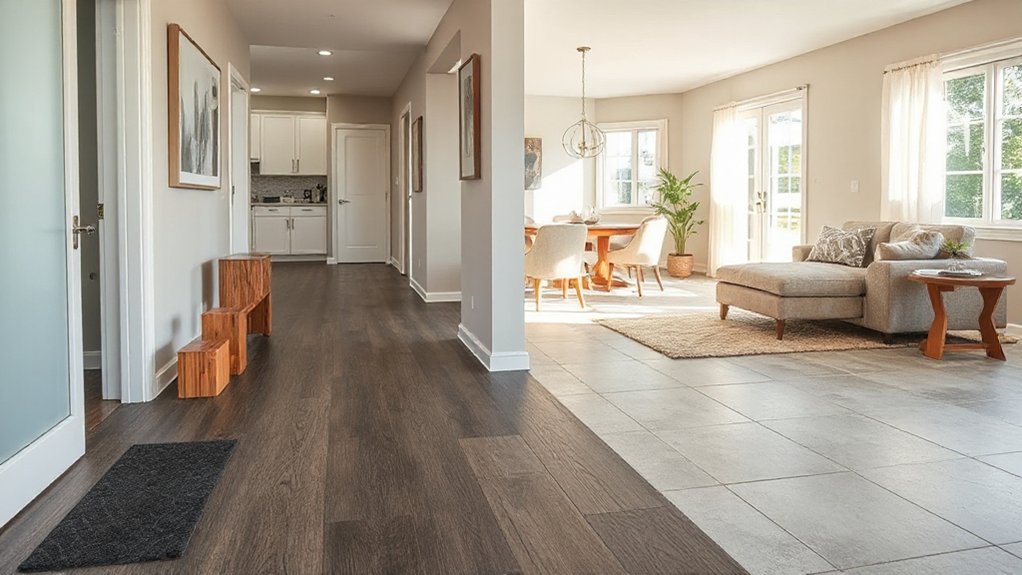
If you’re updating high-traffic spaces on a tight timeline, quick-install flooring can save you time without sacrificing style. You’ll want decisive color choices that hide wear while feeling cohesive with your furniture. Start with neutral bases in grays, taupes, or warm beiges to maximize versatility and resale appeal.
Add depth with decorative patterns that read as deliberate design rather than afterthought, such as herringbone or wide-plank visuals on a short paneling or tile layout. Material textures matter; choose surfaces that show less scuff but still read as inviting, like matte finishes or subtle grain.
For faster results, pair plank or tile runs with matching trim and transitional borders. Finally, run quick mockups or sample swatches to confirm lighting influence and guarantee cohesion across rooms.
Maintenance Routines and Long-Term Cost Planning
How can you keep high-traffic flooring looking great while controlling long-term costs? You’ll implement disciplined routines and smart planning that minimize wear and surprise expenses.
Establish cleaning schedules that match foot traffic peaks, using manufacturer‑recommended products to protect finishes and extend life. Track events that spike dirt, then tailor matting and entry care to those periods.
Pair routine maintenance with quarterly inspections to catch scratches, moisture, or wear before repairs mount. Align each action with budget considerations to avoid over‑servicing or premature replacements.
- Create a monthly maintenance calendar that slots cleaning, sealing, and inspections, with budget notes beside each task.
- Use durable finishes and timely refinishing windows to spread costs evenly over years.
- Build a conservative reserve for unexpected damage, reducing emergency spend.
Frequently Asked Questions
How Do Pets Affect Flooring Choice in High-Traffic Homes?
Pet scratches can be minimized with the right choice, and you’ll notice smoother, longer-lasting results when you select flooring durability first.
In high-traffic homes, you’ll prioritize materials that resist dents, stains, and scratches from claws, spills, and muddy paws.
Choose sealed surfaces, durable cores, and wear layers, plus easy maintenance.
You’ll reduce maintenance time and enjoy consistent performance, controlling costs while keeping pets comfortable and floors looking good, day after day.
What Are Eco-Friendly High-Traffic Flooring Options?
Eco-friendly high-traffic flooring options include sustainable materials like bamboo, cork, and reclaimed hardwood.
You’ll also want durable, low-VOC porcelain or ceramic tiles.
You’ll want finishes that resist scratches and moisture, with proper underlayment for stability.
Consider recyclable flooring options such as certain vinyl composites and engineered planks that are designed for recyclability at end of life.
You’ll reduce waste by choosing products with longer lifespans, easy maintenance, and locally sourced materials whenever possible.
Can Flooring Improve Acoustics in Busy Living Spaces?
You bet—flooring can give busy rooms better acoustics. You’ll notice improvements when you blend decisive choices with acoustic treatments and soundproofing solutions.
Improve absorbency with textiles underfoot, choose dense, low‑resilience fibers, and layer with mats that soften impact. Opt for seamless shifts, tight-fitting planks, and resilient rubber underlays where traffic spikes.
Maintain floors with timely crepe and sweepups. This pragmatic setup lowers noise, enhances clarity, and delivers measurable, lasting results in busy living spaces.
Which Floors Are Best for Allergy-Prone Households?
You should pick floors that minimize airborne allergens and simplify maintenance. Opt for smooth, sealed surfaces like vinyl or hardwood, and skip high-pile carpets that trap dust.
Choose hypoallergenic finishes and washable rugs in high-traffic zones. Regular flooring maintenance, including damp-mopping and dust-mopping, helps dramatically.
Maintain good circulation, use air purifiers, and seal gaps to reduce allergen ingress. With these choices, you’ll reduce exposure and improve overall air quality in allergy-prone households.
Do DIY Installations Affect Warranty Coverage?
DIY installation pitfalls can void your warranty, so proceed carefully. You’ll reduce risk by following manufacturer guidelines to the letter, using proper underlayment, fasteners, and alignment.
If you DIY, expect warranty exclusions for improper subfloor prep, damage during install, or incorrect acclimation. Keep receipts and documentation to prove steps were followed.
Remember: an imperfect job becomes a coverage denial, so weigh professional help against potential out-of-pocket costs.
Conclusion
You’ve got the exact grains, colors, and textures that survive sibling chaos and muddy shoes. But the real test comes next: will you invest in the right durable surface, seal, and rug placement to keep it pristine? Picture the day you sweep once, wipe once, and still walk barefoot on a floor that looks new. The choice isn’t just style — it’s long-term resilience. Ready to decide, then watch your home stay flawless, week after week.