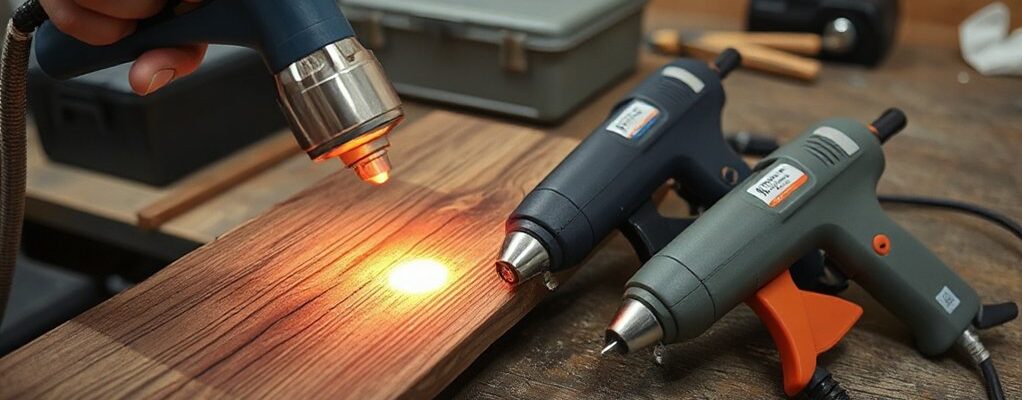
When you compare heat guns for home projects, look at temperature range, airflow, and control to match your tasks. For paint stripping, choose steady heat with adjustable temps and wide nozzles; for shrinking, moderate, even airflow helps cover surfaces evenly; for bending plastics, focus heat with narrow nozzles at mid-range temps; for heavy duty, higher temps with quick passes and robust safety features matter. Accessories, ergonomics, and maintenance also impact long-term value—keep exploring to pick the best fit.
Key Takeaways
- Compare temperature ranges and airflow controls to match tasks from delicate vinyl to heavy paint stripping and metal shaping.
- Emphasize task-specific accessories (nozzles, reflectors, extension wands) for accuracy, safety, and faster work.
- Consider safety features, ergonomic design, and proper heat management to reduce fatigue and prevent damage.
- Review maintenance needs, including cool-down, cleaning, and storage, to extend tool life and reliability.
- Balance initial cost with durability, warranty, accessory availability, and projected usage for long-term value.
What a Heat Gun Does for Your Home Projects (and Common Tasks)
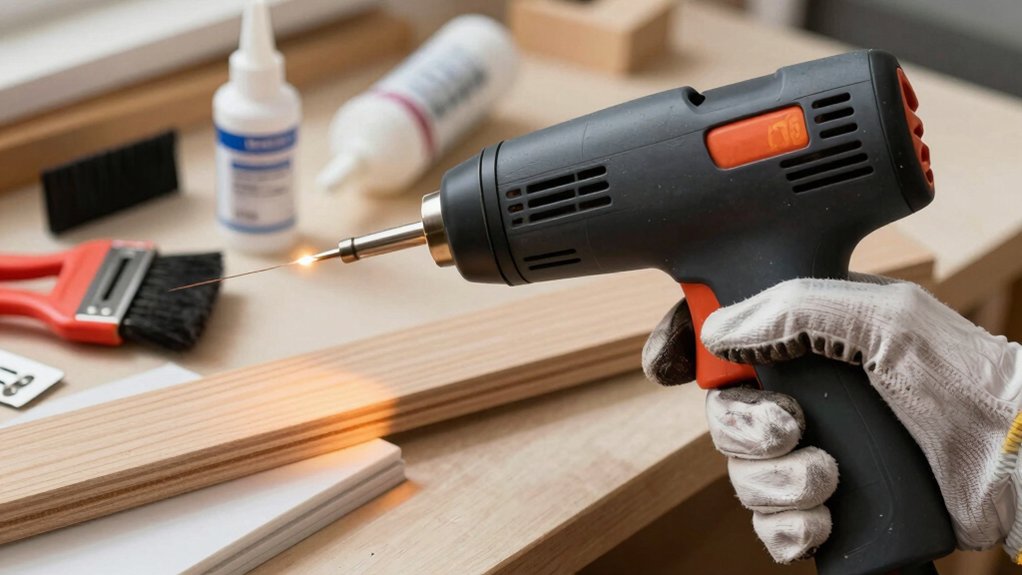
A heat gun is a versatile tool that uses focused warm air to soften, remove, or reshape materials, making many home projects faster and cleaner. You’ll use it to strip paint, bend plastics, loosen adhesives, and thaw frozen seals without introducing sparks or dust.
When you adjust temperature and airflow, you control the process, reducing damage to surrounding surfaces. For safety, respect heat-sensitive substrates and keep a clear work zone to prevent burns.
Heat gun safety means wearing eye protection and using a stable stand or heat-resistant surface for hands-free work. You’ll also rely on heat gun accessories, like nozzles and extension wurs, to direct energy precisely.
Master these basics to finish tasks efficiently and maintain control throughout every project.
How to Choose a Heat Gun: Criteria by Task (Paint Stripping, Shrinking, Bending)
Consider how paint stripping, shrinking, and bending each demand different heat-gun settings and accessories. For paint stripping, you’ll want steady heat and a gentle hand to avoid scorching.
For shrinking, target consistent, even warmth and airflow.
For bending, choose higher temps with precise control to avoid scorching or cracking.
Understanding these criteria helps you pick the right tool and approach for each task.
Paint Stripping Criteria
To strip paint effectively, choose a heat gun with adjustable temperature and a steady, controlled airflow, since different paints and substrates require gentler or hotter settings.
You evaluate stripping criteria by finish, bond strength, and substrate tolerance, prioritizing tools that balance heat delivery with precise control.
Aim for temperatures in the mid range for most coatings, reserving higher settings for stubborn layers while protecting wood, metal, or concrete.
Look for quick-temperature presets and a consistent airflow to prevent scorching or blistering.
Effective paint removal hinges on technique: keep the nozzle moving, use thin, steady passes, and work in small sections.
Consider heat gun accessories that support scraping and edge work.
Focus on paint removal techniques that maximize efficiency without damage.
Shrinking Requirements Guide
Moving from paint stripping basics, you’ll want a heat gun that handles shrinking tasks with precision and control. For shrinking, select a model with a steady, moderate air flow and adjustable temperature range that starts around 200°C and goes up to about 450°C. This lets you shrink sleeves, heat-shrink tubing, and film without scorching adjacent surfaces.
Prioritize a reliable heat source, accurate temperature display, and a safe, ergonomic handle for long sessions. Consider features like a wide nozzle for even coverage and a low-velocity mode for delicate work.
Heat gun safety remains critical: use a heat-resistant mat, keep flammables away, and allow cooling time. Stock up on heat gun accessories such as různ tailored nozzles and replacement filters to maintain performance.
Bending Temperature Tips
When you’re bending materials, choose a heat gun with precise, controllable heat and a steady low-to-mid airflow to avoid scorching or warping. Target temperatures should stay in the 250–350°F range for plastics and veneers, and higher, around 400–500°F, only for rigid wood or metal coatings, with quick passes to prevent scorching.
Use a cool-down interval after each bend to relieve stress. Maintain a consistent distance, about 2–4 inches, and work in small sections to minimize heat buildup. Monitor your progress visually and with touch; if it softens too quickly, back off.
Heat gun safety and Heat gun accessories matter: keep guards in place, wear gloves, and choose nozzles that focus or diffuse heat as needed for precise bends.
Temperature Range: Matching Tasks From Delicate to Heavy-Duty
A wide temperature range lets you handle delicate tasks without scorching and tackle stubborn jobs without underheating. You’ll map project needs to nozzle settings, choosing low temps for vinyl, paint stripping at mid, and high temps for metal reshaping. Look for models with clearly labeled presets or easy dial control to switch gear on the fly.
When you vary heat, stay mindful of a safe distance and steady motion to prevent scorching or etching. Heat gun safety matters: use eye protection, avoid redirects toward you, and unplug when changing tips.
For storage, keep cords untangled and cool, dry, and out of reach of curious hands. Practically, prioritize build quality, and consider a model that resists overheating and includes a reliable overload protector, plus dedicated heat gun storage.
Airflow and CFM: How It Affects Your Work
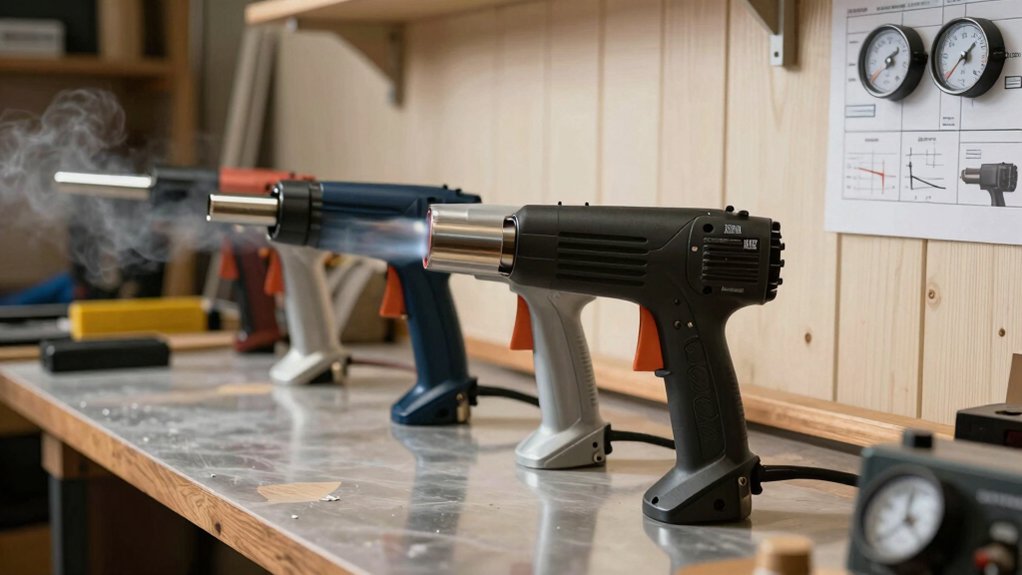
Even at the same temperature, higher airflow moves heat more quickly across the work surface, speeding up tasks like stripping paint or loosening adhesives, while lower airflow gives you gentler, more controlled heating for delicate plastics.
Airflow and CFM determine heat distribution, accuracy, and safety, so you can matched power to task without overshooting.
A robust blower improves material softening, reduces cycle times, and minimizes prolonged exposure, but you must balance with noise levels to avoid fatigue.
An ergonomic design that keeps controls accessible helps you dial in the right balance, improving repeatability and comfort.
Track CFM ratings against task needs, and choose a unit that delivers steady flow without abrupt surges.
Clear airflow control supports precise results while preserving tool longevity.
Attachments to Expand Heat-Gun Capabilities
Attachments can substantially broaden a heat gun’s usefulness by adding interchangeable heads and accessory kits that tailor heat output, precision, and safety to specific tasks.
By selecting the right attachments, you gain targeted control over shaping plastics, loosening adhesives, or bending vinyl. For precision work, consider narrow nozzles and scrapers that focus energy and reduce overshoot.
For surface preparation or paint removal, a wide, flat or reflector nozzle spreads heat more evenly, minimizing damage.
Accessory kits often include heat shields, clamps, and extension wands that extend reach and stabilize handling.
When evaluating options, prioritize Heat gun accessories that enhance Temperature control and feedback.
A modular setup lets you swap tasks quickly, increasing efficiency while preserving material integrity and overall project power.
Staying Safe: Handling, Guards, and Protective Gear
Staying safe with a heat gun means planning ahead: start by wearing PPE, understand the tool’s heat output, and keep flammable materials well clear of the work area.
You’ll protect yourself by choosing Protective clothing that resists heat and sparks, plus gloves with tactile feel for control. Keep handling precautions in mind: always hold the nozzle away from your body, test on scrap material first, and move steadily to avoid hotspots.
Use the lowest effective setting, and never leave the tool unattended while energized. Confirm a clear work zone, with a nonflammable mat and a fire extinguisher nearby.
Inspect cords and guards before each use, and store the gun safely after cooling. Consistent precautions safeguard power, speed, and results.
Real-World Use Cases: Paint Stripping, Shrinking Tubing, and Bending
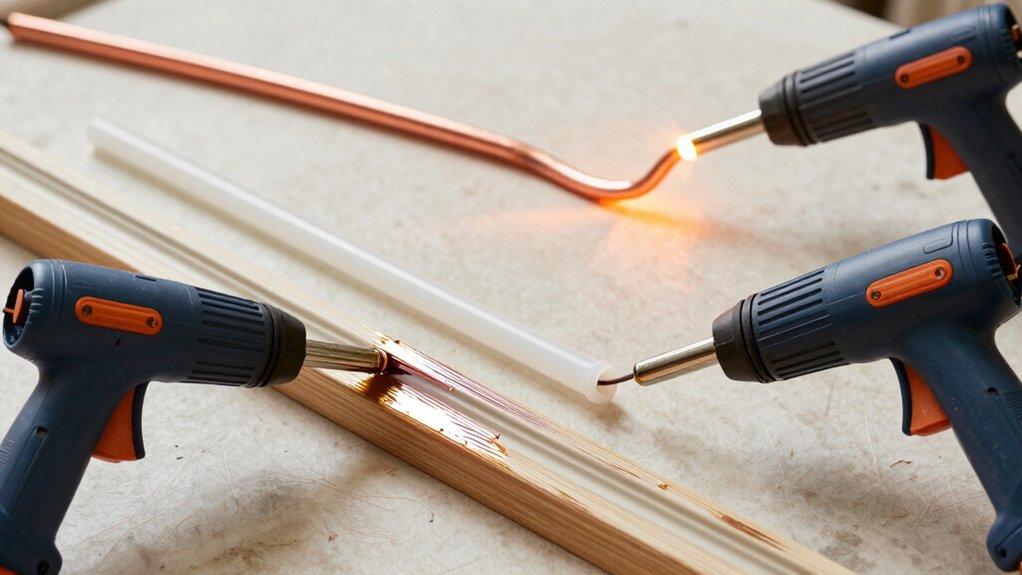
You’ll quickly see how a heat gun fits real-world tasks beyond theory: paint stripping, shrinking tubing, and bending plastics or thin metals. In practice, you’ll strip old coatings efficiently when you control temperature and movement, reducing overshoot and surface damage.
For tubing, you’ll shrink heat wrap or electrical sleeves with consistent heat, avoiding gaps or sagging. When bending, you’ll soften corners or bends without scorching, maintaining structural integrity.
You’ll prioritize heat gun safety by using appropriate nozzles and keeping a clear work area, and you’ll appreciate ergonomic design that reduces wrist strain during extended sessions.
Budget, Value, and Long-Term Investment in a Heat Gun
When evaluating a heat gun, consider not just the initial price but how its features, durability, and warranty translate to long-term savings. You want power without waste, so compare peak temperatures, variable controls, and heat settings that match your tasks.
Budget considerations aren’t just price; they include accessory availability, replacement parts, and expected service life. A model with solid build quality and a robust warranty saves you downtime and repeat purchases.
A device designed for frequent use pays you back through reliability and easier job completion. Weigh upfront cost against projected usage, maintenance needs, and potential energy efficiency.
Favor long term durability, ensuring the tool remains effective across multiple projects and seasons. Informed choices deliver dependable results, not impulsive buys.
Maintenance Tips and Troubleshooting for Longevity
Regular maintenance keeps heat guns reliable and safe, so create a simple routine you perform after each project or weekly if you use the tool often. Start with a cool-down, then wipe surfaces and vents to prevent residue buildup.
Inspect cords for cuts or frays, and test the switch for smooth operation. Clean the nozzle and reflectors gently to avoid heat distortion. Check the fan and intake for obstructions, removing debris with a soft brush.
Store in a dry, ventilated space away from solvents. For longevity, replace worn nozzles only as needed, and use correct accessories to avoid misalignment.
If performance dips, consult troubleshooting tips for common issues like overheating, cycling, or inconsistent heat output. Regular heat gun maintenance reduces downtime and extends life.
Conclusion
In short, a heat gun is a versatile tool you’ll actually use often. Choose by task: delicate projects need lower temperatures and steady control; heavy jobs demand higher heat and solid airflow. A quick anecdote: my neighbor bought one for vinyl siding cleanup, saved weeks of scrapping. Data point: many models reach 250–650°F, with variable airflow for precision. With proper safety gear and maintenance, it stays reliable for years. Practical choice beats hype; plan around tasks, not features.